Education

The mystery of teaching composition

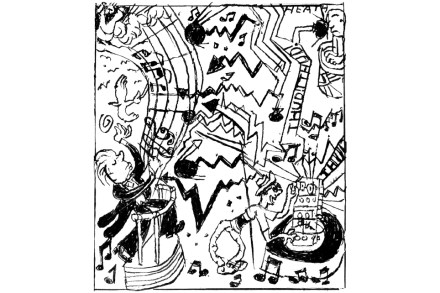
Summer study courses for young composers have been popular for a few generations. After the second world war, up-and-coming experimental composers started flocking to places like Darmstadt in Germany for the Internationale Ferienkursen für Neue Musik. Olivier Messiaen taught there in the late 1940s and 1950s, when among his students were Stockhausen and Boulez. Attending the 1980 course as an undergraduate, I benefitted from a lesson with Brian Ferneyhough and conversations with Wolfgang Rihm, who died last week and was described in one obituary as ‘the last great German composer’. In the US, the summer activities at places such as Tanglewood and Aspen have become part of the learning process for many young composers over the years.
The cult of Bedales

Another of my ageing Bedales school cohort has died and so there’s an ad hoc reunion in his honour at the pub in Steep, the bucolic village near Petersfield, scene of our youth, where we used to sneak out to smoke and drink when the teachers weren’t looking. Which they often weren’t. Bedales implanted itself here in deepest Hampshire in 1900, a pioneering co-educational boarding school, quickly patronised by British and European progressivist-bourgeois-bohemian-leftist artists, writers and intellectuals. It has been chi-chi ever since. Since the place was co-educational, plenty of sex education went on behind the bike sheds From its rustic origins, the school has grown and grown and now dominates the no longer quite so sleepy village.

The intersectional feminist rewriting the national curriculum

The appointment of Becky Francis CBE to lead the Department for Education’s shake-up of the national curriculum is typical of Labour’s plan to embed their ideology across our institutions – or rather entrench it, since the long march is almost complete. On the face of it, Professor Francis is ‘unburdened by doctrine’, to use Sir Keir Starmer’s phrase about how Labour intends to govern. As former director of the Institute of Education and current CEO of the Education Endowment Foundation, she has the outward appearance of a technocrat. But scratch the surface and, like so many Labour appointees, she emerges as a long-standing adherent of left-wing identity politics.

Coercion and coddling take campus

From our US edition

On October 7, 2023, I was the chairman of the political science department at a large public university, but not for long. I did what I presumed universities are for, encouraging students to talk with professors about big questions and important issues of the day. So on October 18, I held a faculty-student discussion with a Middle East expert. I opened the event by stating some facts: that a terrorist organization committed to the death of Jews had attacked Israel, raping and murdering many young people at a peace concert and seizing hostages. I said that these events raised deep moral questions about what should be done in response, regarding the destruction of Hamas and the fate of thousands of noncombatant Palestinians. Discuss. The discussion did not go well.

campus

The craft renaissance

As long ago as the 1960s, the poet Edward James was worried that traditional crafts were dying out. Having frittered much of the family fortune he had inherited, aged five, on supporting struggling surrealists (he commissioned the Mae West lips sofa and lobster telephone from a scuffling Dali) and on backing shows starring his actress girlfriends (‘very wealth-consuming,’ he admitted, ‘because invariably they flopped’) then creating an 80-acre sculpture garden in the Sierra Gorda mountains of Mexico, the man described as ‘the last of the great eccentrics’ decided in his late fifties to invest his remaining money in something more sensible.

Labour’s plans to rewrite the National Curriculum

Michael Gove’s decision to stand down in this election was a reminder that the one really bright spot in the past 14 years was the education reforms he steered through between 2010 and 2014. These policies were vindicated in the most recent PISA (Programme for International Student Assessment) survey, which showed England climbing the OECD’s international league table and outperforming Scotland, Wales and Northern Ireland. In maths, England rose from 17th place in 2018 to 11th in 2022, whereas Scotland, significantly above England in 2010, fell below the OECD average. I was involved in the most successful of these reforms, the free schools programme.

Why can’t America produce proficient teachers?

From our US edition

“Record drops in teen math and reading scores.” “National Math, Reading Scores Hit Historic Lows.” “Test Scores Flashing Red!” The headlines roll in weekly, each more alarming than the last. In February, twenty-six schools in Baltimore failed to bring a single student up to the most basic math requirements. The same month, sixty-seven schools in Illinois couldn’t produce a single proficient reader. We’ve reached a national education crisis, and its roots run deeper than many are willing to admit. The pressing question is: why can’t America produce proficient students? But perhaps a more crucial question is: why can’t America produce proficient teachers?

teachers teaching

We have lost an unforgettable teacher and one of Britain’s great critics

Tanner, the critic RICHARD BRATBY Michael Tanner (1935-2024), who died earlier this month, had such a vital mind and stood so far above the common run of music critics that it’s hard to believe he’s gone. For a philosopher to concern themself with the inner game of opera is not unknown (think of Friedrich Nietzsche and Roger Scruton). To do it as perceptively and as readably as Tanner is rarer. For two decades, starting in  1996, his weekly Spectator opera column offered as thorough and as stimulating an education in musical aesthetics as one could hope to receive; intellectual red meat served with forensic clarity and a mischievous, subversive smile.

Want student loan forgiveness? Make universities pay

From our US edition

At the turn of the twentieth century, Saturday Evening Post editor and Yale dropout George Lorimer bitingly summed up academia when he said “colleges don’t make fools, they only develop them.” On the heels of yet another multibillion-dollar Biden administration college bailout, it seems we haven’t learned the lesson: colleges might not make fools, but they’re certainly trying to make fools of us. The bailout projects come from a Biden campaign promise: “I will eliminate your student debt.” Half-slogan, half-bribe, this resonated with millions burdened by the unpayable debt brought on by liberal arts degrees that may barely be worth the paper they’re printed on.

debt

School portraits: snapshots of four notable schools

Queen Ethelburga’s, York Set in 220 acres of beautiful countryside between Harrogate and York, Queen Ethelburga’s College is an award-winning day and boarding school that welcomes girls and boys aged from three months to 19 years and boarders from Year 3. It is known for its high-ranking academic performance. College, one of its two senior schools, placed second nationally last year for A-levels and 18th for all-round academic performance. The other senior school, Faculty, which offers more ‘creative and vocational subjects’, climbed several places to third in the north for A-levels and seventh for overall performance. The college places emphasis on growing pupils into resilient, caring and confident adults.

Russia lives on in my mind

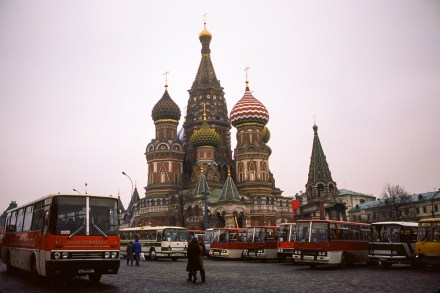
My kids, at our local comprehensive, go on school trips to Leigh-on-Sea. I went to a much fancier school, so I went on school trips to Leningrad and Moscow. The first time must have been in 1990. We were all going through dramatic changes; and so was Russia – not that as cossetted, self-absorbed 16-year-olds we were able to take much serious notice. We joked, nervously, gauchely, ahead of our departure about the likelihood that an Aeroflot flight could be relied upon to get us there in one piece. We practised our rudimentary GCSE Russian: ‘Chto eto? Eto GUM!’ (What’s that? That’s [the department store] – GUM.’) ‘Gdye Dom Knigi?’ (Where’s the bookshop?) ‘Chepukha! Vzdor!’ (Rubbish! Nonsense!

Biden’s absurd student loan ‘solution’

From our US edition

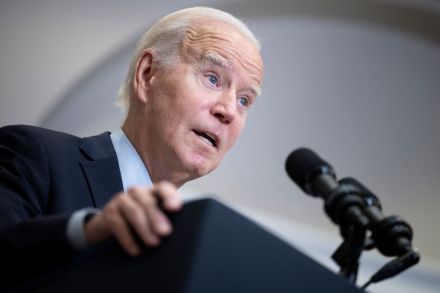
You’ve got to hand it to President Biden — when he puts his mind to something he doesn’t let mere semantics like the rule of law stop him. Despite an earlier Supreme Court slap down, “Middle Class Joe” provided an upper-class gift to some 150,000 college graduates in the form of $1.2 billion in student loan forgiveness. That brings total educational loan forgiveness under this White House to $137 billion effectuated by nothing more than a stroke of Biden’s pen via executive order. Biden openly boasted of his defiance, all but inviting the justices to try to stop his patronage gambit. It’s not that anyone can blame him, because it’s a political win-win for the White House.

The fight for civilization in higher education

From our US edition

The idea that Western civilization ushered in an age of oppression, cultural destruction, environmental degradation and all manner of human exploitation, is bittersweet. I don’t mean that it tastes like coffee or dark chocolate. I mean bittersweet the vine, Celastrus orbiculatus, with the colorful orange-red berries. This kind of bittersweet grows at a phenomenal rate, ascending into the canopy and strangling trees. If you drive north out of New York City, you will pass endless miles of arboreal carnage. Tens of thousands of roadside trees are draped in the deadly vine. It is an invasive Asian species that, once established, is impossible to eradicate. And while its fall berries are attractive and make for good floral arrays, they are inedible.

civilization higher education

The populism of Machiavelli and Jefferson

From our US edition

A few years ago a Marine turned novelist, G. Michael Hopf, captured a classic truth in a pithy formula. Inspired by cyclical theories of history — in particular the generational “turnings” of William Strauss and Neil Howe — Hopf wrote in his novel Those Who Remain, “Hard times create strong men, strong men create good times, good times create weak men, and weak men create hard times.” One need not put much stock in Strauss and Howe to appreciate the maxim. It could just as well be derived from Sallust or other classical sources. Or from Machiavelli: in his Discourses on the First Decade of Titus Livy, the Florentine philosopher considers where best to build a city.

Machiavelli

What lies behind the obsession with race transforming universities?

From our US edition

The first problem about decolonization is the word itself. Colonization is the process of establishing control over a foreign territory and its indigenous inhabitants, by settlement, conquest or political manipulation. But decolonization? It has come to mean much more than the reversal of that process. Today, it refers to an altogether wider agenda, whose central objective is to discredit or downgrade the cultural achievements of the West. Objective truth and empirical investigation are mere western constructs. They are optional ideas which need have no weight beyond the western societies which invented them. But the West has imposed them on the rest of the world by a process akin to the colonial conquests of the past four centuries.

decolonization

Democrats bring a CCP-tied witness to education hearing

From our US edition

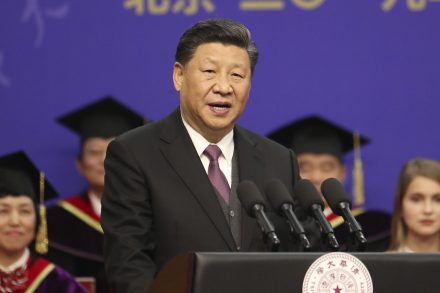
A hearing about the Chinese Communist Party’s funding of American K-12 education took a surprising turn when the Democrats’ witness — and several members of the House Education and Workforce Committee — took pains to conflate opposing foreign investments in public schools with Asian-American hatred. Gisela Perez Kusakawa, the executive director of the Asian American Scholar Forum (AASF), kicked off her remarks by linking concern over the Chinese Communist Party’s investments in public schools to America’s incarceration of Japanese-Americans during World War Two. Warning the Asian-American youth could end up as “collateral damage,” Kusakawa repeatedly conflated opposing the CCP with anti-Asian-American racism.

ccp Chinese President Xi Jinping delivers a speech during a ceremony at Tsinghua University ceremony (KENZABURO FUKUHARA/AFP via Getty Images)

The Youngkin blueprint

From our US edition

Virginia Beach, Virginia “Please run. We need you to save our country. Please.” A man pleads with Virginia governor Glenn Youngkin, referring to speculation that Youngkin may jump into the 2024 GOP presidential primary — and that Republican donors are encouraging him to do so. Youngkin responds, with a laugh: “I’m busy.” The governor is, indeed, quite busy. It is late August and he has just finished up one of his “Parents Matter” listening sessions, this one in Virginia Beach. Youngkin has been traveling the Commonwealth and hearing directly from parents to fulfill one of his biggest 2021 campaign promises: protecting the rights of parents from government overreach in matters concerning their children.

Youngkin
rufo

Christopher Rufo’s new book is impressively erudite

From our US edition

When a new book by an author often characterized as a conservative polemicist earns a rave review in the staid Economist, independent thinkers take notice. Christopher Rufo’s articles on recent US radicalism for the Manhattan Institute’s City Journal have long attracted wide attention, and now America’s Cultural Revolution has been praised as “meticulous” and “cerebral” as well as “persuasive and well-written.” All true, for Rufo’s book is impressively erudite, reflecting a breadth and depth of familiarity with influential leftist writings that will shame any number of “woke” academics.

Why public schools never have enough money

From our US edition

The new school year is just a few weeks away, and that can only mean one thing: right on cue, school districts are once again bemoaning a “lack of funding.” It’s the same story every year. Along with notices advertising the local high school drama department’s production of Grease come headlines announcing the school district is in dire straits and schools will literally fall to pieces if they aren’t pumped full of life-saving funding, stat. Year after year, it’s the same old song and dance: school funding increases, and the next year they need even more. Why is it never enough, though, and where does all the money go?

schools