Education

The independent schools crisis is only just beginning

Ever since the sudden and cruel imposition of VAT on independent school fees at the start of the year, much of the media focus has been on the number of school closures. The first to go have been prep schools and schools in rural areas far from London and the south-east. Trust me, this is really only the beginning. Savvy parents have always known a reduction in those shiny buildings won’t matter that much in the end Only a very small number of independent schools will be completely immune from the current financial pressures and – in the next couple of years – that will start to become increasingly obvious. While many might not close, there will be more mergers and acquisitions, and a scramble for schools to enjoy the benefits and protections of being part of a larger group.

How boarding schools reinvented themselves

Early in his time at Eton College, 13-year-old William Waldegrave, the school’s future provost, was struggling to sleep. He told his dame, and she in turn told the housemaster, John ‘A.J.’ Marsden. The former commando in charge of the boys told Waldegrave that if it happened again, he should knock on his door. A few nights later, the boy did as he was told. Marsden had a solution – they would go for a run, to Bray, seven miles from Eton. Waldegrave slept better that night. Tales of public schools past are legion – some better than fiction, and plenty that have inspired it. Others are less appealing, more appalling. In recent years, memoirs depicting the misery of former boarders’ experiences at school have told tales of neglect and criminality.

Long live eccentric school traditions

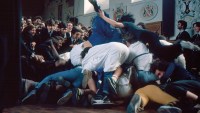
On every Shrove Tuesday since at least 1753, boys at Westminster School have gathered in the hall for a mad scramble over a pancake. The Pancake Greaze (pictured) is a cherished tradition that sees one pupil crowned the winner for grabbing the biggest portion, which the cook tosses into the centre of the hall from a height of 15ft, as the rest of the school cheers on. The champion is awarded a golden coin by the Dean of Westminster, accompanied by the headmaster and sometimes royal visitors. The more unsavoury part of the tradition – nominally beating the cook with Latin primers if he fails to get the pancake over the iron bar three times – has been abandoned. There have been other modern updates.

School portraits: snapshots of four notable schools

Lancing College, West Sussex Lancing is a public boarding school for children aged 13 to 18 in West Sussex. Set within the South Downs National Park, it offers an open-air theatre, a state-of-the-art music school, an equestrian centre and even the tallest school chapel in the world. As impressive as its facilities, though, are its alumni: Evelyn Waugh, Sir David Hare and Lord (Stephen) Green to name but a few. Nowadays, many students at the college – where fees start from £12,602 – come from its sister preparatory schools in Hove and Worthing. Also arriving this month is a new headteacher, Dr Scott Crawford, who will replace Dominic Oliver after 11 years.

Why do people feel sorry for me for going to boarding school aged nine?

Sometimes, when I’m chatting about childhood, at some point it will become clear I went to a boarding school from the age of nine. Reactions can be comical. ‘You poor thing!’ an interlocutor might gasp, gripping my forearm, no doubt picturing cold showers and cruelty. I’ve always responded with bemusement, since my experience largely featured comfort and crumpets. I loved my prep school – Dorset House in West Sussex. It was a world in itself, enclosed and beguiling. In some ways it was unchanging, such as the graffitied Latin primers which were the same our grandparents had used. Yet it could be surprisingly forward-looking, as when it made a satellite link-up to a school in America, many years before the internet.

Elites keep making education about themselves

From our US edition

This month, Congress put school-choice funding on offer to the states as part of the Big Beautiful Bill. Progressives have bashed the provision for the harm they claim school choice will do to under-resourced school districts. But the program saps not a dollar from public schools, which shows the protest for what it is: elitist bluster. The same progressives who fumbled their schools’ Covid responses, instituted woke curriculum and pushed adolescent gender transitioning should not decree to parents which school is best for their children. Public schools have not earned Americans’ trust over these past few years; many private schools have. Under the new measure, families can receive a tax credit for donations to an approved scholarship-granting nonprofit organization.

Elementary school

In the age of AI, humans must keep learning

From our US edition

This year, colleges stopped teaching students to write. As artificial intelligence chatbots allow students to generate unique essays that can’t easily be vetted for plagiarism, professors have felt the need to replace essay assignments with written examinations in closed rooms. It’s a considerably shrunken version of the kind of university education that was on offer 75 years ago. In June, a study from MIT showed steadily waning brain engagement and originality as student essayists used AI more. The college business model is in trouble: $75,000 for a year’s worth of diversity, equity and inclusion nonsense already struck parents as a bit steep. But at least the kids were being taught something. The new limitations AI places on instruction may do a lot of colleges in.

English schools are failing disadvantaged children

Education should be the great equaliser – the ladder with which all children, regardless of circumstances of birth, can improve themselves and, by doing so, climb towards a more prosperous future. It was certainly that way for me. I loved learning, and my state education took me from humble beginnings in Clacton-on-Sea to working in Westminster. Fixing this system will not be politically easy ... but political difficulty is no excuse for inaction But not all children are so lucky. Despite England’s significant success at raising overall attainment over the past decade, the gap between advantaged and disadvantaged pupils has stubbornly remained – despite the significant sums of money spent on the problem.

Texas

The Ten Commandments of Texas

From our US edition

Blessed greetings From Texas, where Governor Greg Abbott recently signed a bill that will require public schools to display the Ten Commandments in every classroom. Teachers must display the Commandments as a poster or framed copy, at least 16 inches by 20 inches, in a typeface that is clearly legible from any part of the room. Supporters of the bill say the Ten Commandments are a cornerstone of American history, though they may have that confused with the Ten Amendments in the Bill of Rights.

Amanda Spielman on the SEND row and Labour’s Ofsted blind spot

22 min listen

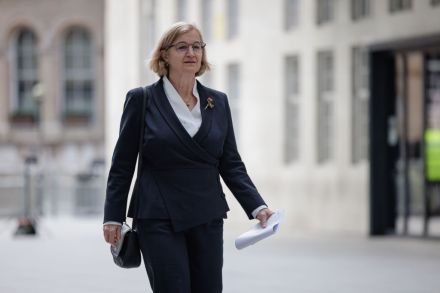
As Labour looks to get a grip on public spending, one rebellion gives way to another with the changes to the Special Educational Needs and Disabilities (SEND) system threatening to become welfare round two.  On this week’s Saturday edition of Coffee House Shots, Lucy Dunn is joined by The Spectator’s Michael Simmons and former Ofsted chief Amanda Spielman to explore what the government is planning – and why so many Labour MPs are worried. Is the system failing the children it's meant to support, or simply costing too much? And can Labour afford to fix it without tearing itself apart? Listen for: Amanda on the unintended consequences of the 2014 SEND overhaul; why teaching assistants may not be the silver bullet schools think they are; and Labour’s mess over Ofsted.

Keir can’t catch a break

13 min listen

Keir Starmer will have been hoping for a more relaxed week – but he certainly won’t be getting one. He is facing a fresh rebellion over support for children with special educational needs (SEND), which threatens to become welfare 2.0. The plan involves overhauling the SEND system and it’s another case of Labour MPs exclaiming that they didn’t stand on a Labour ticket just to target the most vulnerable in society. The main concern among backbenchers is whether it should be legally enforceable for parents to ensure their children receive bespoke support. Elsewhere, all roads lead to the Treasury, as Neil Kinnock has a solution for increasing Rachel Reeves’s headroom: a wealth tax.

We’re losing the ability to read

A recent American study, called ‘They Don’t Read Very Well’, analyses the reading comprehension abilities of English literature students at two Midwestern universities. You may be surprised to discover that the title is not ironic. That they don’t read very well is an understatement along the lines of Spike Milligan’s ‘I told you I was ill’. The study’s subjects were given the first paragraph of Charles Dickens’s Bleak House, and asked to read it out loud, parsing the sentences for meaning. A doddle, you’d think, for anyone reading Eng lit at a university. Well, you’d be wrong. Most participants were unable to elicit a scintilla of sense from Dickens’s prose. It’s as if, dumbfounded, they’d been confronted with Linear B.

The reviving of the American mind

From our US edition

In his 1987 book, The Closing of the American Mind, Allan Bloom argued that higher education no longer taught US citizens how to think. “We are like ignorant shepherds living on a site where great civilizations once flourished,” he wrote. “The shepherds play with the fragments that pop up to the surface, having no notion of the beautiful structures of which they were once a part.” Now, almost 40 years later, we’re even more clueless. The rot in academia has spread throughout the education system and can be found all over American life. Rational thinking has now been almost entirely usurped by the baser passions of anger and grievance, as we saw all too clearly in the collective insanity of the Black Lives Matter riots of 2020.

Trump
universities

Wokeism is stifling thought in America’s universities

From our US edition

The American education system needs drastic reform from bottom to top.  Our K-12 schools, both public and private, have come to be dominated by radical left-wing ideas. Schools not only indoctrinate students with a one-sided view of history and society, but they also increasingly fail in their core mission of imparting the basic skills needed to function in our advanced and complex society. Likewise, our universities, professional schools and graduate schools are in the grip of a far-left ideology that has compromised their traditional missions of truth-seeking, knowledge creation and the preservation and transmission of western culture and the advanced skills essential to its vitality and prosperity.

Rufo

How Christopher Rufo is changing American education

From our US edition

As fire-breathing counter-revolutionaries go, Christopher Rufo seems notably mild-mannered. Perhaps it’s his northern California roots and Pacific Northwest home that keep him from embracing the based lifestyle pursued by so many conservatives in the Trumpian era. He doesn’t like sports. He doesn’t enjoy UFC. He allows his four kids to watch Disney movies and admits he was once a vegetarian. Yet it’s also possible that the Georgetown-educated PBS documentarian turned right-wing iconoclast is effective precisely for that reason: he knows the people he is criticizing.

IQ

Why is intelligence declining?

From our US edition

In 1906, the famous polymath Sir Francis Galton visited a country fair on the edge of Plymouth, England. A bullock had been tethered for slaughter and almost 800 locals were invited to guess its dressed weight: how heavy it would be after butchering. Galton – an obsessive measurer of people, weather and intelligence – gathered the entries, calculated the average and found something remarkable. The crowd’s collective estimate came within a single pound of the ox’s actual weight. This elegant experiment would become one of the founding truisms of modern democratic thought. Galton had shown that while individuals may err, the group, in aggregate, can reason with uncanny accuracy and prescience. He had discovered “the wisdom of crowds.

ADHD

We shouldn’t downplay the risks of ADHD medication

From our US edition

I was diagnosed with ADHD in my freshman year of college. I’d suspected as much in high school, but I disliked the idea of taking medication. College was different. No matter what I tried, I kept finding gaps in my notes – and therefore gaps in my knowledge on test day. While I was prescribed so-called “smart drugs,” I didn’t delude myself into thinking they would magically make me more intelligent – which is why I laughed when I saw the ADHD research industry perform a volte-face in the pages of the New York Times, in a piece headlined: “Have we been thinking about ADHD all wrong?” The obvious answer is yes.

Harvard’s intricate China ties

From our US edition

Scratch almost any major US political story and sooner or later you’ll hit a big red nerve that belongs to the Chinese Communist party (CCP). Tariffs, energy, TikTok, the border, Fentanyl, Greenland, Panama, the Gulf of America – on all these subjects the Trump administration is, one way or another, trying to limit Beijing’s power in the West. And Donald Trump’s "war on Harvard," it turns out, is no exception. It’s clear that the President is pushing against anti-Semitism and the Diversity, Equity and Inclusion madness on America’s most famous campus, as well as in countless other colleges and universities.

Harvard