Easter

Ozempic has ruined Easter

It’s a funny thing, being a feminist surrounded by women on weight-loss drugs. As someone who recognises the health risks of being clinically obese, I’ve never been a fat liberationist – but pretty much all of us used to be against prescribed beauty standards. In practice this meant we would critique the harmful impacts of the ‘size zero’ or ‘heroin chic’ trends rather than obsess over having gained a few pounds over Christmas. Yet, with the rise of weight-loss jabs, skinniness has become a norm rather than a feminist discussion. And twee ideas about ‘being good’ or ‘cheating’ have been replaced by – well – feeling too nauseous to cheat at all.  Which is why Easter is a fascinating holiday in this era of weight-loss jabs.

Religion has been resurrected in British politics

British history is littered with elections and Elections. The first type, common or garden elections, are fought with prosaic issues at their core. Readers might remember the 2001 general election, which saw such pressing topics as the fate of Kidderminster hospital pushed to the fore. The 1865 general election was also considered uneventful by contemporaries. Even contests nominally involving major changes can be just ‘elections’. The tedium of 2024, featuring cynical electoral bribery, with the result a foregone conclusion and the stated policy platforms of the two main parties largely similar, is a prime example. What, then, are the other type: the Elections?

The Christian grace of Jimmy Lai’s prison drawings

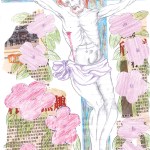
Sharp-eyed readers will notice that Peter Brookes’s fox, who normally tops this column, is absent. They can be reassured. He has gone to ground but will be (in hunting parlance) ‘bolted’ in time to return for future issues. I decided to remove the fox for Holy Week because the replacement drawing tells a story. It is by Jimmy Lai, the billionaire former boss of Apple Daily in Hong Kong. He drew it in solitary confinement in Stanley prison. He has now been incarcerated for nearly 2,000 days. This February, he was sentenced to a further 20 years for ‘conspiracy to collude with foreign forces’ and ‘to publish seditious materials’.

There was Easter but no truce on Ukraine’s frontline

Kramatorsk, Donetsk region In a wooden Greek-Catholic church on the frontline of a warzone, encircled by red tulips and military vehicles, the priest’s sermon is woven through with the war – just like the soldiers’ Easter baskets, packed not only with paska bread, pysanky and sausages, but also with drones, waiting to be blessed. ‘This drone will be at work tonight – enforcing the ceasefire,’ a soldier whispers to me, smiling. The priest looks over a hundred soldiers in front of him, the church so packed that some must listen from the outside, and says that Ukraine will defeat evil, just as Jesus did. ‘The enemy is killing Him in our men and women, they are torturing Him in captivity, our mothers wash their faces with His tears,’ he says.

Pope Francis and the Vatican reckoning

Modern popes, for better or for worse, tend to be defined in soundbites. John Paul II’s clarion call of ‘Be not afraid’ became emblematic of his invitation to young Catholics to embrace their faith and his rallying of the West against the spectre of international Communism. Benedict XVI’s great theological career, and his term as a pope in the model of priest and professor, remains summed up in his simple declaration that Deus caritas est. For Francis, who has died at the age of 88, the world will likely remember, in the immediate weeks after his death anyway, his often quoted, though often misrepresented, motto of ‘who am I to judge?

How should Christians embrace ‘faithful dissent’ today?

This is an excerpt from the latest episode of the Holy Smoke podcast with Damian Thompson, which you can find at the bottom of this page: The Easter issue of the Spectator includes two provocative articles exploring aspects of Christianity. Nigel Biggar, Regius professor emeritus of moral theology at Oxford University, now a Conservative peer, celebrates the heroic ‘faithful dissent’ of Christian heroes such as Thomas More and Helmuth von Moltke, who lost their lives rather than defend injustice.  Meanwhile Spectator columnist Mary Wakefield interviews Roman Williams, former Archbishop of Canterbury. She’s inspired by his holiness but depressed by his use of ‘C of E bureaucratese’ to uphold liberal orthodoxy on subjects such as gender ideology.

Why Easter eggs are getting more expensive

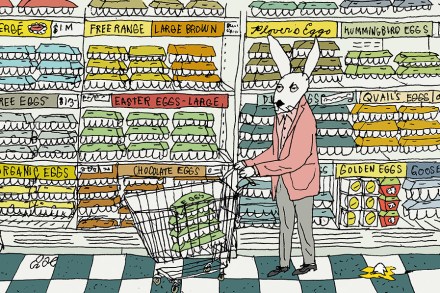
While the US continues to use the price of chicken eggs as a political (American) football, closer to home our concern is with eggs of a sweeter kind. This year has seen chocolate prices rise dramatically. The price of cocoa had remained stable for decades, but in November 2023 it rocketed and has remained high ever since: it is currently almost three times what it was 18 months ago. The sudden increase came about after particularly poor harvests in West Africa, where more than 80 per cent of the world’s cocoa is grown. Extreme weather, in the form of both record-breaking high temperatures and then very heavy rains, have ravaged the cocoa plantations in Ghana and Côte d’Ivoire.

Is it time for Christians to unite over Easter?

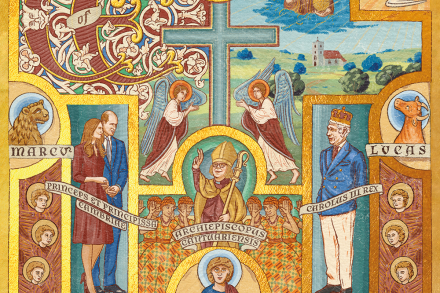
So, you thought the date of Easter, which rambles irritatingly round the spring calendar, was settled by the Synod of Whitby, no? That gathering in 664 AD, which established that Northumbria would celebrate Easter in the Roman calendar, used to be one of the events that Every Schoolboy Knows, though probably not now. There were two rival ways of computing Easter, the Celtic and the Roman, and the problem was that King Oswald belonged to the Irish/Iona tradition, and his wife, Eanflaed, kept the Roman calendar. One bit of the court would be in Lent and fasting, vegan-style, and abstaining from sex and fighting, while the other was celebrating Easter, gorging on Paschal lamb and presumably up for conjugal relations and brawling.

The Easter story reminds us of the importance of truth

Live not by lies, Aleksandr Solzhenitsyn warned the West half a century ago, but we have hardly heeded him since. Fictions have bewitched our minds and captured our culture. Hard truths struggle to be heard. Last week BBC presenters took the leader of the opposition to task for her failure to watch a Netflix drama, Adolescence, which purported to explore the risks to young women from misogyny. At the same time they ignored Kemi Badenoch’s questions about real male violence – the abuse of thousands of girls by rape gangs in 50 British towns and cities.

Lamb is for life, not just for Easter

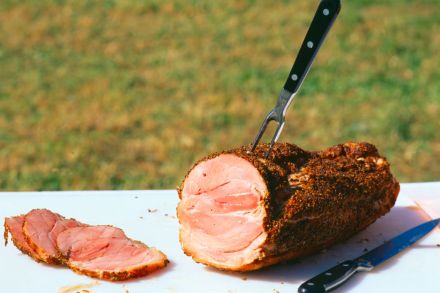
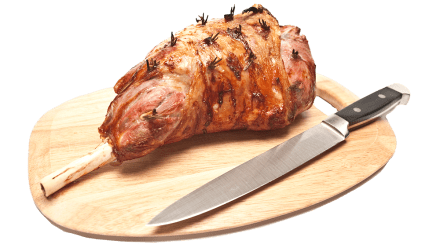
Roast lamb is as expected on the Easter table as turkey is at Christmas. But as a nation, we are falling out of love with lamb. Meat consumption in Britain is at its lowest level since records began, and according to the Agriculture and Horticulture Development Board (AHDB), lamb has been in particular decline for the past 20 years. We may feel we are supporting the sheep-farming industry, but the truth is a little more complicated There are a number of reasons for this: some people are trying to eat less meat for environmental or ethical reasons, while others don’t enjoy the richer taste of lamb compared with other meats. Perhaps most importantly, after a long period of rising in price more drastically than other meats, the cost of lamb reached record highs last year.

How much steel does Britain produce?

Double date This year, Orthodox Easter is on the same date as the western Easter, 20 April. How common is that? The Orthodox Church has a different date for Easter because it still calculates the date according to the Julian calendar, which runs 13 days behind the Gregorian calendar. But the dates coincide when the first full moon after the spring equinox occurs relatively late. The dates last coincided in 2017, but eight years is a relatively long run without this happening. This year is the ninth occasion this century when western and Orthodox Easters have been on the same day. A common date for Easter will next happen in 2028, followed by 2031, 2034, 2037 and 2041.

Spare us from performative piety

Lent did not, I confess, start well. Cheltenham fell in its first week, and the Gold Cup is hardly the place for the rigours of Lenten discipline to begin. Some might say it is hardly the place for a clergyman at all. Peter Hitchens once commented on my clerical collar – stiff, crisp, linen – and said that if he saw a man wearing such a get-up at a racecourse he would assume he was an illegal bookmaker in disguise. Still, I recall that one of the most successful owner-breeders of all time was a clergyman. The vicar of Ashby de la Launde, the Revd J.W. King, won the Oaks, 1,000 Guineas and St Leger with his horse, Apology. There were, as the Bible tells us, giants in the earth in those days.

The hot cross bunfight

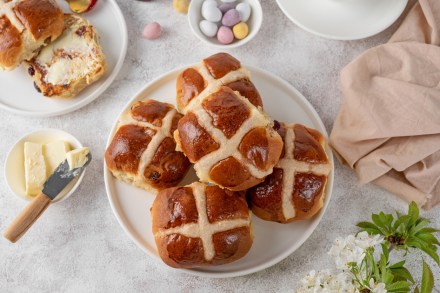
There’s a well-known clip from daytime TV show This Morning where celebrity chef Gino D’Acampo is cooking a classic Italian pasta dish. Holly Willoughby, one of the presenters, tastes it and says: ‘Do you know, if it had, like, ham in it, it’s closer to a British carbonara?’ D’Acampo, in his Italian-accented perfect English, looks at her in horror before replying: ‘If my grandmother had wheels, she would have been a bike.’ This phrase goes round and round in my head as I stand agog in my supermarket’s bakery aisles. Where once there might have been one choice of hot cross bun as we hurtle towards Easter – perhaps one ‘standard’ and one ‘luxury’ in the bigger shops – our options now extend as far as the eye can see.

Easter special: how forgiveness was forgotten

36 min listen

This week: how forgiveness was forgotten, why the secular tide might be turning, and looking for romance at the British museum.  Up first: The case of Frank Hester points to something deep going on in our culture, writes Douglas Murray in the magazine this week. ‘We have never had to deal with anything like this before. Any mistake can rear up in front of you again – whether five years later (as with Hester) or decades on.’ American lawyer and author of Cancel Culture: the latest attack on free speech, Alan Dershowitz, joins the podcast to discuss whether forgiveness has been forgotten.

The three most radical words Jesus said

Some Jewish friends recently asked me: ‘What is Good Friday?’ At first, they said, they had thought it was so called because of the peace agreement signed in Northern Ireland in 1998. Then they had learnt that it was a Christian thing, but they weren’t sure what. They wanted to know why it was ‘Good’. This put me to the test. You cannot explain anything about Christianity without paradox. It was Good, I hazarded, because it was bad: Jesus had to die to rise. My friends were scrupulously polite, but I thought I detected increasing perplexity. Many films of Christ’s Passion have been made, but all from a more or less Christian point of view. The film I should love to see would be one made through the eyes of a practising Jew.

Don’t tell them but the French didn’t in fact invent etiquette

When dining in France, it is considered rude to finish the bread before the main course has been served, and ruder still to slice the bread with a knife, lest the crumbs land in a lady’s décolletage. In China, you should never place your chopsticks upright in a bowl of rice, and in Bangladesh you may eat with your fingers, but should avoid getting sauce above the knuckles. If you are guilty of any of the above, may I direct you, politely, to a new documentary on the World Service. The programme takes aim at many outdated traditions (including those that resign women to the kitchen), but the conversation is far more informative than censorious and more eye-opening than dour.

The secret of perfect chocolate brownies: use a hairdryer!

I'm standing in my kitchen aiming a hairdryer at a pan of uncooked brownie batter and feeling like I might have finally lost my mind. I’ve done a lot of strange things in pursuit of recipe perfection, but even for me, this is an odd one. Brownies are a funny old beast. We think of them as quite straightforward, both in the making and in the eating. But actually, that’s not fair. There are countless variables which can produce anything from a dry chocolate cake to uncooked fudge. And – more importantly – for a glorified traybake, they’re pretty damn expensive to make. A whole pat of butter, lots of chocolate, anything from three to five eggs, a boatload of sugar (rarely simple granulated). It’s a commitment.

Did Jesus visit Cornwall?

I remember the ephemera at the back of St Barnabas. The church stands in Oxford’s suburb of Jericho, near the University Press. It had proper church clutter: stumps of candles, dogeared pamphlets and reminders of long gone diocesan initiatives. St Barnabas – a beautiful Italianate monstrosity, plonked by the high Victorians, with their classic tact, amid a cluster of crabby little houses, once slums but now worth millions – is good at collecting this stuff. In the sacristy is a vestment made from the coronation hangings of Tsar Nicholas II, smuggled out of Petrograd at the revolution; now the double-headed eagle peeps through the incense, delighting porters, dons and motor workers alike on high days and holidays.

Simnel vs colomba: which is the best cake for Easter?

When it comes to Easter cake, there are two possibilities. From the home front, there’s simnel cake, which has 11 marzipan balls on the top – one for each of the apostles, apart from bad Judas. Or there’s colomba, the Italian dove-shaped panettone-style cake, with all its symbolic resonances. Not that the colomba actually looks like a dove, unless you try very hard – more like a cross with round ends (the wings and tail) and a wonky top (the head). Anyway, that’s the idea.  Colomba cake [iStock] So, which is the more perfect? Simnel cake is a lightly spiced and fruited cake, with marzipan in the middle as well as on the top. Made with homemade marzipan, which is easy, it’s a thing of beauty.