Easter

The Spectator Podcast: Easter special

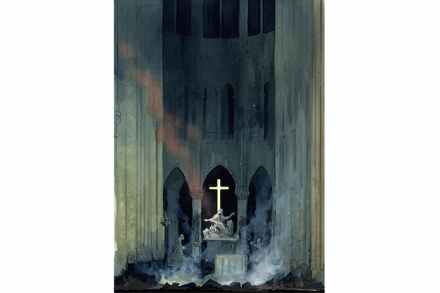
Earlier this week the world watched in horror as the Notre Dame went up in flames. Although the roof and its spire were lost, the main body of the cathedral survived. So did most of its holy artefacts, and the gleaming, golden cross above the altar – which graces this week’s magazine cover. The outpouring of grief and sympathy around the world – from Christians and atheists alike – showed how beloved the Notre Dame is as a historical and architectural icon. However, Damian Thompson, Spectator Associate Editor and host of the Holy Smoke Podcast, says we must not forget that the Notre Dame is primarily a  Catholic place of worship.

The true cross

The bravest thing I’ve ever seen was 93-year-old Albert’s decision to die and the days after in which he stuck to his resolve and sank away from consciousness, like a swimmer turning tail and just diving down into the dark. Albert was not religious, but I’m writing this now because though I’ve been Catholic for a decade, it was only after his final week, in the spring of last year, that I began to understand Easter and the Passion of Christ. I first met Albert when fate decided to call my bluff. For years I’d bored on to my husband about the need for a scheme to put locals in touch with their elderly neighbours. Then one night out in a north London restaurant, there was a card on the table advertising just that: the Befriending Network.

The wonder of Whitby

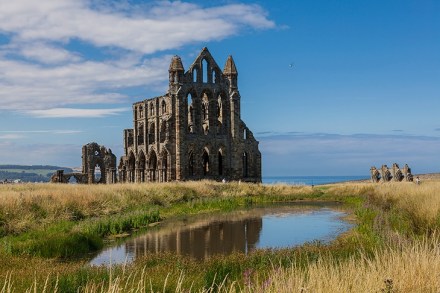
The 199 steps up to the ruins of Whitby Abbey are a pilgrimage; they always have been. And any good pilgrimage takes effort. Count Dracula (also acquainted with the north Yorkshire town) cheated — he climbed the steps in the guise of a black hound. These days, with its new £1.6 million museum and visitor centre, our vampire friend would find a ground-floor café and gift shop. Knowing English Heritage, there is probably a bowl of water for dogs, which would have kept the Count happy. Whitby is a surprise, with a history that puts it at the heart of Britain’s spiritual and literary life. It’s also a vibrant fishing port, somewhere you can pick up a Whitby smoky — smoked herrings — made in a backstreet smokehouse.

Heaven and earth | 28 March 2018

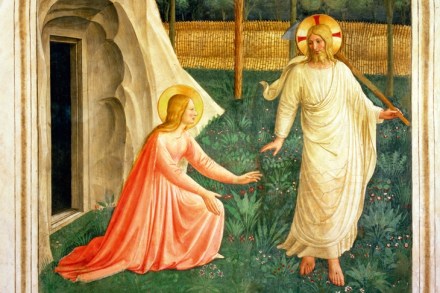
In Nicolas Poussin’s ‘Noli Me Tangere’ (1653) Christ stands with his heel on a spade. He appears, in his rough allotment smock and sandals, to be digging up carrots. In Abraham Janssens oil painting (c.1620), Christ strides among parsnips and pumpkins, cauliflowers and marrows. Mary Magdalene kneels in an artichoke bed. In Fra Angelico’s fresco version — or, rather, vision — for San Marco in Florence (c.1438–50), Christ shoulders a hoe as he hovers above a millefiore carpet of wildflowers. His pristine robes give him away. No gardener would wear white to turn the compost. The Noli Me Tangere scene is the loveliest in the cycle of Christian paintings that tell the story of Easter.

A familiar Ring

Herbert von Karajan established the Easter Festival in Salzburg 50 years ago with a production of Die Walküre that is now considered legendary. In the sense that legends are rooted in memory, and mythological in substance, that much is true. Which is not to damn it with faint praise. This revival, staged by Vera Nemirova, was an old-fashioned representation of Wagner and many Wagnerians, having endured too many modern presentations of the Master, who has suffered more than any other composer from the curse of Regietheater, would say that that is No Bad Thing. A giant ash tree, in whose hollowed-out trunk reside Hunding and Sieglinde, was the single, simple prop for the first act.

Diary – 20 April 2017

We are all drama queens, really, we political hacks; and so we were all thoroughly delighted by Theresa May’s Tuesday coup. I have long been arguing that we would have an election this year, and I had been beginning to feel lonely. But one big thing I got wrong: it had seemed to me in January that a Brexit election would shatter much party discipline, since the voters would be principally interested in where candidates stood on the Great Issue and both Tories and Labour were deeply divided about it. However, by framing the current contest in the way she has, May has deftly but brutally carved away the long and substantial tradition of Tory pro-EU politics. In this election, to be Tory is to support her uncompromising version of Brexit.

If you want to save the CofE, then get stuck in (and go to church)

Christ is risen; happy Easter all round. It’s a pleasing festival in all sorts of ways, chief of which is that it’s wildly uncommercial, being the Sunday following the full moon following the spring equinox, if I’ve got that right. So, not a usefully neat date like 25 December, and one that retailers find much more difficult to exploit except as a means of flogging lamb legs (folks – lambs have only four legs, but they also come with shoulders, you know, which are even nicer) and obviously, chocolate eggs… though Eastern Christians do it better, with hand coloured eggs, which they get blessed at church. Anyway, it’s still a Christian festival, so cue for the usual bout of anxiety about the condition of Christianity in England.

Christianity is at the heart of Britain’s shared values

Theresa May does a decent job of saying that Christianity is at the heart of our shared values. It’s a difficult thing to say without sounding disparaging of non-Christians, but I think it’s something worth saying. Some will say that the Prime Minister should stick to politics, especially when there’s so much politics to do, and stay away from religion. If she wants to give us a headmistressy pep-talk, fine, but keep it strictly secular. I don’t agree. It’s for each prime minister to decide whether to veer into religious territory. (There’s no constitutional bar to him or her getting all happy-clappy – not a danger with this glumly cautious Anglo-Catholic.) And there’s no clear border between politics and religion.

In defence of the Church of England

The Algerian government’s official tourist guide describes ‘the walled town of Beni Isguen — normally closed to foreigners — where the women, clad entirely in white, reveal only one eye to the outside world’. Rod Dreher’s Easter call to devout Christians to separate themselves as a community from what he believes to be the degeneracy of our western culture puts me in mind of that sad, disturbing place. Beni Isguen is one of the oasis towns near Ghardaia in southern Algeria. I visited many years ago and can be sure there has been little change since, for the community has clung to unchanging and uniting beliefs for hundreds of years.

Christians are now a minority – and need to act as one to survive

Hannah Roberts, an English Catholic friend, was once telling me about her family’s long history in Yorkshire. She spoke with yearning of what she had back home and how painful it is to live so far away. I wondered aloud why she and her American husband had emigrated to the United States from that idyllic landscape, the homeland she loved. ‘Because we wanted our children to have a chance to grow up Catholic,’ she said. It’s not that she feared losing them to the Church of England — it’s that she feared them losing Christianity itself. She and her husband Chris, an academic theologian, are now raising their four young children in Philadelphia, a city with a historically large Catholic presence.

Every Easter, I think of the artist and poet David Jones

Each Easter, I think of David Jones (1895-1974). He was a distinguished painter and, I would (though unqualified) say, a great poet. There is a new, thorough biography of him by Thomas Dilworth (Cape). A sympathetic review in the Guardian wrestles with why he is not better known: ‘The centrality of religion to Jones’s work offers a clue to his obscurity.’ Jones recognised this possibility himself, writing about ‘The Break’ in culture, which began in the 19th century. He thought it had to do with the decline of religion, but more with a changed attitude to art, caused by mass production and affecting what he called ‘the entire world of sacrament and sign’.

Easter: how to enjoy the holiday weekend without breaking the bank

Are you counting the hours until home time and a glorious four days without work? Join the club. Just think of it - the beautiful British bank holiday, a Spring mini-break, and the chocolate. Oh my lord, the chocolate. New research suggests that the average UK household spends more than £6,000 on chocolate in a lifetime – the equivalent of 1,500 large Cadbury Easter Eggs or more than 10,200 Crème Eggs. That's according to financial planner Tilney’s Cost of Tomorrow report. People aged between 30 and 49, many of whom will be parents to young children, are the biggest spenders when it comes to chocolate (I can attest to this), blowing an average of £114 a year, while people aged 75 and over are the most frugal, spending £62 on chocolate annually.

How to cook slow roast Easter lamb

When it comes to the ultimate showstopper for an Easter Sunday lunch, it has to be roast lamb: as Spring has now truly sprung, it’s time to start enjoying British reared lamb, and treating it properly when we cook it. My favourite – and, I think, the easiest – way to cook lamb is to slow roast a leg of it, provencal style. Effortlessly impressive, this dish is left in a low oven for several hours, needing no attention. Lamb, rosemary, anchovies and garlic is a classic match, a combo hailing from the Provence region. It won’t taste fishy (although it might smell that way as it begins cooking), just deeply savoury, and fantastically fragrant from the herbs and garlic.

The National Trust could teach Theresa May and the Tories a thing or two

What drove Theresa May to break off from a trade trip to the Middle East to chuck a half-brick at the National Trust over some Easter bunnies? Maybe Dame Helen Ghosh, the Trust’s Director General, knows. When the two worked together at the Home Office, they got along like a house on fire: there were flames, some screaming and eventually someone (Dame Helen, as it happens) left the building through a window. Given that history, it’s probably unwise to suggest that Mrs May might learn something from Dame Helen and the Trust instead of battering them, but I’ll give it a go anyway. The lesson is about members. The Trust has lots of them: more than four million, in fact.

The Spectator’s Notes | 6 April 2017

Cadbury and the National Trust stand accused of taking the Easter out of Easter eggs. The Trust’s ‘Easter Egg Trail’ is now renamed the ‘Cadbury Egg Hunt’. My little theory about the National Trust is that all its current woes result from the tyranny of success: it has become so attached to ever-growing membership (now more than four million) that everything is skewed to this and the original purposes are neglected. No doubt the substitution of the word ‘Easter’ by the word ‘Cadbury’ seemed a small price to pay for big sponsorship. This decision is a symptom of the Trust’s problem. But for the fate of Easter itself, one need not worry.

The National Trust is compromised by its own success

Cadbury and the National Trust stand accused of taking the Easter out of Easter eggs. The Trust’s ‘Easter Egg Trail’ is now renamed the ‘Cadbury Egg Hunt’. My little theory about the National Trust is that all its current woes result from the tyranny of success: it has become so attached to ever-growing membership (now more than four million) that everything is skewed to this and the original purposes are neglected. No doubt the substitution of the word ‘Easter’ by the word ‘Cadbury’ seemed a small price to pay for big sponsorship. This decision is a symptom of the Trust’s problem. But for the fate of Easter itself, one need not worry.

Why has the Prime Minister waded into a fight about chocolate eggs?

Cadbury has changed the name of its annual 'Easter Egg Trail' to 'Cadbury's Great British Egg Hunt', callously dropping any reference to the Christian festival celebrated by 31.5 million Brits. (Actually, the word 'Easter' appears multiple times in the marketing, but it’s out of the title, and that’s the important bit.) Theresa May has taken this as an opportunity to tell everyone yet again that she is the daughter of a vicar, calling the decision 'absolutely ridiculous' and reminding the country that Easter is 'a very important festival for the Christian faith for millions across the world'. So it is - far more so than the overhyped Christmas celebration.

Don’t be ridiculous, of course Theresa May’s having an Easter egg hunt

This morning there has been much outrage following the National Trust's decision to drop the word Easter from the name of their egg hunts (previously called 'Easter Egg Trails'), in association with Cadbury. The Prime Minister has branded the decision 'absolutely ridiculous' as Easter is 'a very important festival for the Christian faith for millions across the world'. Happily Theresa May is flying the flag for Easter egg hunts. Steerpike understands that she will be hosting an 'Easter egg hunt' in the Downing Street garden later this month. Mr S recommends the National Trust take note.

The King’s contribution

From ‘A Royal contribution’, The Spectator, 7 October 1916: His Majesty has passed through troublous times, in the constitutional controversy, in the Irish imbroglio, and in the war, when passion rose to its highest point. The temptation to go behind his Ministers, and to snatch popular favour at their expense, must have been tremendous sometimes. ‘Remember, I am not responsible for this!’ represents the attitude of many sovereigns who have called themselves constitutional. The King never by a hint, a suggestion, a word, or a gesture has taken the stage against his advisers.

Ghosts of the seasons

Forget killer clowns. Halloween was once a very different affair from the Americanised gorefest it is now. In its-original Irish form, as when I was growing up, it was an opportunity for children to dress up in their parents’ clothes, wear a mask and a hat and go begging from door to door for nuts, apples or money for bobbing — viz, sticking your head in a basin of water to dive after coins and apples. There was barmbrack — a sort of yeasted fruitbread you ate on the night — which contained a ring to predict who would be the next to marry (that dates it) and, in old-fashioned houses, a matchstick to predict poverty. It was quite a big thing, but over in a day or two.