Death

Discovering poetry: Samuel Daniel and the art of outliving death

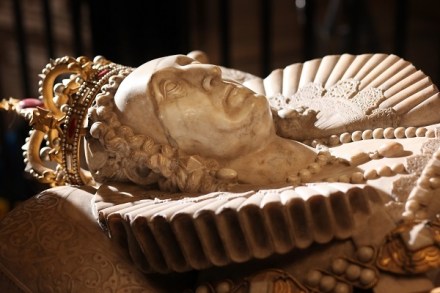
from Delia When winter snows upon thy golden hairs, And frost of age hath nipped thy flowers near; When dark shall seem thy day that never clears, And all lies withered that was held so dear;    Then take this picture which I here present thee, Limned with a pencil not all unworthy; Here see the gifts that God and Nature lent thee; Here read thyself, and what I suffered for thee.    This may remain thy lasting monument, Which happily posterity may cherish; These colours with thy fading are not spent; These may remain, when thou and I shall perish.    If they remain, then thou shalt live thereby;    They will remain, and so thou canst not die. Nicholas Hilliard’s miniature portraits are bewitchingly beautiful.

Review – Shall We Gather At The River, by Peter Murphy

Shall We Gather At The River is a book of unfortunate endings — the stories of nine suicides hang from a plot-line that tells of a freak flood in the small Irish town of Murn. Fittingly for a book preoccupied with endings, we begin at the end: our hero, Enoch O’Reilly, is sitting in his father’s basement and staring down the barrel of a gun. The narrative then leaps backwards by 28 years to give us Enoch as a child in that same basement, stumbling upon his father’s old radio equipment and finding, in that forbidden room, a radio that channels an Old Testament sermon delivered in such rousing style that Enoch feels compelled by the power of Elvis Presley (who appears to Enoch in a dream that night) to ‘steal the preacher’s fire’.

Do you wish you were far from the madding crowd?

From ‘Elegy Written in a Country Churchyard’ 'The curfew tolls the knell of parting day, The lowing herd wind slowly o'er the lea, The ploughman homeward plods his weary way, And leaves the world to darkness and to me. Now fades the glimmering landscape on the sight, And all the air a solemn stillness holds, Save where the beetle wheels his droning flight, And drowsy tinklings lull the distant folds; Save that from yonder ivy-mantled tower The moping owl does to the moon complain Of such as, wandering near her secret bower, Molest her ancient solitary reign. Beneath those rugged elms, that yew-tree's shade, Where heaves the turf in many a mouldering heap, Each in his narrow cell for ever laid, The rude forefathers of the hamlet sleep.

Teju Cole meets V.S. Naipaul

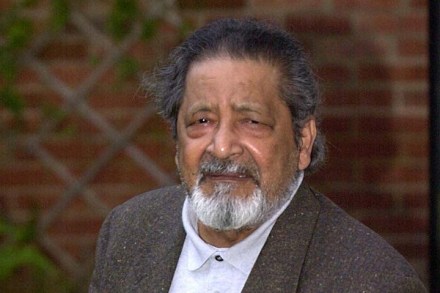
If you have five minutes to spare this evening, read Teju Cole's account of meeting V.S. Naipaul. Writing from the covetable position of a column in the hallowed New Yorker, Cole is man enough to admit feeling awkward when he meets Naipaul, and, worse still, when he is addressed by him as an equal. It’s a winning approach, candid rather than lovey, and both men emerge well from it. Cole’s portrait of Naipaul is intriguing. Cole is not an unthinking admirer: he acknowledges that Naipaul has been ‘so fond of the word “nigger,” so aggressive in his lack of sympathy towards Africa, so brutal in his treatment of women.’ He appears to be honest, touchingly so.

A tale of two Smiths: Zadie Smith and The Smiths

It is lit-fiction season: that time of the year of when the premier novelists of the age dominate the market. Ian McEwan, Pat Barker, Zadie Smith, Sebastian Faulks and Rose Tremain all have new books out, and Salman Rushdie’s much anticipated memoirs are to be launched this week, so many newspapers are devoting themselves to regurgitating stale observations about The Satanic Verses ahead of the main and keenly guarded event. Of the new books, Zadie Smith’s NW is garnering the most plaudits, or at least that seems to be the case.

Across the literary pages: Of life, love and death

John Banville's reputation as a master stylist and serious novelist wasn't done any harm by the weekend reviews for his latest book Ancient Light. Familiar riffs on his usual leitmotifs guaranteed the standard standing ovation. 'It is written in Banville's customary prose, rhythmic and allusive and dense with suggestive imagery,' Alex Clarke commended in the Guardian. While Patricia Craig in the Independent applauded that: 'Many of John Banville's customary concerns are present in this bedazzling new novel: memory and invention, questions of identity and make-believe, names and aliases, transgressions and transformations'. More unexpected however — given the rather dour face he sports for photo-ops - was his rather fun interview in the Guardian.

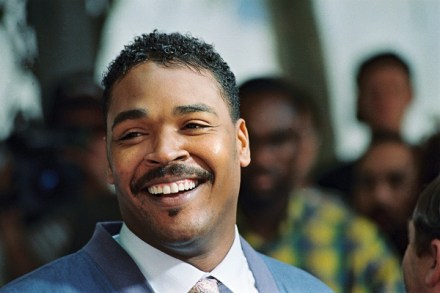
Rodney King and compensation

The late Auberon Waugh advised his readers to reflect on the case of David Flannigan when considering the munificent compensation often awarded to people after awful events. Mr Flannigan had been estranged from his parents for two years before the night of 21 December 1988, when Pan Am Flight 103 fell onto the family’s house in Lockerbie, killing all but one other member of his immediate family. Through a thoughtless, inhumane, process of compensation Flannigan (who had been a spray-painter) became a millionaire. Just over five years later, at the age of 24 — after fast cars, drink and drugs — he was found dead at a beach resort in Thailand.   I thought of Flannigan again this morning when reading reports of the death of Rodney King.

It concentrates the mind wonderfully

It’s odd, but we mostly go about as if death were optional, something we could get out of, like games at school. Philip Gould, in When I Die, admits that he never gave it much thought. Then he got oesophageal cancer. He had a horrible operation, got a bit better. Then the cancer came back. He had chemotherapy, more surgery, a lot of pain. And it came back again: ‘I knew then that the game was up.’ Having worked as Tony Blair’s strategist, Gould at first imagined his illness as another kind of campaign. But once his death became certain, he underwent a remarkable change: The unvarnished certainty that you are going to die within a certain period of time is an immensely powerful thing.

How dangerous is cycling?

Am I dicing with death every morning and evening? The Times would say so. I cycle to work, and, for the past two days, the Times has given over its front page to a campaign on cycling safety. The campaign is in most respects commendable — I like the specific proposals — but it emphasises the urgency of the issue by giving a very grim impression of the risks that cyclists face. ‘Britain’s riders are paying with their lives when they take to the roads,’ we are told. In fact, a bicycle is far from being the most dangerous way to get around. On the measure the Times uses — death rate by distance travelled — pedestrians are more likely to pay with their lives than cyclists are.

Lord Falconer has the wrong ideas about assisted suicide

So Lord Falconer’s commission, funded by Sir Terry Pratchett, has concluded that there is a ‘strong case’ for assisted suicide, has it? Well, there’s a thing. Given their previous form and the composition of the committee, it would have been remarkable if they’d decided that, on balance, the law works perfectly well — which is what one of their witnesses, the Director of Public Prosecutions, Keith Starmer, said. On the whole, partly because some anti-euthanasia bodies refused to participate and partly because people with a blatant opposition to assisted dying weren’t invited to sit on it, the composition and conclusions of the body reflected the opinions of those who set it up.

Whither North Korea after Kim Jong-il’s death?

The photographs and video footage show North Koreans weeping in their hundreds at the news of Kim Jong-il's death. But the departed leader, immortalised by Team America as a song-prone loner, remained a mystery to both his people and outsiders alike.   He came to power after his father, North Korea's founder Kim il Sung, died in 1994. Reliable biographical information about him is scarce. He rarely appeared in public and his voice was seldom broadcast. What's certain is that he spent lavishly on both luxuries and a nuclear programme, while millions of North Koreans starved. Kim Jong-il's death comes at an awkward moment.

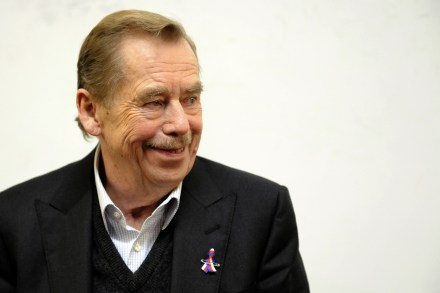
‘People, your government has returned to you!’

The playwright who became a protestor who became a president, Vaclav Havel, has died today. There is already much on the blogosphere about this Czech great, and there will be more in tomorrow's papers. But if you only read one thing connected with him, then I'd advise you make it the address he delivered to the Czechoslovakian people on 1 January 1990, which I've copied below. It was only a few days after his election as president, yet triumphalism and celebration is there little. Instead, Havel dwells on the horrors his country endured in the Twentieth Century, and — crucially — how they were permitted to come about.

Blue Night by Joan Didion

This is a raw, untidy, ragged book. Well, grief is all of those things. On the other hand, Didion wrote about the death of her husband in an iconic memoir, A Year of Magical Thinking, which apart from being raw was none of them. So she knows how it can be done.  That book was about the horribly sudden death of her husband, about shock and pain and then the confusion of bereavement and loss. But it was also a vivid portrait of the man himself. ‘One never knows when the blow may fall’, yet people have been surprisingly surprised that it fell again so quickly on Didion, when her adopted daughter Quintana, also died, a year later. But blows rain down relentlessly, not to say unfairly, on some individuals. Such as Job.

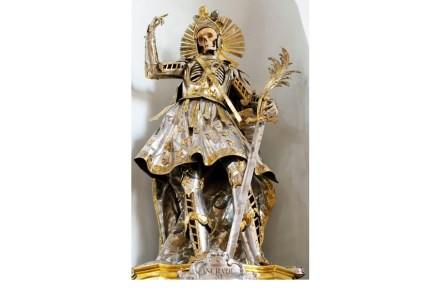
The Empire of Death: A Cultural History of Ossuaries and Charnel Houses by Paul Koudounaris

In one Capuchin monastery in Sicily, the so-called Palermo Catacombs, locals used to buy a niche where their mummified corpse would one day stand erect, clothed and on display to visitors, the way we might now buy a burial plot. Would-be purchasers would pay a visit to select their niche and stand in it to make sure it fitted. Indeed, by way of voluntary penance, some would remain there for hours, contemplating their end. At the same time, in the early 17th century, a related order of nuns in Rome, the Sepolta Vive or Buried Alive sisters, would sleep in coffins and hail each other with the observation: ‘Remember sister, we all have to die’.

There With The Grace of God…

The good news is that Rod Dreher is blogging again, this time at the American Conservative; the sad news is that his sister Ruthie, pictured above with her daughter Claire, has just been killed by cancer. Rod - we email-know one another and have at least one good friend in common - has been blogging about the reaction to his sister's death. It is, as it must be, emotional, passionate stuff. There's no pressing need for me to write about this, I guess, save that blogging is most often a means of expressing frustration or unhappiness or outrage and it is not often that we - that is, people who generally write about politics or culture - pause to reflect on the greater issues, far less note how often humanity or decency prevails in even the direst personal circumstances.

The death of laughter

If you were stranded on a desert island, Ruth Leon would be the perfect companion. She is plucky, resourceful, funny, bright and indomitable: you can see just why the late theatre critic Sheridan Morley fell in love with her. And indeed he did find himself alone with her, on the mental-health equivalent of a desert island, when an otherwise fairly mild stroke seemed to ossify his pre-existing depression. For four years he spent as many hours a day as he could asleep. When he was awake he was either weeping or complaining. I lost count of how many times the word ‘whining’ appears in this book. By her own admission, Leon does not carry ‘the Mother Teresa gene’.

Claude Choules RIP

As the nation heads for the ballot boxes today, it might spare a moment of reflection for Claude Stanley Choules. The last surviving combat veteran of the first world war, born 110 years ago in Worcestershire, died earlier this morning at his residence in Australia. It leaves Florence Green — who served in a non-combat role as a mess-waitress — as the only remaining veteran of that great and terrible conflict. No doubt, our collective memory is weaker for Mr Choules' death. But our country is stronger, more secure, for his life. An election, by whatever voting system, seems an apt sort of memorial to his passing.

Death of the Author

The death of the Polish-born British novelist Joseph Conrad is the central event of David Miller’s debut novel. The death of the Polish-born British novelist Joseph Conrad is the central event of David Miller’s debut novel. A reimagining of Conrad’s final days, Today explores the nature of bereavement. Within the novel’s confines, Conrad exists simply as a character — a dying man whose profession has been that of a writer and whose working life has necessitated the presence of a secretary, Lillian Hallowes, who, up to a point, offers the reader a commentary on the novel’s happenings. Miller attempts no assessment of Conrad’s work, his literary status or psychology.

Perchance to dream

This book reads like an interesting after- dinner conversation between intelligent friends. That said, it is a rambling conversation, and although it is extremely entertaining, it does not add up to much. Its ostensible subjects are two instances of scientific intelligence being brought to bear on the possibility of defying, or surviving, death. In the first case, John Gray investigates those, such as Freddie Myers and Henry Sidgwick, who formed the Society for Psychical Research. In the second instance, Gray tells again the bizarre story of the cult of Lenin, and Leonid Krasin’s belief that, if Lenin’s body could be kept in a state of cryonic suspension, there might dawn a glad day in which Comrade Lenin could return to life.