Culture

Can we no longer distinguish between an evangelical Christian and a jihadist?

Is it possible that London commuters are now unable to tell the difference between the cry of God is Great, Allahu Akbar - a sentiment that unfortunately accompanies every IS atrocity - and the actual Bible? It seems like it from the reaction on the Shepperton to Waterloo service at 8.30am yesterday. As one report put it, 'a man with a rucksack began reciting what seemed to be passages from the Old Testament. He apparently declared homosexuality and pre-marital sex to be a sin.' Or as one commuter put it, 'Some nutter starts reciting verses from the Bible… and causes such panic that some people have forced open the doors and jumped onto the tracks. He recited lines about homosexuality and sex outside marriage being a sin. God gave his only son for our sins etc.

Can we trust supermarket brands?

When you pick up a packet of meat from the supermarket and it says 'Willow Farms', what is the image you conjure up in your mind? Do you imagine the chickens reared on this farm happily pecking around a thatched cottage, searching for grubs in a field that rolls gently down to a river flanked by weeping willows? Of course you don’t. You’re shopping in Tesco and you’re not that stupid. The country’s biggest retailer (and the UK’s biggest private sector employer) is not buying any of its fresh produce from small-scale farmers, especially not its chickens. Some of you, however, might reasonably expect that Willow Farm exists. That it has a geographical presence -- even if it is on an industrial scale. Even that is a little optimistic.

Patronising working class students won’t make universities more inclusive

From Educating Rita and The Young Ones to the more recent Fresh Meat, social class differences among university students provide perennial dramatic inspiration. Working class students - what with their funny accents, strange diet and odd clothes - are simply a great source of comic relief. Now there’s a new stereotype for scriptwriters to get their teeth into: chicken. Fried chicken to be precise. Apparently the working class just can’t get enough of it. And luckily the working class students at Goldsmiths, University of London, have defenders on hand to ensure this cultural trait is neither mocked nor appropriated by their more middle class peers. Working class students: you can relax. Your fried chicken-habit is safely yours, and yours alone.

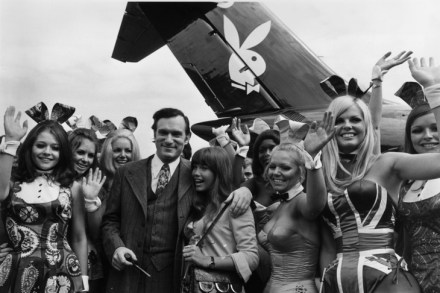
Hugh Hefner was the king of soft porn – and luxury living

I got to know Hugh Hefner quite well when I lived in LA in the nineties and was a fairly regular visitor to the Playboy Mansion. As the Times of London's Hollywood Correspondent, I was a regular on the guest list for The Playmate of the Year awards and occasionally was asked over for one of his supper evenings in his private cinema – with drinks served by waitress-style bunnies. During one Playmate of the Year awards in 1992, I wrote a piece for The Spectator about covering the LA riots from his study as the city went up in flames. Hefner's life philosophy was that 'Life is too short to live somebody's else dream'.

With average house prices now eight times the average wage, affordable housing remains a dream

Housing – and specifically the dearth of reasonably priced housing – is an issue that crops up again and again in the political conversation. Young people are being priced out of the housing market; even where new housing is being built, very little of it could be classed as ‘affordable’. So today’s news that the average house price is now eight times the average wage will, probably come as little surprise. House prices have been increasing exponentially over the last few decades; in 2000, the average house was 3.96 times the average income, and even since 2007 the average house price has increased by 19%. The fact that it isn’t a surprise doesn’t mean that it isn’t something we should be concerned about, however.

Is justice blind to the charms of Oxbridge-educated young women?

Last December, Lavinia Woodward threw a laptop at her boyfriend and stabbed him in the lower leg with a breadknife, and injured two of his fingers. She then tried to stab herself with the knife before he disarmed her. For unlawful wounding, this medical student at Christchurch Oxford, could have got a three-year prison sentence; instead she got a 10-month sentence suspended for 18 months on Monday. The judge, Ian Pringle, when he first heard the case, observed that a custodial sentence would harm her career. Quite. And he declared, as he handed down the suspended sentence, that there were 'many, many mitigating factors' in the case, and the injuries inflicted were 'relatively minor'.

Why artists should stay off Question Time

Do you have to be a boring lefty to enjoy the films of Ken Loach? The reason I ask is, the British Film Institute have just rereleased three of Loach’s finest films on DVD, and though I loved them when they first came out, when I sat down to watch them again, after twenty years, my heart sank. Why? Because nowadays, when people mention Ken Loach, I don’t think of his masterpieces like Kes (one of the greatest British movies ever made) so much as his dreary appearances on political discussion programmes like Question Time. Ken Loach is a socialist filmmaker – whatever that means. If you’re a socialist, maybe that makes his movies even more enjoyable. Who knows? But what if you’re not a socialist, or even particularly left wing?

How ‘safe spaces’ make life harder for people with mental illness

Oh, how wonderfully hilarious: Labour conference has a safe space. It's exactly what you'd expect from a Party now led by eccentric former rebel backbenchers who'd probably still rather be making jam in peace in Islington, isn't it? I ventured into the room marked 'safe space' in the Brighton Centre this week, half expecting to find a group of Blairites huddled in one corner and a group of members who just couldn't cope with the idea of a debate on continuing single market membership in the other. Disappointingly, it was just a bare room with a few chairs and an odd hatstand which seemed to be brandishing a bin.

If we’re all going to have to make the move to low-emissions vehicles, is now the time to do it?

How much time would you say you spent in your car per week, on average? Of course it’s something that varies hugely from person to person, but I’d put money on the fact that it’s more time than you might think. Recent research shows that the average UK driver spends 8 hours a week in their car, which works out at 18 days per year. That’s just the average, though; in the North East, ten per cent of those questioned said they spent over 20 hours per week in their car, while people in London were most likely to drive for under an hour a week. Naturally, the more time you spend in your car, the more important it is what car you choose. At the same time, if you’re spending more time in your car, this means that you’re also spending more money on fuel.

Is America’s ‘despair epidemic’ about to arrive in Britain?

However stressful and bad things get for a parent of young children, there is always one thought that puts it all in perspective - just wait until they're teenagers and they're calling you up at 3am asking for a lift from a nightclub in New Cross. So reports like this one, showing that one in four adolescent girls suffer from depression, are bound to add to that gnawing feeling of dread. Firstly the caveats - any statistic that claims '1 in such and such' suffers from this, or is a victim of this, should be treated with scepticism. Depression is also an ill-understood term, a medical diagnosis widely applied by non-medical experts. But it's safe to say that a lot of people are unhappy, and in particular a lot of young women.

Are old white men really to blame for climate change denial?

Funnily enough, you don’t come across too many pieces in the Guardian blaming black people for crime or women for bad driving. The newspaper would perhaps consider itself a pioneer in trying to drive out racial and gender stereotypes from daily life. It seems a different matter, though, when it comes to the inadequacies of white men, or, more specifically, elderly white men, to throw in a bit of ageism as well. An extraordinary piece in today’s Guardian tries to link what it calls 'climate denial' to race, gender and age.

Lionel Shriver joins The Spectator as a regular columnist, starting this week

We at The Spectator are delighted to announce that Lionel Shriver is joining us as a columnist. As regular readers will know, she has written a few diaries for us and is one of the very best writers on either side of the Atlantic. She’s a hugely successful novelist but what marks her out as a journalist is her understanding of the currents of life and politics. Her writing has all of the qualities that Spectator readers most admire: originality of thought, elegance of expression, independence of opinion. Her first piece is a brilliant evisceration of the movement against historical statues. All of us in 22 Old Queen Street are thrilled that her new column starts this week: she will alternate with Matthew Parris.

Multiculturalism is Europe’s new faith

Never mind the terrorists, chaps, London will just keep calm and carry on. We'll put the kettle on or defy them by going out and getting pissed, because life will just continue as normal. That's the fitting response to terrorism, and it won't affect our lives. Except it will. It will affect your life when you're queuing endlessly to be searched by security in every public building. When you pass by bollards and barriers put in place to stop mass vehicular homicide. The nervousness you'll feel whenever you're on the Tube or when your child gets on public transport in the morning. As the attacks increase, you'll hear more and more anecdotal stories about acquaintances or Facebook friends or even actual pals caught up in these events.

Time and technology are overtaking the arguments for Hinckley Point

The price of offshore wind power has halved, making those giant inshore turbine arrays we love to hate look competitive with new nuclear power for the first time. The headline number in this story is £57.50, which is the guaranteed electricity price per megawatt hour bid by two windfarm ventures in the government’s latest ‘contracts for difference’ subsidy auction. Both due for first delivery in 2022-23, these projects at Hornsea on the East Yorkshire coast and Moray East off the north of Scotland, are between them theoretically capable of powering 2.4 million homes. Just two years ago, windfarms were bidding up to £120 per megawatt hour in comparable auctions; their slashed pricing today can be set alongside the £92.

The age of the unicorn question

I’ve been in Los Angeles for the last week, and it takes a special set of occurrences for someone to return to the UK from LA and think that Britain is getting a bit weird. Yet we appear to have managed it. While I was away there was the row about Jacob Rees-Mogg expressing his adherence to the Catholic church’s views on social issues (over which he has no legislative control). Then there was a row about whether it is bigoted to see any differences between boys and girls, and whether children can or should ‘choose’ which gender they are.

The most half-baked thing about the anti-transgender Christian couple isn’t their approach to gender

We live in a society with a tendency towards liberal intolerance, in which the fury of the mob turns on anyone who dares hold a different belief to the mainstream particularly if they are from an unpopular group such as conservative Christians. But we also live in a society where some people who hold non-mainstream beliefs don’t feel they really have to think them through. Last week, I wrote about the difference between directing scorn at Jacob Rees-Mogg for holding unpopular beliefs which he is happy to justify, and directing scorn at those who hold unpopular beliefs which they aren’t prepared to debate in public, possibly because those beliefs are in fact half-baked.

The Last Night of the Proms is still an exceptional British party

Wouldn’t you just know it: there’s another row about Last Night of the Proms. Apparently the Scots in their open air Last Night weren’t given the opportunity to sing Jerusalem and Rule Britannia, whereas the Welsh and Northern Irish were. Which just adds to the popular perennial row about EU flags versus Union Jacks at the event. It’s all a bit baffling if you were actually there. I was, and all my little prejudices about it were well and truly seen off. It was the most joyful affair.

The Spectator’s 48-year-old intern shows why it’s time to dispense with CVs

We at The Spectator don’t ask for CVs when recruiting interns so we had no idea that our last one of the summer, Katherine Forster, would be a 48-year-old mum-of-three from Yorkshire. Our aptitude test is intended to draw the most promising talent from anywhere. But her writing up her story for the magazine has caused a minor sensation. She has been on the BBC three times and has been the subject of the lead Evening Standard diary story and is interviewed in p23 of today’s Sunday Times (who took the above photo). She’s an inspiring person with a simple question: why, aged 48, shouldn’t she roll the dice again? If we’re all going to work until 70, that’s plenty time to learn a new trade.

‘Bigot bashing’ is the fashionable new therapy for liberals

Were I to wake up one morning experiencing sudden doubts over my sexuality I don’t think I would turn to Mike Davidson, still less the Mountain of Fire and Miracles Ministries, which has been accused of offering a 'cure' for homosexuality, or anyone else offering gay cure therapy, gay conversion therapy or whatever else people call it. The very names hint to me of quackery, of people wasting their money on pseudo-scientific mumbo-jumbo. But then I am inclined to put much psychotherapy into the same category, along with all the self-help books imploring us to create a better self. But does that mean I want to ban any of them above? Not at all. If people want to pay someone to try to change aspects of their personality that is their own free choice.

Farewell Graydon Carter, Vanity Fair magazine’s very own Becky Sharp

Graydon Carter will be delighted by the amount of coverage his departure from Vanity Fair has received. Having edited the magazine for 25 years, he is leaving at the age of 68. The New York Times has devoted the amount of space to the story it would normally give to a departing Secretary of State. It would be inaccurate to describe Graydon as the last of his kind -- Anna Wintour is still at the helm of Vogue -- but there are unlikely to be many more magazine editors like him. He has homes in New York and Connecticut, part-owns two restaurants, hosts the most glamorous party in Los Angeles on the night of the Oscars and has succeeded in crossing the threshold from cynical chronicler of the world of celebrity excess to eager participant.