Culture

The violent product of identity politics

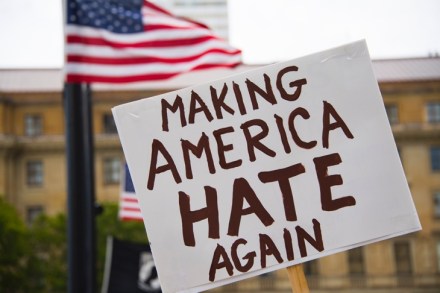
Identity politics is turning violent. It’s been brewing for a while. Anyone who’s witnessed mobs of students threatening to silence white men or Islamists gruffly invading the space of secular women who diss their dogmas will know that, as with all forms of communalism, identity politics has a menacing streak. And at the weekend, in Charlottesville, Virginia, it blew up. That ugly clash between blood-and-soil white nationalists and people crying ‘black lives matter’ is the logical outcome of the identitarian scourge, of the relentless racialisation of public life. Charlottesville was both shocking and unsurprising. It was shocking because here we had actual Nazis, waving swastika flags, in 21st-century America, the land of the free. That is deeply disturbing.

Why Scotland’s rural communities need grouse shooting

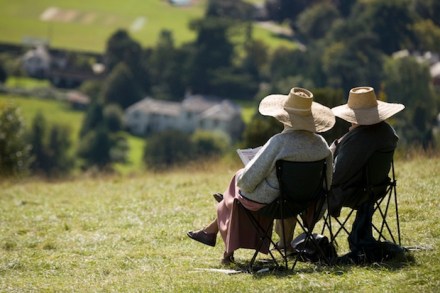
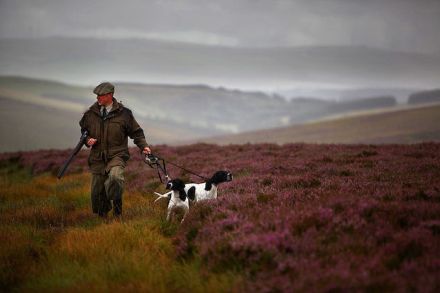
Tomorrow, 12 August, is the 'Glorious Twelfth': the official start of the grouse-shooting season. This normally means plenty of tweed and guns heading north, in cars, in planes, and on the railways. This year, however, there's something of a spanner in the works. Just weeks before the start of the season, ScotRail announced that they would be banning all guns on their trains. This is despite the fact that unloaded, properly licensed firearms are allowed on trains, as long as they are carried ‘in accordance with the law’. The sticking point here, however, is the part that says ‘with prior permission of the train company’.

Beyond the stethoscope: transforming the NHS with new technology

For technology manufacturers, healthcare is already big business, and, with an ageing population increasingly comfortable with technologies that would’ve been unthinkable even a decade ago, the opportunities to innovate are only going to increase. The Future Health Index, a global report commissioned by Philips, supports the fact that it is not just the UK’s younger generation that are embracing these technologies. However are these products – from popular or trendy FitBits to state-of-the-art imaging equipment – really going to revolutionise the country’s medical care? And will the NHS require a head to toe change of ethos to accommodate them?

The gay movement’s righteous fury belongs in the past

The Pride Wars are now a fixed feature of LGBT politics. Lefties attack the event for being too corporate and apolitical. Tories, not always made welcome by other marchers, complain it’s too political and not inclusive of ideological diversity. You could perform a few stonings beside the Queers for Palestine stall and still be more welcome than Jews waving Stars of David. Intolerance never went away, it just rebranded as intersectionality. Emma Little-Pengelly, the MP for Belfast South, sent a tweet to coincide with Belfast Pride on Saturday: 'Best wishes to all my friends & constituents celebrating today - all should be able to live a proud life free from hate, abuse or persecution.' So... what’s the big deal? Very progressive statement; more of this, please.

The Google ‘anti-diversity’ memo isn’t anything of the sort

Earlier this week, a technology website published an internal memo written by an employee of Google called James Damore criticising the company’s efforts to diversify its workforce. This is where-angels-fear-to-tread territory. The America technology sector has come under heavy fire for a number of years for failing to hire and promote enough women and Google is currently being investigated by the US Department of Labour for allegedly under-paying its female employees. But what makes this memo particularly controversial is that Damore takes Google to task for discriminating in favour of women. He begins by saying he is pro-diversity and accepts that one of the reasons women don’t constitute 50 per cent of the workforce in the tech industry is because of sexism.

Would you really want to be a farmer in 2017?

What does being ‘a farmer’ mean to you? For those that have experienced it, the job – or lifestyle, really – the answer might be early mornings, long days, and little pay. Others imagine farming to be more like living the good life. Perhaps that's the reason why a recent report, commissioned by the Prince’s Countryside Trust, revealed that twenty five per cent of adults questioned quite like the sound of giving up their day job and taking up farming instead. The economics of the profession might make them think again, however. The most startling fact from the report is the gap between the general public’s estimates of a farmer’s income, and the reality.

How alt-right was Roman Britain?

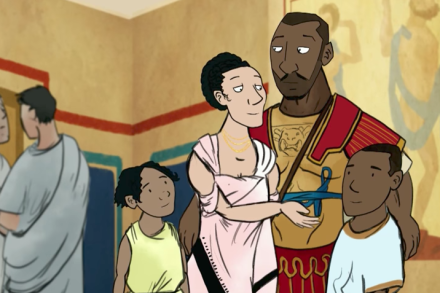
Over the weekend I, like a good dozen others, endured the Twitter rage of Nassim Nicholas Taleb, an old man who rolls around like a drunk trying to prove he’s still the toughest hombre at the bar. He’s the sort of guy who screams at the Cambridge classicist Mary Beard: https://twitter.com/nntaleb/status/892736047519608833 He’s the sort of guy, who, when I and others objected that bragging about his citations was a ‘crass’ way to behave, cried: https://twitter.com/nntaleb/status/893079278870548481 He’s the sort of guy who when I replied: https://twitter.com/NickCohen4/status/893098347875246082 Can come back with: https://twitter.com/nntaleb/status/893807860278317057 He’s that hard.

Tina Stowell is right – going tieless could magnify class division in parliament 

John Bercow’s decision to allow MPs in the House of Commons to dispense with ties has been hailed by some as a great liberation, and by others as an insult to tradition cast by a man who ought to be wearing a wig. But Tina Stowell, who joined the government as a secretary and ended up Leader of the House of Lords, has a different view: that ties (and, indeed, standard dress code) are a social leveller. She writes on her blog:- 'As someone without a degree who travelled a long path myself, I can see now that one of the most insidious ways those of us in powerful positions have diminished opportunities for non-graduates over the last 20 years is by undermining the importance of some standards hard-working people of all backgrounds used to share….

The pill-popping future of work looks terrifying

In Aldous Huxley’s Brave New World, a dystopia rules mankind in a way that renders the masses compliant consumers. The apex of medical mind control in the book is soma: a tranquilliser offering 'a holiday from reality’. Huxley describes how its users' ‘eyes shone (and)...the inner light of universal benevolence broke out on every face in happy, friendly smiles’.  Huxley’s vision was intended as a nightmare but PricewaterhouseCoopers appear to have taken it as an inspiration. Their new report, Workforce of the Future, predicts what the labour market could look like in 2030. As you might expect, automation takes the starring role and a survey of 10,000 workers across the world presents mixed opinions.

In defence of Neymar’s transfer fee

A season ticket at the Parc des Princes, home to Paris Saint-Germain, will set you back somewhere between £336 and £2,116, with individual tickets ranging from £25 to over £100, depending on how good your eyesight is. But this is a small price to pay in order to watch footballing luminaries like Edinson Cavani, Ángel di María and Dani Alves light up a league that has long been the sickly cousin of the European superpowers. Indeed, if you’re a PSG fan, this cost will be nothing compared to the phenomenal resurrection, started in 2011, of a European superpower that appeared to be in terminal decline.

Last summer, feminists defended the burkini. Will they now defend the bikini?

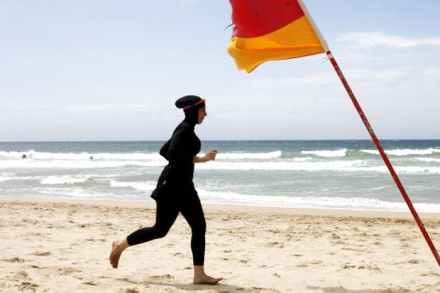
If there was a buzzword from last summer then it was surely 'burkini'. The media got its swimsuit in a twist over France's decision to ban the Islamic garment from its beaches. Slow-witted Anglophone columnists – many of whom have a curious predilection for insulting the French – lapped it up and enthusiastically portrayed Islam as the victim of Gallic oppression. Those trusty custodians of liberal values, the Guardian and the New York Times, got particularly worked up, the former declaring in an editorial that 'women's right to dress as they feel comfortable and fitting should be defended against those coercing them into either covering or uncovering.

Was The Times duped over a gay wedding announcement?

Last week the births, marriages and deaths column of the Times announced an unusual marriage. Lord N.J. Blackmore had married Lord M.T.D. Hiscutt. The ceremony took place in the Palace of Westminster. ‘Marky’ was attended by five women/girls, said the announcement. Nick had two best men. Somebody ‘acted as page boy’. The honeymoon will be spent in Kenya ‘…with Benidorm delayed’. I had not previously known this, but members of the public can be legally married in Parliament — in the Members’ Dining Room, for example (£2,000) — so my original hunch that the notice was a hoax must have been wrong. I wondered, therefore, why the first-ever same-sex marriage of two peers had not made a news story.

Down – if not out – in Paris

Virginie Despentes remains best known in this country for her 1993 debut novel, Baise-Moi, about two abused young women who set off on an orgiastically murderous road-trip round France. In 2000, she became notorious when she collaborated on the hardcore film of the book, which ran into certification problems, with Alexander Walker fulminating about the complete collapse of public decency. Despentes has now published some 15 novels altogether, celebrated in France as grunge or ‘trash’ fiction — and a polemical, erratically feminist, memoir, King Kong Theory, describing her own experience of rape and prostitution, and calling for a new aggression in female sexuality.

Don’t panic! There’s more than enough sperm to go around

Getting agitated, are you, about declining sperm counts? The Guardian called the fall in numbers 'shocking'; for the Telegraph, never one to underplay these things, 'Sperm count collapse could spell doom for humanity'. Really? It feels like one of those stories about species extinction, helped by the undeniable resemblance of spermatozoa to tadpoles. You may have noticed that women are markedly less agitated about all this than men, at least the three I spoke to. For once – hah – it’s not women who have all the angst about procreation. All the Bridget Jones business about body clocks, biological sell-by dates and egg freezing was formerly the preserve of women. Now men can share the grief…welcome, progenitors.

Why is there so much naked flesh on TV?

The other day I frowned at Love Island. I dislike adding (in my tiny way) to such shows’ publicity, but sometimes the obvious moral objection must be made, when sexuality is tackified, and when other commentators queue up to say what kitschy fun it is. The worldly pundit smiles at my earnestness: ‘It’s the culture we live in, it goes with cultural freedom. Why bother disapproving?’ I picture a cool old cove like Simon Jenkins saying this. ‘On the other hand, maybe we do a need a new Mary Whitehouse, just to spice life up a bit,' he smirks. Well, I want to broaden my frown to another show, Channel 4’s Naked Attraction, and I want to step up the earnestness.

Richard Dawkins is dragged into America’s tedious free-speech war

Anyone who has followed the free-speech wars in America over recent years will know that by now, basically, nobody can speak anywhere. Especially at centres like that one-time home of free speech, Berkeley, California, you now cannot speak in public if you’re a man or a woman, if you’re gay or straight and if your skin is white or not. Now to the great list of categories of people who should not be allowed to speak in America we can add scientists. Richard Dawkins is, by any standards, one of the most famous scientists on the planet. His books have brought writing about science to a world-wide audience.

As Boots discovered, the morning-after pill is now a lifestyle choice

Well Boots has climbed down in a battle it was never going to win against Twitter, the mouthy MP Jess Philips and the abortion providers, BPAS, about giving out the morning-after pill ad lib, and as cheap as chips. But in what way, exactly, was Boots 'infantilising women', as Ms Philips had it, by being reluctant to make it as accessible as Nurofen? It all began when BPAS wrote to Boots’ head pharmacist, Marc Donovan, pointing out that generic versions of the Levonelle brand of emergency hormonal contraception can be bought cheaply by pharmacies and can retail for as little as £5.50 in France. By comparison, Boots charges £26.75 for its own version.

Welcome to the herd, UnHerd

A new star is born today into the centre-right blogosphere: UnHerd. The latest brainchild of Tim Montgomerie, founder of ConservativeHome, it has launched with a mission statement to 'dive deep into the economic, technological and cultural challenges of our time'. Its launch blogs show a wide mix of subjects: a YouGov poll revealing the low regard with which the public view traditional news media, Peter Franklin on why we should get ready for Prime Minister Corbyn, James Bloodworth on the crash ten years on and Graeme Archer on how meat-eating may come to be seen as barbaric by our grandchildren. UnHerd is also marked out by its financing model. It has no paywall; all articles will be free to read with the costs covered by an endowment from Sir Paul Marshall.

Single mothers, not wealthy presenters, are the real victims of the BBC’s gender disparity

There is a group of women who have every reason to feel aggrieved to learn that the BBC is paying Gary Lineker £1.8 million a year and John Humphreys between £600,000 and £650,000. But it doesn’t include Jane Garvey and Emily Maitlis, both of whom appear to be grubbing by on a little below £150,000. It is the 101,000 women found guilty last year of evading the TV licence. If you want a genuinely worrying gender disparity, forget the BBC’s highest-earners and look at the balance of people at the bottom of society who are being dragged through the courts for the non-payment of the tax. The Perry Review into the TV licence, which reported two years ago, found that 70 per cent of those prosecuted for non-payment in 2012 were women.

In defence of the BBC: a force for unity in a divided Britain

The BBC is our other national religion and like the NHS it inspires a devotional intensity that can be a little creepy. The disclosure of star salaries over £150,000 certainly brought out the worst in the Corporation's self-styled defenders. Their argument could have been designed to annoy: market dogmatists wanted to destroy the BBC because it's too successful, they say. But not so successful that it could survive without the Licence Fee - which by the way isn't a tax and at £147 is actually great value for money. If anything, we should be grateful the BBC deigns to broadcast to us.