China

Britain’s national security must not be sacrificed to net zero

From our UK edition

Those who, like myself, experienced life behind the Iron Curtain understand instinctively that centrally planned economies beholden to an ideology do not bring benefit to the majority of the population on whom they are imposed. A few top-level individuals prosper, but the citizen finds himself and his aspirations crushed by the diktats of central government. The state itself is similarly confined by a set of ideas which are presented as self-evident truths which constrain its policy--making and exclude challenge. That Iron Curtain model describes pretty accurately the UK’s energy policy, driven as it is by the ideological pursuit of net zero and the diktats required to implement it.

What my pyjamas taught me about China

From our UK edition

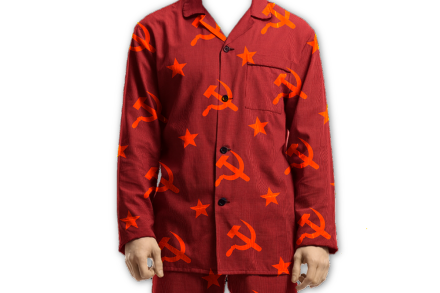
About seven years ago, I bought two pairs of pyjamas, one British, the other Chinese. At the time, they seemed of roughly similar quality, the important difference being that the Chinese ones were half the price of the British. Given that they have the same ‘lived experience’, I can make a direct comparison. The British ones, by Peter Christian (‘gentlemen’s outfitters’ accompanied by an image of two hares boxing), show few signs of the passing years. Their reddish colour with green and yellow stripes holds fast. There is very little wear and no tear at all. The Chinese pair (labelled ‘sleepwear’) tells a different story – the drawstring disappeared, the elasticated waist (which the British one wisely eschews) decayed, the blue checks faded, the cotton thinned.

China has quietly taken over America’s food supply

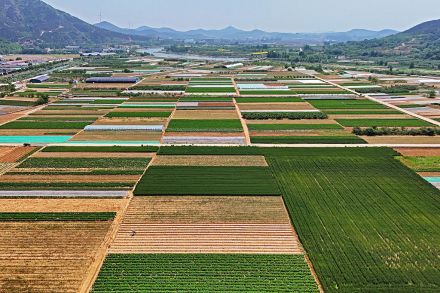
For all the talk about artificial intelligence and quantum supremacy, the fate of civilizations still depends on breakfast. ChatGPT can’t grow corn. Empires rise on stomachs as much as on silicon. And America’s food system – long dismissed as safe and self-sufficient – has quietly become a front line in the US-China rivalry. We act as if lunch is inevitable, but Beijing knows that food is power. A new report from the America First Policy Institute should wake us up. Washington long treated agriculture as a post-political space where globalization could do no harm, and was therefore happy to let much of the nation ship its growth to China. As Ambassador Kip Tom and Royce Hood argue, China has thus taken over critical pieces of the US agricultural system and food supply.

china america food supply

Gavin Newsom flies to UN climate summit

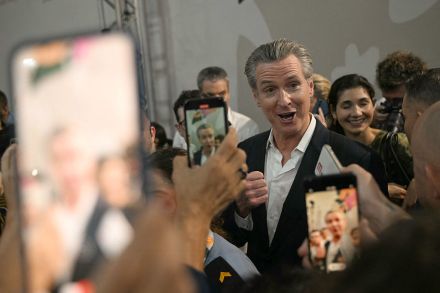
“We’re in Brazil,” California Gavin Newsom said. “One of our great trading partners. One of the world’s great democracies. I mean, hell, you need rare Earth minerals, this is the country we should be engaging with. Instead, middle finger with 50 percent tariffs. That’s shameful.” That’s certainly a point to argue, but the question is why, exactly, was Newsom in Brazil, telling the gathered at a UN climate summit that the Trump administration had “disrespected” them? “I’m here in the absence of leadership of Donald Trump," he told a Sky News reporter. “He’s abdicated responsibility on a critical issue. I’m here to show up on behalf of my country. I’m here to showcase California’s leadership, dominance in the low-carbon greenco space.

Newsom
prince

Will the Andrew formerly known as prince appear before Congress?

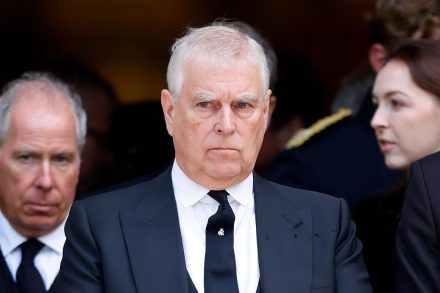
Amidst all the ceremony and gravity of Britain’s Remembrance Day service on Sunday, one salient fact could not be ignored. The King has long talked of his desire for a “stripped-down monarchy,” and now he has his wish. The only male figures from the Firm who were out on show alongside him were the Prince of Wales and Prince Edward, who together had the effect of making the royals look a rather paltry selection compared to the grander gatherings of the past. We all know about Harry, but although some would like to see him, too, stripped of his royal title, Montecito’s second most famous resident continues to be able to refer to himself as a prince.

China is holding the West to ransom over rare earths

China’s naked weaponization of rare earths brings to mind Mao Zedong’s "four pests" campaign, the old tyrant’s fanatical effort to exterminate all flies, mosquitoes, rats and sparrows, which turned into a spectacular piece of self-harm. Sparrows were always an odd choice of enemy, but Mao and his communist advisors reckoned each one ate four pounds of grain a year and a million dead sparrows would free up food for 60,000 people. The campaign, launched in 1958, saw the extermination of a billion sparrows, driving them to the brink of extinction. But the sparrows also ate insects, notably locusts, whose population exploded, and the ravenous locusts wreaked far more damage to crops than the sparrows ever did, hastening China’s descent into the deadliest famine in human history.

ian williams china rare earths

China is holding the West to ransom over rare earths

China’s naked weaponisation of rare earths brings to mind Mao Zedong’s ‘four pests’ campaign, the old tyrant’s fanatical effort to exterminate all flies, mosquitoes, rats and sparrows, which turned into a spectacular piece of self-harm. Sparrows were always an odd choice of enemy, but Mao and his communist advisers reckoned each one ate four pounds of grain a year and a million dead sparrows would free up food for 60,000 people. The campaign, launched in 1958, saw the extermination of a billion sparrows, driving them to the brink of extinction. But the sparrows also ate insects, notably locusts, whose population exploded, and the ravenous locusts wreaked far more damage to crops than the sparrows ever did, hastening China’s descent into the deadliest famine in human history.

How to survive a Chinese banquet

When heading to China on a business trip, I was somewhat bemused to be warned about the banquets I would be attending. Do not sit next to the host, I was told. I was to find out why. Learning the rituals of banquets is an essential part of doing business in China. I was treated to at least one every day on a ten-day trip around the country – and sometimes two or three. There is no such thing as a casual business lunch. Any meal will turn into a semiformal event held in a private room and hosted by the most senior person in the organization. The meal starts slowly, with a few rather unappealing cold dishes laid out on a lazy Susan that sits on a round table, though initially no one sits down.

chinese banquet

Trump plays battleships

The US Navy retired its last battleship 19 years ago, the grand warship’s devastating firepower deemed surplus to requirements in the new war on terror. But the era of Great Power conflict has now returned with storm clouds gathering between the US and China. And with them the old warhorse bristling with guns, the battleship, is facing a call back to action. President Trump has said the battleship will come back as the centerpiece of his new Golden Fleet – a cadre of warships designed to equip our navy to face the challenges of the future, not the past.In a speech to the nation’s top military brass, Trump said:“I think we should maybe start thinking about battleships, by the way.

Trump battleships

A rare earths deal is China’s gift to Trump

Donald Trump went nuclear. Before his meeting with Chinese leader Xi Jinping at an air base in South Korea, he ordered the Pentagon to test atomic weapons on an “equal basis” with China and Russia. Was Xi impressed? Probably not. While Russia expressed indignation, China did not permit itself to be distracted by Trump’s nuclear shenanigans. Instead, Beijing aimed to obtain economic concessions from a prideful Trump, which it did. From the outset, Xi sought to bring Trump down a peg, declaring that “both sides should consider the bigger picture and focus on the long-term benefits of cooperation, rather than falling into a vicious cycle of mutual retaliation.” Trump seems to have absorbed the lesson.

Trump’s Asian vacation

President Trump is meeting with Chinese Prime Minister Xi Jinping tonight, or tomorrow, or whenever it is in Asia. Regardless of the time, the meeting will have enormous implications for the future of the US economy and for geopolitical stability. Don’t worry, Trump told his dinner companions in South Korea last night. The three-to-four-hour meeting “will lead to something that’s going to be very, very satisfactory to China and to us. I think it’s going to be a very good meeting. I look forward to it tomorrow morning when we meet.” The China summit will cap what’s been an absolutely delightful Asian invasion for Trump and his retinue. Trump told reporters last week that he felt incredibly lucky.

Donald Trump

The Chinese spy case you won’t have heard about

From our UK edition

The Hong Kong Economic and Trade Office, handsomely housed in London’s Bedford Square, is responsible for trade relations between the formerly British ‘special administrative region of the People’s Republic’ and the UK, Scandinavian and Baltic states, and Russia. Its organigram boasts a ‘dedicated team for attracting businesses and talents’, including specialists in ‘investment promotion (fintech)’. So far so good: those who detest China’s suppression of Hong Kong also tend to believe its best hope for a return to relative freedom lies in attracting global attention as a hub of trade and finance. But also on the HKETO chart is ‘Office Manager Bill C.B. Yuen’, who will shortly be attracting headlines of a different kind.

Welcome to the Chinese century

Competition between the US and China will shape the 21st century, but have the Chinese already leap-frogged the Americans? It looks as if they might have done. Since China opened itself up to trade and market economics under Deng Xiaoping almost 50 years ago, it has been furiously chasing the US in terms of economic and technological development – and it’s been catching up, fast. We can prove just how fast by measuring its innovation and output per capita. The US has about a quarter of China’s population, so if both countries were at a similar level of economic and technological development, one would expect China to produce roughly four times the number of scientific breakthroughs as America, four times the number of physicists and AI engineers and so on.

China

The truth about Chinese espionage

From our UK edition

13 min listen

Tim Shipman's bombshell cover piece for the magazine this week explains how the collapsed spy trial blew up in the government’s face. As well as raising ‘serious questions’ about Keir Starmer’s judgment and Jonathan Powell’s role, ‘the affair reveals a Whitehall tendency to cover up the gory details of foreign spying in the UK’. According to Tim, four ‘highly credible sources in the upper echelons of the last government… have revealed that far worse scandals have been hushed up’. One, involving Russia, was suppressed ‘to avoid embarrassing a former prime minister’.

The questions the government must answer over the China spying case

From our UK edition

Exactly a year ago, this magazine warned that ministers were showing a dangerous naivety towards China. We revealed that the Chancellor, the Foreign Secretary and the Prime Minister were all intent on cosying up to Beijing. They were scornful of the wariness Conservative ministers had shown towards the Chinese Communist party. The Labour leadership believed that their pursuit of growth could be supercharged by Chinese investment. They hoped one of their missions – the drive to decarbonise the grid – could be facilitated by Chinese tech. They thought Tory attitudes to China were warped by ideology and a more pragmatic line towards Beijing would be economically rewarding.

Portrait of the week: Gaza ceasefire, unemployment increases and a Gen Z uprising

From our UK edition

Home Sir Keir Starmer, the Prime Minister, praised President Donald Trump for the Gaza ceasefire agreement while in India accompanied by a trade delegation of 126. He then flew off to Egypt for the summit at which the peace declaration was signed. Sir Keir asserted that the dropping of a prosecution against two men for spying for Beijing (which they deny) was because China had not been a ‘threat to national security’ when they were accused of espionage between December 2021 and February 2023; Lord Case, the former cabinet secretary, said it definitely had been, and two former heads of MI6 agreed. Kemi Badenoch, the Conservative leader, was seen to be more cheerful since her well-received speech at the party conference proposing the abolition of stamp duty.

Here be dragons: the truth about Chinese espionage

From our UK edition

On 3 July a Chinese man, Xu Zewei, was arrested in Milan to face extradition on nine charges relating to the hack carried out by a group called Haf-nium during the Covid pandemic. Western companies had secrets stolen in 2020 and 2021 when a weakness in the Microsoft Exchange servers was exploited. The National Cyber Security Centre (NCSC), part of GCHQ, later said 70 British firms had fallen victim to ‘a malicious act by Chinese state-backed actors’. The court documents claim that officers of China’s ‘Ministry of State Security and the Shanghai State Security Bureau directed Xu to conduct this hacking’.

Are the Tories to blame for the China spy scandal?

From our UK edition

14 min listen

Keir Starmer did not go into Prime Minister’s Questions with the intention of resolving the row over the collapse of the Chinese spying case: he merely wanted to avoid the pressure building too much. He announced in a long statement at the start of the session that the government would be publishing its three witness statements, and then spent the rest of his sparring with Kemi Badenoch arguing that this was all the fault of the previous government anyway. So who is to blame, the Tories or Labour? What does the inability to deal with this scandal say about the ineptitude of successive governments, and how they communicate with the public? James Heale speaks to Tim Shipman and Isabel Hardman.

Lab leaks & spy scandals: was Cameron wrong about China?

From our UK edition

48 min listen

This week on Quite right! Michael and Maddie turn their sights to Westminster’s latest espionage scandal – and the collapse of the case to prosecute two men accused of spying for China. Was the case dropped out of incompetence, or out of fear of offending Beijing? As Michael puts it, ‘Either we’re not being told the truth, or this is a government of staggering incompetence.’ They also unpick the growing row over Jonathan Powell, Keir Starmer’s National Security Adviser, and his alleged role in shelving the case. What does his re-emergence, along with Peter Mandelson and other ‘Sith Lords of Blairism’, tell us about the return of New Labour’s old moral compromises?