Ian Williams

Ian Williams

Ian Williams is a former foreign correspondent for Channel 4 News and NBC, and author of Vampire State: The Rise and Fall of the Chinese Economy (Birlinn).

America has a serious Chinese spying problem

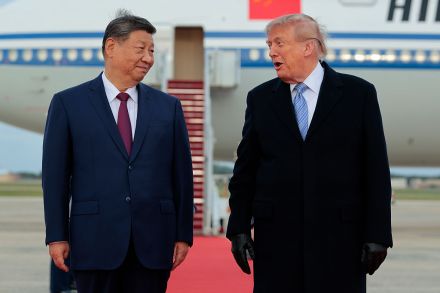
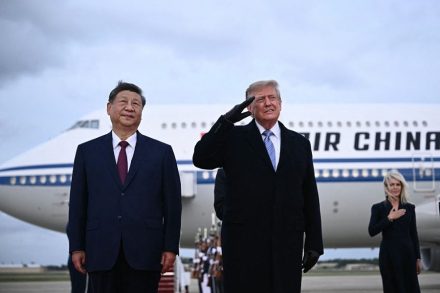
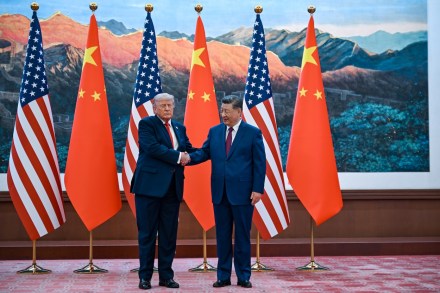
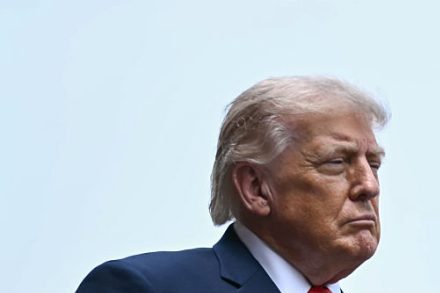
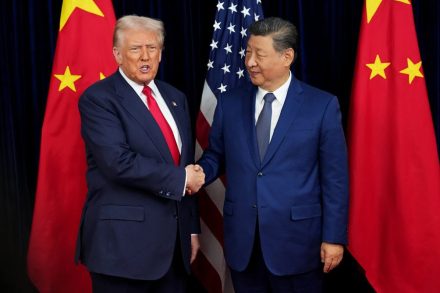
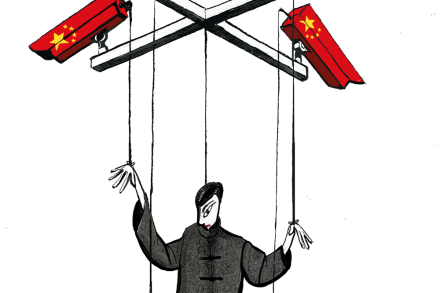
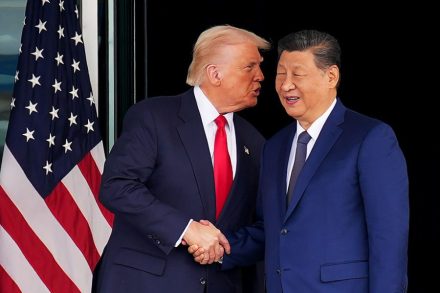
President Donald Trump struck a conciliatory tone during his trip to China. He returned from his Beijing summit with Xi Jinping yesterday full of praise for the “great leader,” who is, in Trump’s estimations, “an incredible guy.” The summit was “very successful, world-renowned, and unforgettable,” according to the President, who insisted that “a lot of different problems were settled.” But there’s one problem that hasn’t been addressed: the growing number of Chinese operations on US soil. China’s espionage and influence operations are extensive Last week Eileen Wang, the mayor of the southern Californian city of Arcadia agreed to plead guilty to acting as an illegal agent of China.

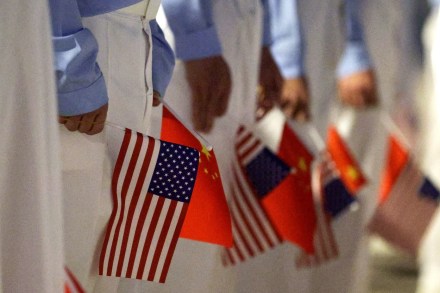
BEIJING, CHINA - MAY 13: Chinese youth hold American and Chinese flags as they join officials to welcome U.S. President Donald Trump at Beijing Capital International Airport on May 13, 2026 in Beijing, China. President Trump is meeting with President Xi Jinping in Beijing to address the Iran conflict, trade imbalances, and the Taiwan situation while establishing new bilateral boards for economic and AI oversight. (Photo by Alex Wong/Getty Images)

No one is watching the Trump-Xi summit closer than Taiwan

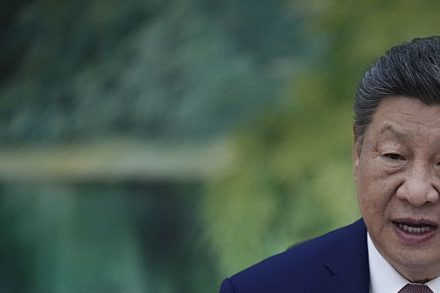
The contrast was striking. Taiwan is ‘the most important issue’, Xi Jinping warned his American counterpart. ‘If mishandled, the two nations could collide or even come into conflict, pushing the entire China-US relationship into a highly perilous situation,’ according to Chinese state media. Trump had earlier named trade as the most important issue. In opening remarks, the American president stuck to bland flattery, saying he and Xi had a ‘fantastic relationship’, that Xi was a ‘great leader’ and that ‘it is an honour to be your friend’. ‘The relationship between China and the USA is going to be better than ever before,’ he insisted.

China’s theft of American AI tech is becoming more brazen

Despite the hype surrounding China’s artificial intelligence capabilities, progress remains heavily dependent on theft and smuggling. The Chinese Communist party (CCP), meanwhile, is determined to maintain tight control. That has become increasingly clear ahead of this week’s Beijing summit between Donald Trump and Xi Jinping. The Chinese leader is determined to lead the world in what he terms an ‘epoch-defining technology’. He appears confident that Trump, preoccupied by his war against Iran, has limited options to counter Beijing’s increasingly brazen activities. Last month, the White House accused Beijing of ‘industrial-scale’ theft of know-how from American AI labs.

The Iran war is giving Xi the upper hand with Trump

China’s largest trade show is now under way in the southern city of Guangzhou. The Canton Fair is a colossal month-long affair with around 32,000 exhibitors and is often described as a shop window for Chinese manufacturers – a barometer of the China trade – where just about anything and everything can be bought. This year the mood is subdued. ‘The spectre of the Iran war hung heavy like the banners inside the gigantic exhibition halls,’ as Bloomberg described it. Exhibitors reportedly complained of soaring costs and falling orders, most notably from the Middle East.

Starmer has got nothing from his demeaning trip to China

From our UK edition

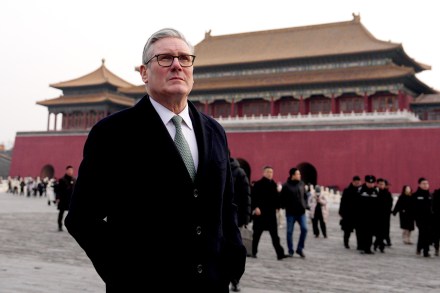
Sir Keir Starmer told Xi Jinping it was time for a ‘more sophisticated’ relationship, yet there is very little sign of that in his excruciating performance in China. This was supposed to be the moment the Prime Minister cashed in on a year spent cosying up to Beijing, during which he has been accused of jeopardising national security to avoid causing offence. Yet you do not need to be part of his large entourage of business people to calculate that the returns have been minimal, and the costs potentially enormous. Donald Trump was certainly quick with his verdict. Asked about Starmer’s pursuit of closer business ties with China while attending the premier of a film about his wife Melania, the US President said: ‘Well, it’s very dangerous for them to do that’.

Inside the Cambodian cybercrime compounds run by Chinese gangs

The scrappy Cambodian border town of Poipet, long associated with vice and criminality, was shaken shortly before Christmas by the sound of F-16 fighter jets screaming overhead. The Thai Royal Air Force was, astonishingly, bombing a series of casinos. At least five fortified compounds were damaged, which were part of a vast industry that has conned millions of people across the world out of billions of dollars. This was “a war against the scam army,” Thailand’s army said. Scamming is a mainstay of Cambodia’s economy. The country earns an estimated $12 billion annually from online scamming alone, around half the value of its formal economy. Poipet is just one small outpost of a Chinese organized crime network, many elements of which have links to the Chinese Communist party.

Keir Starmer will regret approving China’s mega-embassy

From our UK edition

Keir Starmer is poised to give the go-ahead for China’s new mega-embassy near the Tower of London – the biggest diplomatic mission in Europe and a ‘nest of spies’ in the eyes of its opponents. But this will not be the end of the story. A legal challenge seems certain to follow, and the decision will be seen by critics as further evidence of Starmer trying to cosy up to Beijing at the expense of national security. In addition, the timing could not be worse, given the turbulence in geopolitics and strained relations with Trump’s America. The decision is expected as early as today, with Starmer claiming Britain’s intelligence agencies have raised no formal objections.

The battle to stop US universities aiding Chinese repression

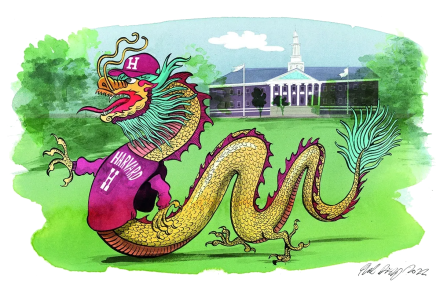
It goes by an innocuous name – “Integrated Joint Operations Platform” (IJOP) – but it’s one of the most sinister components of China’s surveillance state, managing what has been described as a genocide against the Uighurs. The IJOP combines multiple systems of repression – location, messages, contacts, social media and other data from phones, together with information from checkpoints, cameras and biometric records. It then flags “suspicious” individuals for detention and forced labor. Now leading US universities have been accused of extensive collaboration with Chinese laboratories which develop technology that may be deployed or adapted for use in this system.

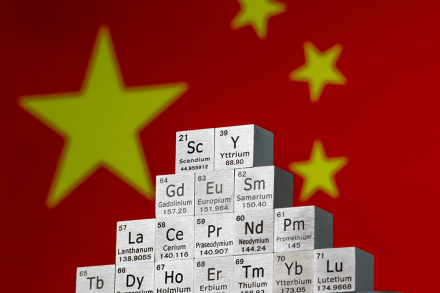
China is holding the West to ransom over rare earths

China’s naked weaponisation of rare earths brings to mind Mao Zedong’s ‘four pests’ campaign, the old tyrant’s fanatical effort to exterminate all flies, mosquitoes, rats and sparrows, which turned into a spectacular piece of self-harm. Sparrows were always an odd choice of enemy, but Mao and his communist advisers reckoned each one ate four pounds of grain a year and a million dead sparrows would free up food for 60,000 people. The campaign, launched in 1958, saw the extermination of a billion sparrows, driving them to the brink of extinction. But the sparrows also ate insects, notably locusts, whose population exploded, and the ravenous locusts wreaked far more damage to crops than the sparrows ever did, hastening China’s descent into the deadliest famine in human history.

Trump and Xi’s South Korean meeting changed little

From our UK edition

Donald Trump says his meeting with Xi Jinping on the sidelines of the APEC summit in South Korea today was ‘amazing’ and that, on a scale of one to 10, it merited a 12. Which means that on a scale for scepticism, it probably deserves a 13. Its biggest achievement appears to have been to at least put the trade war between the world’s two biggest economies on hold, though stock markets, excitable all week as the summit approached, opened flat this morning. Fundamental issues remain unchanged, the momentum towards economic separation will continue, possibly accelerating during the breathing space provided by an extended truce that is unlikely to last.

Tim Shipman, Ian Williams, Theo Hobson, Lara Prendergast & Lisa Haseldine

From our UK edition

34 min listen

On this week’s Spectator Out Loud: Tim Shipman says that the real war for the right is yet to come; Ian Williams examines the farce over the collapses China espionage case; Theo Hobson argues that the Church of England is muddled over sex and marriage; Lara Prendergast reads her letter from America; and, Lisa Haseldine goes on manoeuvres with the German army, the Bundeswehr. Produced and presented by Patrick Gibbons.

Did Jonathan Powell torpedo the China espionage trial?

From our UK edition

The antics of Keir Starmer and his top security adviser over the collapsed China espionage case bring to mind the slapstick British movie Carry On Spying – which is precisely the message it will have conveyed to Beijing. Instead of Bernard Cribbins, Kenneth Williams and their team of fictional incompetents, the real-life Whitehall farce has Jonathan Powell on a single-minded mission to appease China. Powell, Starmer’s national security adviser, has been accused of torpedoing the trial to avoid embarrassing China at a time when he is leading efforts to rebuild diplomatic ties with Xi Jinping. One can only imagine the despair in Britain’s security agencies and the Crown Prosecution Service, who would not have brought the charges unless they were reasonably confident of success.

What China’s show of force means for the new world order

From our UK edition

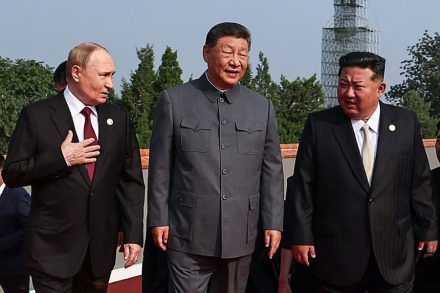
Today’s vast military parade in Beijing is the climax of three days of political theatre orchestrated by President Xi Jinping, with supporting roles played by those pantomime villains Vladimir Putin and Kim Jong-un. The smirking North Korean and Russian dictators joined Xi to witness the People's Liberation Army’s goose-stepping soldiers and shiny weaponry rumbling through Tiananmen Square. ‘Today, humanity is again faced with the choice of peace or war, dialogue or confrontation, win-win or zero-sum,’  Xi told the crowd of some 50,000 carefully selected spectators (which roughly matched the number of soldiers). He said the Chinese people ‘firmly stand on the right side of history’.

How China fools the West

From our UK edition

The mimic octopus is a remarkable creature. It is the world’s master at shapeshifting. It is able to transform its appearance into that of more than 15 different aquatic animals, depending on the needs of the moment. It can ward off predators by appearing to be more deadly than it really is – by impersonating a poisonous lionfish, for example. It can also lure prey by mimicking a crab, say, trying to attract a mate, before smothering, paralysing and devouring the hapless suitor. It is much studied by marine biologists, but it deserves more attention from economists and diplomats – particularly those trying to understand the Chinese Communist party. Its portrait should hang beside the great communist worthies lining the walls of the Zhongnanhai leadership compound in Beijing.

Xi’s purge is expanding

From our UK edition

Of all those who have been purged by President Xi Jinping, disappearing into the communist party’s vast network of black jails, Liu Jianchao is one of the most intriguing. He has held a number of top roles in the party apparatus – including in overseas influence operations and in running a shadowy department that sought to track down overseas exiles and ‘persuade’ them to return home, using methods that ranged from intimidation and even abduction to threatening family members still in China. He was also tipped to be the next foreign minister.

Can ‘China Studies’ still be trusted?

From our UK edition

It is generally agreed that Britain needs to improve its China capabilities. That a greater understanding of Chinese culture, history and language is needed in the UK was one of the few tangible findings from the government’s ‘China audit’, the bare bones of which were published earlier this year. But what happens when institutions responsible for building those capabilities are compromised by the Chinese Communist Party (CCP)? That is the worrying question arising from a report published this week into the state of China Studies in British universities, which details a chilling pattern of spying, intimidation, harassment and self-censorship at the hands of the CCP.

Is China cooking the books on its economy?

From our UK edition

A Western financial analyst based in Shanghai once described China’s economic statistics to me as ‘one of greatest works of contemporary Chinese fiction’. Not even the Communist party’s (CCP) own officials believed them. A cottage industry of esoteric techniques developed to try and measure what was really going on, ranging from diesel and electricity demand to the fluctuating levels of the country’s chronic air pollution, car sales, traffic congestion, job postings and construction – even the sale of underwear or pickled vegetables. One enterprising analyst regularly sent spies to Shanghai port to count the ships and throughput of trucks.

Why is China rushing to grow its nuclear arsenal?

From our UK edition

China is growing its nuclear arsenal at a faster pace than any other country on the planet, according to new figures from the Stockholm International Peace Research Institute (SIPRI). It estimates that Beijing now has more than 600 nuclear warheads and is adding about 100 per year to its stockpile. That means that by 2035, it will have more than 1,500 warheads, still only a third of the arsenal of each of Russia and the US, but nevertheless an enormous increase and a marked shift away from its proclaimed policy of ‘minimum deterrence’. To facilitate this expanding arsenal, China is building fields of new missile silos in its western desert regions.

Has Ursula von der Leyen seen the light on China?

From our UK edition

Coming from an American politician, the accusations would have been unsurprising. Beijing is unwilling to ‘live within the constraints of the rules-based international system’ and its trade policy is one of ‘distortion with intent’. It splashes subsidies with abandon, undercuts intellectual property protections, and as for China’s membership of the World Trade Organisation (WTO), that was probably a mistake too. It is bold of von der Leyen to raise the WTO, and it will be intriguing to see how she is greeted at the EU-China leaders’ summit Yet this tirade came not from an acolyte of Donald Trump, but from Ursula von der Leyen, the president of the European Commission during this week’s summit of G7 countries in Kananaskis, Alberta.

What the next phase of Trump’s trade war with China looks like

From our UK edition

For clues as to where US policy towards Beijing goes next, look beyond Donald Trump’s chaotic and erratic tariffs and focus instead on the small print of the US-UK draft trade deal. It has a clear message: that if you want to do business with Washington, keep China at bay. The agreement itself doesn’t quite put it that way. It doesn’t need to. Instead, there are broad pledges to cooperate and coordinate on ‘the effective use of investment and security measures, export controls, and ICT [information and communications technology] vendor security’, and ‘to address non-market policies of third countries’ – all tailor-made for China, even if the country is not mentioned by name.