


The scrappy Cambodian border town of Poipet, long associated with vice and criminality, was shaken shortly before Christmas by the sound of F-16 fighter jets screaming overhead. The Thai Royal Air Force was, astonishingly, bombing a series of casinos. At least five fortified compounds were damaged, which were part of a vast industry that has conned millions of people across the world out of billions of dollars. This was “a war against the scam army,” Thailand’s army said.
Scamming is a mainstay of Cambodia’s economy. The country earns an estimated $12 billion annually from online scamming alone, around half the value of its formal economy. Poipet is just one small outpost of a Chinese organized crime network, many elements of which have links to the Chinese Communist party. These gangsters are involved in large-scale human trafficking and modern slavery. That’s because scamming is a labor-intensive business. Some 500,000 scammers are estimated to be working across the region; many are young people, lured by the promise of good IT jobs, but then trapped and kept in prison-like conditions. The gangs are estimated to generate $64 billion each year, far more than the GDPs of the small countries in which they operate. Interpol says Cambodia, Laos and Myanmar are home to online financial crime on an “industrial scale,” representing “a serious and imminent threat to public safety.”
The gangsters are involved in large-scale human trafficking and modern slavery
Poipet is part of that network. It sits in a special economic zone (SEZ) – essentially a state within a state. These have become centers of criminality and Chinese influence across the region. There are 128 SEZs along the Mekong River, which runs from China through Myanmar, Laos, Thailand, Cambodia and Vietnam. Within these SEZs are 140 casinos, the ostensible reason for their existence. The promise is that by carving out these autonomous enclaves, the host nations can grow rich. The reality is that China is able to create pockets of control, allowing its vast criminal enterprises to influence their weak Southeast Asian neighbors.
I visited the most notorious of these – the grandly named Golden Triangle Special Economic Zone (GTSEZ) in Laos – while researching my most recent book, crossing the Mekong on a small open-backed boat, accompanied by several nervous youngsters who were answering online ads for vaguely described computer jobs. The air was thick with dust; the land scraped of vegetation and littered with cranes and diggers. There was clearly plenty of money for development, much more than in the rest of Laos. A large massage parlor, the House of Pleasure, sat on China Friendship Street, surrounded by Chinese restaurants, karaoke bars and shops selling fake brand-name electronics. The currency of the zone was Chinese, as were most items in the shops. The area’s first language was Mandarin and all the signs were in Chinese. The clocks were even set to Chinese time, one hour ahead of Cambodia. The zone was, in effect, a Chinese colony.

A casino soared above all of this, complete with mock Greco-Roman statues and vast, thrusting columns. Two Bentleys were parked on a driveway to the casino’s main entrance. On the corner I spotted a blue Rolls-Royce. Down a side street I saw a group of people, not unlike those I had shared a boat with, crowded around a sliding gate. They were being called forward in small groups by a burly foreman who directed them to a compound beyond.
The gangs’ bread and butter is online gambling and fraud. One specialty is the romance scam, or “pig-butchering” (shazhupan in Chinese), which refers to building an online relationship with a victim using a fake profile. Once the victim has fallen in love with the scammer, they are then “butchered” – conned out of their money – often in the form of fake investment or cryptocurrency payments.
The scamming industry is increasingly part of a battle for influence between the United States and China. Bangkok has always been adept at geopolitical hedging, but the bombing campaign is a sign of growing impatience at the power of Chinese organized crime. Thailand is being used as a people-smuggling route and money-laundering center by the gangs, while the Chinese-run SEZs on its border act as immune bases of influence. “It’s out of control,” Chuwit Kamolvisit, a former policeman and self-styled anti-corruption crusader, told me in Bangkok. “They are not afraid of anything because they pay, and they pay much. They can buy the police, they can buy the court, they can buy the judge. They can buy everything. So they have no fear. They come to Thailand and think they can do anything.”
GTSEZ is located on the banks of the Mekong, opposite Thailand, and is described by one business intelligence report as “the world’s worst special economic zone… mired in scandal and criminality.” It is run by a Chinese businessman called Zhao Wei, to whom the Laotian government has granted a 99-year lease on a 15-square-mile tract of land, where he is building his own city.
In 2018, the US Treasury Department sanctioned Zhao, who “engages in an array of horrendous illicit activities, including human trafficking and child prostitution, drug trafficking and wildlife trafficking.” Zhao said this was “a unilateral, extraterritorial, unreasonable and hegemonic act of ulterior motives and malicious rumormongering.” More recently, the British government sanctioned him for people trafficking, alleging: “Victims are promised well-paid jobs but are subject to torture or other cruel, inhuman, or degrading treatment.”
Yet the Laotian government has presented Zhao with several awards, including a “medal of bravery” to honor the “renowned Chinese businessman” for “his efforts and contribution to national defense and national public security in the Golden Triangle Special Economic Zone.”
The FBI has stepped up efforts to combat the scammers, who conned Americans out of $5 billion in 2024
When the GTSEZ recently opened a new airport, Zhao’s guest of honor was Wan Kuok-koi, better known as “Broken Tooth,” once Macau’s most notorious gangster. He is a major investor in Cambodian and Myanman SEZs, including hotels and cryptocurrency exchanges. He has also been sanctioned by the US for his alleged involvement with scamming compounds, has strong links with government officials in China’s Guangdong province and owns more than a dozen Chinese companies.
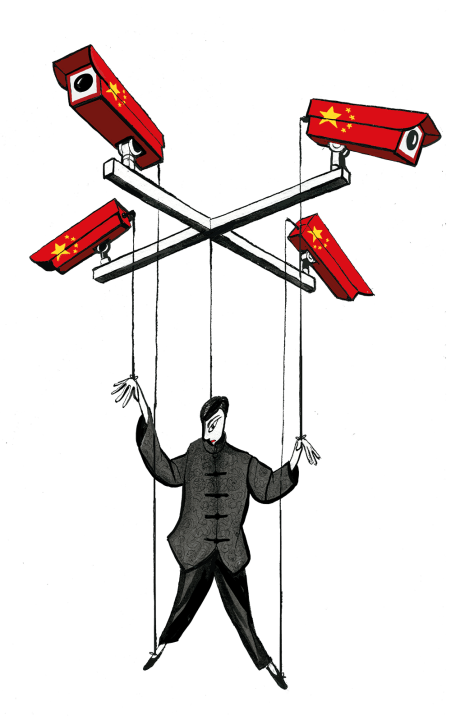
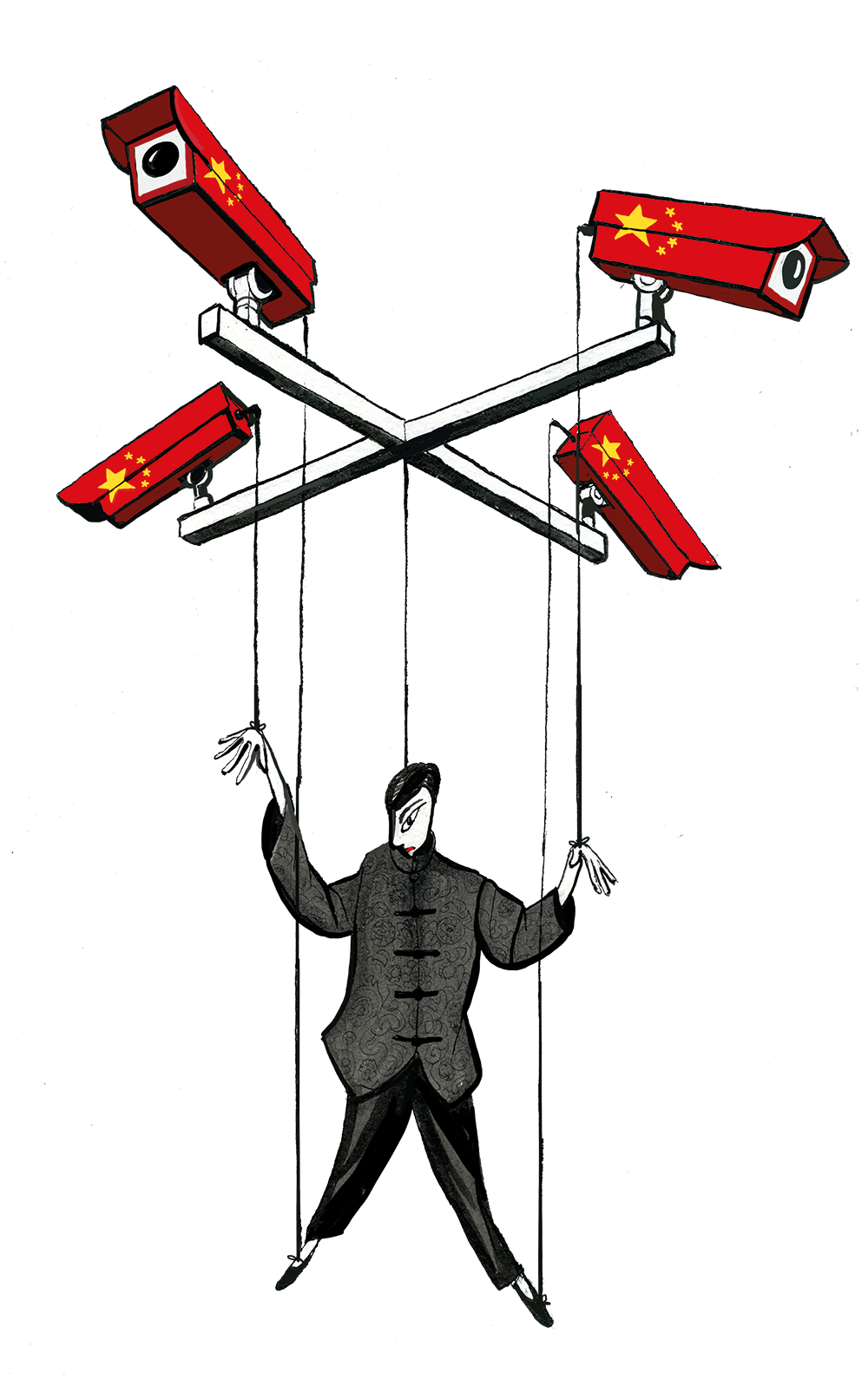
Both Zhao and Broken Tooth present themselves as CCP loyalists, echoing Beijing’s “development” slogans. The SEZs are routinely established under the banner of China’s Belt and Road Initiative, an umbrella for Beijing’s global investments and an instrument for extending its influence. It is inconceivable that they could operate so brazenly without the tacit support of the party, which has a history of working with triads – or “patriotic societies,” as they are often termed – to further Beijing’s interests. The SEZs are praised by Chinese officials and state-owned media, which see them as symbols of China’s growing influence in the region – important chess pieces in the intensifying geopolitical struggle with the West. Chinese media has described Zhao as “a farmer’s child with a pioneering and practical spirit.”
The FBI has stepped up efforts to combat the scammers, who are estimated to have conned Americans out of $5 billion in 2024 alone, sanctioning the companies running the compounds and beefing up their presence in Bangkok. China has also launched well-publicized crackdowns on scamming compounds, notably near its border in Myanmar, but law enforcement officials believe these actions have been selective – concentrating on those scammers targeting China and sparing the most powerful criminal kingpins. The Global Times, a CCP newspaper, recently boasted that more than 5,400 Chinese suspects involved in “telecom fraud” were repatriated to China from Myanmar during the first half of last year.
Last month, Cambodia extradited alleged crime boss Chen Zhi to China in what seemed like a rare act of force by a host nation against these gangs. Chen had already been sanctioned by the US and the UK for running a sprawling cyberscamming and money-laundering empire across Asia. Chen was also rumored to have connections to Chinese intelligence agencies. But all was not quite as it seemed. There are suspicions that his extradition was in fact organized by Beijing to keep Chen out of the reach of American prosecutors, who are becoming increasingly active in the region.

A report by the US-China Economic and Security Review Commission (USCC) suggests the Chinese counterscam actions have merely incentivized the gangs to target Americans instead, shifting their recruitment to those with English language skills. That is supported by reports from Myanmar that, as a result of the Chinese clampdown, the gangs have relocated their scamming compounds away from the Chinese border and shifted their focus to English-speaking victims.
China has sought to strengthen law enforcement cooperation, raising concerns in Washington that it is using the scammers as a pretext to tighten its broader grip on regional security. Thailand recently allowed Chinese forces to participate in cross-border raids on scam centers in Myanmar. This may seem odd at first, given that many of these compounds are run by Chinese nationals. In fact, it’s an attempt by Beijing to bring deviant parts of its organized crime world under control. According to the USCC, the raids resulted in the confiscation of computers and phones containing not only information about the criminals, but also sensitive data about the victims. Many of these victims are American, yet China has been unwilling to share the data.
The criminals are increasingly using AI to target victims and are recruiting people with data-analysis skills
As Beijing exerts greater control, the gangs could well morph into something even more sinister. They are increasingly using artificial intelligence to target victims, tailoring their frauds while using their growing stock of data to branch out into other areas of cybercrime. The gangs have stepped up recruiting people with data-analysis skills, programmers who can sift through massive amounts of information.
What is worrying cybersecurity specialists is the creation of a Russian-style network of state-tolerated cybercriminals, largely allowed to act with impunity as long as they do not target Chinese assets. Similar Russian outfits were involved in trying to sway the 2017 French election, while details of the UK-US trade deal were leaked by a Russian hacking operation in 2019. Beijing may be doing what it does best: copying other countries’ technologies.
Cambodia and Laos are so economically dependent on China that they are essentially vassal states, while Myanmar is being ripped apart by military misrule and civil war. All of which makes them highly susceptible to organized crime and reluctant to upset China. As Ekapop Lueangprasert, a Thai businessman who helps youngsters escape from compounds in Cambodia, put it to me: “They do not want to do anything to affect China. They fear that if they arrest any Chinese, it will affect the infrastructure and investment in their countries.”
Thailand’s bombing campaign is just the most aggressive act so far in a web of organized crime and Chinese influence campaigns. But the gangs are now so powerful that they threaten regional stability. Eradicating them has profound implications, not only for millions of victims, but also for the broader geopolitics of Southeast Asia.
This article was originally published in The Spectator’s February 2, 2026 World edition.






Comments