Patrick Gibbons

Patrick Gibbons is a member of The Spectator’s broadcast team.

A look at The Spectator’s Easter broadcast offering

From our UK edition

How religious is Britain? Last week the Bible Society was forced to pull their report into the ‘Quiet Revival’ of Christianity, which was published last year, after YouGov found their polling used faulty data. This report gained significant attention and was the basis of much inquiry in 2025 – including from The Spectator, through our Holy Smoke podcast. The Spectator has a number of broadcasts this Easter that explore religious faith in Britain. The first is our weekly Edition podcast, where this week Lara Prendergast is joined by Anglican priest Fergus Butler-Gallie, the historian Tom Holland and former Supreme Court Justice Jonathan Sumption.

Trump has triggered a wave of European soul-searching

From our UK edition

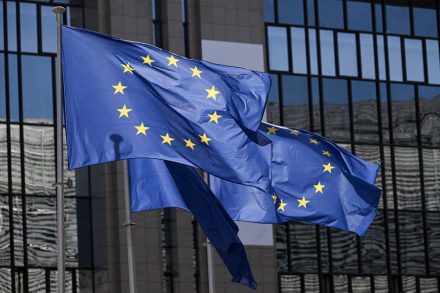
As world leaders grapple with Donald Trump’s second term, his war with Iran has accelerated European multipolarism, with leaders on the continent searching for alternative solutions to American isolationism. How far should Europe pool security and defence? Should there be a European version of the Anglo ‘Five Eyes’ alliance, as the Netherlands’s coalition government, led by their new prime minister Rob Jetten, has suggested? Is the proposal from Renew Europe – the European Parliament’s centrist grouping – for a Nato-like trade alliance between European countries and their democratic allies – like Canada, Japan and South Korea – realistic?

Will Trump pull the US out of NATO?

From our UK edition

15 min listen

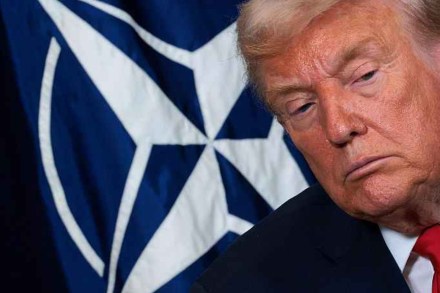
Donald Trump has said he is 'strongly considering' pulling the US out of NATO, in comments made to the Telegraph – and it doesn't appear to be an April Fool. This isn't the first time he has rallied against the Alliance so should the UK take him seriously? Plus – what is Keir Starmer's strategy? – as he tries to balance a testing transatlantic relationship with pursuing closer relations with the EU. Patrick Gibbons speaks to Tim Shipman and James Heale. Produced by Patrick Gibbons.

Will Trump pull the US out of NATO?

To drill or not to drill, that is the question

From our UK edition

15 min listen

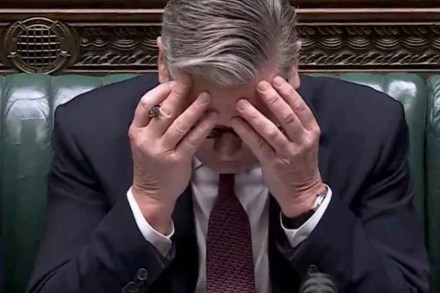
In the final Prime Minister's Questions before Easter recess, Kemi Badenoch pushed Keir Starmer to commit to new oil & gas drilling licences. The Conservatives spot an easy win here – cost of living concerns are rising as America's war with Iran continues. Plus, with a burgeoning welfare bill, the trade-offs are even trickier for Labour to resolve. Who should Labour target? Tim Shipman and Michael Simmons join Patrick Gibbons to discuss. Come for Tim's impression of the Prime Minister, and stay for Michael's very strong response when asked if renewables are the answer. Produced by Patrick Gibbons.

To drill or not to drill, that is the question

Britain is experiencing a pilgrimage revival

From our UK edition

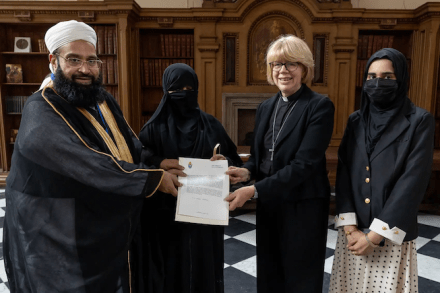
When Sarah Mullally started her pilgrimage this week, travelling from London to Canterbury, she wasn’t just embracing a tradition in England that once stretched back thousands of years, but speaking to a wider trend: the resurgent popularity of pilgrimage. The Archbishop of Canterbury, due to be enthroned next week, joins an estimated 250,000 Britons who will take part in a pilgrimage this year. British experiences with pilgrimage have tended to focus on trips abroad: to holy sites like Lourdes or on treks such as the Camino de Santiago – which stretches from southern France to Santiago de Compostela in Spain. Trips aren’t confined to Christians either – until the Covid pandemic, 25,000 British Muslims took part in the annual Hajj to Mecca.

Net Zero vs AI: can Reeves convince Miliband?

From our UK edition

16 min listen

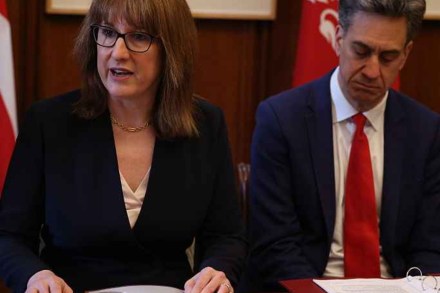
The Chancellor will deliver the annual Mais lecture today and is expected to focus on closer alignment with the EU, AI and improving Britain's economic geography ('levelling up' in all but name). While her comments on Europe might gain the most headlines, we're more curious about what she will say over AI – given the current geopolitical context. Given the energy requirements of AI, the Iran crisis has only further exposed the holes in Britain's energy policy – can Rachel Reeves convince Ed Miliband to adapt his policies? And is this about the Chancellor's political headroom as much as the economic?

Net Zero vs AI: can Reeves convince Miliband?

The Akrotiri attack has weakened Britain’s position in Cyprus

From our UK edition

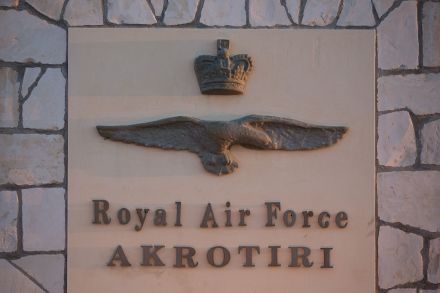
When RAF Akrotiri in Cyprus was targeted in an attempted drone attack on Monday, it didn’t just leave the British government open to accusations that it was slow to respond to events in the Middle East. It also led to criticism from those who would like to see the British overseas territory returned to the Republic of Cyprus.  The drone attack caused minor damage and no one was injured, but in the initial aftermath it was unclear whether it had been shot down by British forces on Cyprus, by Cypriot air defences or by an American warship in the area. The attack has led the UK government to send the warship HMS Dragon to Cyprus, although it will take at least a week to arrive there.

Green surge: could Labour lose London?

From our UK edition

15 min listen

Deputy political editor James Heale and deputy editor of The House magazine Sienna Rodgers join Patrick Gibbons to discuss the challenge the Greens pose to Labour in London. James's political column this week explains how the shockwaves of the Gorton and Denton by-election have reached the capital. Could Labour's 'strongest heartland' fall to the Greens through their coalition of 'urban professionals, young Muslims and the economically disaffected'? Plus: as Sienna reveals Zack Polanski's podcast tastes – in an exclusive interview for The House's cover (out Monday) – we extend an interview to the Green Party leader to join us on Coffee House Shots. Produced by Patrick Gibbons.

Green surge: could Labour lose London?

Iran: has Starmer alienated Britain’s allies?

From our UK edition

21 min listen

As the conflict in the Middle East escalates, the British government continues to face questions about its response. Was the UK too slow to act, and if so – why? Tim Shipman reveals in the Spectator today that Keir Starmer was initially minded to approve American use of British bases but was persuaded not to by other figures, including Ed Miliband. How much damage has this done with the Americans and also wider European allies? Defence Secretary John Healey has landed in Cyprus today on a damage-limitation mission – or in a show of strength, depending on your viewpoint. Has Starmer been weakened by these events? Plus – Home Secretary Shabana Mahmood has revealed further asylum reforms. Will the reforms neutralise the issue of immigration for voters?

Iran: has Starmer alienated Britain's allies?

Is Norway about to take a step closer to joining the EU?

From our UK edition

This weekend in Oslo politicians and activists from Norway’s conservative party, Høyre, will meet to confirm their new leader, Ine Eriksen Søreide. This is not just a vote to further the prospects of the next generation of centre-right leaders but – due to a rare alignment of domestic and geopolitical conditions – the potential starting point for a renewed push towards Norway joining the European Union (EU). Formerly Norway's minister of foreign affairs, Søreide is a committed Europhile. She has been unambiguous on EU membership, saying Høyre is ‘clearly a yes party’.  It is perhaps just a peculiar coincidence that has left several North Sea powers outside the EU.

Is Starmer back from the brink?

From our UK edition

13 min listen

After a dramatic day in Westminster, the threat to Starmer appears to have receded – at least in the short term. But with the Gorton and Denton by-election less than three weeks away, (more) trouble could be on the horizon. Luke Tryl – from pollsters More in Common – and James Heale join Patrick Gibbons to discuss. Produced by Patrick Gibbons.

Is Starmer back from the brink?

How should the UK manage its relationship with China?

From our UK edition

17 min listen

As Keir Starmer's visit to China draws to a close, Sam Olsen – who runs the States of Play substack – and Times columnist Cindy Yu join Patrick Gibbons to discuss how the UK should manage its relationship with China. Starmer's visit has drawn criticism from various China hawks – and from President Trump – but is there a way for the UK to balance legitimate security concerns with the need to trade with the world's second largest economic power? Plus, to what extent to the British public care about these geopolitical concerns? Cindy and Sam explain why is it important for policymakers to explain how these trips link back to domestic issues – and Cindy name checks James Cleverly as she highlights the importance of consistency amongst the political class.

How should the UK manage its relationship with China?

What does Starmer want to achieve in China?

From our UK edition

19 min listen

Keir Starmer lands in China tonight as he becomes the first British Prime Minister to visit since Theresa May in 2018. Sam Hogg from the Oxford China Policy Lab and James Heale join Patrick Gibbons to assess the UK-China relationship right now, what Labour is hoping to get from the visit and whether there are risks for Starmer as well as rewards. Is the tight rope Starmer is walking between the UK & China a sign of weakness, or an extension of a pragmatic 'Starmerite' foreign policy? Produced by Patrick Gibbons.

What does Starmer want to achieve in China?

The truth about Britain’s claim to Greenland

From our UK edition

Every time Donald Trump repeats his threats towards Greenland, a familiar claim does the rounds that the UK has ‘first dibs’ should Denmark ever choose to sell the territory. Most versions of this story trace back to comments by Tom Hoyem, who served as Denmark’s last minister for Greenland in the 1980s. The claim gained traction again after Trump’s recent threats about acquiring the island, saying ‘one way or the other, we’re going to have Greenland’. These threats – which have now been accompanied by additional tariffs on countries including the UK – are being taken so seriously that the Danish and Greenlandic foreign ministers met US vice president J.D. Vance in Washington this week.

International statesman or ‘never here Keir’?

From our UK edition

18 min listen

From 'regime change' in Venezuela to Russia's war in Ukraine, the Labour government is trying to navigate complicated situations across foreign affairs. Having appeared to weather the domestic reaction to the situation in Venezuela, Keir Starmer is in Paris today to discuss Ukraine alongside Chancellor Merz and Presidents Macron and Zelensky. This is undoubtably important – but to what extent will this fuel the criticism that the Prime Minister spends too much time abroad? And how can Starmer reconcile the demands of foreign affairs with his domestic priorities? James Heale and Tim Shipman join Patrick Gibbons to discuss. Produced by Patrick Gibbons.

Ten years after Brexit, the EU is wrestling with its identity

From our UK edition

As the tenth anniversary of the Brexit vote approaches, renewed debate about Britain’s relationship with the European Union is perhaps inevitable. A steady drip of stories has suggested that closer ties between the UK and EU may once again be under consideration, with speculation over rejoining the customs union appearing every week since the Budget. Health Secretary Wes Streeting went further just before Christmas, arguing in favour of the move. The economic case for deeper cooperation may be compelling, but even for those who hope this is a prelude to something bigger, it is worth asking a more fundamental question: what kind of European Union would Britain be re-entering? One answer can be found among the generation now beginning to shape European politics from below.

Brexit’s back – and so is Truss

From our UK edition

16 min listen

There has been a flurry of UK-European activity across Britain this week, with the German state visit in London, the Norwegian Prime Minister signing a defence agreement in Scotland and the British-Irish council meeting in Wales today. Perhaps then it's inevitable that speculation over closer ties between the UK and the EU has re-emerged. Could Labour seek to rejoin the Customs Union? Would this help or hinder Reform? And would the EU even stomach it? Plus – Liz Truss launches a new show today. Will she say anything new? James Heale and Charles Grant from the Centre for European Reform join Patrick Gibbons to discuss. Produced by Patrick Gibbons.

Will Mahmood’s asylum reforms force Ireland’s hand?

From our UK edition

Labour’s plans to overhaul Britain’s overstretched asylum system have forced the Irish government to do the same. As the Northern Irish border is the only international border across these islands, Shabana Mahmood’s pledge to create ‘by far the most controlled and selective [asylum system] in Europe’ left Dublin with little choice. Ireland’s Minister for Justice, Home Affairs and Migration – Ireland’s equivalent to the Home Secretary – Jim O’Callaghan warned that Ireland must be ready to adjust its own policies to prevent a surge in applicants travelling via Northern Ireland.

Mahmood’s right turn, as migration figures revised – again

From our UK edition

19 min listen

Economics editor Michael Simmons and Yvette Cooper's former adviser Danny Shaw join Patrick Gibbons to react to the Home Secretary's plans for asylum reform. Shabana Mahmood's direct communication style in the Commons yesterday has been praised by government loyalists and right-wingers alike, but her plans have been criticised by figures on the left as apeing Reform. Will her calculated risk pay off and how will success be judged? Plus, as ONS migration figures are revised – again – Michael restates his appeal for more reliable data. And how could migration data affect the budget next week? Produced by Patrick Gibbons.

Is South Korea bracing for a third Trump-Kim summit?

Donald Trump’s meeting with President Xi was the standout moment of this month’s Asia-Pacific leaders’ summit in South Korea. Yet almost as much attention focused on the rumours that Trump’s gaze had turned once again to North Korea. Addressing suggestions he would meet Kim, the American President told reporters, ‘I’d be open 100 per cent. I get along very well with Kim Jong Un.’ A meeting never materialised, but speculation – and tension – has only grown since.  Days after Trump’s departure, US Defence Secretary Pete Hegseth arrived as part of his own tour of Asia. In Seoul, he became the first defence secretary in nearly eight years to visit Panmunjeom, the border village within the Joint Security Area (JSA) of the Demilitarised Zone (DMZ).