China

How should the UK manage its relationship with China?

From our UK edition

17 min listen

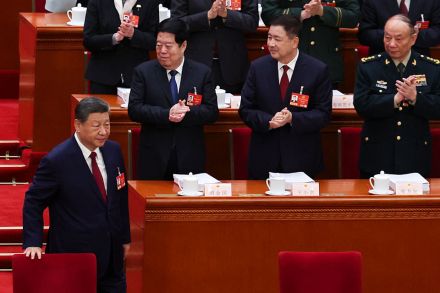
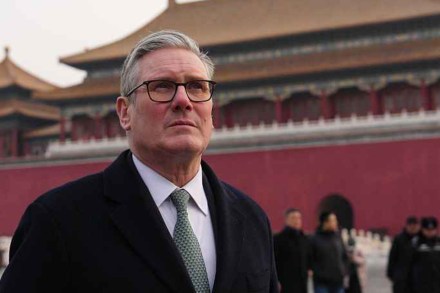
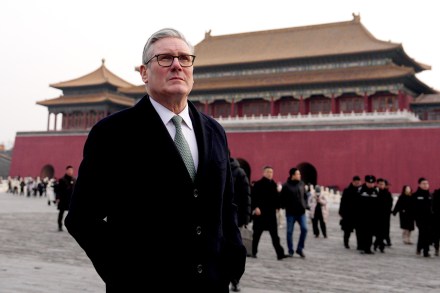
As Keir Starmer's visit to China draws to a close, Sam Olsen – who runs the States of Play substack – and Times columnist Cindy Yu join Patrick Gibbons to discuss how the UK should manage its relationship with China. Starmer's visit has drawn criticism from various China hawks – and from President Trump – but is there a way for the UK to balance legitimate security concerns with the need to trade with the world's second largest economic power? Plus, to what extent to the British public care about these geopolitical concerns? Cindy and Sam explain why is it important for policymakers to explain how these trips link back to domestic issues – and Cindy name checks James Cleverly as she highlights the importance of consistency amongst the political class.

How should the UK manage its relationship with China?

Starmer has got nothing from his demeaning trip to China

From our UK edition

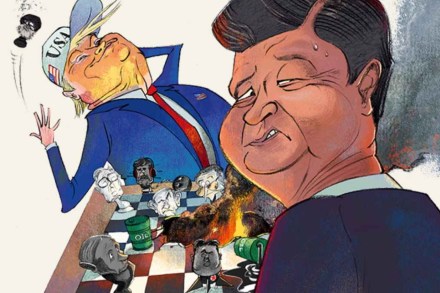
Sir Keir Starmer told Xi Jinping it was time for a ‘more sophisticated’ relationship, yet there is very little sign of that in his excruciating performance in China. This was supposed to be the moment the Prime Minister cashed in on a year spent cosying up to Beijing, during which he has been accused of jeopardising national security to avoid causing offence. Yet you do not need to be part of his large entourage of business people to calculate that the returns have been minimal, and the costs potentially enormous. Donald Trump was certainly quick with his verdict. Asked about Starmer’s pursuit of closer business ties with China while attending the premier of a film about his wife Melania, the US President said: ‘Well, it’s very dangerous for them to do that’.

Where have all the graduate jobs gone?

From our UK edition

It’s a relief not to have been pressganged into joining the Prime Minister’s plane-load of business chiefs and reporters bound for Beijing this week. With Sir Keir Starmer are leaders of the likes of Astra-Zeneca, BP, HSBC, JLR and Rolls-Royce, and some billion-pound deals will no doubt be announced while they’re there – agreed in advance on the condition that Downing Street gave the green light for China’s Royal Mint Court mega-embassy-cum-listening-post on the edge of the City. The Chancellor is on the trip too, perhaps carrying a nice set of hunting prints as a housewarming gift for London ambassador Zheng Zeguang’s new office.

What does Starmer want to achieve in China?

From our UK edition

19 min listen

Keir Starmer lands in China tonight as he becomes the first British Prime Minister to visit since Theresa May in 2018. Sam Hogg from the Oxford China Policy Lab and James Heale join Patrick Gibbons to assess the UK-China relationship right now, what Labour is hoping to get from the visit and whether there are risks for Starmer as well as rewards. Is the tight rope Starmer is walking between the UK & China a sign of weakness, or an extension of a pragmatic 'Starmerite' foreign policy? Produced by Patrick Gibbons.

What does Starmer want to achieve in China?

US special forces’ secret weapons

By using a sonic weapon in the mission to capture Nicolás Maduro, as Donald Trump appears to have confirmed, Delta Force commandos not only triggered a paradigm shift in warfare, but served poetic justice. When asked whether such a weapon had been used, the President replied: “It’s probably good not to talk about it.” But then added: “Nobody else has it, we have some amazing weapons that nobody knows about.” The following morning, at Davos, Trump said: “They weren’t able to fire a single shot at us. They said, ‘What happened?’ Everything was discombobulated.

sonic

Inside the Cambodian cybercrime compounds run by Chinese gangs

The scrappy Cambodian border town of Poipet, long associated with vice and criminality, was shaken shortly before Christmas by the sound of F-16 fighter jets screaming overhead. The Thai Royal Air Force was, astonishingly, bombing a series of casinos. At least five fortified compounds were damaged, which were part of a vast industry that has conned millions of people across the world out of billions of dollars. This was “a war against the scam army,” Thailand’s army said. Scamming is a mainstay of Cambodia’s economy. The country earns an estimated $12 billion annually from online scamming alone, around half the value of its formal economy. Poipet is just one small outpost of a Chinese organized crime network, many elements of which have links to the Chinese Communist party.

The Chinese takeover of Britain’s public schools

From our UK edition

Roedean is now known as ‘Beijing High’. Cheltenham Ladies’ College is ‘Hong Kong College’. In the country’s most elite boarding schools, pupils say that they are one of just a handful of English children. Others note that Chinese has become the dominant language in hallways and dormitories. Many English parents can no longer afford a boarding school education for their children. And the pressure of recently introduced VAT on fees, as well as above-inflation rises year on year, means the number able to cough up will dwindle further. By contrast, China and Hong Kong’s growing economy and cultural obsession with education provides a surfeit of parents with the cash needed to secure the educational prospects of their children.

Who will rule the Arctic?

From our UK edition

In 2007, two Russian submersibles descended from the ice at the North Pole to plant a small Russian flag on the sea floor more than two miles down. While the aquanauts were greeted as heroes in Russia, the reaction of other Arctic nations was somewhat less positive. ‘This isn’t the 15th century,’ complained the Canadian foreign minister. ‘You can’t go around the world and just plant flags.’ In response to the protests, President Putin – then Time magazine’s ‘Person of the Year’ – reassured the world: ‘Don’t worry. Everything will be all right.

Iran: why theocracies survive – with Peter Frankopan

From our UK edition

25 min listen

In the 21st century, the theocratic nature of the Iranian regime – ruled by senior Shia clerics – appears to be a rarity. The constitutional role of religion is perhaps matched only by the Vatican City and Afghanistan, though these vary in terms of autocracy – as evidenced by the brutal suppression of protests across Iran in the past few weeks. The regime, installed following the 1979 revolution and led first by Ayatollah Khomeini and now Ayatollah Khameini, has proven remarkably resilient; how has it survived so long?

Greenland and the new space race

Donald Trump’s desire for Greenland is not just about access to oil, minerals and control of the new strategic and commercial corridors opening in the region. It’s also about data. Specifically, the most important data in the world. For decades, Pituffik Space Base – formerly Thule – in Greenland has been central to US space defense and Arctic strategy. It’s the US military’s only base above the Arctic Circle and their most northerly deep-water port and airstrip. It’s home to the 12th Space Warning Squadron. Its massive AN/FPS-132 radar has 240 degrees of coverage surveying the Arctic Ocean and Russia’s northern coast, especially the Kola peninsula where it has concentrated its strategic nuclear weapons.

greenland

Portrait of the week: Digital IDs ditched, unrest in Iran and an app to check you’re not dead

From our UK edition

Home The government dropped plans to make digital ID compulsory to work in Britain. Sir Keir Starmer, the Prime Minister, called it ‘disgraceful’ that Grok, the online tool on Elon Musk’s X, could undress pictures of people. X limited the function to subscribers, but Liz Kendall, the Technology Secretary, said that the government would back Ofcom if it decided to block X in Britain. ‘They just want to suppress free speech,’ Mr Musk wrote on X. Sir Keir, due to visit China this month, was warned by some Labour MPs not to approve a vast new Chinese embassy in London. The government signalled a U-turn on increases to business rates for pubs in England before the ink was dry on the Telegraph’s Save Our Pubs campaign.

Trump’s attack on the Fed is a pivotal moment of hubris

From our UK edition

The phrase ‘trumped-up charges’ dates from the 18th century, I learn, and derives from the Old French tromper, to deceive. It has certainly acquired new resonance with the threat of criminal indictment against US Federal Reserve chairman Jerome Powell, somehow relating to the cost of Fed building renovations. The President says this Department of Justice action has nowt to do with him, but it’s plainly another exercise of what some commentators are calling ‘the Maduro option’: sod constitutional niceties, just drag your opponent into the dock. For all his foreign-policy fireworks, Donald Trump knows November’s US midterm elections will largely be driven by domestic cost-of-living concerns.

Donald Trump is confronting a reality that Europe has ignored

From our UK edition

Donald Trump’s rendition of Nicolas Maduro was a brilliantly executed coup. It was also an exhibition of America’s hard power, power that has underpinned the rules-based international order that protected America’s allies for decades. Now those allies fear that the rules-based order is as much a smoking ruin as Maduro’s Caracas compound. European hysteria is, however, misplaced. President Trump has not inaugurated a new era of disorder, he has responded to realities about which European elites have been in denial. The post-war international order has been crumbling for more than a decade. And British governments have been enablers of that process. One of the most determined users of hard power in subverting every restraint has been communist China.

Europe’s self-deception over Greenland

As Donald Trump weighs up taking control of Greenland, Britain and the EU has fallen back on a familiar strategy: talk tough, and do nothing. The UK joined France, Germany, Italy, Poland, Spain and Denmark yesterday in making a joint statement affirming that "Greenland belongs to its people." Arctic security, it said, must respect "sovereignty, territorial integrity and the inviolability of borders." Invoking it Article 5 the United States would expose NATO’s limits rather than overcome them If Donald Trump decides to take Greenland, Europe’s initial response would be loud, formal and legally impeccable. Europe and the UK would protest loudly, threaten, – and then do almost nothing at all.

The peril of playing with viruses

If a military team made a mistake during a nuclear war preparedness exercise and accidentally obliterated millions of people, you would not expect to find some of the very same people merrily admitting a couple of years later that they have carried out the very same kind of exercise with different live nukes and slightly fewer safeguards. Would you? That is roughly what I recently found out has apparently been going on in China. The Wuhan laboratory that conducted risky experiments on bat viruses at inadequate biosafety levels and almost certainly caused the pandemic has now revealed that it has done the same kind of risky experiments on another lot of horseshoe-bat viruses at low biosafety levels. Is accidentally killing millions not enough to give them pause?

Jung Chang: what the West gets wrong about China

No writer has done more than Jung Chang to bring the horrors of Maoist China to the attention of western readers. In her monumental memoir Wild Swans (1991), she recounted the Chinese Communist Revolution, the Great Famine and the Cultural Revolution through the stories of her grandmother, her mother and herself. Its influence was enormous: Wild Swans sold more than 15 million copies, making it one of the best-selling nonfiction books of all time. In Mao: The Unknown Story (2005), co-written with her husband, the historian Jon Halliday, she blew apart decades of Chinese Communist party propaganda to reevaluate Mao as one of history’s greatest monsters, as bad, if not worse, than Hitler or Stalin.

The battle to stop US universities aiding Chinese repression

It goes by an innocuous name – “Integrated Joint Operations Platform” (IJOP) – but it’s one of the most sinister components of China’s surveillance state, managing what has been described as a genocide against the Uighurs. The IJOP combines multiple systems of repression – location, messages, contacts, social media and other data from phones, together with information from checkpoints, cameras and biometric records. It then flags “suspicious” individuals for detention and forced labor. Now leading US universities have been accused of extensive collaboration with Chinese laboratories which develop technology that may be deployed or adapted for use in this system.

It feels as if Michael McFaul’s audience has long since left

Since the end of the Cold War, politicians and commentators have been searching for a new paradigm through which to understand international relations. Notwithstanding Francis Fukuyama’s oft-misunderstood The End of History, we have tried various patterns to classify the world order, of which George W. Bush’s “Axis of Evil,” first used in 2002, was among the more enduring. In Autocrats vs. Democrats: China, Russia, America, and the New Global Disorder, Michael McFaul acknowledges the widespread if nebulous consensus that the challenge presented by Russia and China is a kind of second Cold War – historian Niall Ferguson has labeled America’s relations with China “Cold War II.

Michael McFaul

Fact-checking the Venezuela war hawks 

As the US Navy remains primed for action in the Southern Caribbean, Venezuelan dictator Nicolás Maduro prepares for what could be an American attempt to remove him. And as President Trump alternates between calling Maduro on the phone and authorizing air strikes, a bevy of misinformation is being peddled by public figures with an agenda. There are so many claims and counter-claims on the air waves right now that it’s difficult to separate fact from fiction. A sizable chunk of this disinformation is of course being sold by Maduro himself, a man who has learned from his predecessor and mentor, the late Hugo Chávez, that it’s easier to blame the United States for all of your problems than own up to your own catastrophic policy errors.

Trump team warned over London’s Chinese super-embassy

So much for simple Chinese takeout. In his never-ending search for economic growth, British Prime Minister Sir Keir Starmer has finally alighted on the obvious answer: cozying up to the liberal-minded democrats of Tiananmen Square. The Prime Minister is expected to fly to Beijing in the new year, once the long-awaited Chinese super-embassy in the London neighborhood of Tower Hamlets secures planning approval next month. No wonder 2025 is the year of the snake, eh?  But there now seems to be a wrench in the works, ahead of the mooted approval on December 10. For a group of American politicians are up in arms about the possible threat to global financial security.

china embassy