Lara Brown

Lara Brown

Lara Brown is The Spectator's Commissioning Editor 

Will Arts Council England finally stop funding hate?

From our UK edition

It took the stabbing of two Jews in Golders Green to bring Arts Council England’s decade of funding hate to a close. On Tuesday, Keir Starmer criticised the Arts Council (ACE) for funding organisations that promote the work of ‘anti-Semitic artists’. The Prime Minister also promised to force the body to ‘suspend, withdraw and claw back’ money from organisations that have platformed anti-Semitism.  It’s nice that Starmer has woken up to the fact Britain’s main arts and culture grant provider is using taxpayer money to fund hate. But one does have to ask where he’s been for the last decade?

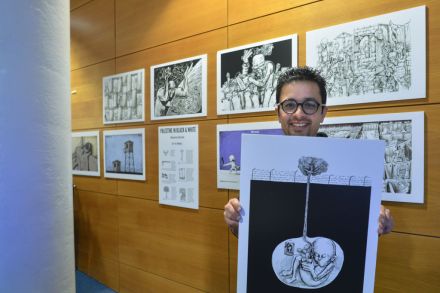
Mohammad Sabaaneh, during the 'Art & Resistance in Palestine' event hosted by Trinity BDS Campaign and Trinity College Students' Union (Getty)

The High Court has undermined freedom of speech in universities

From our UK edition

Maybe sex realists really are winning the gender wars. But for every two steps we take forward we are relentlessly pushed at least one back. The most recent victory in the war against common sense has seen the University of Sussex dodge a £585,000 fine over their free speech policies. The fine was awarded after Professor Kathleen Stock was hounded out of her job five years ago following sustained protests over her views on transgender rights and gender identity. At one point, just to do her job, Stock had to appoint private security. The Office for Students (OfS) spent three and a half years investigating the circumstances that led to Stock’s departure. Their final report is damning.

The Fight for the Right: Conservatives vs Reform

From our UK edition

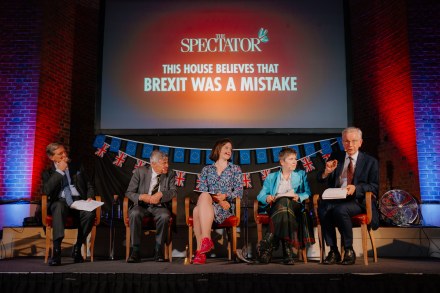
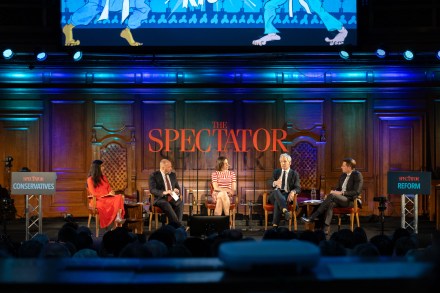
On 7 May there will be no competition. Reform is predicted to pull off sweeping victories in councils across the country, while the Tories are preparing to shoulder heavy losses. But at the Emmanuel Centre on Wednesday evening, Spectator readers were treated to a fight for the intellectual ground on the right. Representing the teal team, Danny Kruger, Reform MP for Wiltshire tasked with preparing the party for government, and Matt Goodwin, Reform’s candidate in Gorton and Denton, faced off against Claire Coutinho, shadow Secretary for Energy and Net Zero and Minister for Equalities, and Nick Timothy, shadow Secretary of State for Justice and shadow Lord Chancellor, on the Conservative side. The Spectator’s assistant editor, Isabel Hardman, refereed.

Trump vs the Pope: Rowan Williams on America’s ‘demonic’ political climate

From our UK edition

50 min listen

The Pope is 'WEAK on crime and terrible on foreign policy' – this was the verdict of the President of the United States this week, as he appeared to deepen his row with the leader of the Catholic Church. In the magazine this week, Damian Thompson reports on why the President appears to have engaged in his own Holy War with the leader of 1.3 billion Catholics around the world. For this week's Edition, host William Moore is joined by deputy editor Freddy Gray, commissioning editor Lara Brown – and the former Archbishop of Canterbury, Rowan Williams. Baron Williams, now retired from the Lords, fears there is something 'demonic' in the political culture of the United States right now, as people appear to twist Christian teaching to justify their own causes.

Trump vs the Pope: Rowan Williams on America's 'demonic' political climate

The hidden truth about our failing universities

From our UK edition

Is it worth going to university? Since 1999, when Tony Blair declared higher education the answer to all society’s problems, it has been a question Britain prefers not to ask. Every September, hundreds of thousands of school leavers pack their bags, wait for their maintenance loan to arrive and head off to their chosen city to drink, go clubbing and occasionally hand in an essay. Does this well-trodden path leave young people better off? It’s almost impossible to find out, not because the information isn’t available but because the government won’t let us see it. The Department for Education knows very well what graduates can expect when they start looking for work.

How to beat Oxbridge’s positive discrimination

From our UK edition

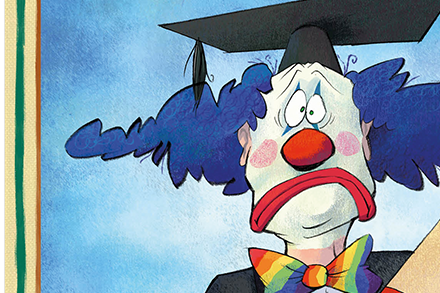
As university admissions have become increasingly obsessed with equal outcomes, many parents fear a kind of reverse discrimination. They worry that a Ucas form bearing the name of an independent school may be bad news for an Oxbridge application. There’s evidence to suggest they’re right. Private-school pupils who transfer to state education after their GCSEs are up to a third more likely to be admitted to Cambridge. Children who remained at private school for A-levels had an acceptance rate of 19 per cent, compared with 25 per cent for those who moved to a grammar school or state sixth form college. Given the assumed prejudice against private school applicants, a recent move by one Cambridge college has surprised many.

The social media moral panic

There is rarely much to commend Keir Starmer for. But on Monday he blocked an amendment to the schools bill which would have required all social media companies to ban under-16s from using their products. In voting against this legislation, MPs have preserved anonymity on the internet, resisted further state powers over what we see online and avoided caving in to a moral panic gripping Westminster. I don’t want to lavish too much praise on the Prime Minister just yet. The sweeping powers brought in by the Online Safety Act already censor most of online life.

The uncomfortable truth about the new Mental Health Act

From our UK edition

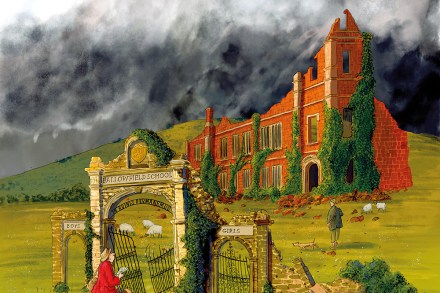
Three years ago, Nottingham University students Grace O’Malley-Kumar and Barnaby Webber, along with caretaker Ian Coates, were murdered by Valdo Calocane in a psychotic rampage. These were preventable deaths. Calocane should have been detained long before he went on his killing spree. The fact that he wasn’t is the consequence of a decade of progressive ideology in the NHS and police, who turned a blind eye to Calocane’s psychosis in part because he was a black man. By 2023, there could have been no doubt about his violent tendencies. In 2020, he was arrested after he attempted to force entry into his neighbour’s flat, believing (falsely) that his mother was being raped inside. Just 11 minutes after he was released on the same day, he attempted to force a woman’s door.

LIVE: The Spectator’s Alternative Covid Inquiry

From our UK edition

53 min listen

As the official Covid Inquiry comes to an end, the Spectator has convened a panel of our own experts to ask the questions that the Inquiry didn’t – or wouldn’t – answer. The Spectator’s commissioning editor Lara Brown is joined by science writer and Conservative peer Matt Ridley, Oxford professor of theoretical epidemiology Sunetra Gupta, former Supreme Court judge Jonathan Sumption, journalist Christopher Snowdon and science writer Tom Whipple. This is a condensed version of the event. Subscribers can access the full event via Spectator TV and you can find more events from the Spectator here.

LIVE: The Spectator’s Alternative Covid Inquiry

Labour has watered down guidance on child transition

From our UK edition

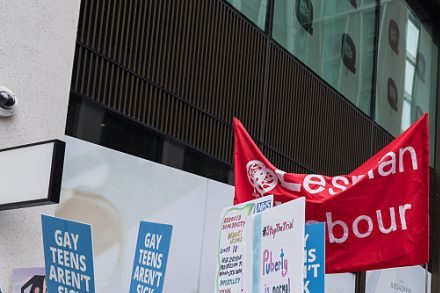
Wilson is said to have claimed that ‘a week is a long time in politics’. Not for the civil servants tasked with producing guidance for schools attempting to support gender-questioning children. On Thursday, seven years after the government first promised statutory advice, we got another draft document for consultation. The delay might not be so egregious were it not for the fact that the last consultation on this issue opened in December 2023 (and closed in March 2024 without a whisper from officials about next steps). Since then, teachers have been navigating the safeguarding issues raised in the Cass Review without any legal direction.

‘Yes, it’s that bad’: inside Oxford’s Saïd Business School

From our UK edition

How do you get into the University of Oxford? It is a question asked by thousands of young people every year. In Martin Amis’s The Rachel Papers (1973), Charles Highway discovers that the key is to feign socialism and memorise a few book reviews. It turns out there is an even better ruse: the Saïd Business School. Saïd has, at best, a dubious origin story. In 1996 the project was forced through at Oxford’s Congregation, the university’s legislative body, despite concerns that naming a school after Wafic Saïd, known for his role as a ‘fixer’ in the al-Yamamah arms deal, in return for £20 million might not do wonders for the university’s reputation. Its first director departed before completing a single term.

AI will bring down Keir Starmer – if Peter Mandelson doesn’t first

From our UK edition

43 min listen

Is Britain ready for Artificial Intelligence? Well, bluntly, 'no'; that's the verdict if you read several pieces in this week's Spectator – from Tim Shipman, Ross Clark and Palantir UK boss Louis Mosley – focused on how Britain is uniquely ill-placed to take advantage of the next industrial revolution. Tim Shipman's cover piece focuses on how the Labour government is approaching AI – there are some positives but, overall, Britain's creaky bureaucracy is blocking progress. To discuss this week's Edition, features editor William Moore is joined by political editor Tim Shipman, commissioning editor Lara Brown and the Daily Mail columnist Sarah Vine. Are you a tech-optimist or part of the 'analogue resistance' that Sarah professes to head?

AI will bring down Keir Starmer – if Peter Mandelson doesn’t first

Trump’s Arctic madness, political treachery & banning social media

From our UK edition

45 min listen

Another week, another foreign policy crisis – this time over Greenland. America's European allies watched as Trump increased the tension over the Arctic territory, only to announce he 'won't use force' in a set-piece speech in Davos. For the Spectator's cover this week, Paul Wood examines the strategic role of the Arctic, both against Russia and China and from nuclear energy to the space race. With a deal supposedly done between Denmark and the US, is there method in Trump's madness? For this week’s Edition, host William Moore is joined by deputy editor Freddy Gray, online commissioning editor Lara Brown and broadcaster Miriam Cates.

The Chinese takeover of Britain’s public schools

From our UK edition

Roedean is now known as ‘Beijing High’. Cheltenham Ladies’ College is ‘Hong Kong College’. In the country’s most elite boarding schools, pupils say that they are one of just a handful of English children. Others note that Chinese has become the dominant language in hallways and dormitories. Many English parents can no longer afford a boarding school education for their children. And the pressure of recently introduced VAT on fees, as well as above-inflation rises year on year, means the number able to cough up will dwindle further. By contrast, China and Hong Kong’s growing economy and cultural obsession with education provides a surfeit of parents with the cash needed to secure the educational prospects of their children.

Debate: is 2026 Kemi’s year?

From our UK edition

16 min listen

Regular listeners will remember back in May we recorded a podcast debating whether Kemi Badenoch was the right fit for Tory leader. At that point in time the Conservatives were falling in the polls and she was facing allegations of laziness and a lack of a political vision. Spool forward to the end of the year and she is in her strongest position ever. She looks more assured in PMQs, her conference speech was a hit and her media game is much improved. But is she actually getting better, or is Starmer getting worse? And will this modest bump in fortunes translate to success at the local elections? James Heale speaks to Paul Goodman, Lara Brown and William Atkinson. Produced by Oscar Edmondson and Patrick Gibbons.

Sandie Peggie and a chilling step backwards for women’s rights

From our UK edition

A woman confronts a biological man in a female changing room. She is later found to have harassed him because he identified as a woman. Many thought this sort of madness was over, but the findings of Sandie Peggie’s tribunal against the NHS confirm that the battle is not won. This year will be remembered as one in which women’s rights took a step forward. The Supreme Court judgment confirmed what we’ve always known to be true: ‘sex’ means sex. It cannot be altered by a piece of paper. It seemed that sanity had been restored. But sometimes we forget just how fast defeat can be snapped from the jaws of victory. The results of Sandie Peggie’s case against NHS Fife serve as a stark reminder. Many have hailed the tribunal as a victory.

Nicotine pouches: solution or smokescreen?

From our UK edition

29 min listen

There has been a renewed focus on tobacco and nicotine products across Europe. Just as countries seek to speed up the process to a smoke-free future, through measures like generational smoking bans and increased regulations on packaging and advertising, there has been a sharp increase in young people using alternative nicotine products like vapes and pouches. Philip Morris International (PMI) expects to see two-thirds of its revenue come from smoke-free products by 2030 – including its product, Zyn. Dr Moira Gilchrist, chief communications officer at PMI, and Charlie Weimers MEP, a member of the Swedish Democrats, join The Spectator’s Lara Brown to talk about how nicotine pouches can help the transition away from tobacco to a smoke-free future.

Lara Brown, James Heale, Sam Olsen & Toby Young

From our UK edition

19 min listen

On this week’s Spectator Out Loud: Lara Brown reports on how young women are saying ’no’ to marriage; James Heale takes us through the history of the Budgets via drink; Sam Olsen reviews Ruthless by Edmond Smith and looks at Britain’s history of innovation and exploitation; and, Toby Young questions the burdensome regulation over Politically Exposed Persons (PEPs).  Produced and presented by Patrick Gibbons.
Are you too cool for marriage?

From our UK edition

The term ‘spinster’ doesn’t seem to scare young women like it once might have. In fact, it is rarely heard nowadays. Instead, women are declaring themselves ‘alpha singles’ and eschewing dating altogether. Influencers are keeping their relationships quiet, for fear that simply posting photos of a new amour can lead to an exodus of followers. Vogue has declared boyfriends to be unfashionable. Women, it seems, are swapping engagement rings for solo travel, matcha lattes and nights spent at home with an LED face mask. Is marriage suddenly uncool? There are certainly plenty of women pushing this idea. Elle McNamara, a beauty influencer who goes by the name ‘Bambi Does Beauty’, posts advice videos on Instagram and TikTok aimed at other women.

Are refugees really worth £266,000 each to the UK economy?

From our UK edition

Refugees could contribute £266,000 each to the UK economy: that’s the claim made by the Together with Refugees coalition and the Public and Commercial Services (PCS) union in a report that says ‘fair and humane changes to the asylum system’ could benefit Britain. Unfortunately, something isn’t quite adding up. Spectator Verify has investigated, and we’ve found that not only is the £266,000 figure highly dubious, but that it’s reasonable to believe the policies proposed could have a significant net cost to the economy. The report makes no secret of the fact its proposals are extremely expensive The report, ‘Welcoming growth: the economic case for a fair and humane asylum system’, proposes four measures, three of which could be ruinously expensive.