China

Porn Britannia, Xi’s absence & no more lonely hearts?

From our UK edition

47 min listen

OnlyFans is giving the Treasury what it wants – but should we be concerned? ‘OnlyFans,’ writes Louise Perry, ‘is the most profitable content subscription service in the world.’ Yet ‘the vast majority of its content creators make very little from it’. So why are around 4 per cent of young British women selling their wares on the site? ‘Imitating Bonnie Blue and Lily Phillips – currently locked in a competition to have sex with the most men in a day – isn’t pleasant.’ OnlyFans gives women ‘the sexual attention and money of hundreds and even thousands of men’. The result is ‘a cascade of depravity’ that Perry wouldn’t wish on her worst enemy.

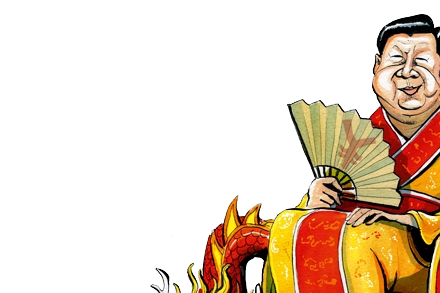
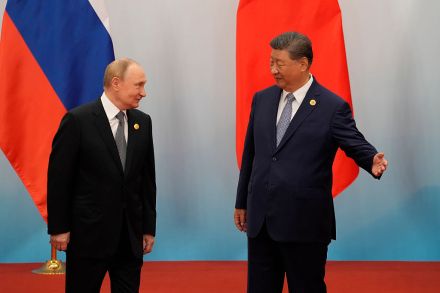
Is Xi Jinping’s time up?

From our UK edition

Stories about Xi Jinping’s father, Xi Zhongxun, are blowing up on social media. He died in 2002, so why the interest in him now? The weird fact is that Xi Zhongxun is being talked about in the West because he is not being talked about in China. Omission is the perverse way that one learns about what is really going on in the opaque world of Chinese Communist party (CCP) politics. China-watchers live on scraps. Xi Zhongxun was a big cheese in his own right. Born in the north-west’s Shaanxi province, he was an early member of the youth league of the CCP. After meeting Mao Zedong at the conclusion of the Long March, which ended up in his home province, he quickly rose through the party ranks.

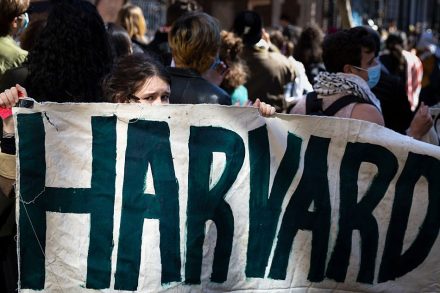
How Harvard lost America

President Trump’s proclamation, “Enhancing National Security by Addressing Risks at Harvard University,” pays a compliment to that crossroads of brilliance and turbidity. It treats Harvard as a serious educational institution, and one that in its misbehavior “presents an unacceptable risk to our Nation’s security.”    Trump was not referring to the risk of immersing some of America’s brightest and most ambitious students in a toxic soup of anti-Semitism, DEI and disdain for our republic. Nor were the “risks” he had in mind “everybody-gets-an-A" grade inflation or a curriculum that wastes the students’ intellectual talents on courses that sound more like entertainment (e.g.

harvard

The disposable vape ban has changed nothing

From our UK edition

I felt a mixture of annoyance and relief when I bought my first non-disposable Elf Bar last weekend, ahead of the disposable vape ban. Relieved, because to all intents and purposes, the new vape is identical to the old one. It looks the same, tastes the same and costs the same. The only difference is that when you give it a tug, a ‘reusable’ pod slides out. Annoyed, because after all the fuss over the ban over the past few years – panicked headlines, furious parents, relentless lobbying – vaping is effectively unchanged. What a waste of time and energy. In the next few days, a third emotion started to creep in: fear. I can’t be the only one to have noticed that the new vapes are just as delicious and, in practice, as disposable as the old ones.

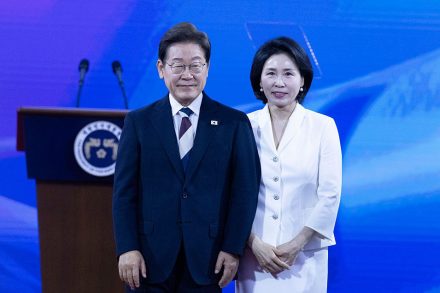
Will the new ‘communist’ leader of South Korea abandon the US for China?

American divisions over politics look positively civil compared to the polarization that has gripped South Korea over the last few years. During the 2022 elections, Yoon Suk-yeol of the conservative People Power party (PPP) narrowly won the presidency over his liberal opponent Lee Jae-myung from the Democratic Party by a razor thin 0.73 percent. But Yoon hastened the demise of his own presidency when on December 3, 2024, he made the poor decision to declare martial law over baseless accusations that the National Assembly’s progressive opposition were collaborating with North Korea. Martial law lasted for only a few hours after both parties unanimously voted to lift the decree.

South Korea

America no longer knows how to fight a war

When educated Americans think about war, they’re apt to think of it in ideological terms. Wars are fought between dictatorships and democracies and the goal is to establish one form of government or the other in the defeated opponent’s territory. That’s certainly been the way American policymakers have thought about the wars of this century and it was the framework during the Cold War as well, when the conflict was said to be, fundamentally, a clash of ideologies. The French Revolution is probably the source of this concept, as the wars it set off were indeed largely about regime change, if not that alone.

war

How China is out-innovating the West

The world received a jolt in 2018 – and it wasn’t from a Silicon Valley whiz or a lab at MIT. It came from Shenzhen, China, where a lanky, unassuming biochemist named He Jiankui did the unthinkable. Using the newly discovered CRISPR-Cas9 toolkit, and asking no one’s permission, He edited the genes of Lulu and Nana, twin baby girls, so that both were born immune to HIV. The scientific establishment gasped, jaws dropped and the moralists clutched their pearls. “Monstrous!” the bioethicists cried. “I was just horrified,” said Jennifer Doudna, who won the 2020 Nobel Prize in Chemistry for inventing the CRISPR gene-editing technique.

China

The frightening advance of China’s military capabilities

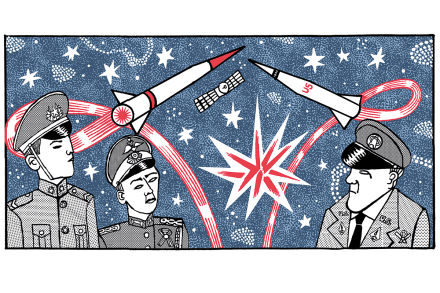
“The number (of kills) could have been higher. We showed restraint.” – Pakistan’s Air Vice Marshal Aurangzeb Ahmed “Godzilla 3? Godzilla 3? ... Explosion in Air.” – Indian Air Force flight radio “China’s hypersonic missiles could destroy US aircraft carriers in just 20 minutes.” – US Defense Secretary Pete Hegseth Historians of the future will need a word or phrase to describe the shock and the disorienting anxiety the West will feel in the coming months as it realizes that China has caught up with – even surpassed it – in technological capability. We could call these “DeepSeek” moments, named after the recent jolt to the western psyche caused by the astonishing capabilities of Chinese artificial intelligence.

South Africa

Inside the struggle for technological control in South Africa

In the dawn light of a South African savanna, a team of rangers huddle around a satellite dish aimed skyward. Their phones spring to life with a signal – an unthinkable result just months earlier in this remote, off-grid conservation zone. The source is Starlink, Elon Musk and SpaceX’s satellite internet service, offering encrypted, high-speed connectivity far from state-controlled networks. But in South Africa, this signal didn’t just connect – it disrupted. And that disruption provides some subtext to the extraordinary “Wild West Wing” showdown between Donald Trump and South African President Cyril Ramaphosa in May, which played out in the Oval Office – with Musk looking on.

Why Washington should make Latin America a priority

As American eyes remain fixed on the Middle East — understandably so — China has been rolling out the red carpet for Latin America, and we have barely noticed. While Xi Jinping welcomes Colombia, one of Washington’s historically reliable allies, into the controversial Belt and Road Initiative, he’s also introducing visa-free entry for South America’s largest economies and greeting regional leaders in Beijing with billion-dollar credit lines and lavish, all-expenses-paid political junkets. Washington, meanwhile, was… busy. If this sounds familiar, it’s because it is. The US has been snoozing through Latin America’s strategic realignment for years, occasionally waking up to mutter something about narcos or illegal migration, then hitting the snooze button.

washington

DoGE should make ending the opioid crisis its legacy

As President Donald Trump trots the globe shopping for a new Air Force One and takes long-distance phone calls in a quest to end the “bloodbath” in Ukraine, a clear and present – and costly, in more ways than one – danger persists on his own country’s soil. A new, first-of-its-kind study from Avalere Health has found the annual average cost of each opioid use disorder (OUD) case in the US “is approximately $695,000 across all stakeholders analyzed.” Per the report’s executive summary:  The costs to the federal government, state/local government, private businesses, and society are driven by lost productivity for employers ($438 billion), employees ($248 billion), and households ($73 billion).

opioid

Donald Trump can be sensible

From our UK edition

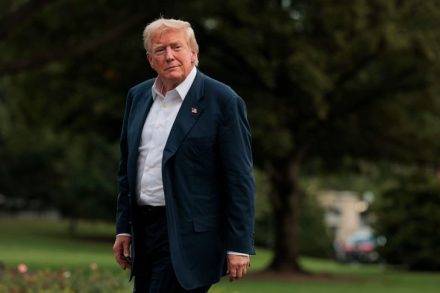
We’ve learnt three things about the future of world trade from the temporary reprieve over tariffs that the US has given China – and China’s response to it.  One is the markets are now confident that both countries will be sensible. The massively negative reaction they gave to ‘liberation day’ on 2 April signalled their hatred of uncertainty but also of stupidity. Before Donald Trump’s arbitrary jacking up of tariffs to what were really absurd levels, they had assumed that he would ensure that there would be reasonable continuity of world trade. His plans, and China’s robust reaction, led to nagging doubts that their assumption might be wrong, there really would be a destructive trade war between the world’s two biggest economies. The S&P index duly plunged.

Letters: Our private schools are China’s next target

From our UK edition

Ka-shing in Sir: Ian Williams highlights (‘Chasing the dragon’, 3 May) the degree to which the Chinese state has acquired interests in the UK. Yet he overlooks a few tentacles of the Asian octopus that have curled around my home region of eastern England. Swathes of high-quality arable land are being subsumed into solar farms, panels for which are manufactured in China. The resultant electricity will be distributed by UK Power Networks, controlled, as Ian points out, by Li Ka-shing. East Anglia’s biggest brewer, Greene King, has been China-owned since 2019, held by Li Ka-shing through CK Asset Holdings. Our government seems craven in its attempts to lure Chinese fast-fashion retailer Shein to list on the London Stock Exchange.

J.D. Vance makes nice with Munich

It was an emollient J.D. Vance who showed up at the Munich Leaders Meeting in Washington, DC. Gone was the Vance who dissed the Europeans in Munich on February 15 by complaining that they were practicing censorship of political views and who met with a representative of the far-right Alternative für Deutschland party. Gone was the Cerberus who barked at Ukrainian President Volodymyr Zelensky on the Oval Office on February 24 that he had exhibited a dismaying lack of gratitude toward America for its assistance to his beleaguered nation. Gone was the Ohio senator who declared in July 2024 that he didn’t give a fig about Ukraine’s fate and was more interested in pursuing an Asia First policy.

jd vance

Why Trumpism won’t fix Clintonomics

As a longtime critic of the Clinton administration’s “free trade” agreements, I’ve lately been mocked by liberal friends who suspect I’m sympathetic to the “plan” hatched by Donald Trump and his senior advisor on trade, Peter Navarro, to “ruin” the country with indiscriminate import tariffs. This sort of jokey ridicule goes with the territory when you jab at neoliberalism from the left. Bill Clinton still has legions of fans among the Democratic party establishment and its media acolytes, and it’s hard for them to face up to the fact that the former president’s economic policies have led directly to Trump’s election as president not just once, but twice.

trade
scientists

Why won’t western scientists condemn Wuhan?

“I am officially launching my new company: Cathy Medicine. We will eradicate diseases in future generations through germline gene editing.” This is one of several strongly – and strangely – worded tweets sent in recent weeks from the X account of He Jiankui, a Chinese scientist who served a three-year prison sentence for gene-editing two human embryos. Those embryos are now people: seven-year old twin girls living under the pseudonyms Lulu and Nana. “Good morning bitches,” Dr. He wrote on April 16. “How many embryos have you gene edited today?” “Get in luddite, we’re going gene editing,” he added the next day. He also wrote: “I literally went to prison for this shit.” Is it the real Dr. He? The journalist Antonio Regalado, who first broke the story of Dr.

Will Jeff Bezos steal Elon Musk’s electric crown with a $20,000 truck?

Though it got somewhat lost in our daily swirl of World In Crisis, last week marked a potentially significant moment in American industry: the formal introduction of a new, low-cost US-based car company. This company is called Slate, mercifully no relation at all to the online magazine. The startup, significantly backed by Jeff Bezos, last week pulled the sheet off a $27,000 fully electric pickup truck, which should be available by the end of 2026.The Slate Truck is significant for what it doesn’t have. The body is plastic, the manually adjustable seats cloth and it lacks electric windows. The driver will operate the windows with a manual crank. It has two doors, a 4x5 bed and black painted steel wheels. It comes in basic gray.

Bezos

Deals, deals, deals vs China, China, China

How was your Liberation Month? It’s been almost 30 days since Donald Trump stood in the Rose Garden of the White House and announced a shocking set of massive tariffs on the world. The event caused huge convulsions in the economic universe: trillions were wiped off the stock market and, under huge pressure, Trump did agree to a 90-day pause on reciprocal tariffs. After that he exempted electrical goods, though his standard 10 percent remains, and the heads of most financial analysts are still spinning trying to figure out what it all means. Yet for all the angst and the apoplexy, yesterday the S&P 500 index closed just 1 percent down from where it was at the beginning of the month.

How China bought Britain

From our UK edition

Somewhere in the bowels of the Foreign Office, civil servants are still working on the government’s ‘China audit’. The report was commissioned by the new Labour government to ‘assess trade-offs in the UK-China relationship’ and to ‘ensure consistency across government, business and academia towards engagement with China’. Little is known about its workings or who’s being consulted. Instead of bringing clarity, the process is deepening confusion, and there are worrying reports that the audit has been pared back to support Keir Starmer’s ‘pragmatic’ approach. All the while, there have been a series of troubling events that demand extreme caution about Beijing. The British Steel debacle is only the latest.