Benedict Rogers

Benedict Rogers is Senior Director of Fortify Rights, co-founder and Chair of Hong Kong Watch, and author of “The China Nexus: Thirty Years In and Around the Chinese Communist Party’s Tyranny”

Why is Britain dragging its feet at giving this Hong Kong activist citizenship?

From our UK edition

Almost six years ago, within hours of the imposition of a draconian National Security Law by Beijing on Hong Kong, the British government initiated a new scheme for Hong Kongers to find sanctuary and a pathway to citizenship in the United Kingdom. It was announced by the prime minister at the time, Boris Johnson, and championed by his Home Secretary Priti Patel. It received unanimous cross-party support. It was one of the few things upon which Boris Johnson and Keir Starmer agreed. More than nine months later, Lau's application remains undecided. The Home Office says it is still conducting “good character” checks Broadly speaking, that consensus has continued.

Beijing’s cruel attempt to stop fleeing Hongkongers

From our UK edition

The Chinese Communist party regime likes to portray itself as the new superpower, displaying its strength on the world stage. In reality it is an extraordinarily fragile, sensitive, fearful, petty and vindictive snowflake of a dictatorship that is so surprisingly un-self-confident that it responds to any criticism with aggression, any dissenting or disloyal idea with repression, and any perceived slight with tit-for-tat retaliation. We have seen this last week with the decision by Beijing to impose sanctions on nine British citizens — politicians, lawyers and an academic — and four entities, including the Conservative party Human Rights Commission, which I co-founded and serve as deputy chair.

Britain cannot leave Jimmy Lai to die in jail

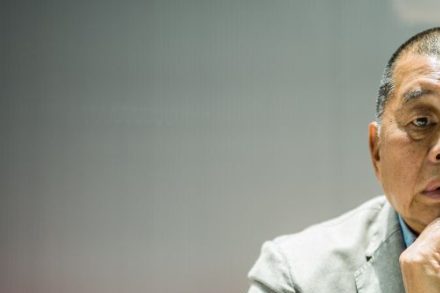
The decision to sentence Jimmy Lai to 20 years in jail in Hong Kong is no surprise, but it is no less shocking or heartbreaking. For his family, especially his courageous wife Teresa, son Sebastien and daughter Claire, who have advocated so tirelessly for their father over the past five years, one can only imagine the pain and grief they feel. Sebastien and Claire have walked the corridors of power in Washington, DC, Westminster, Ottawa, Brussels, Paris and beyond, and sat in television studios for hour after hour, seemingly to no avail. For Hong Kong, this is yet another dark day, yet another nail in the coffin of the city’s freedoms. And for everyone who cares about liberty, the rule of law, and basic human rights, this sentence is a punch in the solar plexus.

What Keir Starmer should say to Xi Jinping

From our UK edition

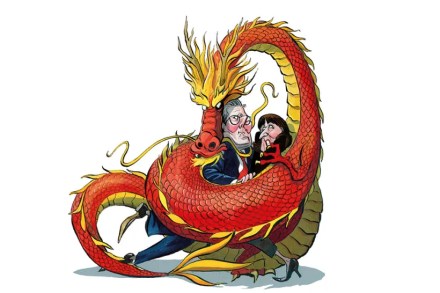
Keir Starmer is flying to China today with a delegation of business leaders in order to build ties with Beijing. Already the visit is a missed opportunity. Starmer should have made his visit conditional on the release of British citizen Jimmy Lai from jail in Hong Kong. Now that the trip is going ahead regardless, he should use his visit to Beijing to demand Mr Lai’s freedom as a precondition for any trade deal. Jimmy Lai is 78 years old and in deteriorating health. He has spent the past five years in solitary confinement, all because he campaigned for freedom and democracy. The newspaper he founded – the Apple Daily – was forcibly shut down in 2021, and he is now awaiting sentencing under Hong Kong’s draconian National Security Law and facing a potential life sentence.

Keir Starmer must not forget Jimmy Lai

From our UK edition

The conviction of 78 year-old British citizen, Hong Kong entrepreneur and pro-democracy campaigner Jimmy Lai yesterday on two counts of conspiracy to collude with foreign powers and one charge of conspiracy to publish seditious publications is one of the great travesties of our time. It was yet another dark day for Hong Kong and a direct assault on the values of freedom, human rights and the rule of law. It was not, however, a surprise. Ever since Lai was arrested and jailed five years ago on multiple other trumped-up charges, and ever since his trial under Hong Kong’s draconian national security law began two years ago, the verdict has been predetermined. It was a bogus trial in a kangaroo court in a repressive police state.

This is Hong Kong’s Grenfell

From our UK edition

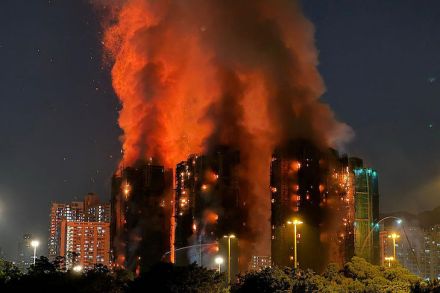
Hong Kong is reeling from the tragedy of a devastating fire which ripped through seven 30-storey apartment blocks in a crowded housing estate two days ago. The death toll so far is 128 and still rising. At least 76 have been injured and almost 300 are missing. Stories abound of survivors trapped in flames and smoke. The death toll so far is 128 and still rising. At least 76 have been injured As is so often the case in such tragedies, the emergency services responded with inspirational courage. Firefighters battled the blaze for hours, medics treated the injured, and rescue workers pulled survivors from smoke-filled stairwells. At least one firefighter has died.

What is Britain doing to help free Aung San Suu Kyi?

From our UK edition

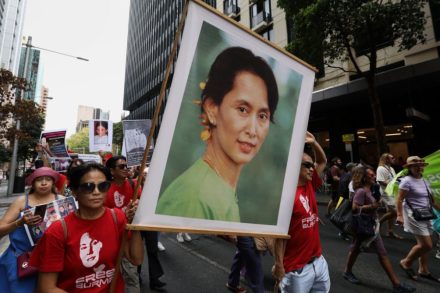
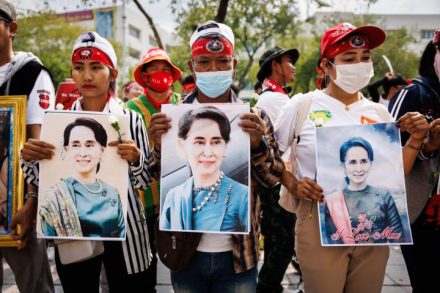
In a prison cell in the middle of Myanmar (Burma), isolated from other prisoners, sits an elderly woman who marks her 80th birthday today. She is serving a 27-year sentence. Yet she is no ordinary 80-year-old. Today, she should be approaching the end of her second term as de facto head of her country’s government, having won an overwhelming election victory almost five years ago. She should be thinking about retirement and handing over the reins to the next generation to take her country’s democracy further. Instead, she has spent the past four years in jail after her elected government was overthrown in a military coup on 1 February 2021, detained by a military junta still seen as illegitimate by much of the world.

The new pope must stop bending the knee to Beijing

From our UK edition

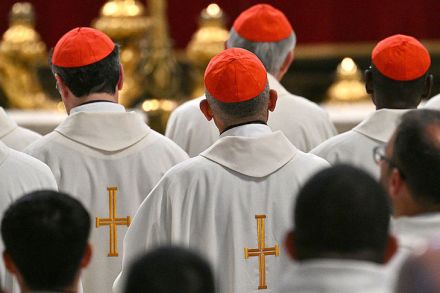
As 133 cardinal electors gather in the Sistine Chapel tomorrow to begin the process of choosing a new Pope, there will be many considerations in their minds. They will be weighing up whether to build on or reject Francis’ legacy of progressive reform, whether to move in a more liberal or conservative direction, and whether to return the papacy to its Italian roots, opt for another European, or build on the precedent of the Latin American Francis and branch out to the wider world. Could this be the moment for an Asian or African pope? Persecution of Catholics – and Christians more broadly – has intensified in China over the past decade Amidst all these questions, there is one which may well be pivotal: what to do about China?

The tragedy of Myanmar

From our UK edition

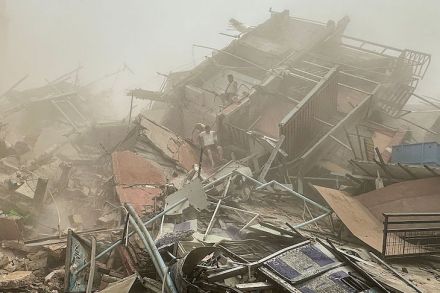
Myanmar, or Burma as it used to be known, has experienced far more than its fair share of tragedy over the past 75 years or more. The death and destruction caused by yesterday’s 7.7-magnitude earthquake is the latest in a litany of suffering which this beautiful but benighted South-East Asian nation has endured. I have visited the areas close to the epicentre of the earthquake many times in the past. I have been in Sagaing, Mandalay and the capital, Naypyidaw. The scenes of the devastation there are heartbreaking, because they are scenes of devastation affecting places and people I know well.

Myanmar’s plight shames the West

From our UK edition

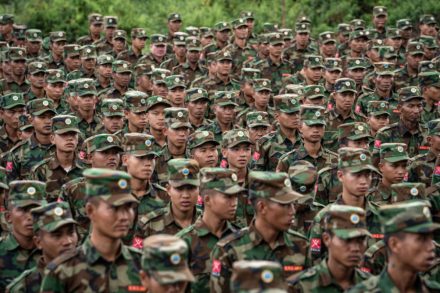
Four years ago, Myanmar’s fragile, nascent quasi-democracy was snuffed out after less than a decade of experimenting with limited reform and opening. In the early morning of 1 February 2021, armoured vehicles rolled down the capital’s absurd 20-lane empty highway. Adding to the surreal quality of the day, an aerobics instructor filming an exercise routine unwittingly captured the unfolding coup d’etat in the background of her video. The army arrested most of the country’s democratically elected leaders, including Nobel Peace Prize Laureate Aung San Suu Kyi. The Commander-in-Chief of the armed forces, General Min Aung Hlaing, seized power, plunging Myanmar into yet another era of repression, poverty and war.

Britain must help Burma win its freedom

From our UK edition

Three years ago today, the military in Burma (or Myanmar, as the junta prefers to call it) plunged the country back into hell. On 1 February 2021, Burma’s army, led by commander-in-chief General Min Aung Hlaing, seized power in a coup. After a decade of apparent liberalisation, which saw political prisoners released, space for civil society and independent media open up and democratic elections held, the clock was turned back on the country by more than ten years. Hlain's army overthrew the democratically-elected civilian government of Aung San Suu Kyi, throwing her and many of her ministers and parliamentarians in jail.

The free world has abandoned Hong Kong

From our UK edition

Forty years ago today, British prime minister Margaret Thatcher and China’s Premier Zhao Ziyang signed the Sino-British Joint Declaration, an international treaty designed to pave the way for the handover of Hong Kong to China on 1 July 1997. Meeting in the Great Hall of the People in Beijing, leaders of the Chinese Communist party (CCP) regime promised to respect a 'high degree of autonomy' for Hong Kong and uphold the territory’s way of life, including its basic freedoms and the rule of law for at least fifty years from the time of the handover.  They lied – or at least, they broke their promises. Forty years on, that treaty – registered at the United Nations – and the promises within it lie in tatters.

The jailing of democracy activists marks a dark day for Hong Kong

From our UK edition

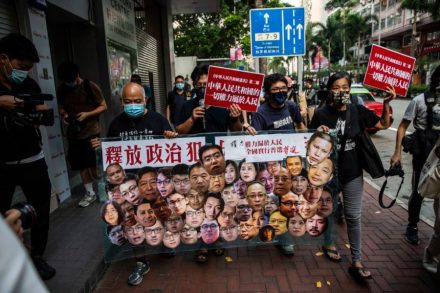
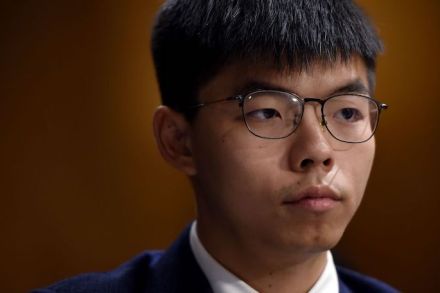
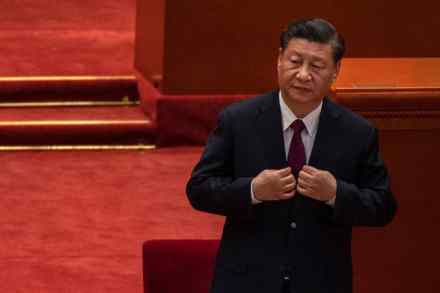
Hong Kong has sentenced dozens of democracy protestors to years in prison, in the largest trial since Beijing’s National Security Law was imposed on the city in 2020. The imprisonment of the 45 former elected legislators and pro-democracy campaigners comes just a day after Keir Starmer met Xi Jinping, telling the Chinese leader that he wants a “strong UK-China relationship”. The draconian punishments that have been dished out today are a humiliation for the Prime Minister’s attempt to build rapport with Beijing. Student leader Joshua Wong was imprisoned for four years Among those who have been locked up are law professor Benny Tai, sentenced to ten years, journalist Gwyneth Ho, jailed for seven years, and student leader Joshua Wong, imprisoned for four years.

The bravery of Hong Kong’s Umbrella Movement must not be forgotten

From our UK edition

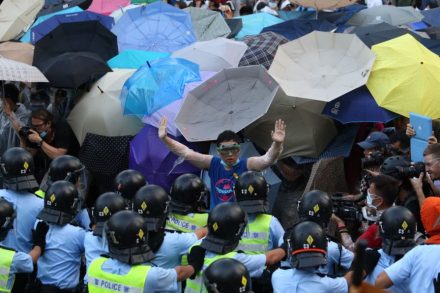
Ten years ago this week, a sea of yellow umbrellas filled the streets of Hong Kong in what at the time was the largest mass campaign for democracy in the city. In what became known as the 'Umbrella Movement', the people of Hong Kong courageously showed the world their desire for freedom – and their determination to fight for it. For 79 days, crowds occupied major streets in the centre of Hong Kong, demanding genuine multi-party democracy. The protests were preceded by demands by civil rights groups in an unofficial referendum for universal suffrage in elections for the city’s chief executive (effectively, the mayor) – a right promised in Hong Kong’s mini-constitution, the Basic Law.

Lionel Messi shouldn’t have been in Hong Kong in the first place

From our UK edition

Football has turned messy in Hong Kong. Last Sunday, the beleaguered Hong Kong Chinese Communist party was hoping for a public relations boost after Inter Miami agreed to play a friendly in the city against the Hong Kong Team. Instead, the game was overshadowed by a furious row after Miami footballer Lionel Messi failed to come out on the pitch because of a groin injury. The Hong Kong government reacted with outrage, and fans booed the players and demanded refunds. Three days later Messi was well enough to play in Japan, adding insult to injury in the eyes of the CCP. The outcry has now spread to mainland China, with state media there accusing Messi and his club of ‘political motives’ aimed at ‘embarrassing’ Hong Kong.

Parliament needs protecting from foreign infiltration

From our UK edition

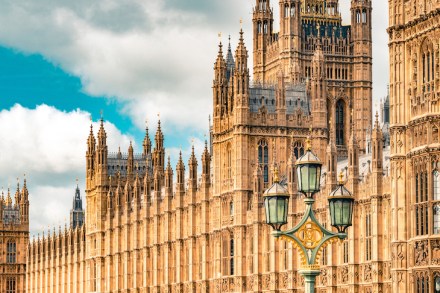
The suggestion this weekend that an alleged Chinese spy is a British-born parliamentary researcher – leading a policy group aimed at countering the growing threat from Beijing – has sent shockwaves through Westminster and beyond. The individual denies the accusations and says he is ‘completely innocent’ but MPs who know him and many of us who interacted with him are obviously concerned.  The investigation into the alleged spy is still ongoing, but regardless of the police's findings Xi Jinping’s regime has long been running a campaign to influence, infiltrate and intimidate people abroad, with the aim of silencing critics and subverting democracy.  These concerns have gained particular prominence in the UK.

Burma’s generals aren’t really pardoning Aung San Suu Kyi

From our UK edition

The brutal generals ruling Burma – or Myanmar as they officially call it – seem to take us for fools. Today the junta issued a ‘partial pardon’ for the country’s jailed former leader Aung San Suu Kyi and reportedly transferred her from prison to ‘a more comfortable state-owned residence’. By doing this, they hope to score a propaganda win, creating the impression of leniency. It is vital though that the international community does not fall for this nonsense and sees through the regime’s lies.  Aung San Suu Kyi should never have been arrested and jailed in the first place. Her party, the National League for Democracy (NLD) – which is now outlawed by the regime – was re-elected by an overwhelming margin in 2020.

What the Tiananmen Square massacre teaches us about Xi’s China

From our UK edition

As millions of Brits celebrate the Queen’s Platinum Jubilee, others will be gathering outside the Chinese Embassy in London to mark a different event: the 1989 Tiananmen Square massacre. Beijing has done its best to wipe this day from the history books, but it’s vital we don’t forget an event that has foreshadowed the direction the Chinese Communist Party has taken in the years since. 33 years ago on the streets of China’s capital, we saw the true nature of the Chinese regime as it turned its guns and tanks on thousands of peaceful protesters. ‘They were shooting, people were running, and people tried to rescue others,’ said Jan Wong, a veteran Canadian journalist who was in Tiananmen Square on the day of the massacre.

China’s censors have already won

From our UK edition

The Chinese Communist Party regime has always been censorious. Its so-called ‘Great Firewall’ means that Facebook, Twitter and Google are blocked in China, many are films banned and even Winnie the Pooh was persona non grata after netizens spotted his resemblance to Xi Jinping. In the Chinese version of Bohemian Rhapsody, references to Freddie Mercury’s sexuality – an important part of his story – are purged. Pirates of the Caribbean: Dead Man’s Chest was banned completely, for its references to ghosts and cannibalism, as was Nomadland, due to comments by its Chinese-born director Chloe Zhao, who described China as ‘a place where there are lies everywhere’. But now, Beijing is going even further, and directly changing a film’s plot.

Myanmar is on the verge of collapse

From our UK edition

Deep in south-east Asia sits a country where 54 million people are living a total nightmare. A nation that, benighted for decades, now faces a humanitarian catastrophe. Myanmar – otherwise known as Burma – has been hit by a quadruple whammy: a military coup, a half-century long civil war reignited with a vengeance, economic collapse and coronavirus. It faces a dire humanitarian emergency fuelled by coup, collapse, civil war and Covid. Since the coup on 1 February, over 900 people have been killed by the army and over 5,000 jailed. Hundreds of thousands have been displaced after the military unleashed an aerial bombardment on ethnic minorities on a scale not seen for years.