China

You want a peace of me?

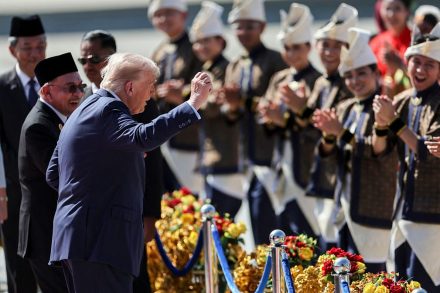
President Trump prevented World War Three yesterday, or so he claimed multiple times. “No one wants World War Three,” he said. Fact check: true. Trump and many of the world’s finest leaders gathered behind a large, tacky but also touching sign that read “Peace 2025.” Italy’s Giorgia Meloni also attended the summit. Trump called her “beautiful,” saying that in the US calling a woman beautiful could mean the “end of your political career.” Fact check: true. “I’ll take my chances,” Trump said. Cockburn enjoyed the day’s festivities, which featured enough comic moments to fill a season of The Office.

peace

China spy scandal: ‘a masterclass of ineptitude’?

From our UK edition

13 min listen

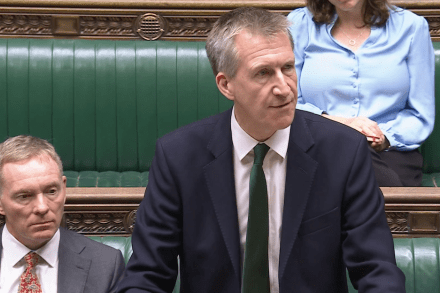
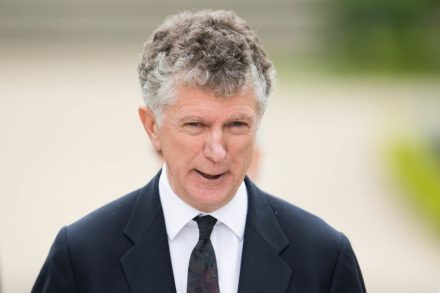
Tim Shipman and Charles Parton, China adviser at the Council on Geostrategy, join James Heale to discuss the ongoing fallout over the collapse of the Westminster spy case. Security minister Dan Jarvis answered an urgent question on the matter late on Monday in Parliament, stringently denying that the government played an active role in collapsing the case. But, as Charles and Tim stress, the case still doesn't add up. Is it as simple as the government not wanting to offend China? And is the deputy national security adviser being 'hung out to dry'? Produced by Patrick Gibbons.

Spy scandal: what is Labour’s policy on China?

From our UK edition

15 min listen

It’s a ‘great and beautiful day’, as Donald Trump wrote in the guestbook at the Knesset, where he will address the Israeli parliament after the final hostages were handed back to Israel. It is, of course, a historic piece of diplomacy, and the conversation in Westminster has turned to the extent to which the UK was involved. Bridget Phillipson claimed over the weekend that Britain played a ‘key role’ in bringing about peace – much to the chagrin of Mike Huckabee, the US Ambassador to Israel, who called her ‘delusional’. Is she? The government have more pressing issues, however, with the collapsed China spy case – the sudden abandonment of a case brought against two men (Chris Cash, a parliamentary researcher, and Chris Berry, an academic).

In defence of Chris Cash

From our UK edition

Can you be a spy by mistake? If, with no treacherous intent, without ever intending to disadvantage your own country, you share information which might give another country advantage over yours, are you spying for that country? In ordinary usage I’d answer these questions with a firm no. Spies operate for many reasons – reward, blackmail, ideology or as a profession – but they do know they are spies. It’s intentional behaviour. If I’ve ever met or communicated with Chris Cash, I don’t remember it. He has, however, been described to me by mutual friends whom I trust. Their descriptions concur. Nothing I’ve learnt about this young man, who worked at Westminster on research into China, suggests it’s likely he can justly be accused of being ‘a Chinese spy’.

Did Jonathan Powell torpedo the China espionage trial?

From our UK edition

The antics of Keir Starmer and his top security adviser over the collapsed China espionage case bring to mind the slapstick British movie Carry On Spying – which is precisely the message it will have conveyed to Beijing. Instead of Bernard Cribbins, Kenneth Williams and their team of fictional incompetents, the real-life Whitehall farce has Jonathan Powell on a single-minded mission to appease China. Powell, Starmer’s national security adviser, has been accused of torpedoing the trial to avoid embarrassing China at a time when he is leading efforts to rebuild diplomatic ties with Xi Jinping. One can only imagine the despair in Britain’s security agencies and the Crown Prosecution Service, who would not have brought the charges unless they were reasonably confident of success.

The celebrity guide to selective outrage

In the West, outrage has become performance art. It’s not about real causes, but about carefully branded ones that play well in pastel Instagram carousels. Climate change? Of course. A vague plea for “justice”? Naturally. A curated “Free Palestine” hashtag? Absolutely. But when it comes to standing with their peers in the Middle East – singers, actors, writers who are literally jailed or executed for their art – the voices vanish. This isn’t about Israel. The point is larger: why do so many Western artists reserve their outrage for one convenient villain while ignoring regimes that jail, torture and kill their peers? Syria’s Christians and Druze are being ethnically cleansed. Yemen is enduring a famine.

Billie Eilish

A new era of nuclear weapons is here

From our UK edition

The world is moving into a more dangerous age. According to the Peace Research Institute Oslo, last year set a grim record, namely the highest number of state-based armed conflicts in more than seven decades. At the same time, we are seeing a fundamental realignment of global geopolitics – made clear from the recent meeting of the Shanghai Co-operation Organisation in Tianjin and the ‘Victory Day’ parade held in Beijing shortly afterwards. There, the leaders of what many in the West see as an emerging new world order stood shoulder to shoulder as Chinese military hardware was put on display to mark 80 years since the end of the second world war. That anniversary underscored the commemoration last month to mark the only two occasions where atomic bombs have been used.

Fragile China: who’s really in charge?

From our UK edition

Xi Jinping effectively vanished in July and the first half of August. Some China watchers speculated that his unexplained absence was a sign that he was losing his grip on power. But he has since reappeared and been very visible again. At the end of last month, he visited Tibet, then indulged in a high-profile, back-slapping meeting with Vladimir Putin and the Indian Prime Minister Narendra Modi in Tianjin. He capped off his busy fortnight with the 3 September military parade in Beijing and a second meeting with his star guest Putin, this time accompanied by Kim Jong-un. So, a great triumph for the neo-Maoist leader and the new Axis of Evil? Not so fast. The lessons to draw from these three events are a sight more nuanced. Here are five take-aways from Xi’s last few weeks. 1.

How powerful is the China-Russia alliance?

This summer’s big security summit in Tianjin, followed by the military parade in Beijing on September 3, has been widely interpreted as a sign of a new global realignment. At a time of growing friction within the US alliances in East Asia and Europe, President Xi Jinping of China, President Vladimir Putin of Russia and about 20 leaders mostly from Central Asia have not just reaffirmed their nations’ close ties. They sought to strengthen the emerging multipolar system, which they see as a rejection of the US-dominated global order. This idea is hardly new.

China
space

Russia, China and the US are preparing for battle in orbit

Russia is playing a dangerous game in space. Despite its history it’s a declining space power, having abandoned many of its long-term projects due to lack of money and technology. It effectively crippled much of its space activity when it attacked Ukraine, which was the source of many of its high-tech components. This year has seen its lowest launch rate since 1961 – the year Yuri Gagarin became the first person to go into space. Yet significantly, three of Russia’s eight orbital launches this year (the US has launched more than 100) could be potential anti-satellite weapons. On May 23, Russia launched the Cosmos 2588 satellite from the Plesetsk launch site situated 500 miles north of Moscow. The Cosmos designation is a general term used to obscure the satellites’ purpose.

Why Trump must build a nuclear reactor on the Moon

Sean Duffy, the secretary of transportation whom President Trump appointed last month as temporary leader of NASA, has issued a directive to fast-track efforts to put a nuclear reactor on the moon. “To properly advance this critical technology to be able to support a future lunar economy, high power energy generation on Mars, and to strengthen our national security in space,” he says.A small nuclear reactor on the moon is a good idea, but the directive is about more than that: it is about renewing America’s leadership in space exploration that, with its magnificent achievements receding into the past, looks vulnerable. Bill Nelson, NASA’s last leader, didn't mince his words when it came to the new rivals, China. “It is a fact: we’re in a space race.

The Moon

Tariffs and the psychodrama of Trump diplomacy

A bleached white conference room, somewhere near Jeddah in Saudi Arabia. On one side sits Volodymyr Zelensky, the Ukrainian leader, in his soldier-boy outfit. On the other, Russian President Vladimir Putin in dark suit and tie. And in the middle, a beaming President Donald J. Trump. "People said this could never happen," he says, as Zelensky and Putin stare awkwardly at the floor. "But it’s a beautiful thing." A White House memo lands in inboxes across the world: "THE PEACEMAKER-IN-CHIEF..." Pure fantasy, perhaps, but Trump does have an almost cosmic ability to get what he wants – and he really wants to end the war in Ukraine. Last night, having spent weeks telling the world how "disappointed" he was with Putin, Trump abruptly announced "great progress" in US-Russia dialogue.

trump Steve Witkoff and Vladimir Putin shake hands (Getty)

The Art of the Dealmaker-in-Chief

Who really thought Donald Trump’s America was about to join the stampede of first-world powers promising to recognize Palestine at the United Nations?  "Wow!" He exclaimed this morning on Truth Social. "Canada has just announced that it is backing statehood for Palestine. That will make it very hard for us to make a Trade Deal with them."  All over the world, commentators convinced themselves that Trump’s expression of concern on Monday about "real starvation" in Gaza meant he was pivoting with global opinion and against Israel.  It turns out, however, that Team Trump is not for turning when it comes to the Middle East. Marco Rubio, the US Secretary of State, has accused the countries now embracing Palestinian statehood of falling for "Hamas propaganda".

Trump deals

What’s next for Taiwan?

From our UK edition

When Portuguese traders sailed past a verdant, mountainous land on the fringe of the Chinese empire in the mid-16th century, they named it Ihla Formosa – ‘beautiful island’. But Kangxi, the third emperor of the Manchu Qing Dynasty, was less impressed when his naval forces captured it in 1683, scoffing: ‘Taiwan is no bigger than a ball of mud. We gain nothing by possessing it, and it would be no loss if we did not acquire it.’ Beautiful or not, Taiwan was a pirates’ lair, inhabited by tattooed head-hunters and best left alone. Yet the Qing clung on to Taiwan for two centuries, with Chinese settlers gradually displacing the indigenous Austronesian population.

The merchant as global reporter

From our UK edition

Joad Raymond Wren’s ambitious history of early modern European news, capacious in structure, monumental in volume, is named for a witticism by John Earle (c.1601-65). The author of Microcosmography, a compilation of satirical ‘characters’ whose obvious modern heir is Victoria Mather’s ‘Social Stereotypes’, was arguably the funniest member of mid-17th century England’s most likeable clique, the Great Tew Circle. Wren more than once returns to Microcosmography’s comparison of the nave of St Paul’s, where London’s freshest newsletters were to be procured, with the commercial buzz of the Royal Exchange, with news replacing goods and hard cash as a potentially fruitful alternative currency.

The mixed legacy of Zbigniew Brzezinski, strategist of the Cold War

From our UK edition

In the autumn of 1938, within nine weeks of each other, two boys arrived in New York, fleeing the gathering storm: a 15-year-old Jewish German and a ten-year-old Catholic from Poland. Both would repay the mortal debt they owed by dedicating their lives to the Land of the Free. The older boy was, of course, Henry Kissinger, later Grand High Poobah to Richard Nixon and Gerald Ford. The younger was Zbigniew Brzezinski, Jimmy Carter’s national security adviser from 1977 to 1981 and the subject of a magisterial biography bythe Financial Times’sWashingtonsupremo, Edward Luce. From the first, Zbigniew Brzezinski (pronounced ‘ZbigNieff BreshinSki’, as Carter helpfully informed his team) sat in Kissinger’s shadow, always a step or two behind the great Bavarian.

Maoist China in microcosm: Old Kiln, by Jia Pingwa, reviewed

From our UK edition

Old Kiln is a novel spoken by the muse of memory but carved into shape by the fear of forgetting. Jia Pingwa (b.1952) wrote the first draft in 2009 after visiting his home village. Remembering a prolonged bloody conflict that tore the village apart during the Cultural Revolution, he was disturbed to find all traces of it gone – and the younger generation knowing nothing about either the violence or the Cultural Revolution itself. Old Kiln also confronts a similar amnesia afflicting the entire country. The fictionalised village is China writ small – its kiln that fires porcelain providing the book’s title.  Jia is superb at marshalling large-scale scenes of chaos and balancing them with quieter interiors.

Could the giant panda be real?

From our UK edition

Nathalia Holt’s book begins irresistibly. The year is 1928. Two sons of Theodore Roosevelt called Ted and Kermit – yes I know we’re thinking it’s a Wes Anderson movie – have smoothed a map out on the table in front of them. Let’s imagine the setting is a bit like the Explorers’ Club in New York, with exotic anthropological curios on the walls – poisoned spears and wooden shields – and globes the size of beach balls lit up from within. The land they are examining is mainly coloured in greens, browns and greys. But running across the map, like the stripes of a tiger, are irregular white blotches. Each of these blank spaces represents terra incognita. This is China, or what was then known of it.

China targets US citizens with biowarfare weapons

On June 3 the Department of Justice announced charges against two nationals of the People’s Republic of China (PRC). The offenses ranged from conspiracy and false statements to visa fraud and smuggling. The final charge was the most concerning, as the item in question was a fungus called Fusarium graminearum. According to DOJ, this fungus is “a potential agroterrorism weapon” responsible for head blight, a disease that targets multiple crops from wheat and maize to barley and rice. It causes billions of dollars in economic losses worldwide each year, and its effects are pronounced: vomiting, liver damage, and reproductive disruptions in both humans and livestock. Welcome to the newest front in the Chinese Communist party’s (CCP) cold war against Americans.

Biowarfare

America’s next president must study Trump’s golden escalator ride

On June 16, 2015, Donald Trump descended a golden escalator in Trump Tower and into political history. The press corps snickered. The consultant class rolled its eyes. Late-night comedians feasted on the spectacle. Most people thought it was a joke. What they missed – and still miss – is that Trump didn’t invent the anger that powered his campaign. He simply noticed it first. The pundits focused on Trump’s bombast. But voters were focused on something else entirely: someone, finally, was saying out loud what they’d been thinking for years. Take China. In 2015, Trump said, “They’re ripping us off.” It wasn’t elegant. But it was true.

Donald Trump