James Tidmarsh

James Tidmarsh

James Tidmarsh is an international lawyer based in Paris. His law firm specialises in complex international commercial litigation and arbitration.

Could the Chinese embassy be an opportunity for Britain?

From our UK edition

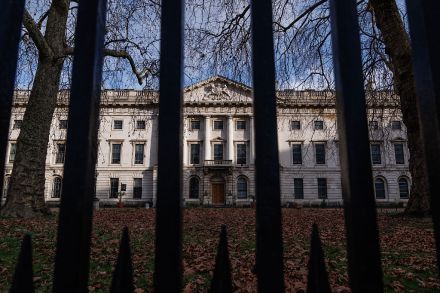
Keir Starmer has formally approved the largest Chinese embassy ever built in Europe. The chosen site, Royal Mint Court, opposite the City of London, is close to sensitive financial and communications infrastructure. Ministers insist the risks can be managed, but there are plenty of sceptics. The assumption underpinning much of the criticism of the embassy is that it represents a unique security risk – that Britain has sleepwalked into granting Beijing a listening post in the heart of the capital. Yet could a colder calculation have been at work? For the British state, perhaps the embassy is not a vulnerability but a controlled environment it can exploit. Britain may be able to penetrate the site more effectively than China can exploit it There is form here.
France’s bistros are dying

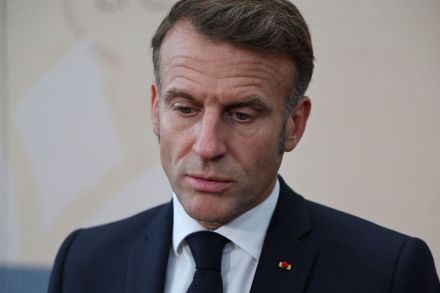
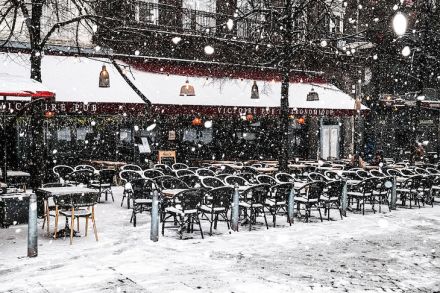
Emmanuel Macron says France’s traditional bistros should be granted Unesco world heritage status. Speaking at the Élysée this week, the French president vowed to help save the country's traditional cafes. 'This is a fight that we want to take on, because our cafés and bistros aren’t just selling croissants, baguettes and traditional products – they’re also on the front lines of preserving French craftsmanship and know-how,' Macron told a group of French bakers at the annual Epiphany cake ceremony. France doesn't need to list its bistros. It needs to decide whether it still wants them Macron is right about what the bistro represents. For generations, it has been a shared meeting place as much as a commercial one; somewhere to linger and belong.

Trump’s Greenland grab would expose Europe’s ultimate weakness

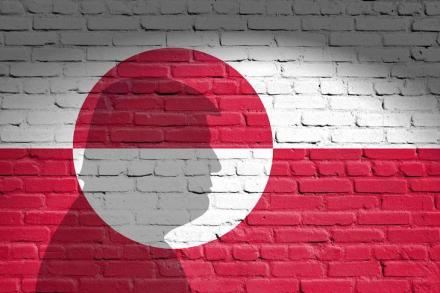
As Donald Trump weighs up taking control of Greenland, Britain and the EU has fallen back on a familiar strategy: talk tough, and do nothing. The UK joined France, Germany, Italy, Poland, Spain and Denmark yesterday in making a joint statement affirming that ‘Greenland belongs to its people’. Arctic security, it said, must respect ‘sovereignty, territorial integrity and the inviolability of borders’. Greenland would be the moment when that pretence finally collapses If Donald Trump decides to take Greenland, much like today’s statement, Europe’s initial response would be loud, formal and legally impeccable. Europe and the UK would protest loudly, threaten, – and then do almost nothing at all.

The New Year’s Eve fire shattered the myth of Swiss invulnerability

From our UK edition

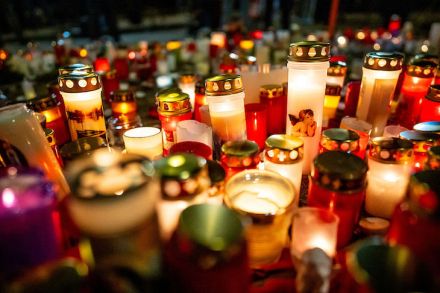
This was not supposed to happen in Switzerland. In a country where disasters are meant to be engineered out, risk neutralised and failure anticipated, the idea of a crowded bar turning into a death trap feels almost unthinkable. Around 40 people died inside the Constellation bar in Crans Montana on New Year's Eve, and up to 119 were injured, many suffering serious burns. Switzerland has become more open and more exposed. It’s also become more complacent Witnesses describe flames racing across the ceiling within seconds. Systems that were assumed to hold clearly did not and panic set in. The inquiry will take time, but the outline is already visible. The details now emerging are uncomfortably familiar.

France is becoming used to gratuitous violence

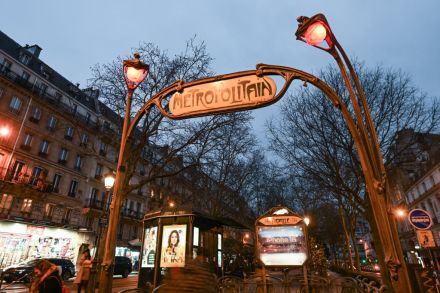
France seems to be witnessing more gratuitous attacks and stabbings. On Boxing Day afternoon, in the middle of central Paris, a man went on a knife rampage through the metro. He struck out at random, stabbing women on station platforms at République, Arts et Métiers and Opéra. There was screaming. There was blood. One of the victims was pregnant. There was no argument, no robbery, and no apparent motive. The attacks were entirely indiscriminate. Random violence has become part of the background noise of public life After each assault, the attacker didn’t run, he boarded the next train. Passengers recoiled. Doors closed. The train moved on. Station by station, through some of the busiest metro stations in the city, he continued.

Paris is a city afraid

From our UK edition

The New Year’s Eve concert on the Champs Élysées has been cancelled for security reasons. Paris was supposed to host its usual spectacle. A free open-air concert at the Arc de Triomphe, video projections on the monument and the midnight festivities that once drew close to a million people. Instead, the concert has been scrapped. It will be replaced on national television with a prerecorded concert filmed weeks ago with a handpicked crowd to mimic a celebration Paris no longer believes it can safely host. A capital once famed for its public life now performs it under studio conditions. It marks the collapse of what used to be one of the simplest pleasures of Parisian life. For decades families and friends would spill out onto the streets on New Year’s Eve.

Violence is being normalised against the National Rally

From our UK edition

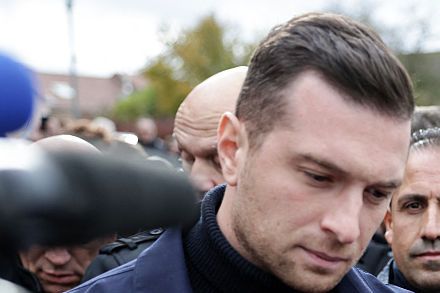
Jordan Bardella has been physically attacked twice over the past five days. Flour was thrown over him at an agricultural fair in Burgundy, then this weekend an egg was crushed on his head at a book signing in Moissac in the Tarn-et-Garonne. He walked away unharmed, but the incidents could easily have been more serious. They come at a moment when Bardella leads the polls to become France’s next president, with Marine Le Pen increasingly sidelined after she was barred from running by the courts. Right-wing officials and politicians are facing a steady rise in insults, threats and physical aggression.

The report that lays bare France’s Islamist networks

From our UK edition

Bruno Retailleau, France’s former interior minister, has with his Senate group just published the toughest report on Islamism in a generation. They warn that Islamist networks have taken hold of entire swathes of French public life – from schools and sports clubs to student housing, neighbourhoods and councils. In the report, 29 Republican senators set out what they describe as a coordinated effort by Islamist networks to impose parallel norms and bypass republican authority.

France’s integration nightmare

From our UK edition

France has spent decades telling itself the same comforting story: that the children and grandchildren of Muslim immigrants would become more French than their parents. Secular, republican, integrated. The older generation might cling to conservative religious values, but the young raised on liberté, égalité and fraternité would drift towards the mainstream. That assumption has taken a serious blow. A country that once prided itself on assimilating newcomers has spent the past several decades dismantling the very idea of a dominant national ethos According to a new IFOP poll, 57 per cent of French Muslims aged 15 to 24 place the rules of Islam above the laws of the Republic. This is up over 10 per cent since 2021. Nearly half express sympathy for Islamist movements.

Why Trump is freezing out Five Eyes allies

The most powerful intelligence alliance in the world is breaking up. In January, Donald Trump restricted intelligence-sharing on Russia and Ukraine, cutting allies out of negotiations and freezing certain channels entirely. Then in March came the so-called “Ukraine intel blackout,” an unprecedented freeze that shut Britain and Australia out of updates on Russian troop movements. And last month, the Dutch said they were scaling back intelligence-sharing with America over fears of “politicization.” Trump tends to treat intelligence as leverage, a tool to reward countries that fall in line with Washington and punish those that don’t. In his hands, intelligence and secrets have become bargaining chips.

five eyes

The fall of Europe’s public service broadcasters

From our UK edition

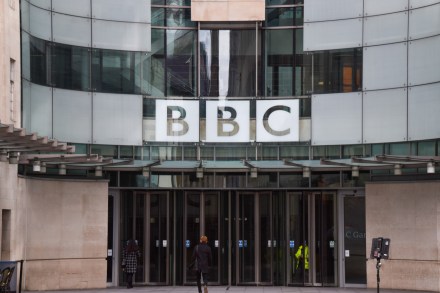
Europe’s public broadcasters were created to stop propaganda. Born in the wreckage of war to protect democracy from lies, they now preach soft, sanctimonious, state-approved truths. The resignations at the BBC this week are only the latest symptom of decay across the European media landscape. The model built to keep power in check now serves it. Public broadcasting was conceived in the aftermath of 1945. After Goebbels and Vichy radio, democracies decided that truth needed its own institutions. The state would fund but not control them. Broadcasters like the BBC, Radiodiffusion Française, Germany’s ARD and Italy’s RAI would speak for the public. For decades, they did. They were calm, factual, balanced and above politics. The voice of reason had replaced the voice of the regime.

The French state is ashamed of its rose queens

From our UK edition

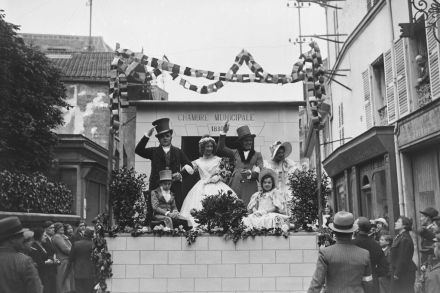
Every summer in small French towns from Créon in the Gironde to Salency in the Oise, a young woman dressed in white walks through the square, crowned with a wreath of roses. She’s the rosière, the rose queen, chosen by her town for her modesty, kindness and civic spirit. The crowning is part of the village fête, a day of processions, music and dancing that celebrates community life. The fêtes de la rosière date back to the fourteenth century, when Saint Médard, Bishop of Noyon, is said to have founded the first ceremony to reward the most virtuous girl of his village, meaning, in the language of the time, the most chaste and upright one. The tradition rested on Christian ideas of virtue, family, and duty. In the capital, culture is downstream of ideology.

The tragedy of the Shein takeover of Paris

From our UK edition

The most glamorous department store in Paris, the BHV Marais, a vast art deco landmark stretching along Rue de Rivoli facing the Hôtel de Ville, is leasing space to Shein, the Chinese fast-fashion giant. Once a symbol of Parisian refinement, BHV now finds itself hosting a brand that epitomises disposability. This has sparked demonstrations outside the store and drawing sharp criticism inthe French press. France can’t save its shops, its factories or its dignity because it no longer believes in the value of producing anything at all This isn’t just another retail opening, it’s cultural surrender. It is proof that Paris, once the world’s fashion capital, is now renting out its soul to Chinese algorithms.

Britain’s trains are dangerously exposed

From our UK edition

Europe has seen this nightmare before. On 21 August 2015, a gunman armed with an AK-47-style assault rifle, a pistol and a knife opened fire on a Thalys train travelling from Amsterdam to Paris, wounding three passengers before being overpowered near Arras. The attacker, Ayoub El Khazzani, a 25-year-old Moroccan who had trained with Islamist militants in Syria, boarded the train intending to commit a massacre in the name of jihad. He was stopped only because three off-duty American servicemen happened to be on board and tackled him as he tried to reload. Without them, the carriage would have become a slaughterhouse. El Khazzani was sentenced to life by a French court in 2020.

Macron has declared war on free speech

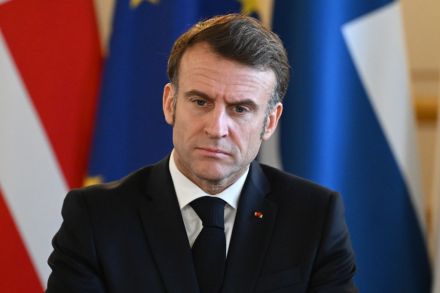
Emmanuel Macron says Europeans should stop relying on social media for their news and turn back to traditional public media. Speaking in Paris on Wednesday, he said people were ‘completely wrong’ to use social networks for information and should instead depend on journalists and established outlets. Social platforms, he argued, are driven by a ‘process of maximum excitement’ designed to ‘maximise advertising revenue’, a system he said is ‘destroying the foundations of democratic debate’.

Should mocking Brigitte Macron be a crime?

From our UK edition

Ten people have gone on trial in Paris accused of harassing France’s First Lady, Brigitte Macron, online. The defendants, eight men and two women aged between 41 and 60, are charged with ‘moral harassment by electronic means’ and mocking a false claim that she was born a man by the name of Jean-Michel Trogneux. Prosecutors say their posts, many of which mocked her marriage to the President and repeated the rumour about her gender, amounted to targeted abuse. In closing, prosecutors requested suspended sentences. The defendants deny wrongdoing.

The Louvre heist shames France

From our UK edition

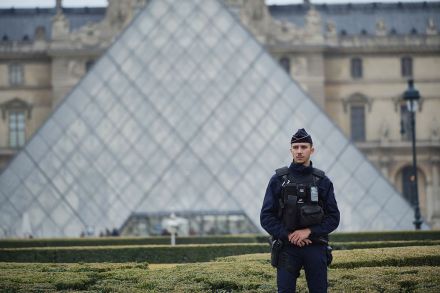
Thieves broke into the Louvre in Paris shortly after it opened on Sunday morning and stole nine invaluable relics from France’s crown jewels. While the exact valuation of the loot is still being established, it could be worth hundreds of millions of euros. The thieves used a cherry-picker to reach a window on the Seine side of the building, smashed display cases in the Galerie d’Apollon, the ornate hall built for Louis XIV and home to the crown jewels. They escaped on motorbikes before police arrived. Among the stolen items was the crown of Empress Eugénie, set with 1,354 brilliant-cut diamonds and 56 emeralds. It was later found smashed in the street near the museum, dropped by the thieves in their flight.

Macron survives again – but at what cost?

From our UK edition

Sébastien Lecornu’s government has survived a no-confidence vote – but only because Emmanuel Macron shelved the pension reform that once defined his presidency. Today’s motion of censure fell short of the 289 votes needed to bring down the government, sparing Macron for now but leaving his authority weakened. What began as a crusade for fiscal responsibility has ended in capitulation, exposing the fragility of his presidency. If the vote saved Macron in the short term, it exposed how completely he has lost control of his political base Out of 577 members of parliament, 271 voted for censure, leaving the government 18 votes short of collapse. It was not a narrow escape but a warning: proof that Macron’s majority no longer exists in any meaningful sense.

Macron has to choose: humiliation or defeat?

From our UK edition

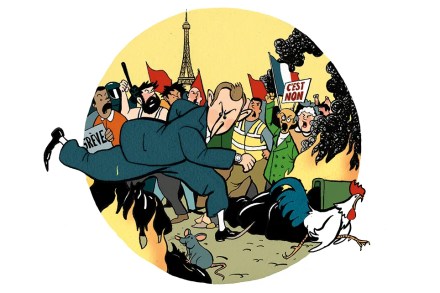
Emmanuel Macron’s presidency is imploding, squeezed between enemies he can no longer outmanoeuvre. Marine Le Pen’s National Rally and Jean-Luc Mélenchon’s France Insoumise, joined by the Socialists, have united to force yet another no-confidence vote, this time set for Thursday. Once the master of France’s centre, Macron’s political survival hinges on a humiliating surrender of his flagship pension reform, or a headlong rush into legislative elections his party cannot win. Macron presents every decision as an act of duty, then retreats when his own powers are threatened. The result is a presidency that has lost its moral centre as well as its political one The Lecornu government 2.0 was meant to buy Macron time. Instead, it’s turned into a countdown to collapse.

In reappointing Lecornu, Macron is clinging to power

From our UK edition

Emmanuel Macron has reappointed Sébastien Lecornu as prime minister, a loyalist whose government collapsed in mere weeks, and whose resignation Macron accepted just days ago. The announcement by the Elysée was made at 10pm on Friday night following two days of tense talks with party leaders. This is a last-ditch attempt by Macron to retain control, to shield his presidency from the advance of Marine Le Pen’s National Rally and to preserve his increasingly fragile authority. His move shows just how precarious his position has become. It’s a retreat into the familiar, prioritising his own personal survival over the country’s desire for change.