China

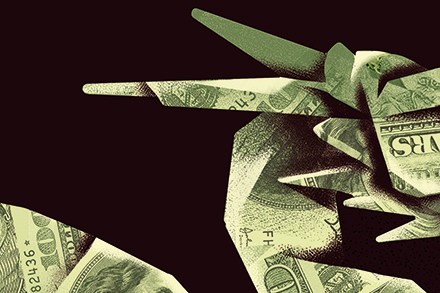
China’s theft of American AI tech is becoming more brazen

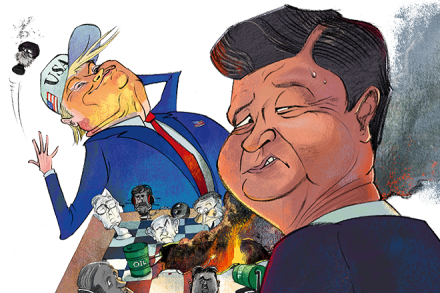
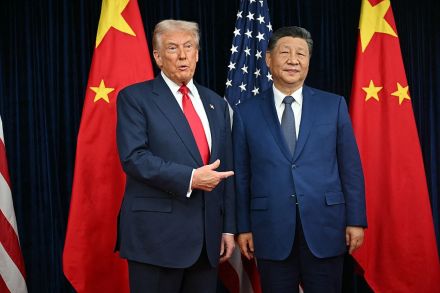
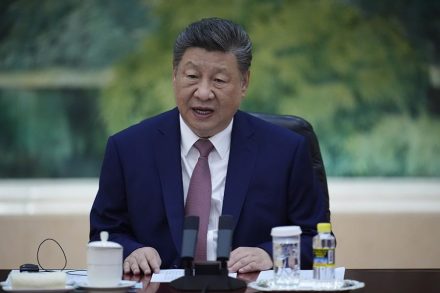
Despite the hype surrounding China’s artificial intelligence capabilities, progress remains heavily dependent on theft and smuggling. The Chinese Communist party (CCP), meanwhile, is determined to maintain tight control. That has become increasingly clear ahead of this week’s Beijing summit between Donald Trump and Xi Jinping. The Chinese leader is determined to lead the world in what he terms an "epoch-defining technology." He appears confident that Trump, preoccupied by his war against Iran, has limited options to counter Beijing’s increasingly brazen activities. Last month, the White House accused Beijing of "industrial-scale" theft of know-how from American AI labs.

china

The truth about Pakistan’s role in the US-Iran conflict

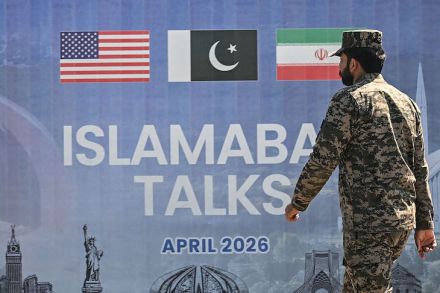
Pakistan was always an unlikely mediator for peace negotiations between the United States, Iran and sotto voce, China. It would not be an exaggeration to describe Pakistan as a failed state. Having outperformed India economically in the aftermath of partition, Pakistan went into steep decline after the arrival on the political scene of a corrupt chancer, socialist and demagogue, Zulfikar Ali Bhutto. Today, bankrupt Pakistan is kept afloat by loans from the IMF, China, and the Gulf States. Trump can be in no doubt that, with regards to political power in Pakistan, it is Munir who wears the pants Bhutto’s political dynasty continued under the aegis of his daughter Benazir and later his grandson.

pakistan

Why China has the edge in mining

Donald Trump wants to bring back mining and mineral processing to the US – and he needs to do this if he’s to continue fighting wars. “You cannot claim to have a military strategy without a clear idea of your supply chains,” says economic journalist Wolfgang Münchau. “The specific advantage that both Russia and China have over the West is not simply their wealth of metals and minerals – it’s the fact that they can also process them. China’s expertise in processing its raw material is unparalleled.” Trump has exhorted America’s traditional allies to take responsibility for their own mineral supplies as well as their own defense, and to ditch economically ruinous energy policies. But will it work?

mining

How the West is empowering China’s war machine

The West’s technology brains and universities are arming China. A few of them are potentially breaking the law to do it, but most of them don’t need to. The front door has been open for years, and nobody in London or Washington has thought to close it. According to a federal indictment unsealed in Manhattan last month, on December 18, 2025, in a warehouse somewhere in Southeast Asia, a team of men used a hair dryer to peel serial-number labels off genuine server boxes and press them onto fakes. The real servers, loaded with some of America’s most restricted artificial intelligence hardware, are alleged to have long since been shipped to China. What remained, according to the indictment, were dummies – non-working replicas repackaged to look untouched.

With no coherent strategy, Britain seems perpetually adrift in the world

From our UK edition

The British state seems perpetually befuddled. Every international crisis catches it in its sudden glare like so many headlights trained on a nervous rabbit hopping hopelessly around a motorway. One moment Russia is invading Ukraine, then Hamas attacks Israel, Israel flattens Gaza, America knocks out Venezuela, then attacks Iran, while all the time China leers over Taiwan. Each new event leaves us spinning. Whose side are we on? What do we want? How do we get it? We use grand words to navigate our way in the confusion: ‘the special relationship’; ‘the national interest’; ‘the rules-based order’. But if these once signified some grand story we could all relate to they now feel empty and confusing.

China wants robots to look after the elderly

From our UK edition

An AI data centre – imagine a factory of buzzing wires and computing equipment cooled by industrial fans – can consume as much power as a city. It has been estimated that, not too long from now, we’ll require 92 cities’ worth of extra power just to meet the demands of artificial intelligence. Ergo, the heat is on – but so, it is said, is a new cold war. On Radio 4 last week, Misha Glenny was exploring how the rapid evolution of technology is shaping the rivalry between the US and China. It turns out that the race for pre-eminence – in AI, at least – is as close as the 1973 Grand National. Red Rum (China) has the current lead, but that lead is ‘razor-thin’ and is thought to owe something to the nature of American tactics.

How Mark Carney sold Canada to China

As Can Force One moved toward Chinese airspace, the delegation’s electronic devices were powered down and secured in signal-blocking bags. Burner phones were passed out: the only machines the public servants, staff and journalists would be allowed to use for the duration of their stay. The Canadian Prime Minister’s security team was taking no risks. But Mark Carney himself was on his way to do something many back home would consider very risky indeed: signing agreements with Chinese President Xi Jinping on trade, global governance, energy, media access and law enforcement.

Carney

Portrait of the week: HMS Dragon sets sail, Mandelson records released and Trump declares victory

From our UK edition

Home John Healey, the Defence Secretary, visited Cyprus after criticism of Britain’s response to drone attacks on the RAF base there. The Cyprus High Commissioner said: ‘The people are disappointed, the people are scared, the people could expect more.’ The destroyer HMS Dragon sailed for Cyprus from Portsmouth on 10 March. Rachel Reeves, the Chancellor of the Exchequer, told the Commons that inflation was likely to rise; the Office for Budget Responsibility estimated an extra percentage point increase on prices by the end of the year. The Prince of Wales aircraft carrier would not head for the Middle East. President Trump of America said: ‘That’s OK, Prime Minister Starmer… We don’t need people that join Wars after we’ve already won!

Alberta

Will Alberta become the 51st state?

Albertans are very good at keeping things that damage their prosperity out of their province. Take rats, for instance. The vermin were designated an agricultural menace in the1950s and after 18 months of chemical warfare Alberta – which is the same size as Texas – was declared rat-free. Today a poison-laced buffer zone with Saskatchewan province and a vigilant population stops their return.The leaders of the resurgent Alberta independence campaign have identified a new set of damaging pests to keep out: the federal government in Ottawa and its new ally the Chinese government.

Will the war in Iran really weaken China?

Analogies in international politics are tricky and easily abused, yet they remain irresistible because they can illuminate patterns that are otherwise hard to see. Consider the present moment.  Just as Ukraine has become a growing burden for Washington and its Western allies, Iran is now a strategic burden for Moscow and Beijing. The US, particularly under the Trump administration, appears to be placing less emphasis on supporting Ukraine. Something similar may be happening in reverse with Iran.  Moscow continues to provide Tehran with assistance – most notably intelligence on US military targets – but the broader pattern suggests caution rather than deep commitment.

China Iran

Geoffrey Cain, Justin Marozzi, Alex Diggins & Sam France

From our UK edition

30 min listen

On this week’s Spectator Out Loud: Geoffrey Cain explains why Trump’s real target with Iran is China; Justin Marozzi argues ancient history might be on the side of Ayatollah Khamenei’s supporters; Alex Diggins warns about the catastrophic consequences that may befall the Palace of Westminster; and finally, Sam France celebrates the 50p coin. Produced and presented by Patrick Gibbons.

Geoffrey Cain, Justin Marozzi, Alex Diggins & Sam France

Iran: is Trump’s ultimate target in this war China?

30 min listen

As the crisis in the Middle East has escalated, Donald Trump's posturing has led many to question his strategy – and if he even has one. Geoffrey Cain, former foreign correspondent, expert on authoritarian regimes – and the author of this week's cover piece in the Spectator, joins Freddy Gray to explain why Trump's ultimate target in the war is China. From the Belt and Road development initiative to more tacit bilateral support, President Xi has been playing a game of chess, to try to check America's power. With Nicolas Maduro arrested and Ayatollah Khamenei assassinated, President Trump is showing his willingness to project American power, at whatever cost – so far. Cain raises questions for those who assume we're moving to a multipolar world.

Iran: is Trump's ultimate target in this war China?

The greater game: Trump’s ultimate target in this war is China

The United States and Israel killed Ayatollah Khamenei, and Xi Jinping’s decade-long project to build an alternative to the American-led order died with him. The view in Beijing has been that the West is declining. Xi built his foreign policy on that premise For years, Beijing quietly assembled a network of dictatorships and client states designed to blunt American power. Iran supplied China with cheap oil and kept Washington bogged down in the Middle East. Russia waged war on Ukraine with Chinese materiel support, a gamble that was supposed to cement a powerful anti-western axis but has instead bled Moscow into dependence on Beijing. Regional proxies from Lebanon to Gaza added just enough chaos to stop Washington focusing on China.

Japan is refusing to tiptoe around the Taiwan issue

One of the most serious issues in the well-filled in-tray of freshly endorsed Japanese Prime Minister Sanae Takaichi is Taiwan, which China claims as its own sovereign territory, and the lamentable state of Sino-Japanese relations. Takaichi provoked fury with comments in the Japanese parliament in November when she stated that were China to attack Taiwan, it would be interpreted as a "survival-threatening situation" for Japan, implying a military response could follow. Under the terms of its constitution, Japan is severely limited in its military options but Takaichi appeared to be preparing more solid ground with her phrasing. A 2015 law changed the constitution allowing Japan to retaliate if the country faced a "life-threatening" situation.

Revelling in reading: The Enchanting Lives of Others, by Can Xue, reviewed

From our UK edition

Can Xue is an oddity in the landscape of world literature. Greeted mostly with bewilderment or indifference in her native China, her novels have gained a following among a certain type of erudite western reader over the past few decades, leading to an annual flurry of Nobel speculation and more works in English translation than nearly any other living Chinese author. The writing can be hard to enjoy. It often takes the form of avant-garde fairy tales populated by nameless characters who genially accept unsettling, inexplicable occurrences around them. When this works, as in last year’s gloriously strange Mother River, you get the disorientating feeling that you are the one who has gone insane, not the characters.

nixon

The deep state vs Nixon

Americans took a break from their partisan vituperation in February to mull over newly revealed testimony that Richard Nixon gave to grand jury investigators in 1975, a year after the Watergate scandal drove him from power. James Rosen, a veteran Washington journalist and the biographer of Nixon’s attorney general John Mitchell, revealed the episode in the New York Times. Nixon had argued that his program of wiretaps had been made necessary by another spying operation that senior American military commanders were carrying out against him and his top aides.

The redemption of Richard Nixon

In the last five years of his life, when I knew Richard Nixon, nothing described him better than Milton’s “calm of mind, all passion spent.” During the most tumultuous political career in American history he had come back many times, but the greatest comeback of all was in full swing. His enemies had seized control of the puritanical conscience of America to slay him, unjustly, and he was manipulating the same national conscience, which was founded on Plymouth Rock and has survived all the corruption and hypocrisy and violence of American public life, and when aroused, is insuperable. Since his political fall, and later his death, polls increasingly indicate public unease about the treatment of Richard Nixon.

Trump is right about greenhouse gases

Irresponsible Trump, responsible China: that is the message the BBC's climate editor seemed to be sending us by juxtaposing the news that the President had repealed Barack Obama’s "endangerment finding" and that China’s carbon emissions fell slightly last year. Trump’s critics like to portray him as a rogue figure in a world which is otherwise committed to reaching net-zero greenhouse gas emissions. But is there any truth in that? The endangerment finding does not appear to have had any obvious impact on US emissions The endangerment finding was a piece of legalese issued in a 2009 ruling by the Environmental Protection Agency (EPA).

Why doesn’t the CDC care about Chinese biolabs in America?

If you rent a cheap Airbnb house in Las Vegas, you might not be altogether surprised to find dead crickets in the garage. But a thousand vials of medical samples in several freezers – and a centrifuge? After the cleaner and one guest fell ill at a property in the city’s Sunrise Manor neighborhood last week, federal agents raided it and found a whole laboratory’s worth of scientific kit of the kind more useful to medical scientists than, say, drug dealers. Curious. Curiouser still, the house belongs to a Chinese national named Jia Bei (Jesse) Zhu. He is currently in prison awaiting trial over a secret laboratory that (it is alleged) he was running in Reedley, California.

Biowarfare

Jimmy Lai cannot be left to die in jail

The decision to sentence Jimmy Lai to 20 years in jail in Hong Kong is no surprise, but it is no less shocking or heartbreaking. For his family, especially his courageous wife Teresa, son Sebastien and daughter Claire, who have advocated so tirelessly for their father over the past five years, one can only imagine the pain and grief they feel. Sebastien and Claire have walked the corridors of power in Washington, DC, London, Ottawa, Brussels, Paris and beyond, and sat in television studios for hour after hour, seemingly to no avail. For Hong Kong, this is yet another dark day, yet another nail in the coffin of the city’s freedoms. And for everyone who cares about liberty, the rule of law and basic human rights, this sentence is a punch in the solar plexus.

lai