David Whitehouse

The only thing out there is the UFO industrial complex

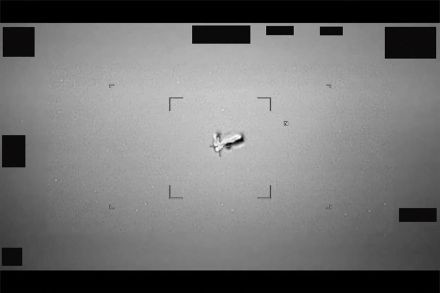
If ever there was an exercise in futility, and a demonstration in intentional stupidity, it was the just dropped UFO files from the US Department of War. The release comes after President Trump ordered in February that the Pentagon and other agencies identify and publish governmental files related to “alien and extraterrestrial life, unidentified aerial phenomena, and unidentified flying objects.” “These files, hidden behind classifications, have long fueled justified speculation – and it’s time the American people see it for themselves,” said Secretary of War, Pete Hegseth, in a statement posted to social media. “This release of declassified documents demonstrates the Trump Administration’s earnest commitment to unprecedented transparency.

Pentagon

How Artemis II returned to Earth

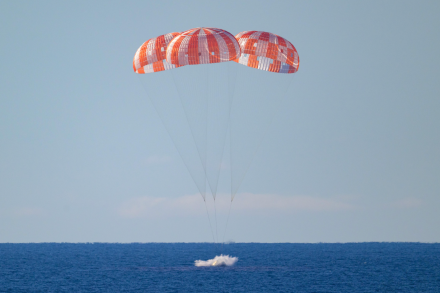
The key event in the return of the Artemis II crew was the moment of real drama during what mission controllers call Entry Interface. The capsule is 400,000 feet above the Earth and still traveling at 25,000 miles an hour. They were among the fastest humans even though they did not break the incoming speed of the Apollo 10 mission. It is only fourteen minutes until splashdown in the Pacific, there is no turning back, no second chance, re-entry will happen no matter what. A few hours earlier the crew donned their orange so-called crew survival suits and lowered their visors. In essence these are personal spacecraft providing everything they need to survive for up to six days. Their water-cooled inner suit was keeping them cool even though the cabin temperature was normal.

Artemis II

Catherine Ostler, Paul Wood, John Power & David Whitehouse

From our UK edition

22 min listen

On this week’s Spectator Out Loud: Catherine Ostler, the former editor of Tatler, ponders the drama of the courtroom as she travels around the Kent countryside; following the news of the ceasefire with Iran, Paul Wood says that no-one knows what Trump will do next; John Power encourages Gen Z men to go hiking; and finally, astrophysicist David Whitehouse explores the dark side of the moon. Produced and presented by Patrick Gibbons.

A journey to the dark side of the Moon

The climax of the Artemis II mission lasted just a few hours. The capsule, named Integrity, rounded the Moon, the crew becoming the most distant humans in history as they moved from its sunward side into its shadow. The familiar features of the permanently Earth-facing side made way for the more heavily cratered far side. This is not the Moon we know. The far side is different. It has a thicker crust, no major solidified lava plains and is more heavily cratered, like the aftermath of the final war. Before reaching it, the crew saw two Apollo landing sites: Apollo 12 touched down on Oceanus Procellarum (Ocean of Storms), and Apollo 14 landed on the plains of Fra Mauro, the target for the aborted Apollo 13 mission. There have been travellers here before, but not like this.

What can Artemis II tell us about the wonders of the moon?

Artemis II departed on the most ambitious mission yet, something which has not been tried for 50 years. Four astronauts were launched into the air on a ten day expedition with the aim of travelling 5000 miles past the far side of the moon. Natasha Feroze is joined by David Whitehouse, astroscientist and writer to discuss the difficulty involved in the mission, how little we think about the significance of the moon and whether the US will beat China in its quest to have footsteps back on the moon.

What can Artemis II teach us about the wonders of the moon?

Will Artemis II fulfill our Space Age dreams?

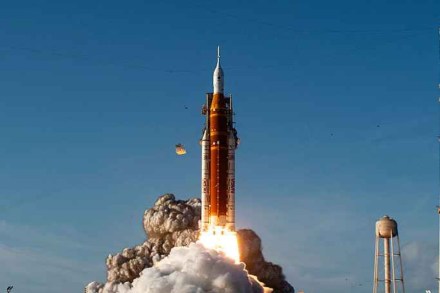
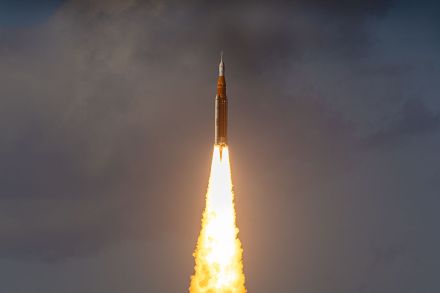
As the Artemis II mission thundered into the sky last night, a full moon rose above Cape Canaveral. It was no coincidence: the timing of the lift-off was ordained by lighting requirements and the mechanics of the Moon's orbit. The mission set off not in the direction of the Moon, but towards where the Moon will be in five days’ time when the spacecraft swings around it in what is called a "free-return trajectory." The crew of four are the first in almost 54 years to go to the Moon. In a way, things have not changed so much since then.

How we wage war in space

Operation Epic Fury marks a turning point in the art of war. The key to 20th-century battles was air power. In the past, space and cyber activities have traditionally played supporting roles as so-called force multipliers. But this is no longer the case. In this conflict they have become mainstream, carving out new fronts for the wars of the future. The use of space is no longer something that is just nice to have, because everything from comms to intel to navigation uses space and cyber assets. Along with the National Reconnaissance Office, which manages US spy satellites, the US Space Force uses a global sensor network of ground-based telescopes and radar on every continent except Antarctica.

Are aliens really out there?

We have all wondered if we are alone in the cosmos; if beings born under the light of another star embark on fabulous voyages between the stars to reach us – their cosmic cousins. Those who believe the Earth has been visited by aliens must think all their dreams are coming true. The recent rumors are that Donald Trump will break the “truth embargo” and make an alien disclosure speech on May 1. Then there is Steven Spielberg’s film about aliens, Disclosure Day, due out in the summer. This is surely no coincidence. The UFO community is a money-making juggernaut that cannot change direction YouTuber Brian Tyler Cohen recently interviewed Barack Obama and asked what many people want to know from a US President, current or former: are aliens real? All presidents are asked this.

Will Bezos beat Musk to the Moon?

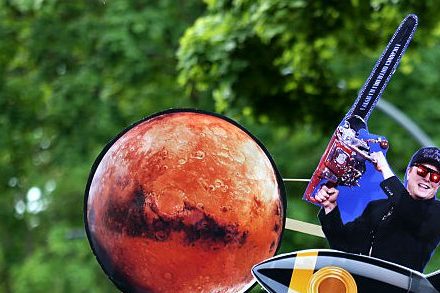
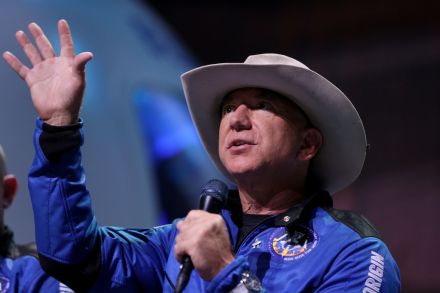
Even Elon Musk has to face a dose of reality every once in a while. Technology and politics have forced him to turn his gaze away from Mars, for the moment at least, to put Americans back on the surface of the Moon before China gets there. But it might already be too late. If America has any chance of beating China, it now seems inevitable that the next American human landing on the Moon will not be by Musk’s Starship but using a craft being developed by his rival Jeff Bezos. Announcing the pivot, Musk wrote on X: “For those unaware, SpaceX has already shifted focus to building a self-growing city on the Moon, as we can potentially achieve that in less than 10 years, whereas Mars would take 20+ years.

Bezos

The Artemis II mission is an exercise in wonder

When the Artemis II mission eventually blasts off, it will take humans back to the Moon for the first time in more than 50 years. Americans Reid Wiseman, Victor Glover, Christina Koch and Canadian Jeremy Hansen will travel further out into space than anyone before when they loop 4,700 miles beyond the Moon, seeing parts of it never before glimpsed by human eyes. The flight is designed to put the powerful Space Launch System rocket and the Orion capsule, with its European-made Service Module, through their paces. Three hours after launch, the crew will monitor a procedure not performed since 1972, so-called TLI – Trans-Lunar Injection. Only five of the 24 astronauts who have experienced that are still with us.

Greenland and the new space race

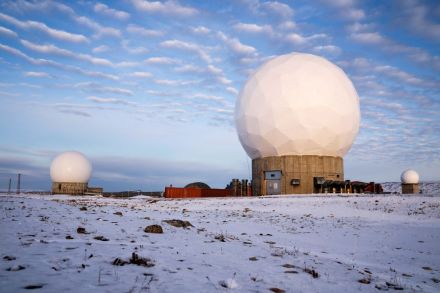
Donald Trump’s desire for Greenland is not just about access to oil, minerals and control of the new strategic and commercial corridors opening in the region. It’s also about data. Specifically, the most important data in the world. For decades, Pituffik Space Base – formerly Thule – in Greenland has been central to US space defense and Arctic strategy. It’s the US military’s only base above the Arctic Circle and their most northerly deep-water port and airstrip. It’s home to the 12th Space Warning Squadron. Its massive AN/FPS-132 radar has 240 degrees of coverage surveying the Arctic Ocean and Russia’s northern coast, especially the Kola peninsula where it has concentrated its strategic nuclear weapons.

greenland

Why the comet 3I/Atlas still fascinates

Our latest visitor from interstellar space is leaving us. It reached its closest point to the Sun on October 29 and is now heading back toward the stars at great speed, having spent a few months traversing our region of space. This visitor – a comet called 3I/Atlas – scared some, fascinated astronomers and thrilled us all as we marveled at its strange journey. 3I/Atlas, which Michael P. Gibson introduced Spectator readers to in the last issue of this magazine, got its name because it is the third object ever found to have entered our solar system from interstellar space – and Atlas is the name of the sky survey that found it as a point of light moving against the distant stars.

universe 3I

The mission to mine the Moon

There will come a time when the richest people who ever lived will be those who control outer space, in particular the Moon and the asteroids. There are vast resources out there, bound in giant rocks hurtling through space, and in the lunar dust. But the first steps will be taken by the brave, and perhaps the reckless in pursuit of a space dream. If you dream of space, nothing can stop you. Not the disagreement of others or the judgement of experts, neither short-sighted investors nor government regulations. One such dream will happen on the Moon’s surface in just a few months.The space company Astrobotic will attempt to land at the Moon’s south pole – a region of extensive shadows where ice may have accumulated and the site of the next US human landing.

The moon

Russia, China and the US are preparing for battle in orbit

Russia is playing a dangerous game in space. Despite its history it’s a declining space power, having abandoned many of its long-term projects due to lack of money and technology. It effectively crippled much of its space activity when it attacked Ukraine, which was the source of many of its high-tech components. This year has seen its lowest launch rate since 1961 – the year Yuri Gagarin became the first person to go into space. Yet significantly, three of Russia’s eight orbital launches this year (the US has launched more than 100) could be potential anti-satellite weapons. On May 23, Russia launched the Cosmos 2588 satellite from the Plesetsk launch site situated 500 miles north of Moscow. The Cosmos designation is a general term used to obscure the satellites’ purpose.

space

Why Trump must build a nuclear reactor on the Moon

Sean Duffy, the secretary of transportation whom President Trump appointed last month as temporary leader of NASA, has issued a directive to fast-track efforts to put a nuclear reactor on the moon. “To properly advance this critical technology to be able to support a future lunar economy, high power energy generation on Mars, and to strengthen our national security in space,” he says.A small nuclear reactor on the moon is a good idea, but the directive is about more than that: it is about renewing America’s leadership in space exploration that, with its magnificent achievements receding into the past, looks vulnerable. Bill Nelson, NASA’s last leader, didn't mince his words when it came to the new rivals, China. “It is a fact: we’re in a space race.

The Moon

A new map of the universe may turn gravity on its head

Scientists have released the largest map of the universe ever compiled. Millions of galaxies have been surveyed, stretching back 11 billion years, most of the age of the cosmos. According to many scientists, this data, combined with other observations, presages a major reassessment of what we know about the universe: possibly, for the first time, revealing a crack in Einstein’s theory of gravity. The Dark Energy Spectroscopic Instrument (DESI) is attached to a large telescope at the Kitt Peak National Observatory in Arizona. Each night it measures the positions of and distances to thousands of galaxies. Galaxies exist in groups and their motions are influenced by other, nearby galaxies.

universe 3I

Fraser Nelson, David Whitehouse, Imogen Yates, Sean McGlynn and Ruari Clark

From our UK edition

31 min listen

On this week’s Spectator Out Loud: Fraser Nelson reflects on a historic week for The Spectator (1:15); David Whitehouse examines the toughest problem in mathematics (6:33); Imogen Yates reports on the booming health tech industry (13:54); Sean McGlynn reviews Dan Jones’s book Henry V: the astonishing rise of England’s greatest warrior king (20:24); and Ruari Clark provides his notes on rollies (26:18).  Produced and presented by Patrick Gibbons.

Will the toughest problem in maths ever be solved?

From our UK edition

For many, not just mathematicians, the Riemann hypothesis is the very definition of a supremely difficult problem that might be forever beyond our intellect. Most mathematicians had given up on it, being pessimistic about making any headway. But recently, the first progress – although not a solution – in more than 50 years has been made. The 165-year-old hypothesis was bequeathed to us by German mathematician Berhard Riemann. It deals with prime numbers – numbers that can only be divided by themselves and 1. For example, 2, 3, 5, 7, 13, 17, 19 and so on to infinity. Has our universe taken only one pathway out of a possible mathematical multiverse? They first appeared in 300 bc with Euclid. His work Elements is like reading poetry using numbers.

Keir Starmer’s plan to soften Brexit

From our UK edition

42 min listen

This week: Keir Starmer’s plan to soften BrexitKaty Balls writes this week’s cover piece on Labour’s plans to establish close ties with the EU. Every member of Starmer’s cabinet voted Remain, and the government is trying to ‘reset EU relations through a charm offensive’. Brussels figures are hopeful: ‘There was no real goodwill for the Conservative government.’ There are tests coming: the first deal, Katy writes, could be harmonisation on veterinary standards. But will the UK have to abide by the European Court of Justice? Then there’s the issue of Chinese electric cars: will Starmer accept cheap imports, or follow the EU in raising tariffs on them? For now, EU officials see the new PM as ‘workman-like and not playing to the gallery’. How long will that last?

Aliens exist? Prove it

From our UK edition

At Wright-Patterson Air Force Base in Ohio there is, it is rumoured, a secret underground room where a crashed alien spacecraft is kept. It’s warm to the touch, buzzing with a strange energy, an indication of technology light years ahead of ours. Meanwhile, over at Groom Lake Air Force Base in Nevada, otherwise known as Area 51, there are apparently more alien spaceships, some intact, as well as the preserved bodies of alien pilots. Is it true? Well, a recent survey indicated that half of the US population believed their government was covering up evidence of aliens. As someone involved in the scientific search for life in space, however, I put that down to poor journalism, a lack of critical thought and shallow scientific knowledge.