China

The humiliating truth about the way we think

Over the long span of human existence, different cultures have held varying notions as to how responsible we are for our own thoughts and beliefs. Before the dawn of the Abrahamic religions, and in places untouched by these faiths, it tended to be the rule that individual members of the group could only be understood as parts of the whole, or in the grander cosmic scheme of things. The ascendence of Christianity in Europe, with its idea of the indivisible soul, tilted matters more towards a belief in individual agency and accountability. This concept, secularised by Descartes, who gave us the commanding rational ego, has proved resilient ever since, despite the best efforts of Freud, neuroscience and gene selection theory to dethrone it.
Will the New Glenn explosion put America behind China in the Moon race?

From our US edition

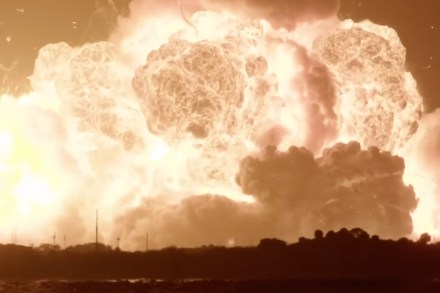
Last Thursday's explosion of the New Glenn rocket, on its launch pad during a test, could hardly be worse news for America’s return to the Moon. Just two days earlier, NASA had unveiled its plans for a Moon Base, which relied heavily on Jeff Bezos’s rocket and his Blue Origin series of lunar landers. As investigators, safety and clean-up crews inspect the wreckage, NASA will be contemplating a major rethink. The options aren’t good. Explosions on the pad are among the worst things that can happen because of how long repairs can take. If a rocket is to explode, engineers pray that it takes place in the air.

new glenn

The rise of the Orienfluencers

From our US edition

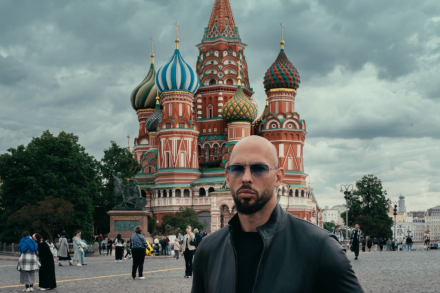
The term “Orientalism” has always implied some kind of caricature of the eastern world. It was originally coined as a way of describing how the West imagines the East as its negative to shore up self-confidence and justify conquest: “The Oriental is irrational, depraved (fallen), childlike, ‘different’; thus the European is rational, virtuous, mature, “normal,’” Edward Said wrote in Orientalism. Now, reverse “the Oriental” and “the European” and you have an idea of the new Orientalism, where the enlightened East becomes the foil to a decadent, violent, barbaric West. The new Orientalists aren’t academics, policymakers or Wall Street Journal opinion columnists.

Andrew Tate

Portrait of the week: Streeting resigns, HS2 stalls and ebola spreads to Uganda

Home Sir Keir Starmer, the Prime Minister, found his position challenged after Wes Streeting resigned as Health Secretary. At the same time Angela Rayner, the former deputy prime minister, announced that her tax troubles had been resolved after a payment of £40,000 in stamp duty that she owed. Andy Burnham, the mayor of Greater Manchester, was given permission by the National Executive Committee of the Labour party to stand for parliament in the Makerfield by-election, brought about by the resignation of its MP Josh Simons. Reform chose as its candidate Robert Kenyon, a self-employed plumber, who had stood in 2024. Mr Streeting caused trouble for Mr Burnham by saying that ‘leaving the European Union was a catastrophic mistake’.

No, I’m not a CIA spy in Greenland

From our US edition

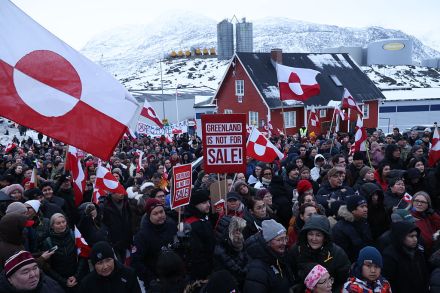
The Danish media has accused me of being a US spy. They say I'm involved in a covert influence operation in Greenland to push the territory towards becoming part of the US. I want to be clear that I have never worked as a covert operative. Instead, my work involves getting investment for sectors like mining and infrastructure. I am very public about my travels in Greenland and business there. I routinely appear on daytime television and bring my family on these trips. That would be a strange thing for Jason Bourne or James Bond to do. I often go for dinner with Greenlandic officials at very public restaurants, with their respective wives and children too. Despite this, I’ve been told by numerous insiders that I’m being monitored.

Greenland

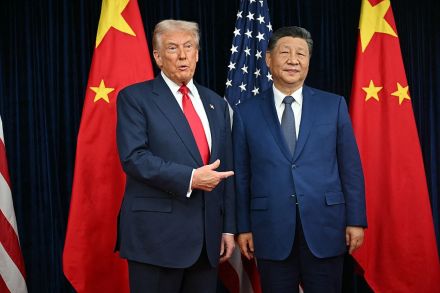
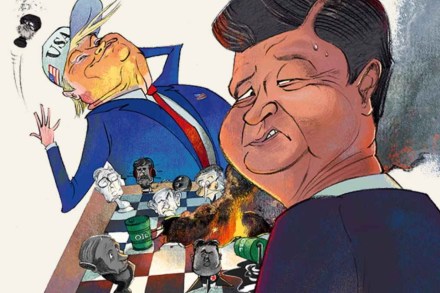
Will Trump and Xi get what they want?

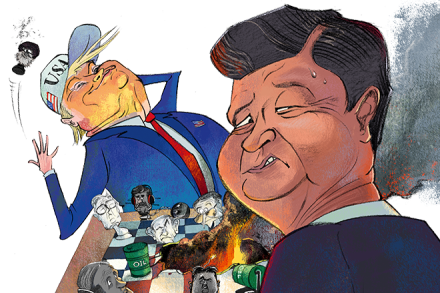
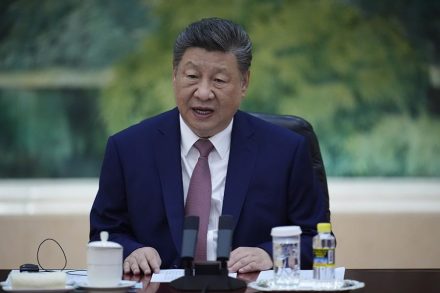
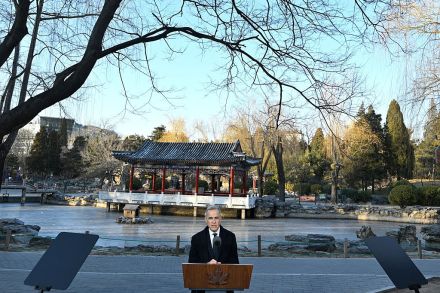
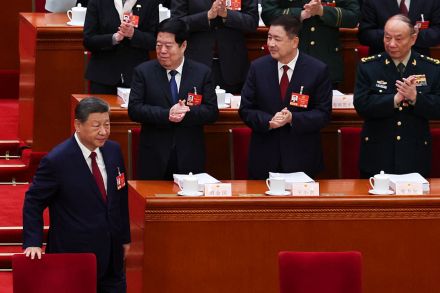
Donald Trump flew to Beijing this week and wants three things when he sits down with China’s President Xi Jinping: a tariff truce that survives his own courts, Chinese pressure on Iran to end the war that never seems to end and a photograph that makes him look victorious. Xi has problems of his own. But he has watched four American presidencies from Zhongnanhai, the walled compound beside the Forbidden City where the Communist party leadership rules, and he knows the value of silence when his counterpart is talking himself into trouble. Trump’s approval rating is the lowest of his second term. What Xi wants from this meeting with Trump is recognition: two great powers, two systems, meeting as equals Trump has obliged Xi noisily.

America’s Trump card in China

From our US edition

The Trump administration has released a list of CEOs who will be accompanying the president to his meeting in China with Xi Jinping. Foremost among the delegation is Elon Musk, traveling in his capacity as CEO of Tesla and SpaceX. Another notable inclusion is Tim Cook, in what may be his swan song international trip as Apple CEO. All told, 17 executives will accompany President Trump to the People’s Republic of China (PRC). Their companies represent sectors ranging from banking and investment to automobiles and AI. Their asks of Xi will likely range from market access (Coherent) and advertising (Meta) to component orders (Boeing) and soybean purchases (Cargill). On paper, President Trump should take business leaders with him to China.

Trump

China’s theft of American AI tech is becoming more brazen

Despite the hype surrounding China’s artificial intelligence capabilities, progress remains heavily dependent on theft and smuggling. The Chinese Communist party (CCP), meanwhile, is determined to maintain tight control. That has become increasingly clear ahead of this week’s Beijing summit between Donald Trump and Xi Jinping. The Chinese leader is determined to lead the world in what he terms an "epoch-defining technology." He appears confident that Trump, preoccupied by his war against Iran, has limited options to counter Beijing’s increasingly brazen activities. Last month, the White House accused Beijing of "industrial-scale" theft of know-how from American AI labs.

china

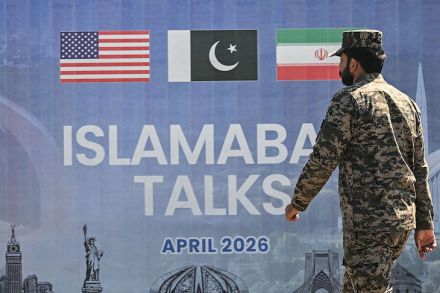
The truth about Pakistan’s role in the US-Iran conflict

Pakistan was always an unlikely mediator for peace negotiations between the United States, Iran and sotto voce, China. It would not be an exaggeration to describe Pakistan as a failed state. Having outperformed India economically in the aftermath of partition, Pakistan went into steep decline after the arrival on the political scene of a corrupt chancer, socialist and demagogue, Zulfikar Ali Bhutto. Today, bankrupt Pakistan is kept afloat by loans from the IMF, China, and the Gulf States. Trump can be in no doubt that, with regards to political power in Pakistan, it is Munir who wears the pants Bhutto’s political dynasty continued under the aegis of his daughter Benazir and later his grandson.

pakistan

Why China has the edge in mining

From our US edition

Donald Trump wants to bring back mining and mineral processing to the US – and he needs to do this if he’s to continue fighting wars. “You cannot claim to have a military strategy without a clear idea of your supply chains,” says economic journalist Wolfgang Münchau. “The specific advantage that both Russia and China have over the West is not simply their wealth of metals and minerals – it’s the fact that they can also process them. China’s expertise in processing its raw material is unparalleled.” Trump has exhorted America’s traditional allies to take responsibility for their own mineral supplies as well as their own defense, and to ditch economically ruinous energy policies. But will it work?

mining

How the West is empowering China’s war machine

From our US edition

The West’s technology brains and universities are arming China. A few of them are potentially breaking the law to do it, but most of them don’t need to. The front door has been open for years, and nobody in London or Washington has thought to close it. According to a federal indictment unsealed in Manhattan last month, on December 18, 2025, in a warehouse somewhere in Southeast Asia, a team of men used a hair dryer to peel serial-number labels off genuine server boxes and press them onto fakes. The real servers, loaded with some of America’s most restricted artificial intelligence hardware, are alleged to have long since been shipped to China. What remained, according to the indictment, were dummies – non-working replicas repackaged to look untouched.

With no coherent strategy, Britain seems perpetually adrift in the world

The British state seems perpetually befuddled. Every international crisis catches it in its sudden glare like so many headlights trained on a nervous rabbit hopping hopelessly around a motorway. One moment Russia is invading Ukraine, then Hamas attacks Israel, Israel flattens Gaza, America knocks out Venezuela, then attacks Iran, while all the time China leers over Taiwan. Each new event leaves us spinning. Whose side are we on? What do we want? How do we get it? We use grand words to navigate our way in the confusion: ‘the special relationship’; ‘the national interest’; ‘the rules-based order’. But if these once signified some grand story we could all relate to they now feel empty and confusing.

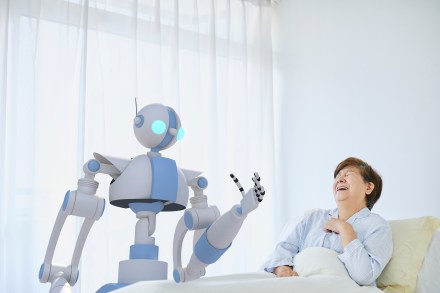
China wants robots to look after the elderly

An AI data centre – imagine a factory of buzzing wires and computing equipment cooled by industrial fans – can consume as much power as a city. It has been estimated that, not too long from now, we’ll require 92 cities’ worth of extra power just to meet the demands of artificial intelligence. Ergo, the heat is on – but so, it is said, is a new cold war. On Radio 4 last week, Misha Glenny was exploring how the rapid evolution of technology is shaping the rivalry between the US and China. It turns out that the race for pre-eminence – in AI, at least – is as close as the 1973 Grand National. Red Rum (China) has the current lead, but that lead is ‘razor-thin’ and is thought to owe something to the nature of American tactics.

How Mark Carney sold Canada to China

From our US edition

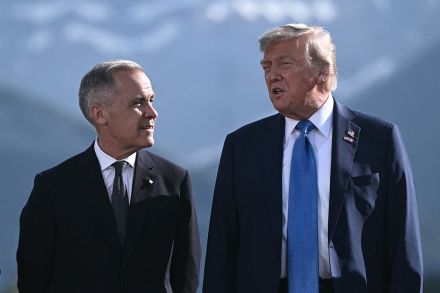
As Can Force One moved toward Chinese airspace, the delegation’s electronic devices were powered down and secured in signal-blocking bags. Burner phones were passed out: the only machines the public servants, staff and journalists would be allowed to use for the duration of their stay. The Canadian Prime Minister’s security team was taking no risks. But Mark Carney himself was on his way to do something many back home would consider very risky indeed: signing agreements with Chinese President Xi Jinping on trade, global governance, energy, media access and law enforcement.

Carney

Portrait of the week: HMS Dragon sets sail, Mandelson records released and Trump declares victory

Home John Healey, the Defence Secretary, visited Cyprus after criticism of Britain’s response to drone attacks on the RAF base there. The Cyprus High Commissioner said: ‘The people are disappointed, the people are scared, the people could expect more.’ The destroyer HMS Dragon sailed for Cyprus from Portsmouth on 10 March. Rachel Reeves, the Chancellor of the Exchequer, told the Commons that inflation was likely to rise; the Office for Budget Responsibility estimated an extra percentage point increase on prices by the end of the year. The Prince of Wales aircraft carrier would not head for the Middle East. President Trump of America said: ‘That’s OK, Prime Minister Starmer… We don’t need people that join Wars after we’ve already won!

Alberta

Will Alberta become the 51st state?

From our US edition

Albertans are very good at keeping things that damage their prosperity out of their province. Take rats, for instance. The vermin were designated an agricultural menace in the1950s and after 18 months of chemical warfare Alberta – which is the same size as Texas – was declared rat-free. Today a poison-laced buffer zone with Saskatchewan province and a vigilant population stops their return.The leaders of the resurgent Alberta independence campaign have identified a new set of damaging pests to keep out: the federal government in Ottawa and its new ally the Chinese government.

Will the war in Iran really weaken China?

From our US edition

Analogies in international politics are tricky and easily abused, yet they remain irresistible because they can illuminate patterns that are otherwise hard to see. Consider the present moment.  Just as Ukraine has become a growing burden for Washington and its Western allies, Iran is now a strategic burden for Moscow and Beijing. The US, particularly under the Trump administration, appears to be placing less emphasis on supporting Ukraine. Something similar may be happening in reverse with Iran.  Moscow continues to provide Tehran with assistance – most notably intelligence on US military targets – but the broader pattern suggests caution rather than deep commitment.

China Iran

Geoffrey Cain, Justin Marozzi, Alex Diggins & Sam France

30 min listen

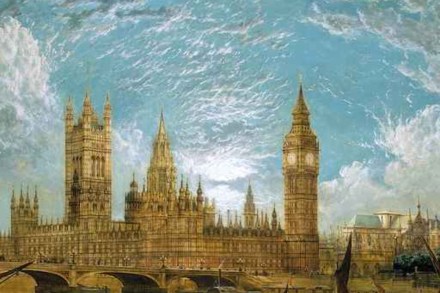
On this week’s Spectator Out Loud: Geoffrey Cain explains why Trump’s real target with Iran is China; Justin Marozzi argues ancient history might be on the side of Ayatollah Khamenei’s supporters; Alex Diggins warns about the catastrophic consequences that may befall the Palace of Westminster; and finally, Sam France celebrates the 50p coin. Produced and presented by Patrick Gibbons.

Geoffrey Cain, Justin Marozzi, Alex Diggins & Sam France

Iran: is Trump’s ultimate target in this war China?

30 min listen

As the crisis in the Middle East has escalated, Donald Trump's posturing has led many to question his strategy – and if he even has one. Geoffrey Cain, former foreign correspondent, expert on authoritarian regimes – and the author of this week's cover piece in the Spectator, joins Freddy Gray to explain why Trump's ultimate target in the war is China. From the Belt and Road development initiative to more tacit bilateral support, President Xi has been playing a game of chess, to try to check America's power. With Nicolas Maduro arrested and Ayatollah Khamenei assassinated, President Trump is showing his willingness to project American power, at whatever cost – so far. Cain raises questions for those who assume we're moving to a multipolar world.

Iran: is Trump's ultimate target in this war China?

The greater game: Trump’s ultimate target in this war is China

The United States and Israel killed Ayatollah Khamenei, and Xi Jinping’s decade-long project to build an alternative to the American-led order died with him. The view in Beijing has been that the West is declining. Xi built his foreign policy on that premise For years, Beijing quietly assembled a network of dictatorships and client states designed to blunt American power. Iran supplied China with cheap oil and kept Washington bogged down in the Middle East. Russia waged war on Ukraine with Chinese materiel support, a gamble that was supposed to cement a powerful anti-western axis but has instead bled Moscow into dependence on Beijing. Regional proxies from Lebanon to Gaza added just enough chaos to stop Washington focusing on China.