China

Europe’s self-deception over Greenland

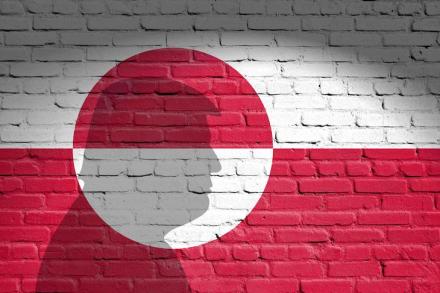
As Donald Trump weighs up taking control of Greenland, Britain and the EU has fallen back on a familiar strategy: talk tough, and do nothing. The UK joined France, Germany, Italy, Poland, Spain and Denmark yesterday in making a joint statement affirming that "Greenland belongs to its people." Arctic security, it said, must respect "sovereignty, territorial integrity and the inviolability of borders." Invoking it Article 5 the United States would expose NATO’s limits rather than overcome them If Donald Trump decides to take Greenland, Europe’s initial response would be loud, formal and legally impeccable. Europe and the UK would protest loudly, threaten, – and then do almost nothing at all.
The peril of playing with viruses

From our US edition

If a military team made a mistake during a nuclear war preparedness exercise and accidentally obliterated millions of people, you would not expect to find some of the very same people merrily admitting a couple of years later that they have carried out the very same kind of exercise with different live nukes and slightly fewer safeguards. Would you? That is roughly what I recently found out has apparently been going on in China. The Wuhan laboratory that conducted risky experiments on bat viruses at inadequate biosafety levels and almost certainly caused the pandemic has now revealed that it has done the same kind of risky experiments on another lot of horseshoe-bat viruses at low biosafety levels. Is accidentally killing millions not enough to give them pause?

Jung Chang: what the West gets wrong about China

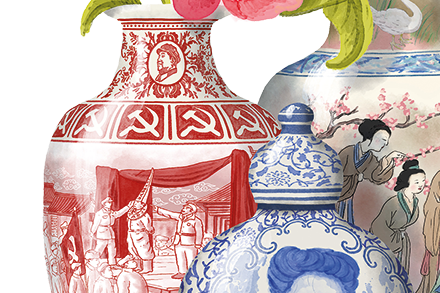
No writer has done more than Jung Chang to bring the horrors of Maoist China to the attention of western readers. In her monumental memoir Wild Swans (1991), she recounted the Chinese Communist Revolution, the Great Famine and the Cultural Revolution through the stories of her grandmother, her mother and herself. Its influence was enormous: Wild Swans sold more than 15 million copies, making it one of the best-selling nonfiction books of all time. In Mao: The Unknown Story (2005), co-written with her husband, the historian Jon Halliday, she blew apart decades of Chinese Communist party propaganda to reevaluate Mao as one of history’s greatest monsters, as bad, if not worse, than Hitler or Stalin.

The battle to stop US universities aiding Chinese repression

From our US edition

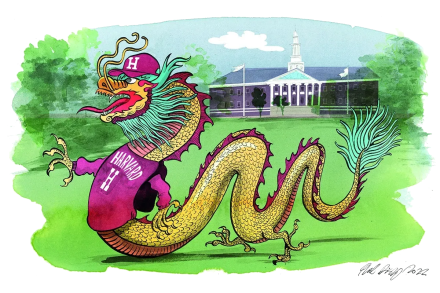
It goes by an innocuous name – “Integrated Joint Operations Platform” (IJOP) – but it’s one of the most sinister components of China’s surveillance state, managing what has been described as a genocide against the Uighurs. The IJOP combines multiple systems of repression – location, messages, contacts, social media and other data from phones, together with information from checkpoints, cameras and biometric records. It then flags “suspicious” individuals for detention and forced labor. Now leading US universities have been accused of extensive collaboration with Chinese laboratories which develop technology that may be deployed or adapted for use in this system.

It feels as if Michael McFaul’s audience has long since left

From our US edition

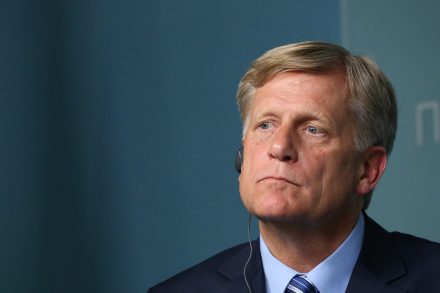
Since the end of the Cold War, politicians and commentators have been searching for a new paradigm through which to understand international relations. Notwithstanding Francis Fukuyama’s oft-misunderstood The End of History, we have tried various patterns to classify the world order, of which George W. Bush’s “Axis of Evil,” first used in 2002, was among the more enduring. In Autocrats vs. Democrats: China, Russia, America, and the New Global Disorder, Michael McFaul acknowledges the widespread if nebulous consensus that the challenge presented by Russia and China is a kind of second Cold War – historian Niall Ferguson has labeled America’s relations with China “Cold War II.

Michael McFaul

Fact-checking the Venezuela war hawks 

From our US edition

As the US Navy remains primed for action in the Southern Caribbean, Venezuelan dictator Nicolás Maduro prepares for what could be an American attempt to remove him. And as President Trump alternates between calling Maduro on the phone and authorizing air strikes, a bevy of misinformation is being peddled by public figures with an agenda. There are so many claims and counter-claims on the air waves right now that it’s difficult to separate fact from fiction. A sizable chunk of this disinformation is of course being sold by Maduro himself, a man who has learned from his predecessor and mentor, the late Hugo Chávez, that it’s easier to blame the United States for all of your problems than own up to your own catastrophic policy errors.

Trump team warned over London’s Chinese super-embassy

So much for simple Chinese takeout. In his never-ending search for economic growth, British Prime Minister Sir Keir Starmer has finally alighted on the obvious answer: cozying up to the liberal-minded democrats of Tiananmen Square. The Prime Minister is expected to fly to Beijing in the new year, once the long-awaited Chinese super-embassy in the London neighborhood of Tower Hamlets secures planning approval next month. No wonder 2025 is the year of the snake, eh?  But there now seems to be a wrench in the works, ahead of the mooted approval on December 10. For a group of American politicians are up in arms about the possible threat to global financial security.

china embassy

Britain’s national security must not be sacrificed to net zero

Those who, like myself, experienced life behind the Iron Curtain understand instinctively that centrally planned economies beholden to an ideology do not bring benefit to the majority of the population on whom they are imposed. A few top-level individuals prosper, but the citizen finds himself and his aspirations crushed by the diktats of central government. The state itself is similarly confined by a set of ideas which are presented as self-evident truths which constrain its policy--making and exclude challenge. That Iron Curtain model describes pretty accurately the UK’s energy policy, driven as it is by the ideological pursuit of net zero and the diktats required to implement it.

What my pyjamas taught me about China

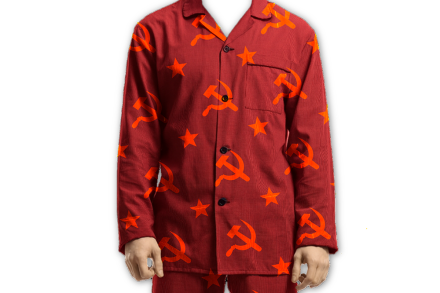
About seven years ago, I bought two pairs of pyjamas, one British, the other Chinese. At the time, they seemed of roughly similar quality, the important difference being that the Chinese ones were half the price of the British. Given that they have the same ‘lived experience’, I can make a direct comparison. The British ones, by Peter Christian (‘gentlemen’s outfitters’ accompanied by an image of two hares boxing), show few signs of the passing years. Their reddish colour with green and yellow stripes holds fast. There is very little wear and no tear at all. The Chinese pair (labelled ‘sleepwear’) tells a different story – the drawstring disappeared, the elasticated waist (which the British one wisely eschews) decayed, the blue checks faded, the cotton thinned.

China has quietly taken over America’s food supply

From our US edition

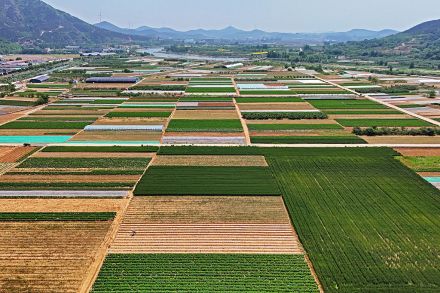
For all the talk about artificial intelligence and quantum supremacy, the fate of civilizations still depends on breakfast. ChatGPT can’t grow corn. Empires rise on stomachs as much as on silicon. And America’s food system – long dismissed as safe and self-sufficient – has quietly become a front line in the US-China rivalry. We act as if lunch is inevitable, but Beijing knows that food is power. A new report from the America First Policy Institute should wake us up. Washington long treated agriculture as a post-political space where globalization could do no harm, and was therefore happy to let much of the nation ship its growth to China. As Ambassador Kip Tom and Royce Hood argue, China has thus taken over critical pieces of the US agricultural system and food supply.

china america food supply

Gavin Newsom flies to UN climate summit

From our US edition

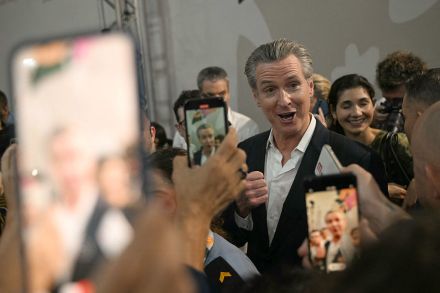
“We’re in Brazil,” California Gavin Newsom said. “One of our great trading partners. One of the world’s great democracies. I mean, hell, you need rare Earth minerals, this is the country we should be engaging with. Instead, middle finger with 50 percent tariffs. That’s shameful.” That’s certainly a point to argue, but the question is why, exactly, was Newsom in Brazil, telling the gathered at a UN climate summit that the Trump administration had “disrespected” them? “I’m here in the absence of leadership of Donald Trump," he told a Sky News reporter. “He’s abdicated responsibility on a critical issue. I’m here to show up on behalf of my country. I’m here to showcase California’s leadership, dominance in the low-carbon greenco space.

Newsom
prince

Will the Andrew formerly known as prince appear before Congress?

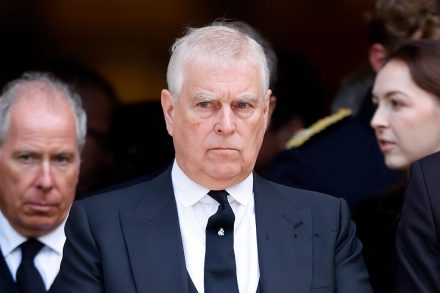
Amidst all the ceremony and gravity of Britain’s Remembrance Day service on Sunday, one salient fact could not be ignored. The King has long talked of his desire for a “stripped-down monarchy,” and now he has his wish. The only male figures from the Firm who were out on show alongside him were the Prince of Wales and Prince Edward, who together had the effect of making the royals look a rather paltry selection compared to the grander gatherings of the past. We all know about Harry, but although some would like to see him, too, stripped of his royal title, Montecito’s second most famous resident continues to be able to refer to himself as a prince.

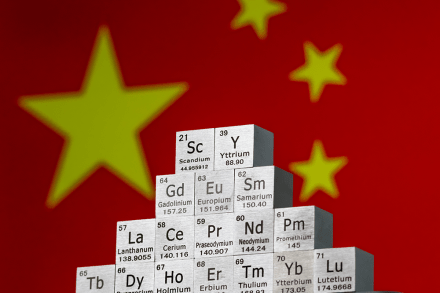
China is holding the West to ransom over rare earths

China’s naked weaponization of rare earths brings to mind Mao Zedong’s "four pests" campaign, the old tyrant’s fanatical effort to exterminate all flies, mosquitoes, rats and sparrows, which turned into a spectacular piece of self-harm. Sparrows were always an odd choice of enemy, but Mao and his communist advisors reckoned each one ate four pounds of grain a year and a million dead sparrows would free up food for 60,000 people. The campaign, launched in 1958, saw the extermination of a billion sparrows, driving them to the brink of extinction. But the sparrows also ate insects, notably locusts, whose population exploded, and the ravenous locusts wreaked far more damage to crops than the sparrows ever did, hastening China’s descent into the deadliest famine in human history.

ian williams china rare earths

China is holding the West to ransom over rare earths

China’s naked weaponisation of rare earths brings to mind Mao Zedong’s ‘four pests’ campaign, the old tyrant’s fanatical effort to exterminate all flies, mosquitoes, rats and sparrows, which turned into a spectacular piece of self-harm. Sparrows were always an odd choice of enemy, but Mao and his communist advisers reckoned each one ate four pounds of grain a year and a million dead sparrows would free up food for 60,000 people. The campaign, launched in 1958, saw the extermination of a billion sparrows, driving them to the brink of extinction. But the sparrows also ate insects, notably locusts, whose population exploded, and the ravenous locusts wreaked far more damage to crops than the sparrows ever did, hastening China’s descent into the deadliest famine in human history.

How to survive a Chinese banquet

From our US edition

When heading to China on a business trip, I was somewhat bemused to be warned about the banquets I would be attending. Do not sit next to the host, I was told. I was to find out why. Learning the rituals of banquets is an essential part of doing business in China. I was treated to at least one every day on a ten-day trip around the country – and sometimes two or three. There is no such thing as a casual business lunch. Any meal will turn into a semiformal event held in a private room and hosted by the most senior person in the organization. The meal starts slowly, with a few rather unappealing cold dishes laid out on a lazy Susan that sits on a round table, though initially no one sits down.

chinese banquet

Trump plays battleships

From our US edition

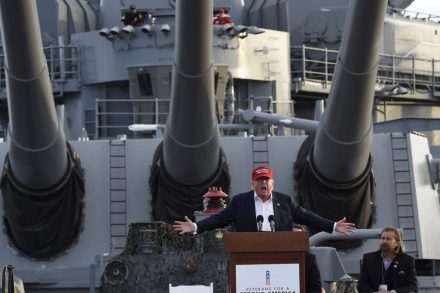
The US Navy retired its last battleship 19 years ago, the grand warship’s devastating firepower deemed surplus to requirements in the new war on terror. But the era of Great Power conflict has now returned with storm clouds gathering between the US and China. And with them the old warhorse bristling with guns, the battleship, is facing a call back to action. President Trump has said the battleship will come back as the centerpiece of his new Golden Fleet – a cadre of warships designed to equip our navy to face the challenges of the future, not the past.In a speech to the nation’s top military brass, Trump said:“I think we should maybe start thinking about battleships, by the way.

Trump battleships

A rare earths deal is China’s gift to Trump

From our US edition

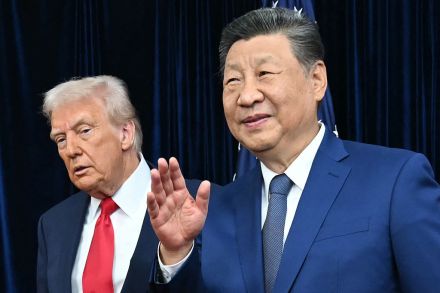
Donald Trump went nuclear. Before his meeting with Chinese leader Xi Jinping at an air base in South Korea, he ordered the Pentagon to test atomic weapons on an “equal basis” with China and Russia. Was Xi impressed? Probably not. While Russia expressed indignation, China did not permit itself to be distracted by Trump’s nuclear shenanigans. Instead, Beijing aimed to obtain economic concessions from a prideful Trump, which it did. From the outset, Xi sought to bring Trump down a peg, declaring that “both sides should consider the bigger picture and focus on the long-term benefits of cooperation, rather than falling into a vicious cycle of mutual retaliation.” Trump seems to have absorbed the lesson.

Trump’s Asian vacation

From our US edition

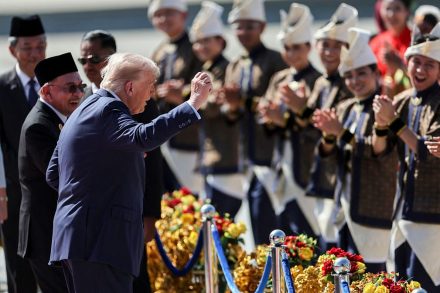
President Trump is meeting with Chinese Prime Minister Xi Jinping tonight, or tomorrow, or whenever it is in Asia. Regardless of the time, the meeting will have enormous implications for the future of the US economy and for geopolitical stability. Don’t worry, Trump told his dinner companions in South Korea last night. The three-to-four-hour meeting “will lead to something that’s going to be very, very satisfactory to China and to us. I think it’s going to be a very good meeting. I look forward to it tomorrow morning when we meet.” The China summit will cap what’s been an absolutely delightful Asian invasion for Trump and his retinue. Trump told reporters last week that he felt incredibly lucky.

Donald Trump

The Chinese spy case you won’t have heard about

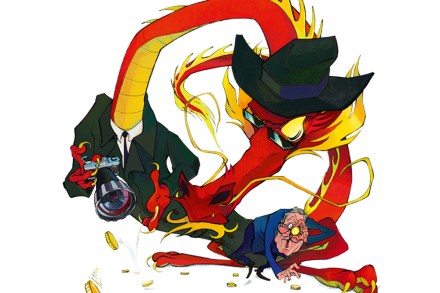
The Hong Kong Economic and Trade Office, handsomely housed in London’s Bedford Square, is responsible for trade relations between the formerly British ‘special administrative region of the People’s Republic’ and the UK, Scandinavian and Baltic states, and Russia. Its organigram boasts a ‘dedicated team for attracting businesses and talents’, including specialists in ‘investment promotion (fintech)’. So far so good: those who detest China’s suppression of Hong Kong also tend to believe its best hope for a return to relative freedom lies in attracting global attention as a hub of trade and finance. But also on the HKETO chart is ‘Office Manager Bill C.B. Yuen’, who will shortly be attracting headlines of a different kind.

Welcome to the Chinese century

From our US edition

Competition between the US and China will shape the 21st century, but have the Chinese already leap-frogged the Americans? It looks as if they might have done. Since China opened itself up to trade and market economics under Deng Xiaoping almost 50 years ago, it has been furiously chasing the US in terms of economic and technological development – and it’s been catching up, fast. We can prove just how fast by measuring its innovation and output per capita. The US has about a quarter of China’s population, so if both countries were at a similar level of economic and technological development, one would expect China to produce roughly four times the number of scientific breakthroughs as America, four times the number of physicists and AI engineers and so on.

China