
The term “Orientalism” has always implied some kind of caricature of the eastern world. It was originally coined as a way of describing how the West imagines the East as its negative to shore up self-confidence and justify conquest: “The Oriental is irrational, depraved (fallen), childlike, ‘different’; thus the European is rational, virtuous, mature, “normal,’” Edward Said wrote in Orientalism. Now, reverse “the Oriental” and “the European” and you have an idea of the new Orientalism, where the enlightened East becomes the foil to a decadent, violent, barbaric West.
The new Orientalists aren’t academics, policymakers or Wall Street Journal opinion columnists. They’re podcasters, bloggers and influencers, and as trust in western institutions wanes, political influence is increasingly in their hands.
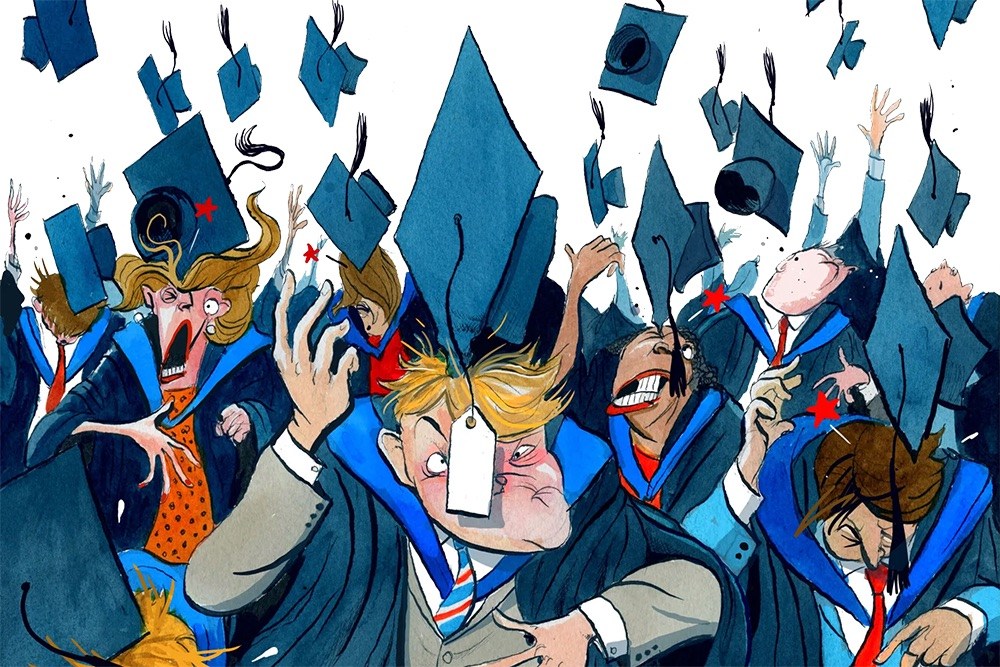
The Orienfluencer usually feels abandoned by the West in some way, that their world has failed to live up to its promises. He (or she) may claim to be “disillusioned” – hence his faith in new or alternative media – but he hasn’t really let go of his dreams. He just projects them on to the East instead. Depending on his politics or even just his personality, he might dream that China promises order and competence; the Islamic world, unabashed masculinity; Russia, a return to tradition; the Emirates, wealth and abundance; Singapore, a thriving alternative to democracy.
The “Chinamaxxing” trend – in which young people started wearing slippers inside and dreaming about life under the CCP – illustrated one of these fantasies. Online, people made memes saying “you met me at a very Chinese time in my life” and “I’m becoming Chinese.” In real life, my friends taught me qigong exercises and made me drink hot water when I came over for dinner. But the version of China we were maxxing was essentially a mirror image of America: where America is over-medicated, overfed, overworked, disenchanted and disordered, China is harmonious, disciplined and competent. It has its herbal medicine and the “ancient wisdom” of ancestors; we have ultra-processed foods and the boomer generation.
Our infatuation with China, or the idea of China, is not exactly proof of its merits so much as a sign of western self-doubt. “Of course, you’re in a Chinese time of your life, you don’t have a choice! Your country is collapsing!” says Emily, who quit her corporate job and moved to Vietnam. She goes by the username @misseatinggood on Instagram, where she has 250,000 followers and intersperses Anthony Bourdain-inspired travel monologues with critiques of western hegemony. Mungo McCosh, a Brit living in China (who, in true Orientalist fashion, wears a suit on his travels), posts videos of city skylines overlaid with the text “Average development when the government builds stuff instead of touching children,” and “Average development when the government funds infrastructure instead of the Iron dome.” He makes the caveat that his content is anti-Washington, not pro-CCP.
“Are we supposed to be aspiring to democracy?” Emily asks in one video. “You have campaigns and lobbies and protests and ‘Epstein Media,’ and maybe that makes you feel good and free. I have affordable housing and green energy and zero crime, and maybe that makes me feel good and free. That doesn’t mean it’s all benevolent,” she says, but “before you start your freedom lecture, get your head out of your ass.”
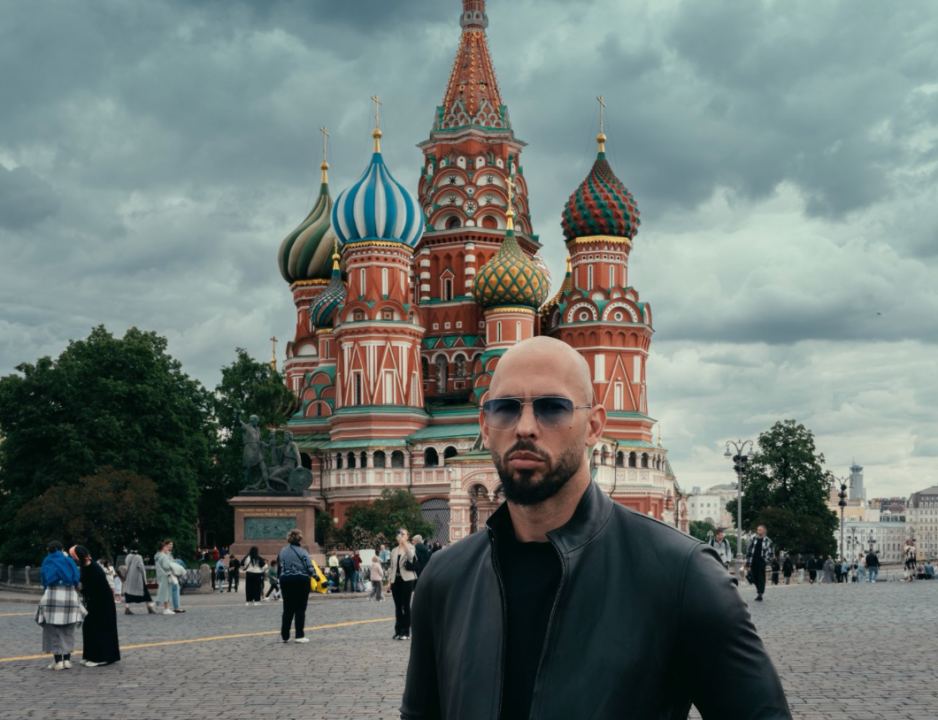
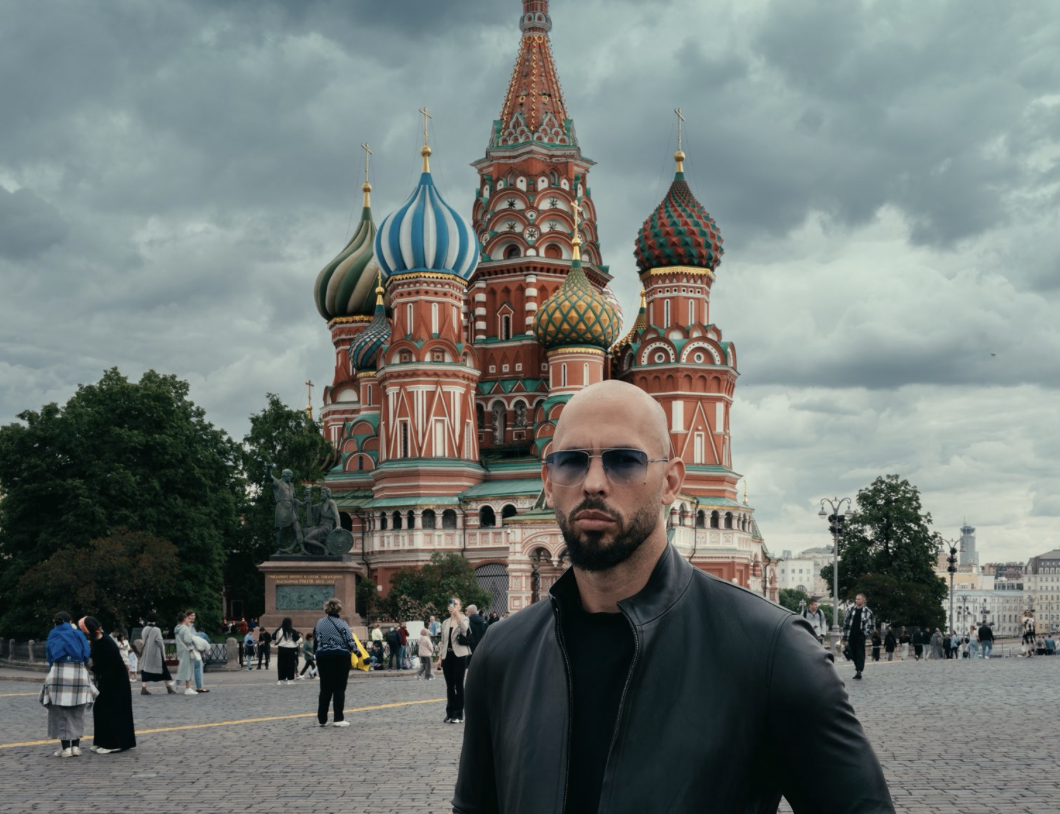
For some Orienfluencers, the East is quite literally a land of freedom. Andrew Tate, currently in Hong Kong, is under investigation in the UK and Romania for rape and human trafficking, and faces possible extradition to Britain. He believes western media is trying to take him out because he can influence elections: “Kamala Harris says in her book… ‘My campaign was ruined by Andrew Tate.’” Lately, he’s been partying on a yacht in Victoria Harbour and taunting British government “dipshits” to “come fuckin’ get me.”
The western society is dysfunctional; thus, the eastern society is functioning
On the other hand, Tate has praised CGTN, the Chinese state-run media outlet: “I’ve never seen such truth from mainstream media. Western corruption. Gaza genocide. Rigged elections. MSM with credibility. Remarkable.” Despite calling the Chinese “the dudes with the smallest dicks,” Tate believes that “China’s the future. They know they’re the future,” he told podcaster Mario Nawfal. The West, meanwhile, “has collapsed in real time.”
In 2022, Tate said he’d converted to Islam. The reason he was attracted to the religion, he says, was because he respected Islam and the kind of society it created. In Islamic countries, you avoid “LGBT garbage,” “woke insanity” and “feminism, which has destroyed the West”: “all these things because Islam is being adhered to and is keeping the society functioning.” The western society is dysfunctional; thus, the eastern society is functioning.
Sneako, a popular American influencer, also converted to Islam in 2023. Despite being banned from most major social media platforms for his antisemitic rants, Sneako still has more than a million followers on X and the streaming site Kick. He went on a “Southeast Asia Tour” last month, as if he were a 19th-century remittance man. The high point of the tour was an interview with Malaysian Prime Minister Anwar Ibrahim. They discussed Israel, whose citizens are banned from Malaysia (“Alhamdulillah!” said Sneako), and the war in Iran. “I think there’s a lot of misunderstanding about [Ali Khamenei], especially in my country… In America, they love to say that he’s an evil person and he’s assassinating people.”
And we can’t forget the expats in Dubai, broadcasting their “frictionless” lives made possible by a migrant worker underclass. Earlier this year, as Iranian missiles flew over the heads of influencers in Dubai, they were informed by the police that “spreading rumors” – which meant sharing, or simply recording footage of the strikes – is a crime. Some influencers coped by posting videos of Dubai’s crown prince and prime minister, captioning the clips, “I know who protects us.” The grown-ups are in the room.
That sense of safety, however paternalistic, is what the Orienfluencers are selling against western insecurity. They’re less upfront about the costs: censorship, surveillance, disappearances, religious coercion, authoritarianism, labor exploitation, subordination of women. They might not deny that these things exist, but the point is that they’re worthwhile trade-offs for a more harmonious society. I’m just not convinced it’s a fair deal.



Comments