China

How should the UK manage its relationship with China?

17 min listen

As Keir Starmer’s visit to China draws to a close, Sam Olsen – who runs the States of Play substack – and Times columnist Cindy Yu join Patrick Gibbons to discuss how the UK should manage its relationship with China. Starmer’s visit has drawn criticism from various China hawks – and from President Trump – but is there a way for the UK to balance legitimate security concerns with the need to trade with the world’s second largest economic power? Plus, to what extent to the British public care about these geopolitical concerns? Cindy and Sam explain why is it important for policymakers to explain how these trips link back

How should the UK manage its relationship with China?

Starmer has got nothing from his demeaning trip to China

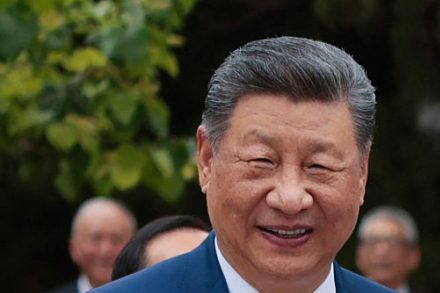
Sir Keir Starmer told Xi Jinping it was time for a ‘more sophisticated’ relationship, yet there is very little sign of that in his excruciating performance in China. This was supposed to be the moment the Prime Minister cashed in on a year spent cosying up to Beijing, during which he has been accused of jeopardising national security to avoid causing offence. Yet you do not need to be part of his large entourage of business people to calculate that the returns have been minimal, and the costs potentially enormous. Donald Trump was certainly quick with his verdict. Asked about Starmer’s pursuit of closer business ties with China while attending

Where have all the graduate jobs gone?

It’s a relief not to have been pressganged into joining the Prime Minister’s plane-load of business chiefs and reporters bound for Beijing this week. With Sir Keir Starmer are leaders of the likes of Astra-Zeneca, BP, HSBC, JLR and Rolls-Royce, and some billion-pound deals will no doubt be announced while they’re there – agreed in advance on the condition that Downing Street gave the green light for China’s Royal Mint Court mega-embassy-cum-listening-post on the edge of the City. The Chancellor is on the trip too, perhaps carrying a nice set of hunting prints as a housewarming gift for London ambassador Zheng Zeguang’s new office. But as is routine for senior

What does Starmer want to achieve in China?

19 min listen

Keir Starmer lands in China tonight as he becomes the first British Prime Minister to visit since Theresa May in 2018. Sam Hogg from the Oxford China Policy Lab and James Heale join Patrick Gibbons to assess the UK-China relationship right now, what Labour is hoping to get from the visit and whether there are risks for Starmer as well as rewards. Is the tight rope Starmer is walking between the UK & China a sign of weakness, or an extension of a pragmatic ‘Starmerite’ foreign policy? Produced by Patrick Gibbons.

What does Starmer want to achieve in China?

The Chinese takeover of Britain’s public schools

Roedean is now known as ‘Beijing High’. Cheltenham Ladies’ College is ‘Hong Kong College’. In the country’s most elite boarding schools, pupils say that they are one of just a handful of English children. Others note that Chinese has become the dominant language in hallways and dormitories. Many English parents can no longer afford a boarding school education for their children. And the pressure of recently introduced VAT on fees, as well as above-inflation rises year on year, means the number able to cough up will dwindle further. By contrast, China and Hong Kong’s growing economy and cultural obsession with education provides a surfeit of parents with the cash needed

Who will rule the Arctic?

In 2007, two Russian submersibles descended from the ice at the North Pole to plant a small Russian flag on the sea floor more than two miles down. While the aquanauts were greeted as heroes in Russia, the reaction of other Arctic nations was somewhat less positive. ‘This isn’t the 15th century,’ complained the Canadian foreign minister. ‘You can’t go around the world and just plant flags.’ In response to the protests, President Putin – then Time magazine’s ‘Person of the Year’ – reassured the world: ‘Don’t worry. Everything will be all right.’ Kenneth Rosen is an award-winning journalist whose work has taken him to geopolitical hotspots such as Iraq,

Iran: why theocracies survive – with Peter Frankopan

25 min listen

In the 21st century, the theocratic nature of the Iranian regime – ruled by senior Shia clerics – appears to be a rarity. The constitutional role of religion is perhaps matched only by the Vatican City and Afghanistan, though these vary in terms of autocracy – as evidenced by the brutal suppression of protests across Iran in the past few weeks. The regime, installed following the 1979 revolution and led first by Ayatollah Khomeini and now Ayatollah Khameini, has proven remarkably resilient; how has it survived so long? Peter Frankopan – professor of global history at Oxford University – joins Damian Thompson to discuss the tensions associated with state control

Portrait of the week: Digital IDs ditched, unrest in Iran and an app to check you're not dead

Home The government dropped plans to make digital ID compulsory to work in Britain. Sir Keir Starmer, the Prime Minister, called it ‘disgraceful’ that Grok, the online tool on Elon Musk’s X, could undress pictures of people. X limited the function to subscribers, but Liz Kendall, the Technology Secretary, said that the government would back Ofcom if it decided to block X in Britain. ‘They just want to suppress free speech,’ Mr Musk wrote on X. Sir Keir, due to visit China this month, was warned by some Labour MPs not to approve a vast new Chinese embassy in London. The government signalled a U-turn on increases to business rates

Trump’s attack on the Fed is a pivotal moment of hubris

The phrase ‘trumped-up charges’ dates from the 18th century, I learn, and derives from the Old French tromper, to deceive. It has certainly acquired new resonance with the threat of criminal indictment against US Federal Reserve chairman Jerome Powell, somehow relating to the cost of Fed building renovations. The President says this Department of Justice action has nowt to do with him, but it’s plainly another exercise of what some commentators are calling ‘the Maduro option’: sod constitutional niceties, just drag your opponent into the dock. For all his foreign-policy fireworks, Donald Trump knows November’s US midterm elections will largely be driven by domestic cost-of-living concerns. He has castigated Powell

Donald Trump is confronting a reality that Europe has ignored

Donald Trump’s rendition of Nicolas Maduro was a brilliantly executed coup. It was also an exhibition of America’s hard power, power that has underpinned the rules-based international order that protected America’s allies for decades. Now those allies fear that the rules-based order is as much a smoking ruin as Maduro’s Caracas compound. European hysteria is, however, misplaced. President Trump has not inaugurated a new era of disorder, he has responded to realities about which European elites have been in denial. The post-war international order has been crumbling for more than a decade. And British governments have been enablers of that process. One of the most determined users of hard power

Britain’s national security must not be sacrificed to net zero

Those who, like myself, experienced life behind the Iron Curtain understand instinctively that centrally planned economies beholden to an ideology do not bring benefit to the majority of the population on whom they are imposed. A few top-level individuals prosper, but the citizen finds himself and his aspirations crushed by the diktats of central government. The state itself is similarly confined by a set of ideas which are presented as self-evident truths which constrain its policy–making and exclude challenge. That Iron Curtain model describes pretty accurately the UK’s energy policy, driven as it is by the ideological pursuit of net zero and the diktats required to implement it. Thus: I

What my pyjamas taught me about China

About seven years ago, I bought two pairs of pyjamas, one British, the other Chinese. At the time, they seemed of roughly similar quality, the important difference being that the Chinese ones were half the price of the British. Given that they have the same ‘lived experience’, I can make a direct comparison. The British ones, by Peter Christian (‘gentlemen’s outfitters’ accompanied by an image of two hares boxing), show few signs of the passing years. Their reddish colour with green and yellow stripes holds fast. There is very little wear and no tear at all. The Chinese pair (labelled ‘sleepwear’) tells a different story – the drawstring disappeared, the

China is holding the West to ransom over rare earths

China’s naked weaponisation of rare earths brings to mind Mao Zedong’s ‘four pests’ campaign, the old tyrant’s fanatical effort to exterminate all flies, mosquitoes, rats and sparrows, which turned into a spectacular piece of self-harm. Sparrows were always an odd choice of enemy, but Mao and his communist advisers reckoned each one ate four pounds of grain a year and a million dead sparrows would free up food for 60,000 people. The campaign, launched in 1958, saw the extermination of a billion sparrows, driving them to the brink of extinction. But the sparrows also ate insects, notably locusts, whose population exploded, and the ravenous locusts wreaked far more damage to

The Chinese spy case you won’t have heard about

The Hong Kong Economic and Trade Office, handsomely housed in London’s Bedford Square, is responsible for trade relations between the formerly British ‘special administrative region of the People’s Republic’ and the UK, Scandinavian and Baltic states, and Russia. Its organigram boasts a ‘dedicated team for attracting businesses and talents’, including specialists in ‘investment promotion (fintech)’. So far so good: those who detest China’s suppression of Hong Kong also tend to believe its best hope for a return to relative freedom lies in attracting global attention as a hub of trade and finance. But also on the HKETO chart is ‘Office Manager Bill C.B. Yuen’, who will shortly be attracting headlines

The truth about Chinese espionage

13 min listen

Tim Shipman’s bombshell cover piece for the magazine this week explains how the collapsed spy trial blew up in the government’s face. As well as raising ‘serious questions’ about Keir Starmer’s judgment and Jonathan Powell’s role, ‘the affair reveals a Whitehall tendency to cover up the gory details of foreign spying in the UK’. According to Tim, four ‘highly credible sources in the upper echelons of the last government… have revealed that far worse scandals have been hushed up’. One, involving Russia, was suppressed ‘to avoid embarrassing a former prime minister’. The ‘most catastrophic breach’ saw China purchase a company that controlled a data hub used by Whitehall departments – thereby

The questions the government must answer over the China spying case

Exactly a year ago, this magazine warned that ministers were showing a dangerous naivety towards China. We revealed that the Chancellor, the Foreign Secretary and the Prime Minister were all intent on cosying up to Beijing. They were scornful of the wariness Conservative ministers had shown towards the Chinese Communist party. The Labour leadership believed that their pursuit of growth could be supercharged by Chinese investment. They hoped one of their missions – the drive to decarbonise the grid – could be facilitated by Chinese tech. They thought Tory attitudes to China were warped by ideology and a more pragmatic line towards Beijing would be economically rewarding. A ‘China Audit’

Portrait of the week: Gaza ceasefire, unemployment increases and a Gen Z uprising

Home Sir Keir Starmer, the Prime Minister, praised President Donald Trump for the Gaza ceasefire agreement while in India accompanied by a trade delegation of 126. He then flew off to Egypt for the summit at which the peace declaration was signed. Sir Keir asserted that the dropping of a prosecution against two men for spying for Beijing (which they deny) was because China had not been a ‘threat to national security’ when they were accused of espionage between December 2021 and February 2023; Lord Case, the former cabinet secretary, said it definitely had been, and two former heads of MI6 agreed. Kemi Badenoch, the Conservative leader, was seen to

Here be dragons: the truth about Chinese espionage

On 3 July a Chinese man, Xu Zewei, was arrested in Milan to face extradition on nine charges relating to the hack carried out by a group called Haf-nium during the Covid pandemic. Western companies had secrets stolen in 2020 and 2021 when a weakness in the Microsoft Exchange servers was exploited. The National Cyber Security Centre (NCSC), part of GCHQ, later said 70 British firms had fallen victim to ‘a malicious act by Chinese state-backed actors’. The court documents claim that officers of China’s ‘Ministry of State Security and the Shanghai State Security Bureau directed Xu to conduct this hacking’. China is constantly probing for ‘weaknesses’ in British defences

Are the Tories to blame for the China spy scandal?

14 min listen

Keir Starmer did not go into Prime Minister’s Questions with the intention of resolving the row over the collapse of the Chinese spying case: he merely wanted to avoid the pressure building too much. He announced in a long statement at the start of the session that the government would be publishing its three witness statements, and then spent the rest of his sparring with Kemi Badenoch arguing that this was all the fault of the previous government anyway. So who is to blame, the Tories or Labour? What does the inability to deal with this scandal say about the ineptitude of successive governments, and how they communicate with the

Lab leaks & spy scandals: was Cameron wrong about China?

48 min listen

This week on Quite right! Michael and Maddie turn their sights to Westminster’s latest espionage scandal – and the collapse of the case to prosecute two men accused of spying for China. Was the case dropped out of incompetence, or out of fear of offending Beijing? As Michael puts it, ‘Either we’re not being told the truth, or this is a government of staggering incompetence.’ They also unpick the growing row over Jonathan Powell, Keir Starmer’s National Security Adviser, and his alleged role in shelving the case. What does his re-emergence, along with Peter Mandelson and other ‘Sith Lords of Blairism’, tell us about the return of New Labour’s old