The Danish media has accused me of being a US spy. They say I’m involved in a covert influence operation in Greenland to push the territory towards becoming part of the US. I want to be clear that I have never worked as a covert operative. Instead, my work involves getting investment for sectors like mining and infrastructure.
I am very public about my travels in Greenland and business there. I routinely appear on daytime television and bring my family on these trips. That would be a strange thing for Jason Bourne or James Bond to do. I often go for dinner with Greenlandic officials at very public restaurants, with their respective wives and children too. Despite this, I’ve been told by numerous insiders that I’m being monitored. To their credit, the Danish and Greenlandic governments have always been polite and non-invasive. I’ve never been brought in for official questioning.
I first learned about these allegations through media reports, not through any official channel. In a sense, I understand why they are being made. An American with a government background – a former Green Beret and Trump administration official, now working on resource projects in Greenland – fits neatly into a certain narrative. But my work has always been commercial and transparent.
My involvement in Greenland began as a professional assignment during the first Trump administration. I was tasked with understanding Greenland’s resources and strategic potential. What I found was a society with a strong identity, capable leadership and a clear determination to shape its own economic path. That stayed with me, and I kept coming back. I have a real respect for how seriously Greenlanders think about their future and the trade-offs involved.
When I left government, I continued this work in the private sector, focusing on critical minerals and resource development. Through GreenMet, the advisory firm I founded in 2021, I work on advancing critical materials projects in the United States and allied countries, including Greenland. We do not act on behalf of any government. Our role is to help bring together technical expertise, capital and credible operating partners where projects stand on their own merits.
I do not support any effort to promote Greenlandic secession. Greenland’s political future is for Greenlanders to determine within the framework of the Kingdom of Denmark.
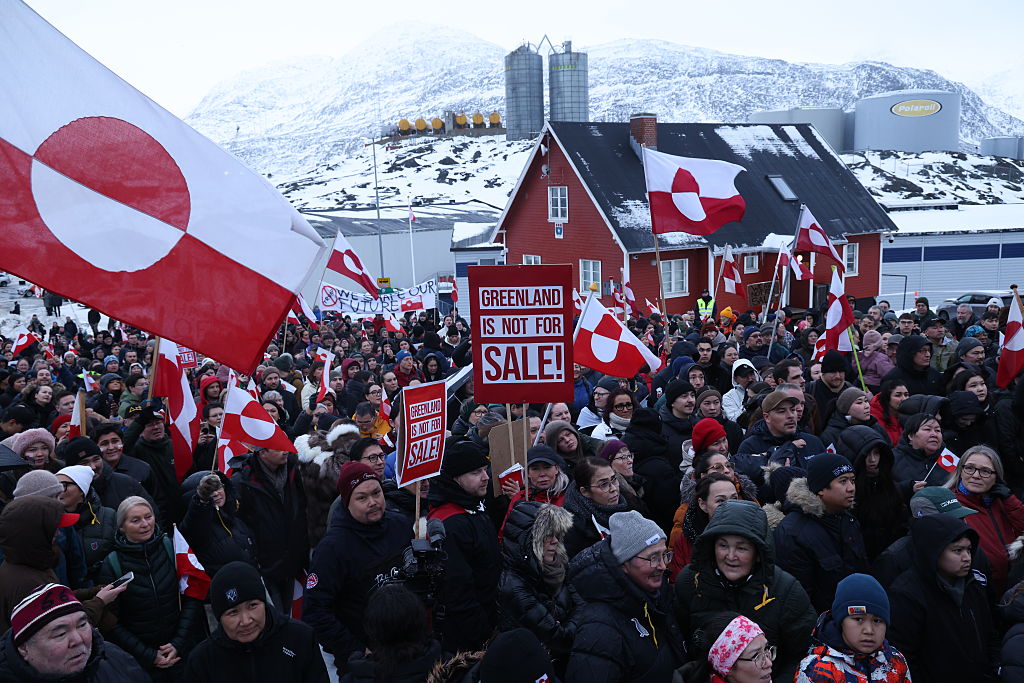
The accusation that I am a US agent says more about the current moment than it does about me. As Greenland draws more attention, people are quick to frame everything in geopolitical terms. That’s not how it looks locally. The focus is on practical questions, jobs, training, infrastructure, and whether anything being proposed is real or just talk. What has changed is that Greenland is no longer being ignored. It sits on materials the West now worries about, in supply chains still heavily exposed to China. Washington has taken an interest, and so have American investors. That alone is enough to raise eyebrows in Copenhagen.
In that atmosphere, it does not take much to be labelled. An American working on resource projects, with a government background, is easy to cast in a certain light. It is a neater story to say “spy” than to accept that commercial actors have shown up because the economics have shifted. There are also internal tensions about how Greenland should develop and who should be involved. When those arguments sharpen, outside figures get pulled in whether they belong there or not.
The mineral endowment is real, and so is the demand. Southern Greenland sits on one of the largest known rare earth provinces outside China, with deposits that run into the billions of tonnes of mineral-bearing rock and meaningful concentrations of the elements used in electric vehicles, magnets and defense systems.
I routinely appear on daytime television and bring my family on these trips. That would be a strange thing for Jason Bourne or James Bond to do.
Today, processing of these materials is heavily concentrated in China, which accounts for roughly 80 to 90 percent of global capacity. That level of concentration would be unusual in almost any strategic industry. Even partial development of Greenland’s known resources would not replace China, but it would begin to shift the balance in a market that is currently heavily skewed.
Greenland is often treated as a strategic prize in a contest between great powers, but this is not about choosing between the United States and Denmark. As an American, I can invest and work with partners there, but decisions about Greenland’s future are not mine to make.
What I like most about Greenland is how quickly it stops feeling remote and starts feeling familiar. I always bring colleagues and family along with me when I visit. Some of the best moments are in small, local places, like Restaurant Charoen Porn, where they serve whale sushi. It comes as part of a mixed platter, but I usually ask them to swap out the other fish for more whale. Or a night at Daddy’s, where by the weekend it feels like the whole town has shown up and you’re just part of it. It’s unpolished, direct, and genuinely welcoming, and that’s what keeps me coming back.
To return to where this began, the idea that this is some kind of covert influence operation just doesn’t hold up. There’s nothing hidden about it. It’s ordinary commercial work in a place that has suddenly become politically sensitive. If Greenland’s resources were ever developed at scale, they wouldn’t shift the global balance overnight, but they would mean fewer chokepoints in a system that is currently heavily dependent on China. That’s the real issue underneath all of this, not espionage.




Comments