Book reviews

Perfectly inconsequential

At this stressful time of year, it is important to note the distinction between Christmas ‘funny’ books and Christmas ‘quirky’ books. Funnies we know only too well, mainly from the sinking feeling most of us experience when unwrapping one on Christmas morning. Quirkies are a more recent development, trading less on jokes and merriment than on oddness, silly facts, curious stories and generalised eccentricity. ‘That’s not writing, that’s typing,’ said Truman Capote of Jack Kerouac. Many of these books are just downloading. But a few are worth your while. The latest from the all-conquering QI franchise is The Second Book of General Ignorance by John Lloyd and John Mitchinson (Faber, £12.99).

Mastering the k-word

The film The King’s Speech, which is due to appear in the UK in January, tells the story of George VI’s struggle to overcome his stammer. The film The King’s Speech, which is due to appear in the UK in January, tells the story of George VI’s struggle to overcome his stammer. The speech therapist who cured the King was an Australian called Lionel Logue, and Mark Logue is his grandson. This book grew out of the researches that he began when the film-makers approached him for information. Lionel Logue was an amateur actor and elocution teacher who made a career teaching Australians how to speak correctly, back in the long vanished days when they were ashamed of their lazy diction and half-open mouths.

BOOKENDS: Pearls before swine

The Poor Little Rich Girl memoir, popular for at least a century, nowadays slums it in the misery department. ‘One particularly annoying aspect of being sexually abused or traumatised as a child,’ writes Ivana Lowell in Why not Say what Happened? (Bloomsbury, £25), ‘is that everyone wants you to talk about it.’ Does she mean ‘everyone’, or just her agent, publisher and ‘many psychiatrists’? The Poor Little Rich Girl memoir, popular for at least a century, nowadays slums it in the misery department. ‘One particularly annoying aspect of being sexually abused or traumatised as a child,’ writes Ivana Lowell in Why not Say what Happened? (Bloomsbury, £25), ‘is that everyone wants you to talk about it.

Feeling pleasantly uncomfortable

It is rare for stories to be specially commissioned for an audio book, but as Maxim Jakubowski, the editor of The Sounds of Crime tells us in a pre-thrill talk, he ‘begged’ the five writers he considered to be the best in their field to produce a new story for this collection; and ‘happily for me,’ he tells us, ‘they all agreed.’ Jakubowski’s introduction evokes those black-and-white days when Alfred Hitchcock shuffled on to millions of walnut-encased television sets to present us with half an hour of spine-tingling tension — very much as we have with each of the stories here.

Forget the matchstick men

Here at last is a book that takes L. S. Lowry’s art seriously and treats it with the scholarly attention it deserves. Here at last is a book that takes L. S. Lowry’s art seriously and treats it with the scholarly attention it deserves. Tom Rosenthal has been a life-long admirer of Lowry’s work, spending his formative years in Greater Manchester and even interviewing the old curmudgeon for Radio 3 in the 1960s. One of his aims in this book is to dispel the various myths that have grown up around Lowry and his critically underestimated art. It has become fashionable in the art world to look down on Lowry as a naive painter who could only paint industrial landscapes full of ridiculous scampering matchstick people.

The making of the coalition

David Cameron was despondent on the evening of 10 May. Although the election result was pretty much as he had predicted privately, he feared that his ‘big, open and comprehensive offer’ of coalition with the Liberal Democrats was about to be rejected in favour of a deal with Labour. When we talked that night he feared another spell in opposition, and he ended by suggesting I went into the office the next day since he would have time on his hands. But as we spoke, the Lib Dem negotiating team was reporting back to Nick Clegg on another disastrous set of discussions with Labour, ensuring that long-held hopes of the so-called ‘progressive alliance’ were shrivelling by the hour. Even Vince Cable accepted the reality of the situation.

BOOKENDS: Gothic tales

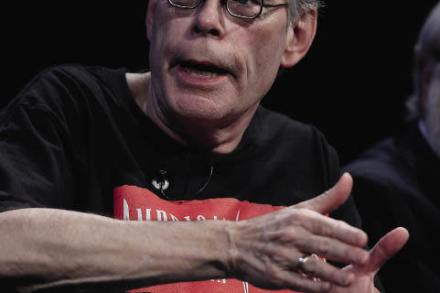
Much of Stephen King’s recent work has been relatively lighthearted, but in Full Dark, No Stars (Hodder & Stoughton, £18.99) he returns with gusto to his dark side and explores the perils of getting what you ask for. Much of Stephen King’s recent work has been relatively lighthearted, but in Full Dark, No Stars (Hodder & Stoughton, £18.99) he returns with gusto to his dark side and explores the perils of getting what you ask for. The first and longest of these four novellas, ‘1922’, is a murderer’s confession: a farmer describes murdering his wife in Nebraska just after the first world war and the unexpected consequences that gradually destroy his life.

No man’s land

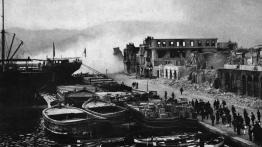
The shores of the eastern Mediterranean, from the eastern Aegean to the delta of the Nile, constitute a region known as the Levant, from the French for the sunrise. The French were first into Smyrna, opposite the island of Chios, which became a boom town in Ottoman times, trading figs and raisins from the hinterland. Far from Constantinople, it was a cheap and relaxed place to do business, encouraged by the Ottoman grants of consular jurisdiction and free trade. European consuls lived like princes in Smyrna, the merchants like lords. Tension between Muslims and Christians, between the many communities of Jews, Greeks, Armenians and Franks who settled there, were generally kept in check, both by the local authorities and by the consuls’ own naval might.

Mean streets | 27 November 2010

Christmas is coming, which generally leads to a surge in sales of crime fiction. Fortunately for readers, some delectable crime novels have appeared in the past few months. Among them is Val McDermid’s Trick of the Dark (Little, Brown, £18.99). This is not one of her series novels but a standalone thriller whose plot revolves around St Scholastika’s College, Oxford, a women’s college with a certain resemblance to St Hilda’s. One of its alumnae is Charlie Flint, a clinical psychologist whose professional reputation is hanging in the balance. She receives an anonymous bundle of press cuttings relating to a recent murder at the college, now the subject of a high-profile criminal trial.

Ring of truth

The glamorous art world of Manhattan is a natural subject for novelists and film-makers, but with the honourable exception of William Boyd’s Stars and Bars, written before the great art boom of recent times got going, few of the novels or movies have quite got it right. The glamorous art world of Manhattan is a natural subject for novelists and film-makers, but with the honourable exception of William Boyd’s Stars and Bars, written before the great art boom of recent times got going, few of the novels or movies have quite got it right. But now comes a novel by Steve Martin, An Object of Beauty, which does seem to have the ring of truth about it.

Under the skin

Why do so many aspiring writers think it best to begin with the short story and graduate to the novel? It’s madness. The short story is infinitely harder to write well. Some novelists succeed at both — William Trevor and John McGahern are the names that spring to mind — but Chekhov never wrote a novel and, coming up to date, our leading woman short-story writer, Helen Simpson, has not been tempted to do so either. I can count on a hand the names of contemporary writers whose collections of short stories are worth reading, but Polly Samson has belonged on one of its fingers since her fine first volume, Lying in Bed. That was published ten years ago.

Dazzling puzzles

Halfway through his new book about Shakespeare’s sonnets, Don Paterson quotes W.H. Auden. Auden was one of Shakespeare’s great commentators and he firmly warned against reading the sonnets as simple statements. ‘It is also nonsensical,’ Auden wrote, ‘to waste time trying to identify characters. It is an idiot’s job, pointless and uninteresting.’ Halfway through his new book about Shakespeare’s sonnets, Don Paterson quotes W.H. Auden. Auden was one of Shakespeare’s great commentators and he firmly warned against reading the sonnets as simple statements. ‘It is also nonsensical,’ Auden wrote, ‘to waste time trying to identify characters. It is an idiot’s job, pointless and uninteresting.

Dying of laughter

Marcus Berkmann on the few genuinely funny books aimed at this year’s Christmas market It’s a worrying sign, but I suspect that Christmas may not be as amusing as it used to be. For most of my life, vast numbers of so-called ‘funny’ books have been published at around this time of year, aimed squarely at desperate shoppers lurching drunkenly into bookshops on 24 December, still looking for the perfect present for someone they don’t much like. But this year there aren’t anywhere near as many. Perhaps they stopped selling. Maybe the QI Annual and Schott’s Almanac saw them off.

The sound of broken glass

What do Evelyn Waugh, Peter Cook and Chris Morris have in common? I would have said ‘irreverence’ and left it at that; but the social scientist Peter Wilkin has written a book on the subject, The Strange Case of Tory Anarchism. What do Evelyn Waugh, Peter Cook and Chris Morris have in common? I would have said ‘irreverence’ and left it at that; but the social scientist Peter Wilkin has written a book on the subject, The Strange Case of Tory Anarchism. It’s an arresting title, not least because it appears to be an oxymoron. But this is not so, according to Wilkin.

Brave on occasion

Hitler’s experiences in the Great War have long been shrouded in mystery and controversy, not least because there is relatively little material from that time written by himself. Hitler’s experiences in the Great War have long been shrouded in mystery and controversy, not least because there is relatively little material from that time written by himself. Although Austrian by nationality, he volunteered for the German army in 1914 and served throughout the war in its List Regiment, mostly as a dispatch runner based at regimental headquarters. After he became a celebrity, quite a few former comrades wrote about his war service. Some were enthusiastically positive about Hitler’s military record, others were more sceptical.

Taking the long view

While Tony Blair emerged from his memoirs as a chameleon of many colours, there is only one George W. Bush in Decision Points. The book reads like the man speaks. If it has been ghosted — and Bush gives thanks to a multitude of helpers — it has been done with consummate skill to preserve the authentic Bush voice. The result will be unexpected, even unwelcome, to many. This is an interesting and readable book, which clips along in short, spare sentences, with frequent flashes of humour. Don’t take my word for it. It has been praised by none other than Bill Clinton.

The spur of the moment

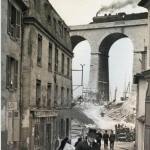
A memorable image by André Kertész shows a steam train passing over a high viaduct behind a row of peeling French houses next to a demolition site while a man in a suit and hat with his back to the train walks across the foreground, a mysterious painting-shaped item wrapped in newspaper under one arm. It is a moment caught. The viewer, naturally, tries to connect the disparate elements. And to us it is not merely a moment but a moment in a place, from the past — when steam trains chuffed and men wore hats with suits — in this case 1928 at Meudon, a Parisian suburb. In this way, photography attains the highest form of art to which painters aspired in post-Renaissance theory: that of history painting.

Charmed out of their minds

David Cameron probably didn’t need reminding while he was in China what fools intelligent people can be when they visit authoritarian regimes. David Cameron probably didn’t need reminding while he was in China what fools intelligent people can be when they visit authoritarian regimes. ‘Useful idiots’, as Lenin didn’t say, they make allowances for dishonesty, even horrors, which they never would at home, express guilt for the past of their own countries, use words like ‘progress’ for the place they are briefly visiting, and accept at face-value hospitality and words which normal consideration would tell them were well-rehearsed and manipulative.