Book reviews

How we roared!

To most people Christopher Plummer means Captain von Trapp in The Sound of Music. Plummer would not be in the least ashamed by this. A year or so ago he found himself forced to watch the film at a children’s Easter party: The more I watched, the more I realised what a terrific movie it is. The very best of its genre — warm, touching, joyous and absolutely timeless. Here was I, cynical old sod that I am, being totally seduced by the damn thing — and, what’s more, I felt a sudden surge of pride that I’d been a part of it. It is an odd book, though. The production is calamitous: some of the illustrations are blurred to the point of mystery; unforgivably, there is no index; if an editor has been anywhere near the text there is no evidence of his existence.

BOOKENDS: Flesh and blood

Flesh. Lots of flesh. That was the simple promise of a Hammer horror film. In this collection of classic Hammer posters (The Art of Hammer by Marcus Hearn, Titan, £24.99) we have cleavages, writhing torsos and shining thighs aplenty. But it’s not just that kind of flesh. Over most of our female subjects leers a monster (usually played by the magisterial Christopher Lee), threatening to butcher their curves and leave behind a carcass. Little wonder that the blood-red acrylic is applied so liberally. More interesting, although generally less striking, are the posters that don’t follow the formula. The horribly sensationalist advert for The Camp on Blood Island (1958) carries the tagline, ‘Jap war crimes exposed!

The man and the myth

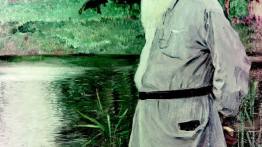
Tolstoy’s legend is not what it was; but sometimes the world needs idealised versions of ordinary men, argues Philip Hensher The truism that Tolstoy was the greatest of novelists hasn’t been seriously questioned in the last century. The nearest competition comes from Proust and Thomas Mann, I suppose. But when you compare two similar moments in the writings of Tolstoy and one of these other supreme novelists, a difference emerges. Both War and Peace and In Search of Lost Time culminate in a glimpse of the next generation.

Deadlier than the Mail

This is an effervescent, elegantly written and faultlessly researched romp through the life and times of someone whose name in Britain was spoken with genuine fondness by an urbane few, with self-righteous anger by some and with disdain or fascination by almost everybody who can read — as, like it or not, very few people don’t enjoy gossip. This is an effervescent, elegantly written and faultlessly researched romp through the life and times of someone whose name in Britain was spoken with genuine fondness by an urbane few, with self-righteous anger by some and with disdain or fascination by almost everybody who can read — as, like it or not, very few people don’t enjoy gossip. Tim Willis has caught the atmosphere of the Dempster decades with uncanny precision.

Fear of the unseen

There was a time when detailed case histories, including direct quotations from patients’ accounts of their own experiences, formed a significant part of the medical literature. There was a time when detailed case histories, including direct quotations from patients’ accounts of their own experiences, formed a significant part of the medical literature. French doctors of the 19th century were particularly adept at writing such case histories; the lucidity of their prose, as of their thought, was exemplary. Indeed, French medical prose of the 19th century was often as good as that of Flaubert. But the extended case history has gone out of medical fashion, as being too anecdotal and therefore unscientific.

A split personality

By the 1970s Ronald Fraser had established himself as an expert on modern Spain and an authority on its oral history, when that discipline was an exotic new concept. As a radical socialist, and a friend of the Marxist historian Perry Anderson, he published a series of distinguished books on popular risings and guerrilla warfare in 19th-century Spain. It was society seen from below. But no one reading the first edition of Fraser’s memoir, published in 1984, would have guessed any of this. Only in a new introduction does he mention his friendship with Gerald Brenan, whose The Spanish Labyrinth was a sacred text to all of us who wrote on 20th-century Spain.

A going-away present

A great time ago when the world was young there was a pleasant and harmless custom by which a British ambassador when leaving his post could sit down and write a valedictory dispatch to the Foreign Secretary. This was not compulsory; often an ambassador withheld his opinions until he was leaving not just a particular post but the foreign office as a whole. The motives of the valedictory dispatch varied. Some ambassadors concentrated on summarising the country in which they had last served; others attempted to sum up the whole period of their service. Some took the opportunity to deplore the present state of Britain; others told amusing stories; almost all thanked the staff who had supported them, and in particular their wives.

Piling Pelion on Ossa

Bettany Hughes is the Nigella Lawson of the classical world — all tumbling raven curls and smoky-voiced seduction, as she takes telly viewers through the greatest hits of the olden days; recent programmes have covered the Spartans, Athens and the Bible. Bettany Hughes is the Nigella Lawson of the classical world — all tumbling raven curls and smoky-voiced seduction, as she takes telly viewers through the greatest hits of the olden days; recent programmes have covered the Spartans, Athens and the Bible. She’s just been on Radio 4 talking about Britain under the Romans. She’s no slouch on the academic side, either: a scholar at Oxford and a research fellow at King’s College, London, she got rave reviews for her first book on Helen of Troy.

Murder in Madison Square Garden

In Victorian and Edwardian England architects did not get themselves murdered. They weren’t playboys, they didn’t have it off with their clients’ wives, they were in no way fashionable even if designing for fashionable people.They were solid members of the professional classes. Lutyens, with his grand marriage and his socialising, was an exception, but his Peter-Pan philanderings with Lady Sackville in the 1920s pale beside the stormy sex life which brought Frank Lloyd Wright into the headlines in 1909. No English architects inspired a novel or a film; a Secret Life of William Butterfield would be unthinkable; John Galsworthy’s Bosinney had no model in real life.

A palace in miniature

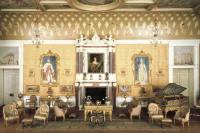
There’s nothing like a really good wallow in nostalgia. There’s nothing like a really good wallow in nostalgia. And if it can be arranged so that the nostalgia is for a time that never was, that’s even better. So it is hardly surprising that when, after the horrors of the first world war, Princess Marie Louise, Queen Victoria’s granddaughter, approached Sir Edwin Lutyens to design a dolls’ house for Queen Mary, they settled stylistically on creating a house firmly rooted in that semi- mythical long Edwardian pre-war summer, when God was clearly an Englishman, his home was his (miniature) castle, and his servants were, decently, not only omnipresent but also invisible.

Labour of love

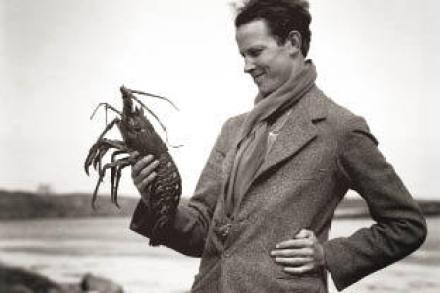
I visited the Hebridean island of Canna in May 2008 — Canna being John Lorne Campbell’s island, donated by him to the National Trust for Scotland in 1981 — and was immediately struck by three things, all of which presented a considerable contrast to the island of Colonsay, some little way to the south, where I live. I visited the Hebridean island of Canna in May 2008 — Canna being John Lorne Campbell’s island, donated by him to the National Trust for Scotland in 1981 — and was immediately struck by three things, all of which presented a considerable contrast to the island of Colonsay, some little way to the south, where I live.

BOOKENDS: Inspiration for a cult hero

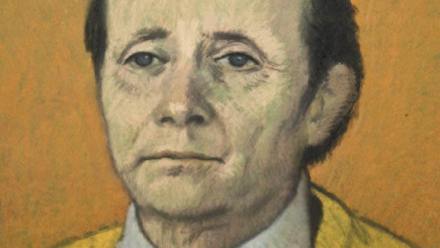
This is an odd book: the exhaustive biography of a complete nobody. Vivian Mackerrell was the primary inspiration for the cult that is Withnail. In that, at least, he doesn’t disappoint. This is an odd book: the exhaustive biography of a complete nobody. Vivian Mackerrell was the primary inspiration for the cult that is Withnail. In that, at least, he doesn’t disappoint. Mackerrell emerges from Colin Bacon’s eulogy, Vivian and I (Quartet, £12), as a rakish Charles Pooter, sunk by alcoholic degeneracy at the age of 24, though he staggered on gamely for another 30 years. The paucity of Mackerrell’s life leaves Bacon to indulge in bawdy nostalgia about the Sixties.

Far from idealism

If you think the Special Relationship has been looking strained in recent years, consider its condition during the American Civil War(1861-65). In 1863, an anonymous letter was delivered to Charles Francis Adams at the US legation in London: Dam the Federals. Dam the Confederates.Dam you both. Kill you damned selves for the next 10 years if you like; so much the better for the world and for England. Thus thinks every Englishman with any brains. NB PS We’ll cut your throats fast enough afterwards for you if you ain’t tired of blood, you devils. Brevity, they say, is the first grace of style. The feeling that letter encapsulates ran pretty high in England.

The other Prince of Darkness

This is a clever publishing idea, a light academic-historical cloak for another set of political memoirs. Jonathan Powell, chief of staff (the term should not be taken literally) at No. 10 throughout Tony Blair’s premiership, kept a diary. Blair himself couldn’t, Powell explains: ‘There simply isn’t time for a prime minister to set out detailed reflections and lead a country at the same time’. One wonders how Ronald Reagan managed it. Besides, is not reflecting on events, actions and consequences — ‘examining with diligence the past’ — one of Machiavelli’s precepts? Despite its title, however, the book is not a re-casting of the tenets of Machiavellianism.

Thynges very memorable

John Leland, who died in 1552, lived less than 50 years and was mad for the last five of them. Today he is one of the forgotten worthies of 16th-century England. An enormous edition of his major prose work may therefore seem an eccentric publishing choice. Yet there are many reasons why we should remember this gentle, melancholy and rather obsessive scholar from another age. Leland lived at a time when England was changing faster than it had ever done before. Henry VIII had broken with Rome. An aggressive protestantism had achieved a growing influence, and was soon to take possession of the English Church.

In deep trouble

Atlantic by Simon Winchester and The Wave by Susan Casey are, at first glance, very different works. Atlantic is a historical-philosophical-fantastical meditation on the Atlantic ocean, from the ‘post-molten Hadean’ through the ‘cool meadows of today’s Holocene’, to the conjectured end-days of the ocean ‘about 170 million years’ from now. The Wave is a pithy account of some years Casey spent following the elite American surfer Laird Hamilton as he travelled from one storm-lashed coast to another in search of waves.

Country matters

Clive Aslet was the long-time editor of Country Life, and now, as its ‘Editor at Large’, is released into the environment. Clive Aslet was the long-time editor of Country Life, and now, as its ‘Editor at Large’, is released into the environment. It obviously suits him. He writes wonderfully in Villages of Britain about building materials such as mud and stud, wattle and daub, and cob, which is where our oldest houses meet African mud huts. Cob is just earth ‘that has been sieved to a fine tilth and laid over straw; water is put on it to make it sticky, and more straw laid on top’, with a seasoning of dung and twigs. Then great lumps of it are piled up into a deep, thick wall.

Anthem for doomed youth

Britain’s greying post-war generation are getting increasingly used to a bad press. Britain’s greying post-war generation are getting increasingly used to a bad press. Once lauded for liberating British society, the teenyboppers of the 1960s are now vilified for squandering a time of plenty, having mortgaged their children’s futures to fund a reckless, debt-fuelled shopping spree. The Baby Boomers’ thirst for property speculation, their younger critics lament, has transformed the UK housing market into a vicious collusion between rack-rent retirees and latte-crazed estate agents. For the young, owning a house has become a distant dream.