Book reviews

BOOKENDS: The Diary of a Lady

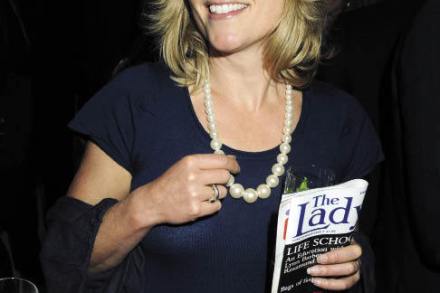
On the evidence of Rachel Johnson’s latest book (Penguin/ Fig Tree, £16.99), Julia Budworth, the owner of The Lady, was wrong in her recent accusation that the magazine’s editor is obsessed with penises. Johnson is far too busy talking about testicles. She tells her immediate boss (Mrs Budworth’s son Ben) to ‘grow a pair of balls’. She admits later that he has ‘cojones you can see from space’. She calls one article ‘cobblers’. On the evidence of Rachel Johnson’s latest book (Penguin/ Fig Tree, £16.99), Julia Budworth, the owner of The Lady, was wrong in her recent accusation that the magazine’s editor is obsessed with penises. Johnson is far too busy talking about testicles.

Almost everything came up roses

There’s a number in Merrily We Roll Along called ‘Opening Doors’, in which two young songwriters audition for a producer who interrupts: ‘That’s great! That’s swell!/ The other stuff as well!/ It isn’t every day I hear a score this strong,/ But fellas, if I may,/ There’s only one thing wrong:/ There’s not a tune you can hum.’ Urging them to be ‘less avant-garde’, he exits, asking for a ‘plain old melodee-dee-dee-dee-dee-dee-dee’ — sung (inaccurately) to the tune of ‘Some Enchanted Evening’. There’s a number in Merrily We Roll Along called ‘Opening Doors’, in which two young songwriters audition for a producer who interrupts: ‘That’s great!

Cleared on all counts

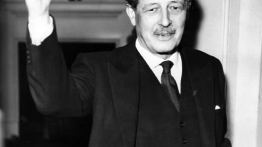
Since the main purpose on earth of the Conservative party was, and still should be, to keep Britain’s ancient and well-proven social and political hierarchy in power — give or take a few necessary upward mobility adjustments — Harold Macmillan must rank very high in the scale of successful Conservative prime ministers; just below Benjamin Disraeli, whose skill in sugaring the pill of inequality and humanising the face of privilege is never likely to be bettered. Earlier biographies of Macmillan, blinded by the egalitarian zeitgeist, have never done justice to this particular dimension of his genius, preferring to see his successful manoeuvring to pass the torch on to a 14th earl as an anachronistic blunder rather than a masterstroke. To his credit, D. R.

Innocent mischief

He’s been taking aim for two decades. Now Craig Brown presents his greatest hits. He’s been taking aim for two decades. Now Craig Brown presents his greatest hits. The best of his fortnightly spoofs in Private Eye, supplemented by new entries from historical characters, have been loosely sorted into an imaginary calendar. Everyone has their favourite Brown character. Mine is Heather Mills McCartney, whose self-righteous truculence he captures perfectly, while encouraging her to indulge her gift for fantasy. She reacts to a documentary about Florence Nightingale and blames the press for peddling lies: They try and make out she’s only in it for the publicity.

A quest for identity

If it had been possible to listen to Howard Jacobson’s brilliant Booker Prize-short- listed novel in one sitting I would happily have done so; but even on motorways congested to the point of strangulation, a return journey from Chipping Norton to Brighton has yet to take 13 hours. If it had been possible to listen to Howard Jacobson’s brilliant Booker Prize-short- listed novel in one sitting I would happily have done so; but even on motorways congested to the point of strangulation, a return journey from Chipping Norton to Brighton has yet to take 13 hours.

Land of poets and thinkers

The reason Peter Watson gives for writing this long intellectual history of Germany since 1750 is a convincing one: that British obsession with Nazism has blinded many British people to the achievements of German culture. Watson describes the complaints of German commentators about the emphasis on Nazism even in British schooling, which were borne out by the 2005 report of the Qualification and Curriculum Authority: ‘There has been a gradual narrowing and “Hitlerisation” of post-1914 history.’ Watson also discusses the importance of Nazism to America, and his most intriguing point is that interest in the Holocaust is a comparatively recent phenomenon. A study in the 1950s found that the effect of the Holocaust on American Jews was ‘remarkably slight’.

A fragile beauty

Colm Tóibín’s short stories hinge on lonely figures seeking what one of his narrator’s describes as ‘the chance… to associate with beauty’. Colm Tóibín’s short stories hinge on lonely figures seeking what one of his narrator’s describes as ‘the chance… to associate with beauty’. Either that, or mourning the loss of that chance. It’s a fine subject, and in the nine stories collected in The Empty Family, Tóibín’s first publication since last year’s wonderful Brooklyn, he addresses it in narratives of remarkable scope and variety.

Curiosities of literature

Lordy. It’s another book by Professor John Sutherland, and a fat one at that. What David Crystal is to linguistics and James Patterson to thrillers, John Sutherland is to literary criticism. I’ve more than once been critical about Sutherland in print, having detected — but who am I to talk? — a certain slapdashery in some of his scholarly productions. On the last occasion, I received a very gracious, if somewhat Eeyorish, email conceding the odd point and explaining his pace of output with a poignant allusion to alimony. So I don’t want the old brute to feel I’ve got it in for him. We all gotta eat.

A race against time

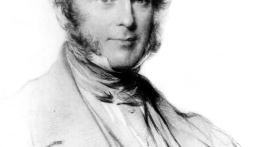
Lord Palmerston poses severe quantitative problems to biographers. His public life covered a huge span. Born in 1784, the year Dr Johnson died, he was nine years younger than Jane Austen and four years Byron’s senior. He died in 1865, the year Kipling, Yeats and Northcliffe were born. To put it another way, when he was a baby Reynolds was painting Mrs Siddons; when he died Manet was showing his ‘Olympia’, and Tolstoy had just published War and Peace. His long life was crowded with incessant political activity. He was on the Board of Admiralty in 1807, aged 23, even before he had a seat in parliament.

What we did to them . . .

The perception of war changes, remarked the poet Robert Graves, when ‘your Aunt Fanny, the firewatcher, is as likely to be killed as a soldier in battle’. The perception of war changes, remarked the poet Robert Graves, when ‘your Aunt Fanny, the firewatcher, is as likely to be killed as a soldier in battle’.

. . . and they did to us

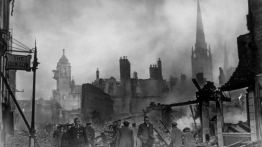
The craters are all filled in, the ruins replaced, and the last memories retold only in the whispery voices of the old. Apart from celebrating the resilience of our parents and grandparents 70 years ago, why remember the Blitz? It was triggered by the desire to retaliate, either Churchill’s to the random dropping of bombs on London in the summer of 1940 (heightened by the prior example of Nazi bombing of Guernica and Warsaw) or Hitler’s to the subsequent raid on Berlin. ‘This is a game at which two can play,’ he ranted on 4 September. ‘When they declare they will attack our cities in great measure, we will eradicate their cities.

Whine, whine, whine

There came a moment, very early in my reading of the latest volume of Christopher Isherwood’s Diaries, when a spell was broken. The relevant entry, written at his beach home in Santa Monica, California, was dated 12 November 1960. And the single, throwaway notation which caused me to re-evaluate, I fear definitively, my admiration for Isherwood ran as follows: ‘Tonight I have to take the Mishimas out to supper.’ There came a moment, very early in my reading of the latest volume of Christopher Isherwood’s Diaries, when a spell was broken. The relevant entry, written at his beach home in Santa Monica, California, was dated 12 November 1960.

Angry old man

Ecce Homo Erectus. Saul Bellow, John Updike … at 77, Philip Roth is the last of three giants still standing; and he actually does stand to write, at a lectern-like desk — scriptern? This verticality is crucial to his ideas of self and spirit, and is fully evident in his fiction, which is nothing if not erect. Ecce Homo Erectus. Saul Bellow, John Updike … at 77, Philip Roth is the last of three giants still standing; and he actually does stand to write, at a lectern-like desk — scriptern? This verticality is crucial to his ideas of self and spirit, and is fully evident in his fiction, which is nothing if not erect.

BOOKENDS: The Elephant to Hollywood

The three knights of British cinema have taken disparate routes in their twilight years. Roger Moore jettisoned a hokum career for more worthwhile pursuits as a Unicef ambassador, while Sean Connery settled into his Bahamian golf-resort to champion Scotland’s independence. Michael Caine, however, has added a further veneer to a great body of work. The three knights of British cinema have taken disparate routes in their twilight years. Roger Moore jettisoned a hokum career for more worthwhile pursuits as a Unicef ambassador, while Sean Connery settled into his Bahamian golf-resort to champion Scotland’s independence. Michael Caine, however, has added a further veneer to a great body of work.