Art

The English El Greco

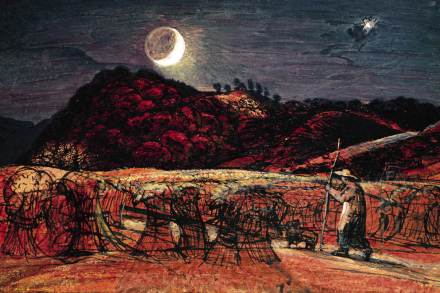
Talk about ‘enemies of promise’. Talk about ‘enemies of promise’. In the March 1942 number of Horizon magazine there appeared what could be a heartfelt illustration of the whinger’s conceit propagated by Horizon’s editor, Cyril Connolly, to the effect that life stifles artistic ambitions. Plate 2, ‘Dreamer in Landscape’ by John Craxton, is a pen-and-wash drawing of horny plants breathing down the neck of a dozing boy. How very Craxton. Not yet 20 and already well-versed in overgrown styling and poetic self-pity. For decades Craxton lived with the fact that early promise guarantees nothing.

1951 and all that

The author of this book and I both visited the 1951 Festival of Britain on London’s South Bank as schoolboys. The author of this book and I both visited the 1951 Festival of Britain on London’s South Bank as schoolboys. He was 13, I was 11. We were both old enough to remember the war. We were both enduring the post-war austerity. Much was still rationed. Everywhere there were bombsites. From his generally commendable account, I know we both had a similar reaction to the Dome of Discovery, the Skylon and all the other attractions: there was a sense of renewal, lightness, colour, modernity and excess, in contrast to the drabness and penny-pinching we were used to.

Religious doubt

No description of Eric Gill is ever without the words ‘devout Catholic’, and Eric Gill: Lust for Letter & Line (British Museum Press, £9.99), while short, provides evidence to both confirm and confound that assessment. One can follow the three-year journey of Gill’s celebrated Stations of the Cross for Westminster Cathedral from preparatory drawing to finished sculpture. Or one can study ‘Girl in bath’, a wood engraving of the artist’s daughter Petra, impossible to contemplate without bearing in mind his sexual abuse of his children.

The Midas touch

Now that we can read on Kindle and some people fear that paper-and-ink books will become extinct, one’s first impulse might be to say hurrah for this mighty production. Now that we can read on Kindle and some people fear that paper-and-ink books will become extinct, one’s first impulse might be to say hurrah for this mighty production. But then doubts creep in: isn’t it a bit OTT? It is by far the largest book I have ever reviewed, or indeed handled. A monster of a book, a juggernaut, a Leviathan. And it has a whopping price to match: 400 smackers. I had the sneaking thought: do the publishers, Reel Art Press, really (or reely) expect to sell the limited edition of 1,500 for a total of £600,000?

Fish and chaps

This is the ultimate ‘niche’ book. This is the ultimate ‘niche’ book. It focuses on that singular decade between the years of rockers and punks, when toffs, freed from school or army uniforms, and toughs, discarding skinhead aggression, found a sartorial meeting point. This new style, the cool child of late Fifties mods, had been given a huge public oomph by the Beatles and ‘their silly little suits’ as David Bailey (who has stated that he, along with myself, was the unwitting originator of the look) succinctly puts it. It was sharper, leaner and hinted at androgeny. Its creators were no longer found in caverns down Carnaby Street, nor high in the King’s Road, but centered round that time-honoured dandy’s inferno, Savile Row.

Never the same | 12 February 2011

There is a saying that art in restaurants is like to food in museums. You know the feeling: the attendant monstrosity on the wall peers over your shoulder, wrecking your appetite. But times are changing. Independent galleries have faded under recent financial strain, and the upward pressure on shop rents continues. Denied their premises, dealers are using new spaces and have reached new markets in the process. This is what brings Thomas Ostenberg’s Equilibrium to the Mint Leaf Lounge, 12 Angel Court, London EC2 (until 27 February). Ostenberg is a former vice-president of Citibank who had a Damascene moment in the Rodin Museum and vowed to become a sculptor. Plenty of dissipated financiers have similar impulses; few share his talent. This exhibition is fantastic in an exact sense.

Enlightened patronage

Alberto Della Ragione (1892–1973) was a naval engineer from Genoa with a passion for music, poetry and the visual arts; he also had the collecting bug. Alberto Della Ragione (1892–1973) was a naval engineer from Genoa with a passion for music, poetry and the visual arts; he also had the collecting bug. Towards the end of the 1920s, he sold his earlier accumulation of 19th-century paintings and began to acquire modern art, concentrating on works with a figurative bias, but by some of the most adventurous spirits then active in Italy.

In from the cold | 12 February 2011

Philip Ziegler puts the case for Terence Rattigan, whose centenary is celebrated with numerous revivals of his work After decades in the doldrums, Terence Rattigan seems once more to be returning to popular and critical favour. Last year After the Dance was one of the National Theatre’s more emphatic successes, and the centenary of Rattigan’s birth is being celebrated by productions of his plays at the Old Vic, the Jermyn Street Theatre and in Northampton, West Yorkshire and Chichester. There is to be a Rattigan season at the British Film Institute, and a new screen adaptation of The Deep Blue Sea. Rattigan, it seems, is back. Of course, he never really went away.

Hungry for novelty

My first — and so far only — proper job in journalism was, many years ago, as a staff writer on a kids’ computer-games magazine. My first — and so far only — proper job in journalism was, many years ago, as a staff writer on a kids’ computer-games magazine. We were pretty good for what we were, but if we had a flaw it was that we were obsessed, absurdly and often fruitlessly, with being the first magazine to feature some new game that absolutely no one was talking about, usually because they hadn’t finished writing it yet. It was my introduction to a particular kind of journalistic mindset: the belief that what is new, what is now, is intrinsically more fascinating than anything else. Have you heard blah blah band? Have you seen blah blah film?

Creative protesting

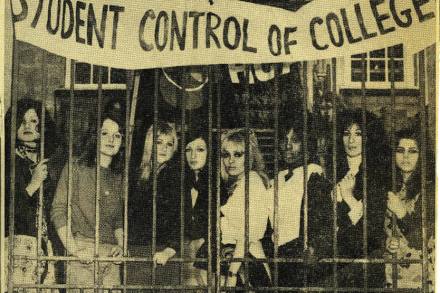
It’s time to heed the complaints and free art schools from the constraints of the university system, says Niru Ratnam The Turner Prize award ceremony always attracts protest — usually in the shape of the Stuckists, a group of bedraggled, eccentric-looking artists who gather outside Tate Britain in funny hats and bemoan the death of representational painting. But this year they were upstaged by around 200 art students, who entered the museum in the afternoon and refused to leave, staging what was described as a ‘teach-in’. In addition to wearing their own humorous hats, the students made speeches, marched round and chanted.

Best in show | 15 January 2011

Penelope Curtis, director of Tate Britain, talks to Ariane Bankes about the planned revamp of the museum and 100 different ways of showing sculpture The evening after first meeting Penelope Curtis, director of Tate Britain, I bumped into a mutual friend who told me, only half-joking, that she could be frightening. Fair enough, I thought: to become the first woman director of one of Britain’s pre-eminent public galleries you have to frighten a few people along the way. As it happened, I hadn’t found her alarming at all at the press briefing that morning: direct, brisk, purposeful — she was, after all, embarking on a wholesale top-to-toe redesign and rehang of the gallery — but approachable.

More real art, please

Although I am an admirer of Dulwich Picture Gallery, and like to support its generally rewarding exhibition programme, I will not be making the pilgrimage to see its latest show, Norman Rockwell’s America. Although I am an admirer of Dulwich Picture Gallery, and like to support its generally rewarding exhibition programme, I will not be making the pilgrimage to see its latest show, Norman Rockwell’s America. This is not just because it’s quite a hike to Dulwich for me, involving a bus, a train, another bus and another train (anything in excess of three hours from door to door), but also because I don’t think the trip will be worth it.

Going for gold

There’s gold out there. The search for lost masterpieces beguiles many a theatrical impresario but with it comes the danger that the thrill of the chase may convert a spirit of honest exploration into an obtuse reverence for the quarry. There’s gold out there. The search for lost masterpieces beguiles many a theatrical impresario but with it comes the danger that the thrill of the chase may convert a spirit of honest exploration into an obtuse reverence for the quarry. The huntsman starts to believe that neglect proves excellence. Sturdy Beggars, an independent troupe who accept no public subsidy, are mounting a season of ‘forgotten gems’ from Eastern Europe.

Waste not, want not

‘I want everyone to be as angry as I am,’ says Hugh Fearnley-Whittingstall, and I hope he succeeds for the thing that makes him so angry is one of the things that makes me most angry, too: the senseless eradication of the world’s fish stocks. ‘I want everyone to be as angry as I am,’ says Hugh Fearnley-Whittingstall, and I hope he succeeds for the thing that makes him so angry is one of the things that makes me most angry, too: the senseless eradication of the world’s fish stocks. All this week on Channel 4, HF-W has been campaigning in a series of programmes called Hugh’s Fish Fight. In the first episode he set the scene nicely by going out with a trawler into the fishing grounds 80 miles off the north Scottish coast.

Theatre to mark Western decline

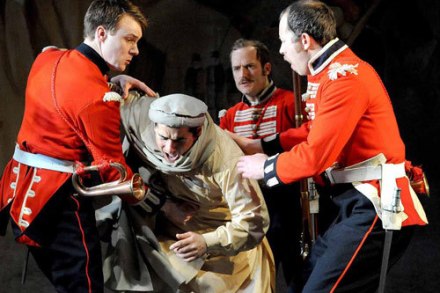
USO is not what it once was. The days of Bob Hope’s wisecracking have receded into the past, and ogled Playmates no longer sex their way across stages. The Pentagon has commissioned British theatrical talent to educate its troops about Afghanistan’s political culture and history. Performed by the Kilburn Tricycle Theatre, The Great Game is a 7 hour show about Afghanistan’s cycles of invasion, struggle and victory. Presumably if the grunts can withstand that, they can withstand anything. As Ben Macintyre notes in the Times (£), there is neither greatness nor beauty in the games that Western powers have played in Afghanistan.

Folkie supergroup

The Fence Collective is a loose association of singers, musicians and songwriters, at least a few of whom live in and around Anstruther in Fife. The Fence Collective is a loose association of singers, musicians and songwriters, at least a few of whom live in and around Anstruther in Fife. Anstruther is a fishing village and not the first place you’d go looking for a revolution, but the Fence Collective has other ideas. It hosts events and festivals and even has its own record company. I was brought up in Fife, so when I heard about Fence I was curious. Soon thereafter I was part of the congregation and singing its praises. Some Fence alumni you may have heard of: KT Tunstall, James Yorkston, King Creosote. Others you may not.

A Cumberland legend

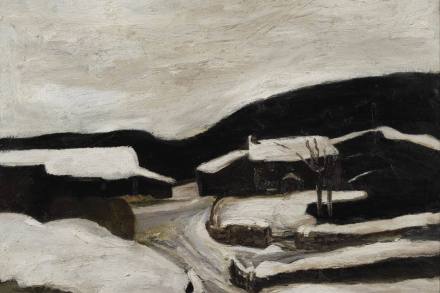
The legend of the glamorous artist Sheila Fell (1931–79), with her striking looks — black hair, white skin, large eyes — who died young, has tended to obscure the real achievement of her art. The legend of the glamorous artist Sheila Fell (1931–79), with her striking looks — black hair, white skin, large eyes — who died young, has tended to obscure the real achievement of her art. She was part of a talented generation which included her friends Frank Auerbach, Jeffery Camp and Craigie Aitchison, and was given her first solo exhibition at the age of 24 by Helen Lessore at the Beaux Arts Gallery in London. Fell came from Cumberland and painted its landscape. At that first show, L.S.

A look ahead | 18 December 2010

The trend of fewer temporary exhibitions in our museums is becoming established, as the cost of mounting blockbusters escalates beyond even the generous reach of sponsorship. This is in sharp contrast to the commercial galleries, which still put on as many as 10 or 15 different shows a year in the hope of tempting clients to part with their cash. Taking a keen look at forthcoming exhibitions is always a mixed pleasure: the expected counterpointed with the novel, the obvious with the obscure. Thankfully, there are still enough exciting prospects in the public sector to raise the spirits and move us to make a note in the diary.

Another form of segregation

N.B. This review was published without its final two paragraphs in the 18th December 2010 issue of The Spectator. These paragraphs have been reinstated for the online version below. These volumes — four for now, and a further six to come — are saddled with a title redolent of lantern lectures delivered in Godalming, say, round about the time that Rorke’s Drift became legendary overnight. The Image of the Black suggests people, or things, of a certain stamp. Penny blacks, so to speak: picked out with tweezers, profiles raised, their blackness being their distinction, their black face value assessed within the swelling majesty of Western Art.