Sarah Burton

Male-order bride

From our UK edition

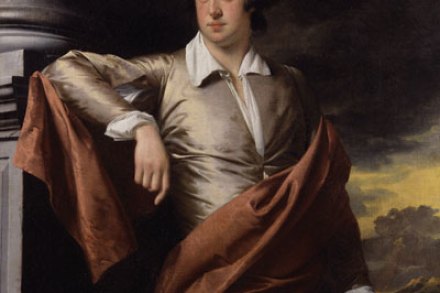
If you want to learn how to create the perfect wife, you should not read this book. You should make an emergency appointment with reality and remain under self-imposed house arrest until help arrives. If you are a man in search of a tolerably compatible partner, just keep looking. If you are a woman, read Caitlin Moran’s timely How to be a Woman (it doesn’t matter whether you’re looking for anyone or not — just read it). In 1769 Thomas Day was a single man (aged 21), in possession of a good fortune who (therefore) must be in want of a wife. Though Day was charitable to the poor, opposed slavery and refused to kill a spider, these appear to have been his only merits.
Marilyn was murdered

From our UK edition

In The Mill on the Floss, having been given a ‘petrifying’ summary of Daniel Defoe’s History of the Devil by young Maggie, Mr Riley challenges Mr Tulliver with allowing his daughter access to such dangerous reading material. A perplexed Tulliver explains: Why, it’s one o’ the books I bought at Partridge’s sale.They was all bound alike — it’s a good binding, you see — and I thought they’d be all good books. There’s Jeremy Taylor’s Holy Living and Dying among ’em. I read in it often of a Sunday’ (Mr Tulliver felt somehow a familiarity with that great writer, because his name was Jeremy).

Art for ransom

From our UK edition

These two books make mutually illuminating and surprisingly contrasting companions, given the similarity of their subjects. Both are written by those with hands-on experience in the field of art preservation and security. Sandy Nairne was Director of Programmes at the Tate Gallery in 1994 when two important paintings by J.M.W. Turner were stolen while on loan to an exhibition in Frankfurt, and was a key player in their eventual recovery. When Anthony Amore became Security Director at the Isabella Stewart Gardner Museum in Boston in 2005, he immediately picked up the threads of the investigation into the theft of three Rembrandts and other works which had been stolen from the museum 15 years previously.

His island story

From our UK edition

‘If you don’t come to terms with the ghost of your father, it will never let you be your own man.’ Here Christopher Ondaatje (brother of novelist Michael) combines his voyage of filial discovery with another quest: to pursue his obsession with a story he heard at his father’s knee, of a man-eating leopard. ‘If you don’t come to terms with the ghost of your father, it will never let you be your own man.’ Here Christopher Ondaatje (brother of novelist Michael) combines his voyage of filial discovery with another quest: to pursue his obsession with a story he heard at his father’s knee, of a man-eating leopard.

First knight and his lady

From our UK edition

A Strange, Eventful History: The Dramatic Lives of Ellen Terry, Henry Irving and Their Remarkable Families, by Michael Holroyd It is rare today to come across a non-fiction book that does not include in its title or subtitle the assertion that the tale it tells is ‘remarkable’, ‘extraordinary’, or ‘fas- cinating’, publishers presumably having decided that we readers are unlikely to guess that a book might be interesting unless it says so on the cover. Inevitably, these claims have become devalued. Michael Holroyd, perhaps in ironic homage to this trend, puts no less than four appetite-whetting adjectives on his menu, with the original twist that the feast they advertise actually satisfies them all.

A fascinating woman, ill-served

From our UK edition

Star of the Morning: The Extraordinary Life of Lady Hester Stanhope, by Kirsten Ellis Unlike her republican-minded father, ‘Citizen Stanhope’, Hester declared ‘I am an aristocrat and I make a boast of it’. After falling out with him (her mother had died when Hester was four) and quarrelling with his heir, her brother, in her early twenties she made her home with her uncle, William Pitt the Younger, but even a privileged position at the centre of London political and social life was not enough for Hester. She embarked on a series of love affairs and adventures which were to earn her notoriety and were to end with her living almost alone (and at least slightly deranged) in the fortress-like house she had built on a hill near Mount Lebanon.

Lucky dip for lovers

From our UK edition

First published in 1857, The Ladies’ Oracle dates from a period when very little literature of real merit was widely considered appropriate reading material for respectable young women, with the consequence that the presses fairly overran with little books designed to fill, rather than enrich, their idle moments — lest the Devil had plans for them — and otherwise kill the precious hours they had before serving their time as wives. Many of these handy volumes were promoted as instructive or edifying; others had less serious intentions and one suspects that many a hopeful maiden would have hastily shoved her copy of the Oracle into her needlework basket on hearing the approach of mater, pater, governess or nurse.

The net result

From our UK edition

Vermeer’s Hat turns on its head the conventional relationship between a history book and its illustrations. The seven paintings and one plate reproduced here are not intended to give us clues as to what the period and people in the narrative looked like, but are themselves the starting points for the web of narratives that Timothy Brook has woven on the subject of early global trade and the international exchange of ideas and practices. The eight works (five of which are paintings by Johannes Vermeer) were all made in Delft between 1630 and the end of the century and all depict objects which Brook recruits as portals not just to 17th-century Holland but to the 17th-century world as it became increasingly joined up through international commerce.

Dramatic thrills and chills

From our UK edition

To be a member of a good audience is exhilarating. The sounds that it makes around you are as much a part of the show as the sounds from the stage: the sound of alert anticipation before the curtain rises — the sound of silence — the sound of implications being understood — the sound of generosity in laughter and response. This description occurs early in the first half of the collection, where Frayn describes the processes involved in the writing, rehearsal, re-writing and performance of his original plays.

Inscrutable lords of the deep

From our UK edition

The sperm whale, more than any other whale, has captured the public’s imagination, to the point that when the average person envisions a whale, it is the sperm whale that they most often see. As a child I definitely saw, in my mind’s eye, the whale that swallowed Jonah as a sperm whale (although I may have conflated this monster with the beast that swallowed Disney’s Pinocchio). Moby Dick was a sperm whale. The huge head, the low, long, tooth-studded jaw, the oddly placed eye, the fountainous blowhole, the massive flukes, and the legendary power of the sperm whale (the only whale known to have deliberately sunk ships) all combine to make it, as Dolin puts it, ‘the whale’s whale’.

Nanny comes to the rescue

From our UK edition

Footballers’ wives and girlfriends, pop stars’ and politicians’ sons and daughters, are gilded by proximity to the golden ones, often regardless of their own intrinsic talent (or lack of it). It is unusual to find this phenomenon operating upwards through the generations, however. Jennie Churchill, despite her great beauty, charisma, notorious marriages, and reputed 200 lovers, would not merit a page in the history books were it not for the place deservedly reserved there for her son. Anne Sebba dutifully makes a case for Lady Randolph Churchill’s achievements in her own right, but they do not exceed those of a legion of other contemporary politicians’ wives or society hostesses.

The invisible woman

From our UK edition

Elizabeth Marsh was an undistinguished member of an unremarkable dynasty. She was neither famous nor infamous and had no conspicuous talent except, perhaps, for survival. Her father’s family was involved in maritime activity but of her mother we know nothing. Elizabeth herself was married to James Crisp, an entrepreneur of uncertain fortunes from whom she spent long periods living or travelling apart. But it was before she married him that the event which marks her life as unusual occurred: in 1756 the ship on which she was travelling was boarded by Moroccan sailors and she was taken by force to Marrakesh and kept as the prisoner of the acting Sultan, Sidi Muhammed. Though her capture was political, there appears to have been a sexual element in Sidi Muhammed’s plans for her.

The Welshman in the Court of Vienna

From our UK edition

In the opening pages of Italo Calvino’s If on a Winter’s Night a Traveller books are memorably divided into certain useful categories: Books You Needn’t Read, Books You Mean To Read But There Are Others You Need To Read First, Books That If You Had More Than One Life You Would Certainly Also Read But Unfortunately Your Days Are Numbered, and so on. Most intriguing of all these categories is Books That Everybody’s Read So It’s As If You Had Read Them Too. Along similar lines is Mr Crawford’s observation in Mansfield Park: ‘Shakespeare one gets acquainted with without knowing how. It is a part of an Englishman’s constitution. His thoughts and beauties are so spread abroad that one touches them every where, one is intimate with him by instinct.

Challenged at the top level

From our UK edition

Coming as I do from a long line of hairless wonders, baldness has fascinated me since childhood. One of my earliest memories is of my father harvesting and boiling nettles to produce a concoction which he then spread on his pate in the hope of checking the premature departure of his hair. What was more memorable was the following morning when, despite repeated shampooing, he appeared at the breakfast table with a bright green head. Memorable too, no doubt, to the 600 boys to whom he was headmaster and who he would shortly have to face in assembly. My father subsequently abandoned any attempt to interfere with nature’s plans for his hair, and this book would cheer his decision.

Mother both superior and inferior

From our UK edition

In January 1831 26-year-old Aurore Dupin Duvenant abandoned her secure provincial existence, her husband and small children, and set out for Paris and la vie bohème. She soon took a 19-year-old lover, adopted male dress, and began to write for a living. The publication of her novel Indiana led to a staff job on La Revue and she became, overnight, both rich and famous. She was no longer Mme Duvenant but known to the world as George Sand. Aurore adopted her male nom de plume on the advice of her editor who believed that books by women would not sell.

Famous for being famous

From our UK edition

Mary Robinson: actress, poet, novelist, playwright, feminist and London bus. One could wait over a century for a biography of her and then three come along at once. Had London buses existed in Robinson’s lifetime, contemporary satirists would have leapt at the analogy, as it was widely believed that anyone who could afford the fare could have a ride. Robinson was best known not for her thespian or her literary talents, but for being a grande horizontale, most notably as the first mistress of the Prince of Wales (later George IV). Mary Robinson was born Mary Darby somewhere between 1756 and 1758 (the first of many characteristic obfuscations) and, at around the age of 15, married inadvisedly.

Birds in a gilded cage

From our UK edition

George III freely acknowledged he was in no hurry to see his daughters married: ‘I am happy in their company, and do not in the least want a separation.’ As a consequence, three of them (Augusta, Sophia and Amelia) never married; the others did so late: Charlotte at 31, Mary at 40 and Elizabeth at 48. Meticulously detailed and deeply researched, Princesses chronicles their bids to achieve a balance between personal fulfilment and filial duty. The princesses’ early lives were employed almost exclusively in lessons and ‘work’ — an endless round of drawing and sewing imposed upon them by their mother which, then and later, often filled the space where their lives should have been.