Notes on...

Cathar country

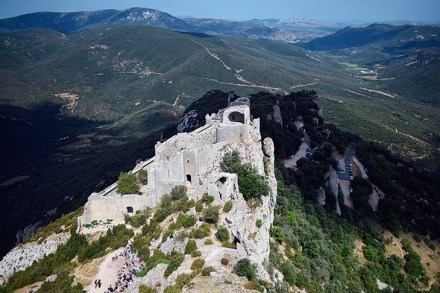
I once spent three months living in the Languedoc, writing my first novel. The highlight was the few days I allowed myself away from my monastic schedule to visit Cathar country. I’d been dying to see it because the castles and the landscape are so stark and dramatic, the history is so dark, bloody and weird, and because I wanted to try cassoulet in its proper location. I can’t remember much about the various cassoulets I tried except that, though it’s impossible to go wrong with goose, sausage and beans, none of them was quite as good as the one I laboriously recreated at home from a recipe in my Larousse Gastronomique. But you never forget the castles, such as Peyre-pertuse, jutting, as so many of them do, from a vertiginous, craggy, razor-back ridge.
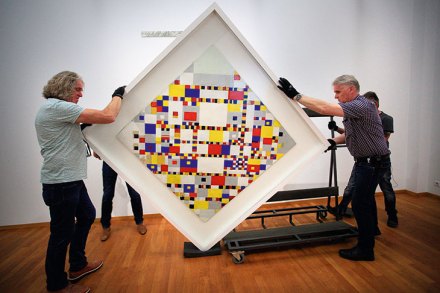
A century of De Stijl

It starts as soon as I arrive. In Den Haag Centraal railway station, the kiosks, windows, lift shaft, piano and even the hoarding on the building site outside, are all cheerfully decked out in red, blue and yellow rectangles, black lines and an occasional patch of straight-sided white. Holland’s capital has gone Mondrian mad; the style of De Stijl (the modernist art movement to which he belonged) is plastered all over town, indeed over much of the country. Holland is in the grip of ‘Mondrian to Dutch Design: 100 Years of De Stijl’, a year celebrating its ‘most important contribution to the 20th century’. De Stijl’s influence is everywhere.

The Britten Theatre

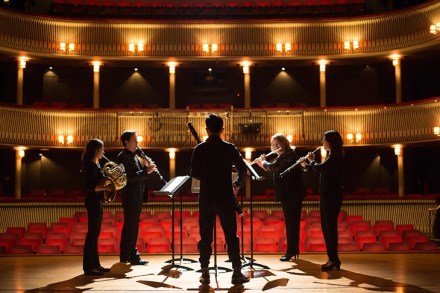
When friends from overseas with the slightest interest in music ask for recommendations about what to see in London, I always come up trumps. Boastful but true. In fact, even friends who’ve lived in London all their lives are impressed when I suggest a night of opera at the Royal College of Music’s Britten Theatre. Normally, that’s because they’ve never heard of it, never mind not knowing where it is or what it does. And what it does is the key. For this is the stage upon which some of the best young singers in the world prepare for stellar operatic careers, and it’s where you and I can listen to them in supreme comfort for a fraction of the cost of a ticket to the Royal Opera House.

West Middlewick Farm

In springtime in our family, we always have the same old argument: where should we go on our summer holiday (I know, I know — we should have booked it months ago). Every year I make the same suggestion, and every year I’m shouted down. ‘Let’s go back to West Middlewick Farm,’ I say, more in hope than expectation. ‘No! There’s nothing to do there!’ reply my wife and teenage children. ‘But that’s exactly why I like it,’ I protest, before we go and book an overpriced villa in Spain or Italy. This year, however, I’m feeling a bit more optimistic.

The doorstep

You have probably been hearing a lot about doorsteps recently. Politicians love to demonstrate how much they care about ordinary, hard-working voters by banging on about how many front doors they’ve knocked on. Standing on a doorstep, preferably in the driving rain, proves how dedicated you are to getting your message of ‘hope’ and ‘change’ across. An hour or two pounding provincial avenues, camera crew in tow, pays dividends back at the TV studio where you can then boast about how many of the electorate are on your side. Of course the reality of doorstepping is much bleaker.

A rugby legend

‘There’s a chance we’ll meet up with Richie McCaw in Christchurch,’ proffered the PR on our New Zealand press trip. The man from the Sunday Times and I let out a little gasp. We weren’t sports journos but we knew where McCaw stood in the pantheon of all-time greats. He is the most capped player in rugby union history, a World Cup winner on two occasions and arguably the best open-side flanker there has ever been. He captained the mighty All Blacks 110 times out of his 148 matches, and is probably the most popular living Kiwi. That’s all. Richie, as everyone knows him, retired from the game in 2015 after lifting the William Webb Ellis trophy at Twickenham.

Kentish wine

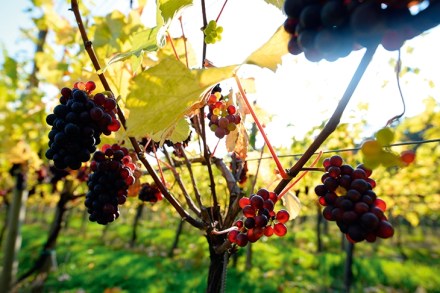
As a wine bore, holidays abroad are a battle with the family to cram in as many vineyard visits as possible when all they want to do is go to the beach. But it’s only recently that I have begun to take advantage of the riches on my doorstep. I wonder how many Londoners realise that half an hour from St Pancras is one of the world’s most dynamic wine regions — Kent. My previous reluctance might have something to do with the weather. As you leave London on the M20, there always seems to be a moment of sunshine that lights up the countryside before it starts to rain again. No matter. While many wine regions can be ugly — the Médoc is a drained swamp — Kent is lovely, even in the drizzle.

Swiss trains

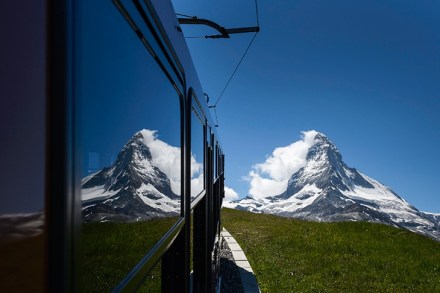
When Theresa May went off to Switzerland on a walking holiday last August, she said it was the ‘peace and quiet’ that drew her there — but I can’t help thinking there’s more to it than that. The Swiss are famous for their efficiency — and if there was ever a Brit who would appreciate things happening on time, it’s Theresa May. Yes, it is something of a cliché to say that no one does timekeeping like the Swiss. And in fact in 2014 a scandal erupted when statistics showed that only 87.5 per cent of trains arrived within three minutes of their scheduled time. Fortunately, Swiss Federal Railways managed to up its game the next year, and the crisis was over.

Kaspar the Savoy cat

How to solve the problem of an unlucky 13 people at dinner? Developing a rational mind is the obvious answer, but let’s pretend to be superstitious for a moment, because there’s fun to be had. And indeed money: in 19th-century Paris men known as quatorzièmes sat around in full evening dress, waiting for last-minute gigs as the 14th guest at a meal. Some people say a pregnant woman counts as two guests, while a press story from several years ago claimed that when David Cameron and friends realised their party comprised 13, the restaurant owner fetched his Paddington Bear and sat it down with them.

Scafell Pike

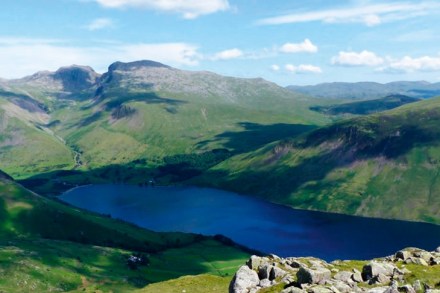
Within a couple of miles of England’s deepest point is its highest. Towering a kilometre above the hidden depths of Wast Water looms the sublime massif of Scafell Pike. From here, the rooftop of England, the whole union reveals itself — Scotland, Wales and those glowering guardians of Northern Ireland, the Mountains of Mourne. Most visitors to Lakeland know Scafell. For the tramping tourist and charity rambler, lured by the thrill of being atop its 978m peak, it’s a must-see goal. Its prominent summit cairn, memorialising Cumbrians who fell in the Great War, is large enough for a cricket team to picnic on. The terrain is astoundingly alien: devoid of any greenery, it presents a surreal, Mars-like boulder-scape.

Ruislip Lido

Most mornings, if I’m not too hung-over, I go for a run around Ruislip Lido — a mile there, through Ruislip Woods, about two miles round the lido and a mile back again. It generally takes me about half an hour. On my way, I see woodpeckers, egrets, sparrowhawks, and the occasional Muntjac deer. It’s hard to believe you’re in London, at the arse end of the Metropolitan line, surrounded by bland suburbia — John Betjeman’s Metroland. Ruislip Woods is the largest slice of natural woodland in Greater London: 726 acres of oak, beech and hornbeam, and the lido is its pearl. People have gathered timber from this scruffy forest since god knows when.

Genoa

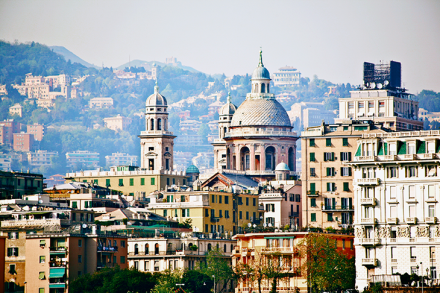
Some say Genoa takes its name from Janus, the two-faced god of time and doorways. Perhaps. What’s certain is the city has two aspects: the vast industrial port, its docks the bared teeth of the Italian Riviera; and, in the ruched strip of land between the Ligurian Sea and the hills, a bewildering network of alleys, stairways, and irregular little squares. ‘Genoa is the tightest topographic tangle in the world,’ wrote Henry James, ‘which even a second visit helps you little to straighten out. In the wonderful crooked, twisting, climbing, soaring, burrowing Genoese alleys the traveller is really up to his neck in the old Italian sketchability.’ The port has sent out illustrious exports in its time.

Frank Matcham

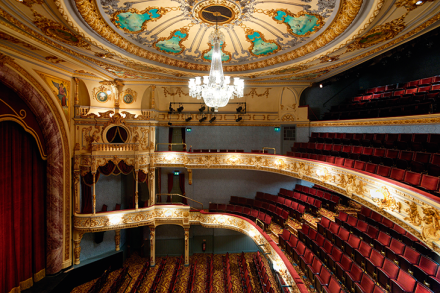
Go inside the Everyman Theatre, Cheltenham, preferably when it is empty. Look round. Look up. And there it is, with its elegant decorated and gilded curves, rising to the ornate cupola, panelled in duck-egg blue. Look at the proscenium arch, the swagged red curtains with seats to match. The chandelier above the stalls. It is perfect. The lines please the eye, painting and gilding are to just the right degree of ‘Over the Top’. You could equally well go to the King’s Theatre Glasgow or His Majesty’s Theatre Aberdeen, the London Coliseum, the Theatre Royal Wakefield or the Gaiety, Dublin, and do the same thing. Even before anything happens on stage, you are having a theatrical experience. You are in a Matcham Theatre.

Marmalade

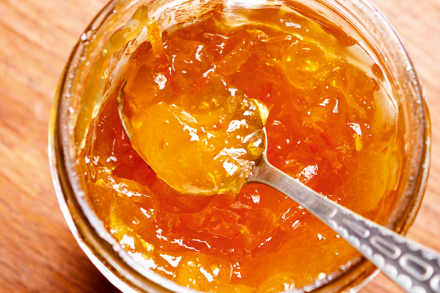
Marmalade’s had a rough old time of it lately. A recent report in the Telegraph declared it is dying out; that only oldies are buying it because millennials can’t handle ‘bits’ in spreads. Well, excuse me, but I direct you to this year’s World Marmalade Awards, held a few weeks ago in a big Georgian house called Dalemain just outside Penrith, which attracted nearly 2,000 homemade jars from around the globe. Big jars, little jars, jars decorated with glitter, sticky jars that had leaked in the post, jars with gingham hats. All laid out on trestle tables with individual, handwritten tasting notes from the WI judges underneath, marking each jar out of 20.

North Berwick

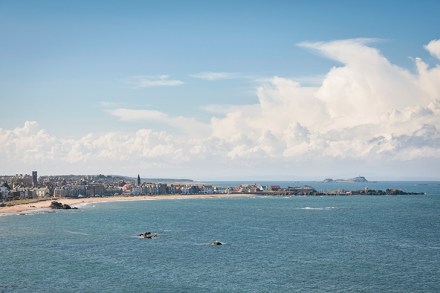
My home town is better than yours. Don’t take my word for it. This month North Berwick was crowned ‘best place to live’, at least in Scotland, thanks in part to its good schools, community spirit and low crime. The news hasn’t come as a surprise to locals — it’s a town perched between an extinct volcano and the North Sea on the south shore of the Firth of Forth, so we know it’s something special. But there’s more to us than pretty streets, beaches and fish and chips. The first thing to note about North Berwick is that it is in Scotland. This may seem obvious, but it’s often confused with Berwick-upon-Tweed, 40 miles south in England.

Cherry blossom

In what I like to think of as The Spectator’s back garden — most people call it St James’s Park — the cherry trees are in blossom. There’s a group of six or seven of them, clouds of bright pink, in the corner nearest 22 Old Queen Street. They’re worth a look, even if you think blossom’s a bit of a girlie interest. There are more dotted around. A little grove of white cherries on the south side of the lake is ranked among the best in London, according to one website: ‘A simple point-and-shoot photo of these trees somehow transforms itself into an impressionist painting.’ But we shouldn’t rank blossom, or feel compelled to photograph it (the blossom hashtag on Instagram has five million posts), or think of it as girlie.

Lawrence of Arabia

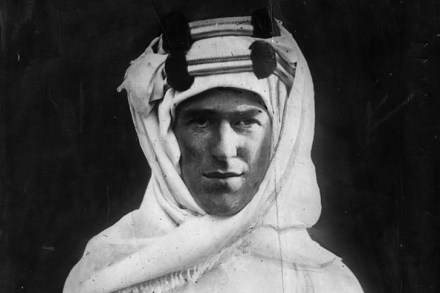
The centenary of General Allenby’s capture of Jerusalem falls later this year. On 11 December 1917, the commander-in-chief of Britain’s Egyptian Expeditionary Force entered the city on foot in recognition of the unique sensitivities surrounding the world’s holiest city. War and farce are never too far removed and, as is so often the case on these extraordinarily important moments, the surrender of Jerusalem almost went hilariously wrong. Mounted on horseback and waving a white flag, the city’s mayor offered to hand over the keys to Private Murch, a British cook who had been sent out to find some eggs for his commanding officer. ‘I don’t want yer city,’ the stalwart Murch told the immaculately-turned-out mayor.

The Suffolk-Essex border

You’ve already seen a picture of the Essex-Suffolk border. Assuming you’ve seen Constable’s ‘The Haywain’, that is: the Stour (the river into which the farmer has cleverly driven his cart) forms the county boundary, meaning the land on the left is Suffolk, that on the right, Essex. Years of David Beckham and jokes about girls in white stilettos had rather inclined me against Essex, so when I moved to Suffolk it was galling to discover I had a Colchester postcode. Only gradually did I realise how well the two counties work together. This part of the world is beautifully untrendy — it’s on the way to nowhere other than the North Sea, so, unlike the Cotswolds, we are spared invasion by tourist coaches.

Dublin’s Jewish museum

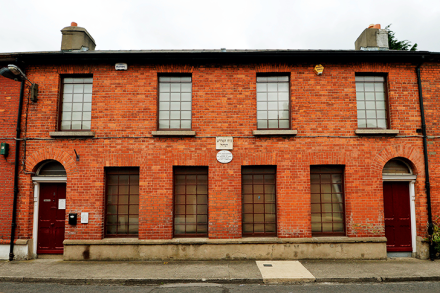
I love small museums, and the Irish Jewish Museum in Dublin is a little gem, located in the neighbourhood once known as ‘Little Jerusalem’, a centre of Jewish life around the South Circular Road. The museum itself is a converted terraced house at 3 Walworth Road, within walking distance of the streets so evocative of Leopold Bloom’s Dublin. It is crammed with impressive artefacts from Jewish life in Ireland — Torah scrolls, a menorah in the shape of a harp — but also with small details and modest memorials of Irish Jewish life, which is now so sadly in decline. (There are estimated to be hardly 1,000 Jews in Ireland today, and many of them are older people whose offspring have gone elsewhere.

Wetherspoons

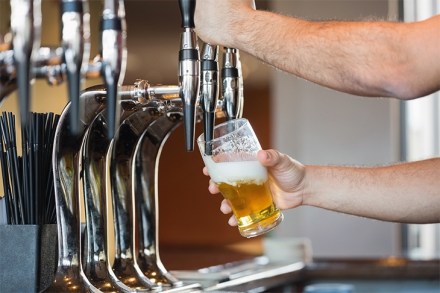
Of all the stories I’ve heard about the fallout from Brexit — families divided, work jeopardised, friendships ended — the saddest was someone on Facebook who declared that he would never again visit a Wetherspoons because the proprietor, Tim Martin, pushed for a Leave vote. This seemed to me the definition of cutting your nose off to spite your face; imagine turning down cheap beer because of the EU! But it also disrupts one of the fundamentals of a liberal society: that you do business even with those whom you disagree. Voltaire marvelled at this concept on his visit to the London Stock Exchange: ‘Here Jew, Mohammedan and Christian deal with each other as though they were all of the same faith, and only apply the word infidel to people who go bankrupt.