Constance Watson

Want to be attractive? Lose the mask

This article was originally published in The Spectator’s June 2021 World edition. ‘The last thing we need is Neanderthal thinking that in the meantime everything’s fine, take off your mask, forget it,’ said Joe Biden. ‘It still matters.’ Sorry, Mr President, I disagree. After more months than I care to count of rigorously strapping a face covering across my mouth and nose, I’ve decided to shed the mask. Now, after nine maskless days, I can say that I have never felt so sensible, so liberated and so, well, attractive. In fact, I cannot recommend it enough. I first shed the mask by accident after getting slightly drunk one evening. Who cares, I thought, as I hurled myself on to the subway.

mask masks

Novak Djokovic is right to challenge state-mandated quarantine

The world’s Number One tennis player Novak Djokovic made headlines this week as he called for liberty in the face of Australian bureaucratic hysteria. As the planet’s best tennis players prepare for the Australian Open tournament, 72 of them are subject to punitive quarantine conditions after four — yes, four — new arrivals into Melbourne tested positive for coronavirus. It is thought that none of the tennis players themselves were infected, but that the positive tests were from individuals on charter flights arriving in the city. The solution adopted by the Australian government is to impound all tennis players — and presumably their teams of coaches, managers, nutritionists and whomsoever else they travel with — in solitary confinement for 14 days.

novak djokovic

Killing time in Thailand

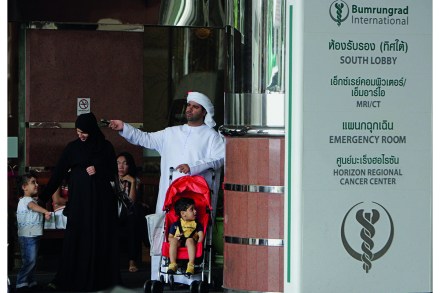
Thailand is famous for many things, some of which are unmentionable in these pages. It has long been considered the perfect location for ‘winter sun’, if you are the type of person to whom a piña colada on a white sandy beach appeals. In recent years, it has become a hotspot for hypochondriacs requiring non-essential medical care and hysterics after a nip-and-tuck (pre-COVID, the health-tourism industry was thought to be growing at 14 percent a year). Home to the orchid, pad thai, the Monkey Buffet festival (what it says on the tin), the Siamese cat and the bumblebee bat, Thailand’s gentle and healing culture has earned it a reputation as a cleaner, greener land.

thailand

Is a degree worth the debt? | 17 August 2018

From our UK edition

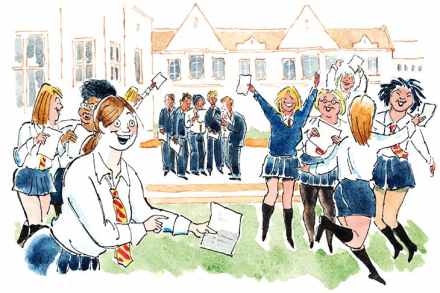
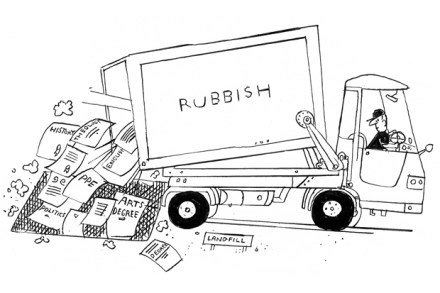
You’ll never get into a good university if you carry on like this.’ A haunting threat from school days past, but since the coalition trebled university tuition fees in 2010, the question is — do you really want to? The decision to increase fees to a maximum of £9,000 a year was met with anger from students and parents alike. Riots broke out with police arresting 153 people at a demo in Trafalgar Square. Widespread fury was particularly directed at Deputy Prime Minister Nick Clegg, who had pledged to vote against any increase in fees — so much so that he was forced to broadcast a public apology: ‘We made a pledge, we did not stick to it, and for that I am sorry… it was a pledge made with the best of intentions’, he said.

Join the club

From our UK edition

I’m bored.’ ‘Read a book.’ This sequence more or less summarises my childhood (along with ‘I’m hungry.’ ‘Eat some fruit.’) At the time, such instruction was loathsome and it never ceased to amaze me that the grown-ups didn’t seem to grasp the fact that I had obviously considered, and rejected, the idea of picking up a book. They never appeared to be sympathetic to my boredom, in spite of my heartiest attempts to reflect the ennui that was oozing from my every pore. In fact, boredom was positively encouraged by our parents — it was the mother of invention. Those were the days. For many of today’s parents, boredom is not so much the mother of invention as the father of failure.

Tapestries

From our UK edition

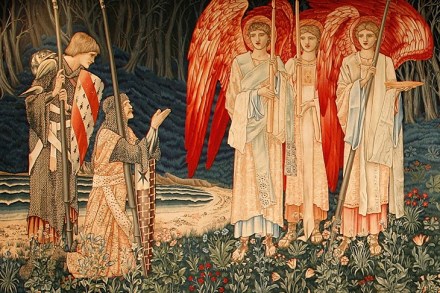
It is rare nowadays to see someone pull out a half-finished tapestry from their handbag and get on with their stitching. In fact, tapestry is becoming increasingly unfashionable; ‘nomadic murals’ (as architect Le Corbusier described them) are often relics of the distant past. So much so that they have plummeted in price. ‘People are streaming into contemporary art, and tapestry is becoming more of a niche market,’ says Marcus Radecke, Christie’s European head of furniture. ‘Whereas a large Brussels baroque tapestry might have fetched £50,000 in the 1980s or 1990s, nowadays it would sell for £20,000 or £25,000.’ That may still sound a lot for woven thread, but it’s a long way short of the record-breaking $1.

Pssst… wanna get your kid into Eton?

From our UK edition

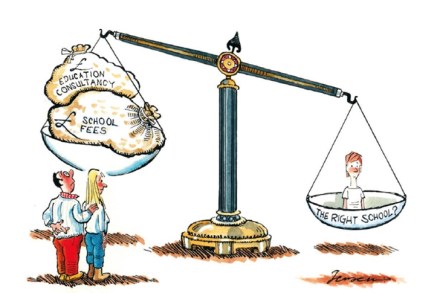
British education has never been so competitive. Our system, particularly the private sector, is a constant source of fascination and is renowned the world over — even though it educates only 7 per cent of UK children. But the current competition for places has borne a new industry, usually labelled ‘education consultancy.’ Consider education consultants the Robin to the private sector’s Batman. The Yoko to Eton’s John or the Sonny to Cheltenham Ladies’ Cher. Are you keen for your son or daughter to get into one of the best prep schools in the land? Do you toss and turn in torment each night at the infinite options?

Thank goodness ‘Marmitegate’ is over

From our UK edition

Back in the halcyon days of EU membership, a case for 'Remain' was presented upon these very pages. It explored the potentially disastrous consequences of Brexit on our meals. We toyed with the threat of turning our backs on claret, kissing confit de canard goodbye, and bidding farewell to champagne after 23 June. But in my shortsightedness, and in my greed, I failed to predict that Brexit would mark the funeral march of Marmite. Which it nearly did. Despite a day of utter hysteria, unalloyed panic and bulk buying, #Marmitegate is over. Thank God. To be fair to Brexit, and all who voted for it, no one could have predicted the threat of extinction of our beloved breakfast spread. But lo, the threat came - and what a threat it was.

Is a degree worth the debt?

From our UK edition

You’ll never get into a good university if you carry on like this.’ A haunting threat from school days past, but since the coalition trebled university tuition fees in 2010, the question is — do you really want to? The decision to increase fees to a maximum of £9,000 a year was met with anger from students and parents alike. Riots broke out with police arresting 153 people at a demo in Trafalgar Square. Widespread fury was particularly directed at Deputy Prime Minister Nick Clegg, who had pledged to vote against any increase in fees — so much so that he was forced to broadcast a public apology: ‘We made a pledge, we did not stick to it, and for that I am sorry… it was a pledge made with the best of intentions’, he said.

Could you survive a boycott of French goods?

From our UK edition

Last week French minister Emmanuel Macron emerged at the forefront of the Brexit debate, warning that if Britain leaves the EU, it would seriously threaten Anglo-French relations. In particular, he was referring to the Touquet agreement, which allows Britain to carry out border controls - and therefore keep migrants away - on the French side of the Channel. ‘The day this relationship unravels, migrants will no longer be in Calais,' he said. But if the French want to play that game, I say, let's play it too. We’ve survived centuries of relatively cordial relations with our nearest neighbours, despite the Hundred Years' War, various sieges (Calais, Orleans) and multiple battles (Hastings, Trafalgar, Waterloo).

The office party should not be hard work

From our UK edition

Is anything worse than the office Christmas party? It is almost always a horror show. Colleagues who are cheerful all year round turn into angry drunks. Usually benign bosses become second-rate pimps. The interesting become boring and the boring become interminable. The average office Christmas do tends to leave you wishing you didn’t have to come back to the grind next year. Why should it be so? Most of us like the people we work with— give or take — so a few hours of celebration should be fun. The problem, I think, is that office party organisers, who tend to be drawn from the management caste, can’t get themselves out of work mode. As a result they don’t think enough about what really makes a party.

Customs of the country

From our UK edition

There are some things that will always be in competition. The Capulets and the Montagues; William Brown and Hubert Lane; the NHS and Bupa. They thrive on the tension, and there is always a story to be told. Such is the case with schooling in this country. The education system, and the battle between private and state education, receives vast amounts of media attention. We often hear about why the state system is ‘failing’ — or conversely, more recently, triumphing. Then there’s the perennial university conundrum: last year the Department for Education predicted that privately educated applicants would be five times more likely to gain admission to Oxbridge than students from state schools. Add to that our social attitudes. We in Britain obsess over schooling.

The pros and cons of a computerised education

From our UK edition

Is internet technology turning our brains to mush? For those born after 1990, it is a constant fear. Most of us struggle to read a poster, let alone a book. We’ve overstimulated our prefrontal cortexes to near death through incessant multi-screening. Our brains aren’t wired to do anything except be wired. But technology fans tell us to be positive. We should embrace the new world and its limitless possibility. In education, in particular, there is a sense of optimism. When I started secondary school at the turn of the millennium, we had just one interactive whiteboard. It immediately became the epicentre of the school. By the time I graduated from university, all students were equipped with their own laptop, and essays were uploaded electronically.

Spectator Event report: Will artificial intelligence put my job at risk?

From our UK edition

Will computers make humans redundant? It might be the biggest question of our time. Last night Spectator Events, in partnership with Microsoft, hosted a panel discussion to answer the question 'Will Artificial Intelligence put my job at risk?' A fascinating and wide-ranging conversation about the technological revolution ensued. The Spectator’s chairman Andrew Neil was joined by Microsoft’s Laboratory Director Professor Andrew Blake, journalist Bryan Appleyard, the TUC’s Nicola Smith and Jamie Bartlett, Director of the Centre for the Analysis of Social Media at Demos. Professor Andrew Blake, up first, sounded an evangelical note, emphasising the positives of technological change.

What’s the best way to prepare young people for employment?

From our UK edition

Britain’s skills crisis was addressed by the country’s leading educationalists today at The Spectator’s half-day conference, Giving Britain the skills it needs. Matthew Hancock, Minister for Skills and Enterprise, delivered the key note speech. In it he outlined his plans for better preparing young people for employment. ‘I’m determined that apprenticeships  become the established route for all school-leavers who don’t go to university; not as a second option,’ he said, before adding that ‘demanding higher standards of people isn’t setting them up for failure, as we’ve often heard from the left.’ Hancock’s speech focussed on the need to establish how technology must be used to ‘spread opportunity.

Listen: what the people of Brixton and Chelsea think of Ukip and Farage

From our UK edition

London is, like the rest of the country, heading to the polls today. Coffee House went down to Brixton High Street to find out how people intend to vote, and gauge their views on Nigel Farage and UKIP. We found some some who intend to support Farage, others who were more apathetic. This is what they had to say: listen to ‘The people of Brixton on Ukip and Nigel Farage’ on Audioboo And on the other side of town, the people of Chelsea (although less willing to chat) had polarising views on Ukip and the Farage racism row: listen to ‘The people of Chelsea on Ukip and Nigel Farage’ on Audioboo Worryingly, many interviewees were opting out because they weren’t aware of the elections or were ignorant as to how to vote.

Online etiquette must be taught in classrooms

From our UK edition

Can we protect children from the darker aspects of the internet? That was the question put to the panel last night, when the Spectator hosted a feisty discussion about the effects of technology on childhood. Child abuse, pornography and online dating were discussed, as was the idea that children have become self-centered and socially inept. Andrew Neil chaired the event, and was joined by culture minister Ed Vaizey, psychologist Oliver James, The Spectator’s Rory Sutherland and Microsoft’s Jacqueline Beauchere. Each panelist presented a different angle on the subject of The ‘Always On’ Generation, but all agreed that technology had created new opportunities and challenges.

Should you take a degree to earn money – or to learn how to live?

From our UK edition

The motion ‘An Arts Degree is a Waste of Time and Money’ was roundly defeated at last night's Spectator debate, after a lively debate in which Will Self took on Katie Hopkins. Self, opposing the motion, was supported by Wellington College headmaster Anthony Seldon and Doug Richard, entrepreneur and former Dragon from BBC's Dragon’s Den. Katie Hopkins, supporting the motion, was backed by The Spectator’s contributing editor Harry Cole and by Julia Hobsbawm, founder of Editorial Intelligence. Hopkins kicked off asserting that the type of degree studied is linked to the name of the student. After losing herself somewhat in this opening flourish, she then returned to the argument about the value of the arts.

Fracking debate: ‘Let’s peek into this pandora’s box’

From our UK edition

At last night's Spectator debate, the audience voted dramatically in favour of the motion Let’s Get Fracking! Despite impassioned speeches from Green party leader Natalie Bennett, Greenpeace’s Joss Garman, and Craig Bennett from Friends of the Earth, the crowd sided with Conservative MPs Peter Lilley and John Redwood and the energy consultant Nick Grealy, who said that it’s time for Britain to ‘peek into this Pandora’s box’ and at least explore the possibilities of shale gas. Peter Lilley opened the debate with a joke at Chris Huhne’s expense: ‘in my view he should have been jailed not for driving too fast but for driving the development of shale gas too slowly’.

The way to build Tech UK: ‘Think big. Start small. Move fast’

From our UK edition

The panel discussion entitled ‘Can the UK produce the next Facebook?’ carried The Spectator audience on a stimulating journey from Scotland to Silicon Valley, before dropping them back in London. Mike Tobin, from Telecity, opened the discussion with a measured speech. He explained that Britain's technological status has stagnated, and blamed this on a a mixture of things: our culture, government policy and economics. 'We need to change the way we educate our kids', was the crux of his message.  He suggested we should inject the 'fun, value and enjoyment' of computer coding into the school curriculum. Julie Meyer, founder of Ariadne Capital, gave a fast-paced lecture that focussed on the restructuring of British business models.