Notes on...

The mysterious world of pigeon racing

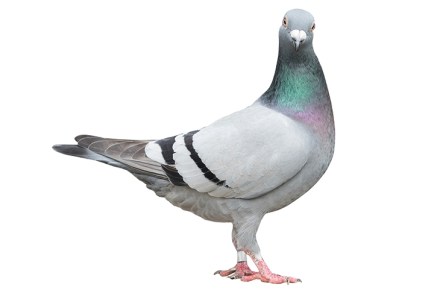
Pigeon racing isn’t much of a spectator sport. Race birds are driven to the ‘liberation point’, where they’re released to fly back to their homes. Only the liberation and the return are witnessed — what happens in between is a mystery. This is partly what makes pigeon racing so fascinating. It’s also what can make it so stressful. A week ago, between 5,000 and 10,000 pigeons went missing during a race from Peterborough. Usually fanciers aren’t too worried if a few birds don’t make it straight home from a race; they’ll rest up and return a few days later, no worse for wear. But this time the losses were exceptionally large.
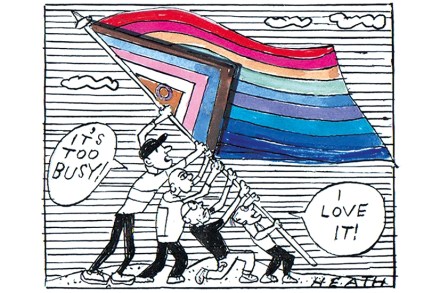
The problem with the Pride flag

Last month, the Pride flag was updated by the Intersex Equality Rights UK campaign group — the simple rainbow was not considered inclusive enough for intersex people. Other pressure groups had already added stripes for black people, brown people, trans people and people with Aids. The Gay Pride flag first flew 43 years ago this week. It was sewn by the American gay activist Gilbert Baker, who performed under the drag name of ‘Busty Ross’, claiming kinship (of a sort) with the 18th-century Quaker upholsterer Betsy Ross, who sewed the first American flag. Baker had been asked by Harvey Milk, the most famous openly gay politician in America, to design a flag for the San Francisco Gay Freedom Day Parade.

Why it’s boom time for bitterns

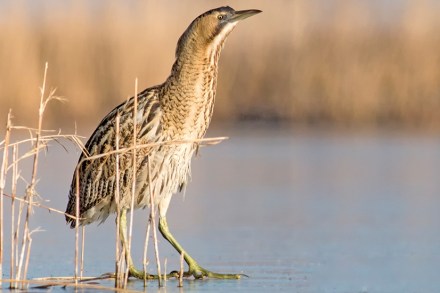
Bitterns are booming, both literally and metaphorically. These handsome brown birds from the heron family make a noise quite unlike anything else in Britain and we are lucky to be able to hear it. If there is such a thing as a birding bucket list then hearing a bittern’s ‘boom’ — the loudest bird call in the country — should be on it. Before the bittern starts booming he performs a warm-up ritual called grunting. He strengthens his throat muscles, which expand to turn his gullet into an echo chamber. His powerful muscles make up a fifth of his body weight and can propel the sound of his boom for more than three miles.

What makes a pasty Cornish?

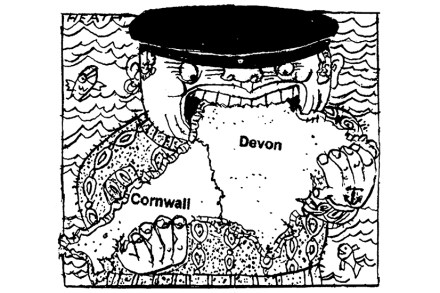
This week, world leaders are doing what countless Brits do every summer: unpacking their bags in a charming corner of Cornwall. The G7 summit — Joe Biden’s first, and Angela Merkel’s last — is taking place in the resort town of Carbis Bay, a stone’s throw from St Ives. Between the speeches and the roundtables, will the world leaders find time to tuck into Cornwall’s proudest and most popular export, the Cornish pasty? Boris Johnson talked about the region’s industrial history in the run-up to the event: ‘Two hundred years ago Cornwall’s tin and copper mines were at the heart of the UK’s industrial revolution and this summer Cornwall will again be the nucleus of great global change and advancement.

Do you speak Viking?

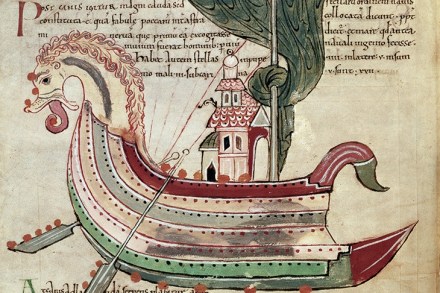
Supposedly 5 per cent of words in English are borrowed from Old Norse. It doesn’t sound like a lot, but much of our key vocabulary was brought over in longboats: ‘get’, ‘take’, ‘give’ and ‘egg’ are all derived from the language of the Vikings. Indeed, it took the Saxons centuries to thwart the gangs of sly lads who came across the gusty seas full of anger, hoping to ransack the weak Saxon oafs and angrily hit their skulls together. Our Saxon fellows repeatedly fell victim to these dregs of the North Sea. They blundered in paying the Danegeld and only slowly learnt the awkward lesson that this gift would not get rid of these Danish outlaws.

Crunch time: why has Walkers changed its salt and vinegar crisps?

Henry Walker might never have got into the crisp business were it not for the fact that his Leicester butcher’s shop was hit by meat rationing after the second world war. In 1948, when Walkers and Son started looking at alternative products, crisps were becoming increasingly popular — and so they shifted to hand-slicing and frying potatoes. The crisps were sprinkled with salt and sold for threepence a bag. Fast-forward 73 years and Walkers crisps are so integral to our way of life that when I bought a six-pack of salt and vinegar the other day and noticed they had changed the recipe it precipitated a personal crisis resulting in sleepless nights. ‘Bursting with more flavour,’ said the redesigned pack.

The grim roots of ‘refusenik’

‘Vaccine refusenik’ is the latest catchphrase used to disparage anyone unwilling — for whatever reason — to roll up their sleeve for a Covid shot. Few are aware, however, that the word ‘refusenik’ could hardly be less fitting. The term ‘refusenik’ (the anglicised version of the Russian otkaznik), which spread across the globe in the early 1980s, was used to describe the hundreds of thousands of Soviet Jews (and also other minorities such as ethnic Germans of the Volga region) who were refused permission to emigrate. These Soviet Jews, most of whom sought to build a new life for themselves in Israel, were persecuted as dissidents and traitors.

The strange magic of the mountain hare

The numbers of the dear old mountain hare in England are becoming perilously depleted. A researcher, Carlos Bedson, has suggested there may be only 2,500 left in the Peak District. Warmer weather seems to be finishing them off. It is time to appreciate them and their cousins, the brown hare, more and to look after them. I was in my thirties when I’d head up on to Saddleworth Moor with my father-in-law to watch the white-furred mountain hares. We didn’t say much, we just took in the old magic of those beautiful creatures. I’m not the only one to love hares. That great English poet and hymnodist William Cowper suffered from severe depression and many breakdowns. It was adopting three leverets as pets that began to turn the mental tide.

In defence of dandelions

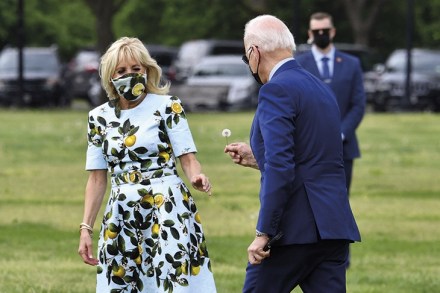
Dandelions are one of the cheeriest wild flowers. They are loved by children for their ‘clock’ seed heads, are entirely edible for humans and are a source of food for many insects and birds. And yet many gardeners go to great lengths to get rid of them. This year’s daffodils may have faded, but dandelions — their similarly coloured wild replacements — are in full swing, and it’s a vintage year for them. Road verges, meadows and lawns are covered in thousands of gold polka dots, with each plant bearing half a dozen blooms. They make a boring green sward far more interesting, and are — to my mind at least — as beautiful as the daffodils that are often planted in the same spots.

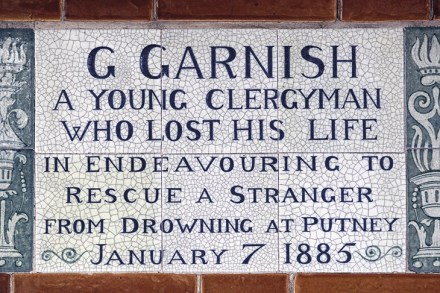
The humble heroes of London’s Watts Memorial

Folajimi Olubunmi-Adewole died last weekend saving a woman’s life. Hearing her cries as she fell into the Thames from London Bridge, the 20-year-old, known as Jimi, handed his phone to a friend, told him to call the police, and with another passer-by dived into the river. The other man and the woman were rescued. Jimi was not. His family have called for his heroism to be publicly remembered. A few minutes’ walk from the flowers left for Jimi on the riverbank sits an unassuming remnant of Victorian public-spiritedness, inspired by the same desire to remember everyday heroism.

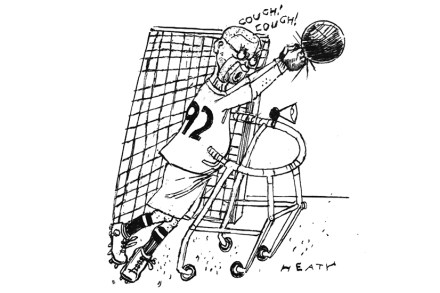
‘Walking football’ is in a super league of its own

As a footballer, I’m elderly not elite, meaning that I’m one of 60,000 or so 50- to 92-year-olds (yep, 92!) in England who enjoy a more pedestrian version of the sport than the Premier League’s whippersnappers. A survey last year revealed that for many of us ‘walking footballers’, the sport is our most significant social interaction of the week. So while the Premier League continued through the winter, I was — to use footballer lingo — sick as a parrot when we somewhat older, rather slower players were red-carded by the government. Conversely, I was over the moon at the end of last month when we were allowed to return to the pitch. The walking game precludes running (the clue’s in the name) or play above head height.

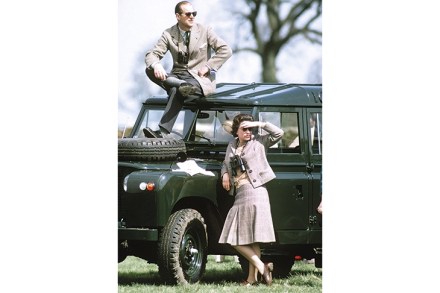
For Queen and country: the joy of Land Rovers

The Duke of Edinburgh’s coffin will be carried in a Land Rover. Not any old Land Rover, but a Defender 130 Gun Bus, designed by the Duke for his funeral and adapted by Foley Specialist Vehicles. By chance, years ago, when researching my book on Land Rovers, I visited Foley while they were adapting the Duke’s vehicle. I had to sign a non-disclosure agreement forbidding me from discussing the car until now. First, a little history. The Land Rover was launched in 1948 as a farm vehicle to help re-establish Britain’s shattered economy through agriculture. It cost £450 and was later named the Series I. This was followed by the Series II, IIA and III and then the 110, 90, 127 and the Defender, the name now used to refer to the entire ‘boxy’ lineage of cars.

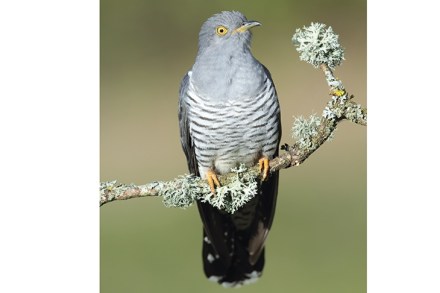
The cruelty and cunning of the cuckoo

St Tiburtius’ Day, on 14 April, is traditionally when you will hear the first cuckoo. Since at least the Middle Ages, cuckoos have been seen as heralds of spring. They are also often associated with romance, and yet they are some of the cruellest birds found in Britain. The adults arrive in this country at the end of March or the beginning of April and depart in late July or August. They return to central Africa and fly, either via Italy, resting near the River Po and continuing over the Sahara, or stopping in Spain before entering Africa from the far western end. They live mainly in and around the Congo rainforest and in similar habitats as far south as Angola. They come to Britain merely to mate.

Is the adder slithering towards extinction?

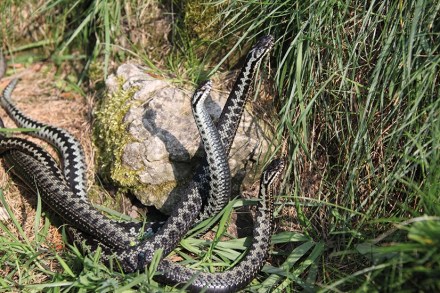
In early April, when the chiffchaff sings its drab little song in the leafless hawthorns, something is stirring in the dead bracken. Having spent the winter months underground, one of our most fascinating creatures slithers into the weak spring sunshine: the adder. The emerging adders haven’t eaten for six months, but food is not on their minds; it is the mating season. Rival males indulge in spectacular ritual combat, rearing up side by side and twisting and wrestling at great speed. After mating the snakes disperse and spend the summer in solitary pursuit of mice, voles, lizards, frogs and fledglings. Adders never use more energy than is necessary and spend a lot of their time basking.

How mead became cool again

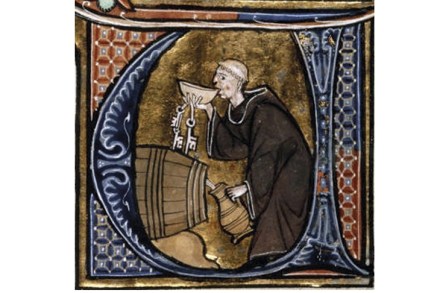
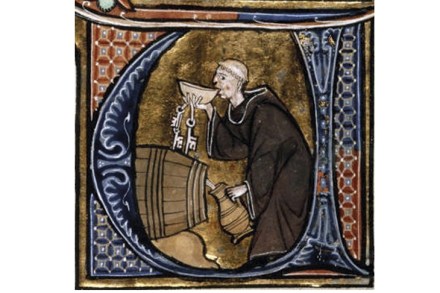
The last time I drank mead was 7 April 1978. It was my 18th birthday and —unforgettably — it was snowing heavily. My chum Mark had bought me a bottle of Lindisfarne Mead which I knocked back on top of several Tequila Sunrises, a bottle of Black Tower and a few Brandy Alexanders. This toxic mix took its toll and I was violently sick during an all-comers’ snowball fight the length of the Fulham Road, before getting arrested for being drunk and disorderly outside the Café des Artistes at 3 a.m. I only mention this because my younger son, Ludo, is now 18 and has developed a serious mead habit.

Top floor: Minton tiles inspire a remarkable devotion

It’s only since I moved to Staffordshire that I’ve come to appreciate that some of the finest works of public art aren’t on the walls of great buildings, but on their floors. Staffordshire, of course, is the home of Minton tiles — one of the most successful British exports of the Victorian era. The company was founded by Thomas Minton in Stoke-on-Trent, but it was his son, Herbert, who cracked the tile market. In the 1820s Herbert became obsessed with the idea of making medieval-style encaustic tiles, which create a pattern using different colours of clay rather than a glaze. Encaustic tiles are centuries old, but were too expensive to produce at scale.

Why egrets keep making headlines

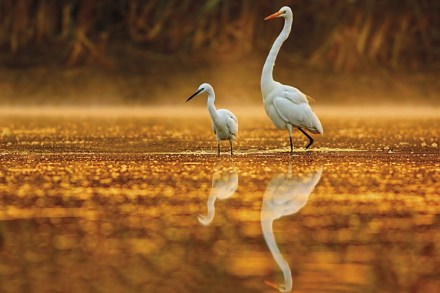
There’s an unwritten rule in newspaper journalism that any story about egrets must have one of two headlines. Either ‘no egrets’ if numbers are dropping or ‘egrets, we’ve had a few’ if they are booming. At the moment, fortunately, it’s the latter. The little egret (egretta garzetta) can be seen as something of a trailblazer. The first only nested successfully in England as recently as 1997, on Brownsea Island in Dorset, and there are now up to 1,000 pairs in the country, according to the RSPB. They compete for food with herons and cormorants on the Thames and even have been known to venture into cities and towns.

Devil of a job: the curious occupations recorded in the census

Even before the first census was made in 1801, the plan was regarded with fear, hatred and ridicule. And this year, on 21 March, households have another chance to mock, embrace or ignore the census. When parliament debated a bill in 1753 for an annual census, Matthew Ridley, MP for Newcastle, warned that his constituents ‘looked on the proposal as ominous, and feared lest some public misfortune or an epidemical distemper should follow’. They were aware that, by the Bible’s account, ‘Satan rose up against Israel and caused David to take a census of the people of Israel’. God was so angry that he gave the King three choices: seven years of famine, three months of fleeing his enemies or three days of pestilence. He chose the last and 70,000 died.

What kind of oyster-eater are you?

The latest fight between the EU and the UK isn’t over vaccines, but molluscs. Brussels won’t grant Britain a special export health licence for the trade of ‘live bivalve molluscs’ unless they are purified first. The problem is, once they’ve been purified they have to be eaten within 48 hours, which gives them too short a shelf life to be practical for export. This affects the trade of cockles, clams and mussels, but if the beleaguered British shellfish industry were to collapse, I think I’d be saddest about the oysters. Ours are some of the finest in the world. It’s no coincidence that three of London’s most famous restaurants — J. Sheekey, Rules and Wheeler’s — all began as oyster bars.

Pigs have a long history of performing remarkable feats

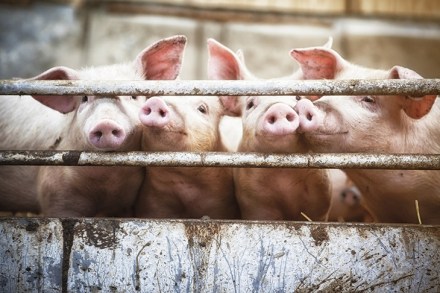
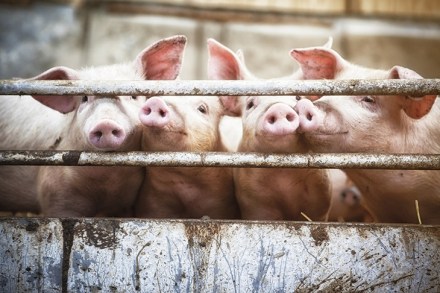
If you scratch his tummy, Ivory the clever pig will take you on at a computer game. He wields the joystick with his snout which makes it difficult for him to see the screen. Floppy ears don’t help when he’s tracking the cursor. Even so, Ivory has proved a dab trotter at gaming, outperforming his porcine friends, Ebony, Omelette and Hamlet. Researchers at Purdue University, Indiana are delighted with all four, claiming last week that they’ve revealed cognitive skills never before recorded in swine. ​Anyone who’s ever kept pigs will tell you how much they like to play. My two big black pigs enjoy hide-and-seek and football. They grunt with excitement at any game involving water and a hosepipe.