More from Books

In search of the peripatetic philosopher Theophrastus

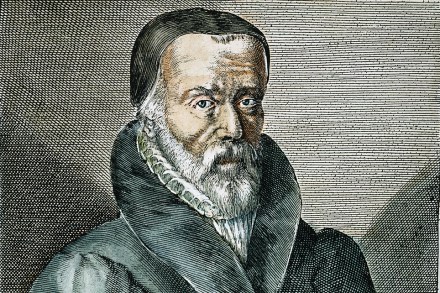
Publishers lately seem to have got the idea that otherwise uncommercial subjects might be rendered sexy if presented with a personal, often confessional, counterpoint. The ostensible subject of Laura Beatty’s book is the pioneering Greek botanist and philosopher Theophrastus. He was a friend of Aristotle’s, and was once thought his intellectual equal, but is now little known except to a few classicists and historians of science. But since no one wants to publish a straight book on Theophrastus, we get instead a book that is at least as much about Laura Beatty, her library researches, her travels in Greece and her kitchen garden. Her publishers describe the book as ‘genre-defying’.

Rocked by rebellion: the short, unhappy reign of Edward VI

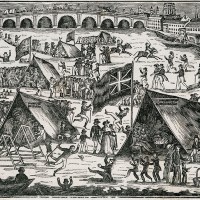
As Tory writers reflected on the safe passage of the Stuart dynasty through the Exclusion Crisis of 1679-81, an anonymous author urged contemporaries to learn the lessons of English history. The Rebels Doom (1684) offered some thumbnail sketches of various unsuccessful rebellions and attempted revolutions that had threatened the monarchy since the reign of Edward the Confessor, in order to show ‘the Fatal Consequences that have always attended ... Disloyal Violations of Allegiance’. The writer paused especially over one Tudor insurrection from 1549, in which 10,000 rebels from Devon and Cornwall took up arms against the administration of Edward VI and besieged the city of Exeter, but were ultimately crushed by forces led by Lord John Russell.

Why was Henrietta Maria, Charles I’s beautiful wife, so reviled?

On 15 June 1645, as Thomas Fairfax’s soldiers picked over the scattered debris on the Naseby battlefield, they made a sensational discovery. Amid the corpses and musket balls, dismembered limbs and severed swords there nestled a carrying case of personal letters and papers. It was nothing less than the king’s private correspondence. The cache included letters between Charles I and his queen, Henrietta Maria – his always opened ‘My deare harte’ – which discussed in detail the tactics and strategies of the war. Never ones to miss a PR opportunity, the Parliamentary high command ordered that a selection should be published with a guiding commentary.

Harpo Marx – genius, idiot savant or lovable overgrown child?

It’s hard (if not impossible) to imagine a world worth living in that doesn’t include the Marx Brothers; and equally impossible to imagine the Marx Brothers without their forever silent, animal-loving, hilariously unpredictable Harpo, he of the moppet wig, trampish overcoat packed with stolen silverware and blow torches, and recurringly grotesque facial expressions. For while the greatest comic performers of the silent film era (such as Chaplin and Keaton) couldn’t speak to the camera, Harpo was the only comic of the talkie era who simply wouldn’t, as if human conversation were somehow beneath him.

An angry poltergeist: Long Shadows, by Abigail Cutter, reviewed

Long Shadows, a powerful novel set mainly in the American civil war, is very unlike Gone with the Wind. The narrator, Tom Smiley, is now an unhappy ghost trapped in his old home, which, apart from snakes, mice and silverfish, has been uninhabited since his widowed daughter Clara died. A young couple arrive: Harry, who has inherited the property, and Phoebe, a psychic. To Tom’s indignation, they start renovating, getting rid of loved objects such as his family’s kitchen table and piano. Letters, medals and his sisters’ clothes are unearthed, prompting painful memories for him.

Seize the moment: Undercurrent, by Barney Norris, reviewed

Barney Norris’s third novel opens with a wedding in April. The couple tying the knot don’t matter; it’s the occasion that does, paving the way for a story about love, family and stories themselves, which is apt from a writer who is known for his dramas on the stage as much as on the page. Ed, who narrates half the novel, is there with his girlfriend Juliet, wondering why they’re yet to get married. It’s the expense, he supposes, and the not knowing what sort of ring to buy. And so he allows time to drift by, ‘just letting it happen to me, rather than me doing very much with it’. But then the wedding photographer, Amy, recognises Ed from a chance encounter as children and his story starts to change.

Aleister Crowley was even more beastly than we’d imagined

I have never had much time for Aleister Crowley. Magic(k) is nonsense; the mystical societies he founded were simply pretexts for him to take as many drugs and have as much sex as he could. And he was a second-rate writer at best. When the novelist Arthur Calder-Marshall said he had gone ‘from Great Beast to Great Bore’, I thought it a fair summing-up. Crowley initiates were some of the dodgiest people in the western world – either frauds or hucksters themselves or the most gullible of fools. There was always the matter of his self-reinvention. Aleister Crowley was not christened thus: he changed his first name because he thought that a dactyl followed by a spondee conferred the greatest chance of becoming famous. (I cannot say it has done me any favours.

Propaganda from the Russian Front: The People Immortal, by Vasily Grossman, reviewed

On its posthumous publication in 1980, Vasily Grossman’s Life and Fate was widely compared with War and Peace. For all the novel’s many virtues, the comparison was hyperbolic. In one respect, how-ever, Grossman’s was the more remarkable achievement. Whereas Tolstoy wrote about historical events with the benefit of hindsight, Grossman wrote about ones that he had recently endured. Life and Fate was the third of Grossman’s novels set during the Nazi invasion of the former Soviet Union. The first was The People Immortal, which, like the second, Stalingrad, is now available in an unexpurgated edition, superbly translated by Robert and Elizabeth Chandler.

The bizarre history of London’s private members’ clubs

At the height of the IRA’s terrorist campaign on mainland Britain in December 1974, a bomb was lobbed through the front window of the In & Out – the Naval and Military Club, then in Piccadilly. Exploding, it knocked everyone off their feet, including the barman Robbins, and trashed the Long Bar. But in the silence that followed came the unwavering request of senior member Commander Vaughan Williams: ‘Another pink gin please, Robbins.’ A subsequent cartoon in the London Evening Standard depicted the scene of devastation (no one was injured or killed) with a mess-jacket-wearing member calmly wondering what the barman had put in his pink gin: ‘But I’ll have another!

How the travel industry convinced us we needed holidays

In September 2019, Thomas Cook filed for compulsory liquidation, leaving 600,000 customers stranded abroad. It was a sorry end to a company that had lasted 178 years and survived both world wars. Founded by a Baptist preacher who began organising railway trips to Midland cities for local temperance societies, the company grew into one of the largest travel agencies in the world, thanks to the transformation of tourism from an activity for the idle rich to an experience open to all. This opening up of travel is the story Lucy Lethbridge tells in Tourists, taking the reader from the last years of the Grand Tour to the first years of the package holiday.

The invisible man: The Glass Pearls, by Emeric Pressburger, reviewed

Not all Germans were swayed by Hitler, but the majority were. Karl Braun, the fugitive Nazi doctor at the heart of Emeric Pressburger’s 1966 novel The Glass Pearls, was devoted to the furtherance of so-called ‘science’ under the Führer. In the interests of research he cut up the brains of a number of concentration camp inmates. His chosen victims – Jews and other ‘useless mouths’ – were crematorium fodder. Yet Braun sees himself as a decent, God-fearing family man. Undoubtedly he had to carry out unpleasant work, but does that mean he has no conscience? Pressburger, a Hungarian-born Jewish émigré, had reason to dislike the Germans: his mother and other close relatives were murdered at Auschwitz.

It’s thrilling to learn that the rebellious Urien actually existed

Once, when we shared the same history teacher in our teens, my older brother Dominic handed in an essay about the Dark Ages that deliberately parodied a sub-Tolkien mysticism of tone. ‘Little is known,’ his opening sentence ran, ‘about those shadowy twilit years twixt 400 and 600 AD.’ Our teacher was particularly enraged by the word ‘twixt’. In Dom’s defence, he was just reacting to a challenge that still confronts medievalists today. When there’s barely any evidence, what is there to say? The response of this intriguing book by Thomas Williams is to lean into the problem.

We do love to be beside the seaside

In the garden of my house in Cornwall there is a smooth granite stone about the size and shape of a goodly pumpkin. In the middle, where the stalk would be, there is a hole filled with rusting iron. The day I moved in, a neighbour told me that the hole was drilled and filled with molten iron to attach a hook, long since rusted away, to make a ‘sinking stone’. Smuggled cargo could be submerged just off shore if there were any danger of meeting King George’s men, to be harvested when the coast was clear.

Fleeing paradise: eden, by Jim Crace, reviewed

Since announcing his retirement in 2013, Jim Crace has had more comebacks than Kanye West, something for which we should all be thankful. Craceland is a compelling place to visit, full of hazy yet broadly recognisable locations (Tudoresque England in the IMPAC award winning Harvest; a vaguely Mediterranean town in Melody) and spanning indeterminate times (the post-apocalyptic future in The Pesthouse; the end of the Stone Age in The Gift of Stones). The specific non-specificity of his fiction reflects Crace’s view of himself as more of a storyteller than a novelist, and his sense of history as a largely unwritten – and therefore often forgotten – phenomenon. In this, eden is typical Cracian fare.

How Alice Prin conquered bohemian Paris

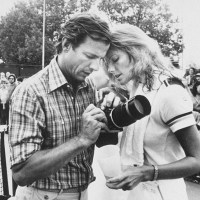
This book is about two people who reinvented themselves in 1920s Paris. Mark Braude focuses on Kiki de Montparnasse and Man Ray, the decade of their creative collaboration and the cafés and nightclubs of Montparnasse, immersing the reader in a world where everyone was pushing their creativity in unimaginable directions. Emmanuel Radnitzky, the Jewish tailor’s son from Brooklyn who turned himself into Man Ray, the painter and photographer, saw himself as the equal of Picasso, Duchamp, Picabia, Léger and the other artists who were being talked and written about with such excitement. Yet people found him more interesting as an innovative photographer than a painter, and while photography was definitely an art, it was not Art.

Three men on a pilgrimage: Haven, by Emma Donoghue, reviewed

I used to envy Catholic novelists – Graham Greene, Muriel Spark, François Mauriac – as having that extra point of view, namely eternity. The Irish-Canadian novelist Emma Donoghue doesn’t entirely qualify as a Catholic writer, even though she’s on record as saying she’s currently obsessed with Catholic theology, specifically Purgatory, but there’s a thread of Catholicism (particularly the Irish variety) in many of her books. Also, it has to be said that she’s frightfully good at suffering and endurance. I thought this when reading her 2020 novel The Pull of the Stars, set in the 1918 flu epidemic, and Haven is no exception. This must surely be her most Catholic novel.

Slavoj Zizek: the philosopher who annoys all the right people

Slavoj Zizek is a Slovenian graphomaniac who infuriates some of the world’s most annoying people, and might for this reason alone be cherished. He once enjoyed a high degree of pop-philosophical notoriety, being blamed by pundits who had clearly never read his books for the scourge of pomo relativism that threatened to undermine the ‘moral clarity’ of those who deemed it an excellent wheeze to invade Iraq. Such was his leftish celebrity a decade ago that he shared a stage with Julian Assange and was forced to deny rumours that he was having an affair with Lady Gaga. ‘My friends said, “You’re stupid. You should have said: No comment”.

Solving the mystery of mass almost ruined Peter Higgs’s life

In 1993 William Waldegrave, the science minister, was looking into a project being planned on the continent. Cern, the European research body, was upgrading its particle collider to create what it called the Large Hadron Collider. This underground apparatus ran beneath the French-Swiss border and it was so vast that its diameter equalled that of the Circle Line. Two beams of subatomic particles called protons would be fired around this subterranean loop in opposing directions and smashed together at 99.99 per cent of the speed of light. The scientists’ aim was to prove the existence of a fundamental particle called the Higgs Boson, which they hoped would appear momentarily from the sub-atomic luminescence. Waldegrave grasped the significance of the project.