More from Books

Seeking forgiveness for gluttony, sloth and other deadly sins

Professor Guy Leschziner writes that he was raised in a secular household that was ‘entirely irreligious’ yet with ‘a strong sense of morality, of right and wrong’. As an eminent neurologist and a rational atheist, it’s striking that his study of the extremes of human behaviour should reach for such Biblical terms. Is there an element of ghoulishness here? Seven Deadly Sins has a structure of which David Fincher, director of the gruesome film Seven, might approve.  To zero in on the sins is undoubtedly a darkly entertaining approach, if not for the squeamish. Having been a consultant at Guy’s hospital for more than 25 years, Leschziner has seen ‘the full spectrum of human morality’: inexplicable altruism, generosity, kindness, love.

Not for the faint-hearted: She’s Always Hungry, by Eliza Clark, reviewed

Eliza Clark’s first novel, Boy Parts, centred on a self-destructive woman taking explicit photographs of men. Her second, Penance, was about a journalist constructing a ‘definitive account’ of a seaside murder. Last year she was named one of Granta’s best young novelists; but she has now produced a sadly uneven short story collection. These 11 tales do not hang together thematically, aside from a broad emphasis on the corporeal. The good ones are full of brio: ‘The Shadow Over Little Chitaly’ is composed entirely of hilarious reviews of a takeway that offers Chinese food alongside pizza. The feedback is bizarre from the start: the first mentions that the restaurant is 125 miles away and the customer complains that they rang 117 times for a refund.

The North American fruit tree that provides a model for economics

Life on Earth is not a zero-sum affair. Most plants only exist thanks to partnerships with fungal filaments in the soil which mobilise essential nutrients for them and receive sugars made from sunlight in exchange. Without those partnerships, humans and most other land animals which depend on plants either directly or at one or two removes would not exist. Cooperation gives rise to a living world that is vastly more complex, productive and beautiful than the sum of its parts. An understanding of this reality is one of the key insights of an ecological worldview; and, argues Robin Wall Kimmerer in this short and charming book, it is of vital relevance when thinking about how human societies and individuals might organise, and think differently and more expansively about the future.

The Lion’s Mane, the Firework and terrible jellyfish jokes: the year’s best children’s books

Philip Reeve roams across realms of his own making with effortless brio. If I say that Thunder City (Scholastic, £8.99) is based on the premise that the world’s great cities have detached themselves from their terrestrial foundations and are floating across the sky like so many urban space ships, swallowing up smaller fry, you’d probably think this is asking a bit much of the reader, but somehow you take it all on board. In this futuristic scenario the characters and their modes of thinking are in fact rather quaint – like Miss Torpenhow, a governess whose floating town of Thorbury has been captured by a diabolical former protégé. The assurance of the storytelling carries you along. Rick Riordan has invented an entire genre: Greek myth crossed with American teenage comedy.

A shortage of Nigels and other calamities: humorous stocking-fillers

This is the part of the run-up to Christmas I always look forward to most – the ‘silly’ books, loo books, even non-books produced by serious publishers who may resent the huge piles of money they make every year while delicate, thoughtful literary novels remain unbought and unread. As it happens, I have just finished a wholly unsatisfactory book of short stories – no names, no packdrill – so a few weeks of loo books have proved surprisingly refreshing, like a palate cleanser after a hideously over-thought restaurant meal. They are all recommended for grumpy old relatives, or even yourself. Ysenda Maxtone Graham’s Scream (Abacus, £14.99) comes in the familiar category of ‘Rants About Life’, and is full of gobbets of unadorned rage about features of modern living.

We need to learn to pray again

In The Spectator’s basement kitchen a few weeks ago, I cornered a young colleague, Angus Colwell, and asked him what he made of Rod Dreher’s new book Living in Wonder. The thrust of it is that we are not in an age of enlightenment so much as ‘endarkenment’ (Dreher’s term) and that, having turned our backs on God, we have become easy pickings for demonic forces. ‘Oh Lord’, said Angus, turning wearily away, ‘I’m so sick of demons.’ This delighted me then and still delights me, both because it’s so surreal and also because it rings so true. If you’d told me ten years ago that young political types in 2024 would be talking knowingly about the ancient devil-gods of the Mesopotamian region – Moloch, Ishtar and Baal – I’d have said your vape was spiked.

Surviving an abusive mother-daughter relationship

In The Brothers Karamazov Dostoevsky writes: ‘It would be strange in times like ours to expect to find clarity in anyone.’ Given where the times have got to in the intervening 140 years, one would suspect that clarity would be even further from us. The clarity we seek is generally externalised, about the world and its workings; that which is most hidden is about our personal histories and our families’ intergenerational legacies. Nightshade Mother is the Welsh poet Gwyneth Lewis’s quest for clarity – a memoir of excavation positioned between what the infant experienced and what the adult has sought to understand. Multiple narratives are in play: the voice of the child, the poet, the scientist and the psychologist. Lewis is adept at all these stratagems.

The chilly charm of Clarissa Eden

Clarissa Churchill – as she was known until her marriage to Sir Anthony Eden – was brought up in a now vanished privileged world of intellectual, social and political London. In the introduction to his biography, Hugo Vickers provides a valuable roll-call of names. Those still living who knew Clarissa have proved invaluable sources of information, though a note of unconscious humour sometimes slips in – as when Antonia Fraser comments: ‘I was not quite glamorous enough for her’ (‘quite’ being the operative word). Born in 1920, Clarissa began life with the ostensible advantage of being a Churchill, the niece of Winston. In fact this was not the case: her real father was Harold Baker, known as ‘Bluey’, a scholar, barrister, Liberal politician and friend of H.H.

A century of Hollywood’s spectacular flops

Gore Vidal once sighed that ‘every time a friend succeeds, I die a little’, and there is inevitably a sense that when some idiotic blockbuster makes $1 billion worldwide, our collective intelligence loses a couple of IQ points. It’s a relief, then, when the worst examples of their kind, made at enormous cost to negligible artistic impact, flop hideously: proof that audiences will not fork out for any arrant piece of trash. The most recent high-profile failure of this kind was Todd Phillips’s bewilderingly poor Joker sequel, Folie à Deux, which insulted its audience and thus precipitated its commercial failure.

The boundless curiosity of Oliver Sacks

Oliver Sacks, who died in 2015, first came to public attention with his descriptions of fascinating neurological conditions in accessible articles and books. He was one of the first doctors to attempt to break down the barriers between the medical profession and the layman by eschewing esoteric jargon and explaining complex brain pathology simply while never losing sight of the patient as a human being. He exuded compassion and honesty. He brought attention to little-known illnesses such as encephalitis lethargica, or sleeping sickness, of which there was an epidemic after the first world war.

Blooming marvellous: the year’s best gardening books

I am an absolute sucker for a handsome reproduction of a rare and highly illustrated natural history, preferably more than two centuries old. This may possibly be a niche interest, but Catesby’s Natural History was pronounced a wonder when it was first published and is a wonder still. Mark Catesby was ‘a procurer of plants’, sponsored by a group of rich, curious patrons, including William Sherard and Sir Hans Sloane, to explore and record the flora and fauna of the most southern of the Thirteen Colonies – the Carolinas and Florida, as well as the Bahamas Islands. He made several perilous trips in the 1720s, sketching his subjects live, and completing paintings in England. He finally published his text and 220 hand-coloured plates in 1747.

What will the cities of the future look like?

At the Pacific Design Center Gallery in Los Angeles, artists have created an imaginary enormo-conurbation into which humanity’s billions have been herded, surrendering what’s left of the planet to wilderness. Views of Planet City, the resulting temporary exhibition, is all Blade Runner-esque, purple-neon cityscapes in miniature, VR games and costumes melding world cultures into one. The show riffs on Edward O. Wilson’s Half Earth hypothesis, the biologist’s 2016 proposal to remove humanity from half the planet to allow ecosystems to recover. It is an entertaining, clever and provocative exhibition, but it is fiction: it does not offer a set of instructions.

Who would be a goalkeeper?

‘We are all goalkeepers now,’ declares Robert McCrum, and who could seriously argue with that? Every day we try to defend our own goal against the hurtling ball of fate, but too often end up fishing it out of the back of the net. Then again, we are also all strikers, hopefully hoofing, occasionally taking a bit of a dive in the box. Or central defenders, muddied but valiant. Or nippy little wingers, making mazy but pointless runs down life’s touchline, whingeing at the referee. Come to think of it, we are all, in a very real sense, referees too. There is no end to the football-as-metaphor game. For the football metaphorist, every pass and kick, tackle or foul represents some grand, universal truth about life and the wider world.

A quest for retribution: Fire, by John Boyne, reviewed

At the end of John Boyne’s novel Earth, Evan Keogh, a conscience-stricken young footballer, hands evidence of his connivance in a rape to the police. Two years earlier, he and his teammate Robbie had been found innocent of the charge by a jury, whose foreperson was Dr Freya Petrus. Freya, a consultant in a hospital burns unit, becomes the protagonist of Fire, the third of Boyne’s Elements quartet. Like its predecessors, the novel is dominated by issues of aberrant sexuality. As a 12-year-old girl on a summer holiday in Cornwall, Freya was first raped and then buried alive in a sadistic ritual by 14-year-old twins, Arthur and Pascoe.

South Asia in a time of the breaking of nations

Early on Christmas morning in 1962, the Indian diplomat S.S. Banerjee heard a mysterious knock on his door in Dacca, East Pakistan. Standing outside in the darkness was a 14-year-old boy, who beckoned to him to follow, and minutes later Banerjee found himself opposite the firebrand politician Mujibur Rahman, a pipe-smoking Bengali activist who had recently transformed from a Pakistani nationalist into one of the country’s fiercest critics. For the next hour, the two men engaged in small talk, with Banerjee growing increasingly mystified as to why he had been summoned. Then, just as he was about to go home, he was handed a small envelope intended for the Indian prime minister Jawaharlal Nehru.

The ambassador’s daughter bent on betrayal

In June 1933, the 24-year-old Martha Dodd, the daughter of the newly appointed American ambassador to Berlin, arrived in the German capital with her parents and older brother. She knew little and cared less about politics. To her, Adolf Hitler, who had just seized supreme power in Germany, was merely ‘a clown who looked like Charlie Chaplin’.            To all her friends in Berlin, Martha would show odd bits of information from her father’s office The Berlin in which the Dodds found themselves was a ferment of intrigue, uncertainty, plots, counterplots, sudden disappearances and febrile gaiety.

Seeds of hope in the siege of Leningrad

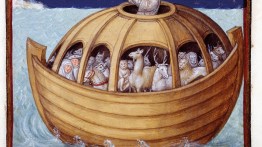
The idea was revolutionary – yet there was something ancient at its heart. The scientist Nikolai Vavilov, arriving in Petrograd in 1921 to take the helm of the Bureau of Applied Botany and Plant Breeding, was on a sacred mission: to make, in his words, ‘a treasury of all known crops and plants’. The world’s first seed bank would shape the future of agriculture – possibly even eliminate failed harvests and hunger. This was gleaming scientific idealism, but there was also an element of the Old Testament Ark about it. Throughout the siege, the botanists had to find the superhuman strength not to eat the seeds themselves The vision would collide with the brute reality of Stalin’s own efforts to bend nature to his will, and then the nightmarish Nazi invasion of Russia in 1941.

The shame of being an alcoholic mother

Recollections of crimes, misdemeanours and shameful stories can pall, especially when viewed through the bleary-eyed lens of alcohol. But In the Blood, a memoir of devastating clarity – the result of an unprecedented collaboration between a mother and daughter whose alcoholic gene was ‘baked into them like a curse’ – provides a frightening insight into the labyrinthine workings of the addict’s devious mind.  The illness had run riotously through many generations until Julia Hamilton and Arabella Byrne both rejected what had ‘zig-zagged through [their] family like a knight in chess’.