Peter Stothard

Horoscopes and horror – the reign of Septimius Severus

From our UK edition

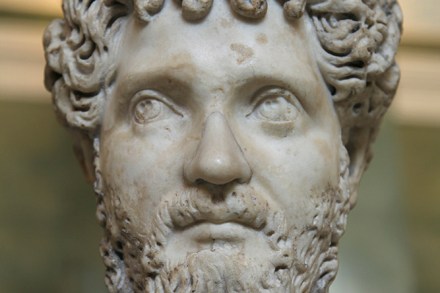
Rome’s first African emperor, Septimius Severus, was renowned during his reign (193-211 AD) for the mass killings of his rivals (ruthlessness even by ancient standards); for his genocide against the Scots (a rare recourse, despite Rome’s bad reputation as imperialists); and his budget-stretching generosity to his soldiers. He had an unusually glamorous Syrian wife, Julia Domna, who indulged her pet philosophers and her husband’s superstitions while setting a hairstyle trend. He had women Christians thrown to wild animals. His two sons, Caracalla and Geta, notoriously hated each other.
The crude tirades of Cicero the demagogue

From our UK edition

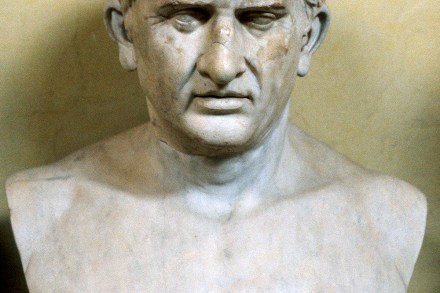
It is rare to read a book about Cicero that likens its hero to a demagogue. Rome’s prosecutor of conspiracy and corruption in the last years of the Republic is seen more commonly as a toga-draped crusader for virtue. Was he also a ranter steeped in violence, crude character-assassination, tendentious storytelling and racial stereotypes? Yes, argues Josiah Osgood, an American historian, whose book persuasively analyses a range of Cicero’s murder, fraud and extortion cases. Other men of the time were often no better, he writes, but, echoing Michelle Obama on Donald Trump: ‘Fortunately for Cicero, if his opponents went low, he knew how to go even lower.

The Roman Empire’s years of glory

The Roman emperor Domitian began life as a spare. At the end of the first century CE, while his brother Titus was the heir to their father Vespasian, the younger boy’s “sense of resentment and frustration had festered,” writes Tom Holland. “Rather than stay in Rome, where his lack of meaningful responsibility was inevitably felt as something raw,” Domitian moved away with a wife whom his family disliked, “doomed forever to be a supernumerary,” paranoid, attracting gossip, avoiding any company in which “innocent mention of baldness” might be viewed as “mockery of his own receding hairline.” In most judgments by posterity this Prince Harry of the early empire fulfilled all this lack of early promise. Big brother Titus became emperor only briefly.

Roman

What ‘pax’ meant in Rome’s golden age of imperialism

From our UK edition

The Roman emperor Domitian began life as a spare. At the end of the 1st century CE, while his brother Titus was the heir to their father Vespasian, the younger boy’s ‘sense of resentment and frustration had festered’, writes Tom Holland. ‘Rather than stay in Rome, where his lack of meaningful responsibility was inevitably felt as something raw’, Domitian moved away with a wife whom his family disliked, ‘doomed forever to be a supernumerary’, paranoid, attracting gossip, avoiding any company in which ‘innocent mention of baldness’ might be viewed as ‘mockery of his own receding hairline’. In most judgments by posterity this Prince Harry of the early empire fulfilled all this lack of early promise. Big brother Titus became emperor only briefly.

Peter Stothard: Crassus

From our UK edition

40 min listen

My guest on this week’s Book Club podcast is Peter Stothard, whose new book Crassus: The First Tycoon tells the story of the third man in Rome’s great triumvirate: landlord, power-broker, Spartacus’s nemesis and leader of a hubristic expedition to the east that was to see his glorious career end in bitter failure.

Mythic automata

From our UK edition

Among the myths of Ancient Greece the Cyclops has become forever famous, the Talos not so much. While both were monsters who hurled giant boulders at Mediterranean shipping, the Cyclops, who attacked Odysseus on his way home from Troy was a monster like us, the son of a god, an eater, a drinker, a sub-human with feelings. The Talos was more alien, by some accounts a mere machine, manufactured in metal by a god and pre-programmed only to sink ships and roast invaders alive, a cross between a Cruise missile launcher and an automatic oven. Talos began its existence just as early as the Cyclops. But it was only described with drama in the epic poem the Argonautica, by Apollonius of Rhodes some 500 years later. Homer’s readers have always been the more numerous.

Lessons for the Prime Minister’s speech-writer

From our UK edition

To a new Prime Minister’s speech-writer the party conference approaches like a bullet train. If my friend, Sir Ronald Millar, were still alive he would be working flat out on Theresa May’s speech by now. With the date of delivery advancing and the drafts on her desk ever more undeliverable, the need for ‘Ronnification’ must be overwhelming. It always was. Ronnie is best known today as the playwright who wrote ‘U-turn if you want to: the lady’s not for turning’ for Margaret Thatcher in 1980, and gave this paper’s former editor, Charles Moore the title for the second volume of his great biography.

What is written down

From our UK edition

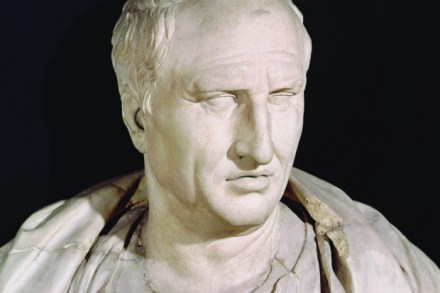
Marcus Tullius Cicero was the ancient master of the ‘save’ key. He composed more letters, speeches and philosophy books than most writers of any epoch; but more important than any particular work was that so much survived to define his time. He had a secretary, Tiro, who can reasonably be given the credit for researching, correcting, copying and casting out his master’s words. In Robert Harris’s three novels of Cicero’s life, Marcus Tullius Tiro, the freed slave who took his name as well as dictation from his boss, gets his full reward.

A neglected corner of Roman history

From our UK edition

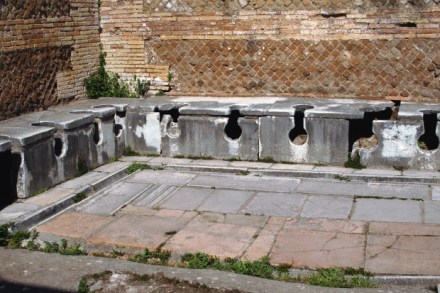
When Ovid was seeking ‘cures for love’, the most efficient remedy, he wrote, was for a young man to watch his girl on the toilet. The American author of The Archaeology of Sanitation in Roman Italy begins with this worrying poetic advice. The evacuation of the human body has had little previous attention from historians of Rome, she says, but ‘Ann Olga Koloski-Ostrow on the toilet’ should not become the citation attached by fellow scholars to her name. We might all be put off. Her fear is well-founded. The reason that there are dozens of books about the Romans’ baths and almost none about their latrines reveals much about us and nothing about them. High-minded archaeologists used to prefer their heroes as brave bathers discussing philosophy.