More from Books

The dreadful fate of Queen Victoria’s granddaughters

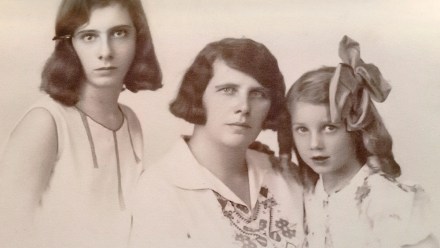
‘Cela me revolte,’ wrote Queen Victoria in her diary in 1894 when her adored granddaughter Alexandra of Hesse announced her engagement to the Tsarevich Nicholas, ‘to feel that she has been taken possession of and carried away by those Russians.’ The sisters all look alike in the photos: uncomfortable dress, priceless jewellery, grimace, hair in bun  The queen was proprietorial about the four surviving daughters of her late daughter Alice, who had died of diphtheria, aged 35, when little Alix was only six. To lose one of those granddaughters to the Russians had been bad enough.

The must-have novelties nobody needed

Many reviewers start work with a peek at the book’s index. Here you find Gladys Goose Lamp, Choo Choo Chain and Dynamite Candles – novelty gifts (the ‘executive toys’ of the title) that made a small fortune for their creators. You might therefore think this a very slight book – so slight that its value could be dispersed by the mildest of zephyrs. But no. With unhesitating commitment it reveals the frailty and vanity of the long-gone culture it describes. Thus, fascinating.  Can anything better illustrate the sense of doom gathering in the 1980s than an executive toy created for bored Concorde passengers? They say an era is at its end when its illusions are exhausted: BA001 LHR-JFK, playing with a fluid puzzle after several glasses of the Chateau Palmer ’70 at Mach 2.

4,000 pages of T.S. Eliot’s literary criticism is not enough

This is Alice B. Toklas, ventriloquised by her partner, Gertrude Stein: I must say that only three times in my life have I met a genius and each time a bell within me rang and I was not mistaken, and I may say in each case it was before there was any general recognition of the quality of genius in them. The three geniuses of whom I speak are Gertrude Stein, Pablo Picasso and Alfred Whitehead [the mathematician]. Defiantly, flagrantly clairvoyant. Daring us to dispute the claim, the Big Lie flourishes. Size matters. Think George Steiner, Joseph Brodsky, Big Whoppers both, tirelessly fibbing.  Towards the end of his life, in 1963, T.S.

Out of this world: The Suicides, by Antonio di Benedetto, reviewed

The NYRB logo is now something my eye leaps to when browsing, and the publisher’s eclectic range has proved consistently rewarding. The Argentine writer Antonio di Benedetto was praised by Borges, Bolaño, Cortázar and Coetzee. He was born in 1922, on 2 November, the Day of the Dead – which he made much of – and was imprisoned and tortured in 1976-77, during Argentina’s Dirty War. His eerie fables of paranoia, impending threat and incomprehension pre-empted his experience of them. Esther Allen deserves great credit for introducing the author to an Anglophone readership. Having read her translation of Benedetto’s Zama, followed by The Silentiary, I foundthe wait for The Suicides excruciating. But it was worth it.

Four legs good, two legs bad – the philosophy of Gerald Durrell

We know of the Durrells mainly through their own writings, outstandingly My Family and Other Animals, about their years in Corfu in the 1930s, and from the image of them created by TV and film adaptations of this work. Gerald and Lawrence were the best known members of the family, the first as a zoologist and conservationist, the second as an experimental writer. Their siblings, Margaret (Margo) and Leslie, will always be perceived through the lens Gerald turned on them in My Family – the former as a flighty eccentric, something like an extra from a Carry On film, the latter as a pantomime villain. Their mother, Louisa, was loved unreservedly by her children and comes across in My Family as a kindly eccentric.

Was Graham Brady really the awesome power-broker he imagines?

The great parliamentary sketchwriter Quentin Letts, the Henry Lucy of our day, has described Sir Graham Brady (now Lord Brady) thus: ‘Were he a yacht, his galley would gleam, the decks would be scrubbed daily and there would be a large brass bell to summon matelots to morning parade. Commodore Brady runs a tight ship.’ After 27 years in the Commons, 14 of them as Chair of the 1922 Committee, the commodore has swapped his deck garb for ermine and written a kiss-and-tell about his political encounters with five Tory prime ministers. The 1922 Committee – the fabled men in grey suits who represent the parliamentary party’s backbenchers – is ‘the closest thing the Conservative party has to its own trade union’.

‘Teaching someone to draw is teaching them to look’: the year’s best art books

Colour, the painter Patrick Heron once proclaimed, is a continent that artists have yet to explore. The mammoth two-volume The Book of Colour Concepts (Taschen, £150) catalogues numerous attempts to map this mysterious chromatic domain, from the late 17th century to the mid 20th. It quickly becomes clear that this area is infinitely vast. One only has to glance at the plates of the ‘Viennese Colour Cabinet’ (1794) – a whole column of blue-greens – to realise that. The effect of these technical diagrams is beautiful in the manner of abstract art.

Learning difficulties: The University of Bliss, by Julian Stannard, reviewed

You have been warned. First, David Butterfield has excoriated Cambridge University in these pages, leaving its standing devalued. Now Julian Stannard, a poet and novelist, delivers in fiction a devastating evisceration of other current universities. The University of Bliss belies its title. This is a work of high satire and Stannard vents his frustration with more than a touch of Swiftian saeva indignatio. His ridicule is extreme and addictively readable. The novel follows the career of the newly appointed vice chancellor Gladys Nirvana, partial to foot massages which transport her to regions signalled by her surname and give her acute sexual gratification.

The good soldier Maczek – a war hero betrayed

Who could forget the Polish squadrons in RAF Fighter Command when, in the 1969 film The Battle of Britain, a British squadron leader, frustrated by the excited radio chatter on being allowed into action at last, orders ‘Silence! In Polish!’ Or the Polish Parachute Brigade at Arnhem, whose commander, Stanislaw Sosabowski, played by Gene Hackman in A Bridge Too Far (1977), thinking the venture disastrous, growls ‘God Bless Field Marshal Montgomery’ as he jumps from his Dakota? Commander Eugeniusz Plawski, the captain of the Polish destroyer Piorun which first spotted the Bismarck and charged at her to draw fire, might be better known if he had featured in the 1960 film Sink the Bismarck! – but that wasn’t expedient, with the honours going instead to a Royal Navy officer.

British architecture according to the Great Man school of history

Simon Jenkins has, over the years, assembled a winsome array of higher coffee-table books about the kind of building which welcomes National Trust mobility scooters and the beige brethren aboard them. This is a man who knows the cardigan market. And he knows his stuff, mostly. He subscribes to a version of the Great Man school of history, which casts the great man as an exigent client who believes himself the maker or author. But, sadly, the grim-faced Bess of Hardwick did not install the glazing herself. And another promoter ever anxious for an attribution, God Almighty, did not personally carve his supplicants’ chantries. It might be his house, but he delegated the design.

Rebels and whistleblowers: a choice of recent crime fiction

No one joins the CIA for the money, which might explain the spate of thrillers now emerging from former officers. The latest addition, The Peacock and the Sparrow (No Exit Press, £7.99) by I. S. Berry, comes festooned with praise from other CIA officers turned authors. Set in Bahrain during the Arab Spring, the novel is told in the first person by Shane Collins, a veteran CIA officer nearing the end of his tour there. Divorced, estranged from his son and engaged in a desultory affair with the wife of a colleague, Collins is weary. As his source Rashid declares: ‘This is your problem. You have no expectations... You are like this air. Empty.’ Rashid is one of the leaders of the increasingly restive dissidents in Bahrain, whose corrupt king lives distanced from his subjects.

Who’s still flying the flag for Britpop?

There’s only one Cincinnatus in the Cotswolds, and it’s not Boris Johnson. Over the Rainbow tells the story of how, once again, Alex James was torn from his life in a very big house in the country to fulfil his national duty to play bass with Blur. The tale comes in the form of a diary, like Brian Eno’s wonderful A Year with Swollen Appendices, except that this is a year with inflated egos. To make sure our sympathies are in the right place, it begins with a preamble at the end of December 2022, during which the author attends a series of parties, each more wearisomely smug than the last. Then he sets up the stakes of the plot.

A father’s love: Childish Literature, by Alejandro Zambra, reviewed

Serious books about fatherhood are hard to come by; indeed, next to distinguished literary mothers such as Rachel Cusk, Sheila Heti, Jacqueline Rose, and Elena Ferrante, the male sex is beginning to look decidedly inarticulate. In his new, genre-blurring work Childish Literature, the Chilean novelist Alejandro Zambra seeks to right this imbalance. In doing so, he aims to correct the failings of prior male generations, who may have ‘tried, in their own ways, to teach us to be men’, but never quite ‘taught us to be fathers’. Before he became one of Latin America’s most inventive prose writers, Zambra was an acclaimed poet and, like many poet-novelists, he treats narrative unities with healthy suspicion.

Fortitude, emotional intelligence and wit – the defining qualities of Simon Russell Beale

The path to National Treasureland is no paved highway. Simon Russell Beale, the finest classical actor of his generation, was nearly lost to academia (he swerved a PhD in Victorian literature), and faced down pigeon-holing from an agent who wanted to change his name to Simon Beagle, the better to capitalise on a knack for dopily jolly comedy roles. Now – and not before time – he’s written an elegant study of Shakespeare that does double duty as a juicy actor’s autobiography. The pleasure here is in the mix of green room gossip and literary insight. There’s plenty of the former: dining next to Lauren Bacall at the chat show queen Barbara Walters’s place? Good. Watching Top Gun with Imelda Staunton and Penny Downie? Even better.

The report of Christianity’s death has been an exaggeration

George Orwell began his beautiful, nostalgic pre-war novel Coming up for Air with an epigraph from a popular song. ‘He’s dead, but he won’t lie down.’ It’s tempting to borrow the line when writing about Christianity in the West today. The chronicle of its death has been long foretold, its obituary repeatedly rewritten. Numbers, particularly in older denominations, have been heading south for decades, and churches (in Britain at least) have been shutting ever since over-enthusiastic Victorians opened far too many of them. Yet at the same time immigration is revivifying congregations everywhere. Many people show signs of spiritual openness, few speaking well of the kind of bare-knuckle rationalism that characterised New Atheism.

The curse of distraction: Lesser Ruins, by Mark Haber, reviewed

Earlier this year, I visited the Museum of Jurassic Technology in Los Angeles. This cherished museum appears at first to be a collection of bizarre arcana: botanical specimens, miniature dioramas, tributes to forgotten polymaths. Closer inspection reveals it to be something altogether stranger, at the junction of fact and fiction. Witty and highly individual, it invites us to sit with the wonder, to contemplate what we have seen. Phones are strictly banned. Lesser Ruins, the consummate third novel by the Minneapolis-based Mark Haber, feels like a literary analogue – taking us as it does down rabbit holes, a twisting tour of an overloaded mind. Its unnamed narrator is a former community college professor (retired or fired – there are different versions).