Camilla Cassidy

A macabre quest for immortality: Old Soul, by Susan Barker, reviewed

From our UK edition

Susan Barker’s Old Soul opens with pages from a diary: ‘T’ records a late-night conversation with a woman known as ‘E’ as they watch Venus rise. While they talk, we learn that Venus ‘spins slowly, at the pace of a walking man’, so one day is longer than a year. E imagines she is there, walking towards a sun that never sets. When T says that sounds lonely, E is adamant it wouldn’t be. This strange fragment sets the tone for a sinister horror story in which one woman – who goes by many names but is often simply ‘the woman’ – has an unnaturally prolonged life, serving an entity she calls the Tyrant, who has an appetite for human sacrifice and a taste for lost souls.

Work, walk, meditate: Practice, by Rosalind Brown, reviewed

From our UK edition

Practice is a short novel set in a ‘narrow room’: one day in the life of an Oxford undergraduate writing an essay on Shakespeare’s sonnets. Annabel is trying to ‘perfect her routine, to get more out of each day’. She goes to bed early and rises at 6 a.m. She makes coffee like it’s a ritual and drinks it from the same small, brown mug. She has a plan. She will work, walk, do yoga, meditate, each at their allotted time. The restriction of the novel – a single day, a single character, discrete passages strung together like a sonnet sequence – lends itself to a delicate portrait of Annabel’s struggles with discipline, focus and attention.

Back to the world of Big Brother: Julia, by Sandra Newman, reviewed

From our UK edition

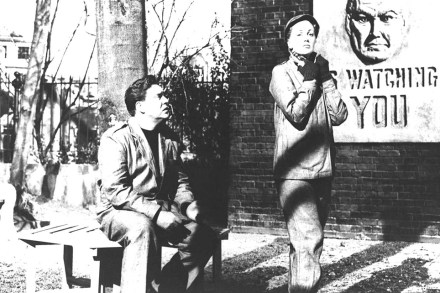
Sandra Newman’s Juliahas a connoisseur’s nose for body odour. When she gets close to another person or animal, she almost always notices their smell – manly, dusty, dungy, a hint of talcum powder. When she suppresses emotion, she sweats. She sprains her wrist and tears rise ‘of themselves like sweat’. In a pivotal scene, she unblocks a gruesomely overflowing toilet. This abundance of bodily functions feels like a reminder of George Orwell’s original Julia in Nineteen Eighty-Four, whose physical abandon makes her an object of desire and symbol of rebellion. This fantasy is punctured in Julia. Bodies are sensuous but they are also skin-crawlingly horrible. Mutilated wrecks, with teeth and nails removed in the Ministry of Love, creep around London on all fours.

Will we ever know the real George Orwell?

From our UK edition

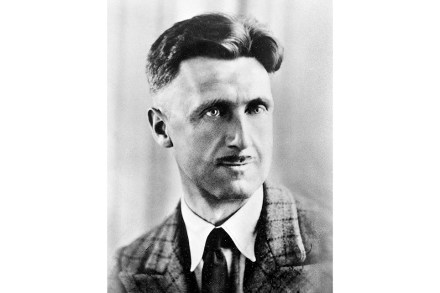
While George Orwell was staying with his family in Southwold during the 1930s, figuring out how to become a writer, the town pharmacist was busy shooting ciné footage. On the edge of a crowd watching a circus parade, he captured a tall man smoking at a street corner. It’s impossible to identify this brief glimpse as Orwell, but D.J. Taylor sees the self-conscious figure holding himself apart as a possible sighting. It doesn’t seem all that revealing, so why does it matter? It feels somehow symbolic of a wider effort to grasp something tangible and candid of a writer who can too readily be obscured by his own myth. This might be a chance to get a look at the man himself rather than a stage-managed persona.