More from Books

The gripping story of the failed NKVD officer who fooled the FBI and the CIA

This is not quite another story about a man who never was. But it is about a man who certainly wasn’t what he said he was. The context is Russian intelligence operations of the 1930s, especially those of the NKVD (known later as the KGB) during the Spanish civil war. In Britain we tend to see 1930s/1940s espionage through the prism of the Cambridge spies — Philby, Burgess, Maclean, Cairncross and Blunt, the so-called Ring of Five — but, as Boris Volodarsky points out, the full picture is much wider. By 1937, he reckons, the Russians had over 100 agents and collaborators in Britain alone, with many more in other western countries. And they were ruthlessly active in Spain.

All roads lead to Blackpool in Andrew O’Hagan’s latest novel, The Illuminations

The illuminations of Andrew O’Hagan’s fifth novel are both metaphysical and mundane. In the course of its taut plot, they encompass Blackpool’s elaborate decorations and a moment of understanding between a grandmother and grandson; epiphanies about the nature of masculinity picked out by the tracer fire and explosions in Afghanistan; and a photograph of an everyday sink linked to the aesthetic realisation that ‘colour is light on fire’. O’Hagan has rightly been praised as a prose stylist, and his grasp of cadence and rhythm is every bit as evident here as before; but what is more impressive is O’Hagan as strenuous moralist.

Both lyricist and agitator: the split personality of Vladimir Mayakovsky

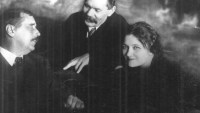
Why increase the number of suicides? Better to increase the output of ink! wrote Vladimir Mayakovsky in 1926 in response to the death of a fellow poet. Four years later, aged 36, he shot himself. What drove the successful author, popular with the public and recognised by officialdom, to suicide? Bengt Jangfeldt provides some clues to this question in his detailed, source-rich biography. Mayakovsky came to poetry as a Futurist, co-authoring the 1912 manifesto A Slap in the Face of Public Taste, which granted poets the right ‘to feel an insurmountable hatred for the language existing before their time’. That the new era demanded a new language was a principle Mayakovsky adhered to all his life.

Alexandra’s Fuller’s parents are the stars even when their daughter is divorcing, in this sequel to the bestselling Don’t Let’s Go to the Dogs Tonight

‘Double ouzo, hold the Coke,’ Mum ordered at the Mkushi Country Club bar, during spanikopita night. ‘My daughter’s a lesbian.’ The Greek farmers blinked at her uncomprehendingly. ‘Oh, don’t pretend you don’t know what I’m talking about. You bloody people invented it.’ Alexandra Fuller’s wild parents make good copy, as was clear in Don’t Let’s Go to the Dogs Tonight, her bestselling 2002 memoir about her chaotic, often tragic, childhood in Zimbabwe (then Rhodesia).

Results

The school holidays in the final furlong and the next new phase and term in clear sight. This is when the thousands receive their plain envelopes informing them whether they have made the grade, precisely. And we look on, remembering or not remembering a future built on hopes and inadequacy, not knowing what is right about our work and knowledge, and what is wrong, aware too of us in them and how things fade. We kiss them out the door and wait until they ring with hard facts that bring five years to a close.

The madness of Nazism laid bare

‘If the war is lost, then it is of no concern to me if the people perish in it.’ Bruno Ganz, who not so much portrays Hitler as becomes him in Bernd Eichinger’s 2004 film Der Untergang (Downfall), spits the Führer’s nihilist venom so convincingly that the fundamental insanity of Nazism is at once laid bare, even to his closest collaborators. The madness of Nazism is now merely Hitler himself, and when on 30 April Ganz/Hitler, entombed in the Führerbunker, shoots himself, the film’s tension is at once gone. What follows is just rats fleeing the hole; and the rest, as it were, is silence. But it was not. VE (Victory in Europe) Day was not celebrated in London until 8 May, and in Moscow on 9 May.

Anne Tyler’s everyday passions

There was nothing remarkable about the Whitshanks. None of them was famous. None of them could claim exceptional intelligence, and in looks they were no more than average….Their family firm was well thought of. But then, so were many others. But like most families, they imagined they were special. So, you know what you will get in this novel, which Anne Tyler says will be her last, and that is the stories of three generations of the Whitshanks, a straightforward, unexceptional Baltimore family. We have been here before.

Even the people who make political adverts aren’t sure they work

It is a common prejudice about modern politics that it is all focus groups and spin, all public relations and advertising. The rather heartening conclusion from Sam Delaney’s history of advertising in politics is that this is a calumny on the political trade. Delaney has spoken to everyone involved in political advertising since the phenomenon began in earnest with Wilson in 1964 and can hardly find a soul who is certain that advertising does anything more than varnish good ideas. Maurice Saatchi, for example, credited Margaret Thatcher’s proposals, rather than his talent for a pithy slogan, for her electoral victories. Chris Powell, a leading figure in Labour’s Shadow Communications Agency, also doubts whether advertising can really change popular opinion.

Cybersex is a dangerous world (especially for novelists)

Few first novels are as successful as S.J. Watson’s Before I Go to Sleep, which married a startling and unusual premise to a tightly controlled and claustrophobic thriller. Its only drawback was that it was a hard act to follow. Novelists tend to dump all their brilliant ideas into their first book, and the white heat of originality compensates to some extent for any want of craft. Second novels lack both advantages, and have the additional problem that readers come to them laden with expectations. Like its predecessor, Second Life is a slice of domestic noir with a woman narrator. It is set mainly in affluent corners of London, with occasional trips to Paris.

They sought paradise in a Scottish field — and found hunger, boredom and mosquitoes

Dylan Evans, the author of this book, was one of those oddballs who rather looked forward to the apocalypse, because it promised ‘challenging times ahead’. If, in the not too distant future, famines and droughts more or less wipe us out, that will be our own fault for allowing population levels to reach an unsustainable nine billion — the predicted figure for 2050. How much better the planet will be with a select handful living in their villages of yurts, log cabins, teepees and straw-bale huts, the children gambolling happily ‘amidst the bracken and the trees’. The air will be cleaner. Wildlife ‘will make a comeback’. Neighbours will help each other out. People will be fitter as a result of their manual labour.

The greatest American Arctic disaster

In the course of the 19th century, various flotillas of expeditions hastened to the polar regions in little wooden ships which sooner or later expired in the pincers of an ice floe while crewmen ate their shoes. These stories bear retelling for our own age, and Hampton Sides does well to identify the gruesome story of the USS Jeanette, which ended in the greatest American Arctic disaster ever. The idea began with James Gordon Bennett Jr, the proprietor of the New York Herald (the largest circulation daily in America) and a flamboyant character who enjoyed riding round Manhattan in the nude. He had already sponsored numerous expeditions and popularised the now standard technique of creating news, the more sensational the better. (The phrase ‘Gordon Bennett!’ was minted for him.

Good time girls: Italian women prefer sunglasses to babies, according to Nicholas Farrell

Like so many Britons who chased the dream and woke up in Italy I have contemplated writing a book about the Italians. I even thought of what to call it: Those Italians.The title was prompted by what an Albanian port official told the media during some international crisis in response to the news that the entire cargo of an Italian aid ship had disappeared one night in the Albanian port of Durres. ‘Yes it is incredible,’ the official conceded, ‘but — my friends — there is always something funny going on with those Italians.’ An Albanian, of all people! But such books are a poisoned chalice. The theme demands that you capture the spirit of the place and its people and yet avoid stereotype and cliché.

Powers of persuasion: how Churchill brought America on side

In time for the 50th anniversary of Churchill’s death comes this pacy novel about his attempts to persuade the Americans to join the war. It is January 1941; President Roosevelt’s special envoy Harry Hopkins arrives in Blitz-torn London and is subjected to Churchill’s charm offensive. Hopkins, a chain-smoking, hard-drinking man of principle with a dislike of hereditary privilege, finds himself guided down every corridor of power. It’s port and cigars at Downing Street, roast pheasant at Chequers, even champagne in the prime ministerial bathroom while the great man fires questions at him from the tub, ‘a pink, round, gleaming Michelin man’.

From classical to post-modern: a beginner’s guide

My career at school and after was greatly enhanced by a series of books called The Bluffer’s Guide to....These gave mischievous advice, often on the reliable when-in-doubt-confuse-the-issue lines. A favourite of mine, still in use in emergencies, was: ‘I think Jack Kerouac was more a Franciscan Christian than Buddhist, don’t you?’ Martin Kemp’s Art in History is several clicks up the ratchet of sophistication, but, being a beginner’s guide, retains something of the character of a prop for the indolent. The curious title betrays a little uncertainty. It is one of the publisher’s ‘Ideas in Profile’ series which includes Shakespeare, Criticism and Politics. But why the preposition between ‘art’ and ‘history’?

The fallen idol: seeing Putin in a new light

The way to think about Russia, Bill Browder told me in Moscow in 2004, using a comparison he recycles in Red Notice, is as a giant prison yard. Vladimir Putin, he argued then, had no choice but to destroy Mikhail Khodorkovsky, the yard’s top dog and country’s richest man. One of a tribe of Western financiers who traversed a hermetic circuit of offices, guarded apartments, upscale restaurants and the airport, Browder would berate reporters for banging on about human rights abuses or atrocities in Chechnya. Putin was already Putin, for anyone who cared to notice — autocratic, corrupt, nationalistic — but, for Browder, Russia was an oil-powered success story, and Putin was a seer.

Tony Judt: a man of paradox who made perfect sense

Tony Judt was not only a great historian, he was also a great essayist and commentator on international politics. Few in this country will be familiar with his journalism, however, since it was largely published in America by the the New York Review of Books and the New Republic. Thankfully, this situation can now be remedied through this collection of his writings, ranging from 1995 to his untimely death in 2010 from motor-neurone disease. As was often observed during his life, Judt was a man of apparent paradoxes. A secular Jew, who as a teenager had been a left-wing Zionist, he was castigated for criticising the actions of Israel. A historian of Europe, he spent most of his career teaching in America.

From prince to pauper: a dramatic overview of Britain on 18 June 1815

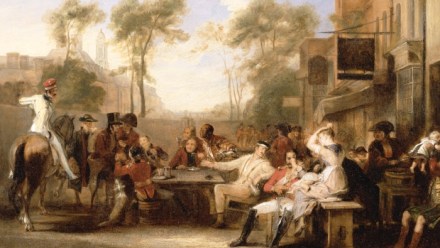
Of all the big battalions of books marking the bicentenary of the battle of Waterloo that have come my way, this has to be the best. David Crane has used the bloody campaign as a telescope, bringing into sharp focus not just the carnage along the Brussels road, but the state of Britain itself: a country on the cusp of vast, irreversible change. He achieves this within the compass of a single summer’s day — Sunday, 18 June 1815 — devoting a chapter to each hour and cutting cinematically between the three armies slaughtering each other in Belgium and the citizens at home. Some anxiously await news of triumph or disaster; others are utterly oblivious of what the cannonade rolling across the Channel, clearly heard by Kentish churchgoers, portends.

Cabinet of curiosity: we do not even know for sure the maker of the Sixtus Cabinet at Stourhead

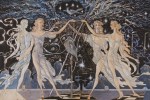
Italian cabinets and tables decorated with inlaid semi-precious stones known as ‘pietre dure’ were a ‘must-have’ for English milords returning from their Grand Tours. The finest example is perhaps the Sixtus V cabinet at Stourhead, in Wiltshire, which has just been written up in a thorough, scholarly way by Simon Swynfen Jervis and Dudley Dodd, two eminent furniture and architectural historians. As well as placing the Sixtus V cabinet within the contexts of Roman manufacture and English collecting, the book brings to life its Roman provenance and its subsequent residence at Stourhead after the banker Henry Hoare bought it in about 1740.