More from Books

When two young Britons go camping in Yosemite their lives are changed for ever

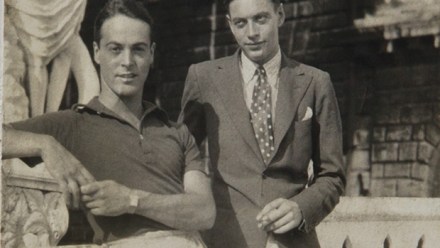
The title of A.D. Miller’s follow-up to his Man Booker shortlisted debut Snowdrops refers not to lovers but to two British men who befriend each other in their early twenties in 1993 when in the US. Among the sights they see on a tour of Yosemite is a pair of old trees with a conjoined trunk known as ‘The Faithful Couple’. Neil lost his mother as a child, and his father owns and runs a stationery store. He is the only one in his family to have been to university. Adam comes from a more entitled background and is full of confidence. When he speaks of his career ambitions in TV it is with certainty, not hope. Despite their differences, the two strike up a friendship.

The Dear Leader’s passion for films — and the real-life horror movie it led to

Ahead of last year’s release of The Interview, the Seth Rogen film about two journalists instructed to assassinate Kim Jong-un, North Korea interpreted the film as ‘an act of war’. Sony Pictures were hacked by a group linked to North Korea and hundreds of humiliating titbits about spats between celebrities and Sony execs made public, most memorably the description of Angelina Jolie as ‘a minimally talented spoilt brat’. The film was first cancelled and then given a limited release. Kim Jong-un had the last laugh when the reviews came out, however. ‘About as funny as a communist food shortage, and just as protracted,’ said Variety.

A Father’s Day tragedy: what exactly happened when a car plunged into a reservoir in Australia in 2005?

When Helen Garner, an award-winning Australian author, first saw the TV news images of the car being dragged out of the water, she uttered a prayer: ‘Oh Lord, let this be an accident.’ A strange, pessimistic, almost paranoid prayer. A car had swerved off a dark highway outside her hometown of Geelong, Australia, and plunged into a reservoir.Why wouldn’t that be an accident? But Garner seems to have had a premonition. This House of Grief is her account of the murder trial, and ultimate conviction, of the car’s driver, Robert Farquharson, who had escaped and swum ashore while his three young sons drowned.

If ‘incorrect’ English is what’s widely understood, how can it be wrong?

In a cheeringly Dickensian fashion, the names of our supposed experts on grammar imply they want to bind writers (Lynne Truss); send them awry (Kingsley Amis); besmirch their prose (H.W. Fowler); deafen them with moos (Simon Heffer); or snort at their legitimate constructions (John Humphrys). At first glance, Oliver Kamm appears happy to keep them company. A leader-writer for the Times and its resident authority on style, Kamm is the most small ‘c’ conservative man I know. If he has ever left home without cleaning his shoes — and I doubt that he has — he would have realised his mistake before reaching the end of his road, and rushed back to apply the polish. Instead of joining the pedants, however, Kamm batters them.

John Lister-Kaye tracks Highland wildlife through a pair of binoculars as he lies in his bath

Sir John Lister-Kaye has adopted a very familiar format in his new book of wildlife encounters. Essentially he charts a single 12-month cycle in the life of the Scottish Highlands near his home at the Aigas Field Centre, just to the west of Inverness. The author has lived in the region since the 1960s, when he was lured north out of a business career to take up work with the famous naturalist Gavin Maxwell. In the intervening half-century he has acquired a deep knowledge of wildlife, and many of his observations are skilfully woven into the fabric of his 12-month narrative, so that we end up with a lifetime’s rich experience for the price of one year’s diary.

2,500 years of gyms (and you’re still better off walking the dog)

My favourite fact about gyms before reading this book was that the average British gym member covers 468 miles per year and the average British dog walker 676. Eric Chaline’s history of the institution has offered up some competition on the fact front — but my cynicism remains undimmed. Chaline, a personal trainer and weightlifting instructor, certainly shows that ‘gym-bunny’ doesn’t have to equal ‘numbskull’. The book is learned and well-researched, and although this sometimes gives us sentences such as ‘The body plays a central role in the transformation of abstract social discourses into lived actions and identities’, it also furnishes some pretty interesting history.

Another enemy within: Thatcher (and Wilson) vs the BBC

In a ‘Dear Bill’ letter in Private Eye, an imaginary Denis Thatcher wrote off the BBC as a nest of ‘pinkoes and traitors’. That drollery points to the corporation’s paradoxical place in British life: an essential part of the establishment (‘Auntie’) yet sometimes its most daring critic, willing to put impartiality above patriotism. Jean Seaton makes one wonder at this impressive balancing act in a book that continues Asa Briggs’s magisterial history of the BBC up to 1987. After the war many from newly liberated Europe thanked the BBC Overseas Service for keeping hope alive during the Occupation; this was reprised after the Berlin wall fell.

Don’t buy The Glass Cage at the airport if you want a restful flight, warns Will Self

Nicholas Carr has a bee in his bonnet, and given his susceptibilities this might well be a cybernetic insect, cunningly constructed by a giant tech company with the express purpose of irritating him — a likely culprit might be the Tyrell Corporation in Ridley Scott’s future-dystopic film Blade Runner. In 2012 Carr — whose name has homophonic overtones of Cassandra — published a minatory work on the internet and the web called The Shallows. The title does indeed say it all: Carr’s view was that our increasing use of these technologies is having an impact on our cognitive and other physical faculties, and that by and large it’s a negative one.

Daffodils

These sprightly flowers are no cowards. They poke forth sun seeking heads, proudly proclaim when earth remains clenched in winter’s pale dead. See, before you rise to your day, these shattering yellows hold sway, say something we cannot, or have forgotten, in garden, park and verge, believe, before there is proof, of what will come, sun’s surer rays, a time for warmer                             weather. But for now an icy wind ripples and the daffodils shudder and shiver, stunned by the life within them.

The first Lord Dufferin: the eclipse of a most eminent Victorian

The first Marquess of Dufferin and Ava is largely forgotten today — rotten luck for the great diplomat of the Victorian age. In the second half of the 19th century, Dufferin zoomed around the empire, hoovering up the sweetest plums in the diplomatic service: Governor-General of Canada, ambassador to the courts of Russia, Turkey and Italy, ambassador to France, Viceroy of India. Why did Queen Victoria’s proconsul slip into oblivion? Andrew Gailey, the Vice-Provost of Eton — until now best known as housemaster to Princes William and Harry — answers the question, telling not just Dufferin’s sad, dazzling story but the story of the empire at its high point, before the fall. Practically all the good fairies gathered for Dufferin’s birth in 1826.

Michael Arditti is the Graham Greene of our time

Duncan Neville is an unlikely hero for a novel. Approaching 50, divorced and the butt of his teenage son Jamie’s utter contempt, Duncan is also the eloquent yet mild-mannered editor of the Francombe Mercury, a local newspaper on its last legs. Francombe too has seen better days, not least since its pier burnt down in 2013 (an event covered fulsomely in the Mercury). While Duncan negotiates a good take-over deal for Mercury staff and their pensions, he’s also trying to prevent the ruined pier from being developed into a sex theme park by his schoolboy nemesis Geoffrey Weedon. The fact that Duncan’s ex-wife Linda is married to Geoffrey’s brother doesn’t help. Thank goodness then for Ellen, a new arrival to Francombe after the jailing of her fraudster husband.

Ogres, pixies, dragons, goblins… Kazuo Ishiguro’s first novel in ten years is a strange beast indeed

If you’d been asked at the beginning of the year whose new novel would feature ogres, pixies and a she-dragon called Querig, I suspect you might have taken a while to guess that the answer was Kazuo Ishiguro. Admittedly, since his career-establishing 1980s triumphs with An Artist of the Floating World and The Remains of the Day, Ishiguro has been at some pains to distance himself from poignant, perfectly-wrought narratives by uptight self-deceivers who find themselves on the wrong side of history. There was, for example, the long, dream-like and famously punishing The Unconsoled. More rewardingly, Never Let Me Go — published ten years ago — took place in an alternative Nineties world in which clones were created to act as organ donors.

Sonic Youth turns sour: a tarnished marriage band

For 30 years Kim Gordon was one half of a cool couple in a cool band. With her husband Thurston Moore she formed Sonic Youth, who sprang partly from the New York art world and partly from the post-punk No Wave music scene. Idealised and romanticised by their fans, they seemed to represent a radical version of domestic bliss, more Rebel Marrieds than Smug Marrieds. When both marriage and band ended in 2012, fans were distraught, and many will surely come to this memoir hoping to find out exactly what happened to their dream. They won’t be disappointed.

How could anyone enjoy Cédric Villani’s ‘Birth of a Theorem’? I think I’ve worked it out

I’ve got a mathematical problem. Birth of a Theorem is by one of the great geniuses of today, a cosmopolitan, liberal-minded man who helps his wife look after their children, likes big-hearted folk songs, welcomes diversity and wears the same jewellery as I do. But as a contribution to the genre of popular maths, the book stinks. To give the problem extra calculus, my favourite maths writer is a sour-faced white supremacist with a mouth the shape of staple, who thinks women in America should be deprived of the vote and apparently calls himself ‘Derb’.

Murder in the dunes: the ‘26 Martyrs’ of Baku and the making of a Soviet legend

In the pre-dawn hours of 20 September 1918, a train, its headlamp off, heading eastwards out of Kransnovodsk on the Caspian sea, came to an unscheduled standstill among the lonely desert dunes of Transcaspia. From one of the two carriages stumbled a group of bound and blindfolded prisoners, who were pushed and dragged up to the crest of a nearby dune, and there gunned down and their bodies hastily covered with sand. In the context of the times and the area — 15,000 men, women and children had just been slaughtered in Baku on the other side of the Caspian — the political execution of 26 Bolsheviks might not seem a major event, but it was a murder that would resonate down through Soviet history.

Count Basie, Aretha Franklin, Elvis, Bob Dylan – all the greats ultimately owe their fame to the faceless ‘record men’

The crucial thing to remember about the music business is that it’s a business. If you happen to be creating great art as well, that’s a bonus, but it has never been compulsory. Only in the music business could someone who hates music as much as Simon Cowell clearly does become so rich and powerful. And for a group like Westlife to have enjoyed a 15-year career of uninterrupted chart success without recording a single song anyone can remember, or even name, is something we have to admire. It was only ever about the money. To be fair to them, they have never pretended otherwise. At the same time, though, where would we be without the ‘record men’, the entrepreneurs and executives who live and breathe music, eat and drink it?

‘Another terrible thing…’: a novel of pain and grief with courage and style

Nobody Is Ever Missing takes its title from John Berryman’s ‘Dream Song 29’, a poem which I’d always thought related to Berryman’s strange sense of guilt over his father’s suicide. At the heart of Catherine Lacey’s novel there is another suicide that brings with it enormous pain and grief, that of the heroine Elyria’s adopted sister Ruby, six years earlier. This is a novel of extremes — to put it mildly — charting Elyria’s slide into a derelict state. It is a witty, knowing and lyrical work that takes as its subject the thoughts and feelings of a woman who has suffered more misery than most humans can take. The bulk of the novel’s action takes place in New Zealand, but it could happen anywhere.

Emer O’Toole is a joyless bore compared with my heroine Caitlin Moran, says Julie Burchill

Looking at the brightly coloured front cover of this book, I felt cheerful; turning it over and seeing the word ‘gender’, my heart sank. When I was a kiddy in the early 1970s, the word (especially when combined with ‘bending’) seemed full of fun and flighty possibilities — David Bowie in a dress, Marc Bolan flouncing about on Top of the Pops like a little girl at her birthday party, Danny La Rue making my mum snort Snowball down her nose on a Saturday night. Now gender-bending appears to have boiled down to a bunch of hatchet-faced transsexuals demanding to use the Ladies, ‘no-platforming’ veteran feminists who have worked all their lives to better the lot of women and children, and generally telling born females what to do.