More from Books

Patrick George: painting some of his best work at 91

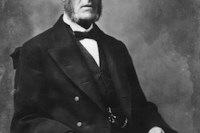
‘If I see something I like I wish to tell someone else; this… is why I paint.’ Patrick George is 91, still painting ‘some of the best work he’s ever done’, in Andrew Lambirth’s view. ‘His principal aim is to point out, to those of us less well-trained to observe, how marvellous the appearance of things is, and he does this through exquisite landscapes, figure and still-life paintings, of unassuming but stringent beauty.’ After four years in the Navy (he commanded a landing craft in the D-Day landings) George went to Camberwell art school where he imbibed the strict measuring technique associated with William Coldstream, which he has continued to use — though not exclusively — throughout his career.

The really shocking thing about Michel Houllebecq’s Soumission — he rather likes Islam

Michel Houellebecq’s sixth novel, imagining an Islamic government taking power in France in 2022, has been widely assumed to be an act of pure provocation. He is, after all, the author who faced legal trouble after having said in an interview in 2001: ‘La religion la plus con, c’est quand même l’islam.’ Soumission (Submission) was announced quite suddenly by Flammarion in December for the first week of the New Year, with an initial print run of 150,000 copies. So keen was the interest that it was pirated online before publication. It’s an event — but a literary event, it turns out. For Soumission is a fine, deeply literary work, not a prank.

William Marshal: kingmaker — or just king of the joust?

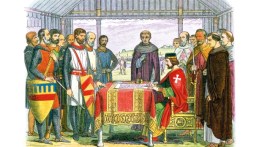
In February 1861 a 21-year-old French medievalist called Paul Meyer walked into Sotheby’s auction house near Covent Garden. He had been sent by the Bibliothèque Imperiale to bid on their behalf at the sale of the Savile collection of rare manuscripts, and though he did not have the funds to compete with the big players at the auction, he did at least manage to see, before it disappeared for the next 20 years into the insatiable collector’s maw of Sir Thomas Phillipps, a rhymed verse chronicle of 19,000-odd lines in Norman French that was to become the great obsession of his life.

Politics as an aphrodisiac: the secret of the Disraelis’ happy marriage

The long, happy and unlikely marriage of the great Conservative leader Disraeli and his wife Mary Anne, 12 years his senior, is analysed thoughtfully in Daisy Hay’s new book. Reading between the lines, it is possible to see the Disraelis as a Victorian power couple not unlike the Underwoods in Netflix’s remade House of Cards — he, high on his own oratory; she, a valuable campaign asset; together, a marriage that is child-free and (with his sexuality in question) built on blackberries at bedtime. Yet — here’s the twist — they truly loved one another. The Underwoods are bound together in sinister ambition, but the Disraelis make an inspiring emblem of marriage as a virtuous circle.

An ill-waged war against the war on drugs

Since drugs became popular, there have been countless books on what to do with them. The most interesting are those of a creative kind by high-profile writers: De Quincey, Baudelaire, Aldous Huxley, Henri Michaux, William Burroughs, Carlos Castaneda. The most useful, so far as social policy is concerned, are those by low-profile operators in the field: scientists, doctors, psychiatrists, social workers, police. The least interesting or useful prove to have been the polemical books in neither category, so I wasn’t thrilled by the prospect of this one, written by a political journalist, and hyped by Elton John, Noam Chomsky, Stephen Fry and Naomi Klein.

Black Knight

A few forgotten objects Dad passed on: copperplate pens with long nail nibs, still stained black, one coal-fire red, laid to rest for twenty years in the shed’s office chest; a Monopoly set yanked by a seaman uncle from his sinking merchant ship U-boat torpedoed at the beginning of the second world war, but minus the board; the pine green balsa houses, the pink prim hotels strewn on the field of our living-room floor, much else that was yours: the board, this uncle and your gambling father, we never saw. And the chess pieces we played and played; of our two wooden box sets, the best hand carved, you varnished and weighted with lead. The black knight like you could lose its head.

Rugger, Robin Hood and Rupert of the Rhine: enthusiasms of the young Antonia Fraser

Despite it being a well known fact that Antonia Fraser had earthly parents, I had always imagined that she had somehow skipped infancy and emerged instead from a celestial cloud, surrounded by hordes of trumpet-wielding cherubim, a fully-formed Venus in pink and gold and white. Turreted castles, a constant shower of sovereigns, a title, a jewelry box whose contents might have made Liz Taylor wince: this was the milieu suggested by her tremendous beauty and mysterious half-smile. My History, a captivating memoir of her childhood and early youth, proves otherwise. In fact Antonia’s father, Frank Pakenham, was a second son who married the very clever daughter of a Harley Street doctor.

The hidden history of one of the greatest treasures of the early Renaissance: Florence’s Brancacci chapel

In 1439 Abraham of Souzdal, a Russian bishop visiting Florence, was in the audience in Santa Maria del Carmine for the famous Ascension play, arranged by the members of the lay confraternity, the Sant’Agnese. Sitting in the body of the church, Abraham looked up and saw, on top of one end of the huge stone choir screen, a castle with towers and ramparts, and at the other a Mount of Olives. From here the ascending Christ was drawn up through celestial curtains to be united with God the Father, suspended ‘in a miraculous fashion’ in the far distance above the altar.

The turbulent reign of King Cotton: the dark history of one of the world’s most important commodities

If not for cotton, we would still be wearing wool. To equal current cotton production, we would need seven billion sheep, and a field 1.6 times the area of the EU. Capitalism has spared us this itching, bleating nightmare. But capitalism, Sven Beckert writes in his hair-shirted history, Empire of Cotton, has wrought other horrors. For medieval Europeans, cotton was a luxury import. Prices fell as Europe’s maritime empires bypassed the Ottoman middleman. They fell further after the 1780s, when the East India Company increased its imports, and British inventors developed water-powered spinning machines.

Bish bash Bosphorus: Elif Shafak’s saga of love and death in Istanbul is crammed with incident on every page

If you like to curl up by the fire with a proper, old-fashioned, saga-style tale about a boy and his elephant in Istanbul in the 1500s, The Architect’s Apprentice might be suitable for you. My heart sank slightly when the review copy arrived: a 452-page brick by an Orange-Prize-shortlisted Turkish author and ‘global speaker’ who ‘blends western and eastern methods of storytelling’ and has 1.6 million Twitter followers. But I resolved to get caught up in the novel and did.You have to suspend all need for irony and modernity and latch on to Jahan, the Indian boy who is the central character. As a child Jahan stows away on the evil Captain Gareth’s ship in order to stay with Chota, his beloved white elephant who nearly dies on the journey.

Cowboys and Muslims: that’s the new global power struggle, according to the latest great American novel

‘I’m pleading with you, with tears in my eyes: if you fuck with me, I’ll kill you all.’ When ‘The Bumper Book of American Foreign Policy’ gets written, General James Mattis’s line to Iraqi leaders after the 2003 invasion will be an obvious choice for the cover blurb, but meanwhile it makes a striking epigraph to Bob Shacochis’s furious, sprawling novel about a half-century of US espionage and powerbroking. Like Norman Mailer’s Harlot’s Ghost, Don DeLillo’s Libra and Denis Johnson’s Tree of Smoke, this is the spy story tricked out as the great American novel, vaulting over the conventions of the cloak-and-dagger genre in dogged pursuit of larger questions of the national heart and mind.

Answers to ‘Spot the Booker Prize Winners’

1. Life of Pi by Yann Martel (2002) 2. Amsterdam by Ian McEwan (1998) 3. The Sea, The Sea by Iris Murdoch (1978) 4. The English Patient by Michael Ondaatje (1992) 5. Heat and Dust by Ruth Prawer Jhabvala (1975) 6. The White Tiger by Aravind Adiga (2008) 7. Midnight’s Children by Salman Rushdie (1981) 8. In a Free State by V.S. Naipaul (1971) 9. Wolf Hall by Hilary Mantel (2009) 10.

Mark Steyn: a hairy, successful version of myself, says Julie Burchill

For those of you who haven’t had the pleasure, Mark Steyn is sort of a hairy, successful version of me— a civilised, larky type of chap who was just tootling along minding his own biz and scribbling about his favourite show-tunes when — crash, bang, wallop! — he found himself on the frontline of commentating on the clash of civilisations. He is obsessed with the fact that Islamism poses the greatest risk to peace, progress and piano bars since the second world war and is unable to comprehend why so many people seem so bovinely oblivious to this fact. Like Richard Littlejohn — another fine, undervalued writer — he is unfashionable, not using 20 words when two will do and never apologising for being alive.

Sunday roasts and beaded bubbles: dining with the poets

In December 1817 Benjamin Robert Haydon — vivid diarist and painter of huge but inferior canvases of historic events — held a Sunday luncheon to which he invited John Keats, Charles Lamb and William Wordsworth. Nearly a century later, in January 1914, seven poets and Lord Osborne de Vere Beauclerk met in Sussex to eat roast peacock at another Sunday lunch. Six of the poets (Yeats, Ezra Pound, Richard Aldington, Sturge Moore, Frank Flint and Victor Plarr) came from London to honour the seventh, Wilfred Scawen Blunt, at his manor house. Hilaire Belloc joined them for tea afterwards, and sang a ballad about cuckoldry. Robert Bridges and John Masefield declined their invitations.

Stories about storytelling: Kirsty Gunn’s preoccupation with words is utterly entrancing

Although entitled Infidelities this collection of short stories could as well be called Choices, because that is what really preoccupies Kirsty Gunn’s characters. Divided into three sections, ‘Going Out’, ‘Staying Out’ and ‘Never Coming Home’, the stories are more linked by style and writing than by any theme. Gunn’s style is clear, unaffected and poetic without being pretentious; her descriptions of nature — for instance the sky at the beginning of ‘The Wolf on the Road’ — are at times almost painfully beautiful. One stylistic technique she favours is not always as successful as her descriptive writing; often in a story she will slip from a narrative voice to an authorial one, from the past to the present.

Fact, fiction or farce? The American comic novel is becoming increasingly hard to define

The American comic novel is going through an odd phase. Just lately it seems like anything funny must sneak in behind an abstruse metafictional edifice, deployed, I suspect, by insecure authors who want to retain their jobs as teachers of creative writing. 10:04, Ben Lerner’s lopsided but often electric second novel, is the latest example of the comic genre via subterfuge, sprinkled with tricks and played so deadpan you might not know when to laugh. The narrator, who shares a first name with the author, is a resident of a New York City that is battered by storms, vulnerable to hurricanes and hipsters.

How the smile came to Paris (briefly)

In 1787 critics of the Paris Salon were scandalised by a painting exhibited by Mme Vigée Le Brun. The subject was conventional enough: a self-portrait of the artist cradling her small daughter. The problem was that Vigée Le Brun was depicted smiling. You could even see her teeth. This was, as one critic put it, ‘an affectation which artists, connoisseurs and people of good taste are unanimous in condemning’. These outraged art lovers must have been rather out of touch with current trends. For, as Colin Jones shows in The Smile Revolution — his revealing history of 18th-century French smiling — the full-on, lips-parted sourire had been increasingly visible in Paris since at least the 1740s.