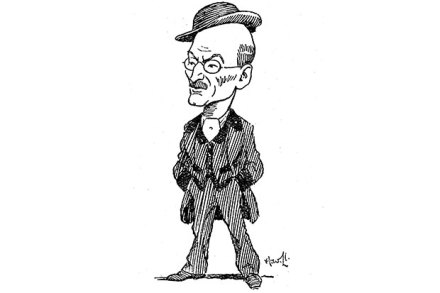
Philip Collins

Trump will now be judged like any other politician

From our UK edition

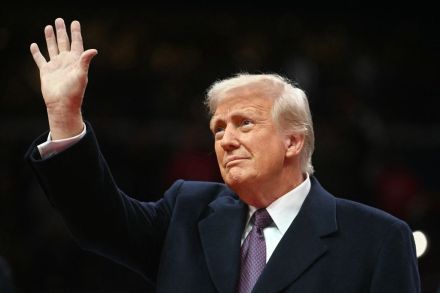
The abiding question for the 47th President of the United States of America is whether he now, after running against everything that counts as orthodox in the way of politics, has suddenly become a politician. Donald Trump is the candidate from beyond the beltway, the man who speaks directly to the public. Yet the conjuring trick, rhetorically, for every successful candidate is the extent to which he can maintain outsider status after an emphatic victory. That was the conundrum of Trump’s second inaugural.  The inaugural speech in American political history is almost always the same, irrespective of party origin. It is a political ritual, the moment at which America enacts its transfer of power.
Cambridge in crisis, Trump’s wicked humour & the beauty of AI ceramics

From our UK edition

53 min listen

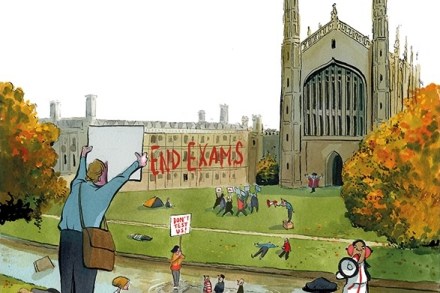
This week: Decline and Fall – how our greatest universities are betraying students.Our greatest universities are betraying students, writes David Butterfield, who has just resigned from teaching Classics at Cambridge after 21 years. What went wrong? First, class lists of exam results became private, under alleged grounds of ‘data protection’, which snuffed out much of the competitive spirit of the university. Now even the fate of examinations hangs in the balance. Grade inflation is rampant, and it is now unheard of for students to be sent down for insufficient academic performance. For students, the risks have never been lower.

From The Archives: Speeches that shape the world

From our UK edition

28 min listen

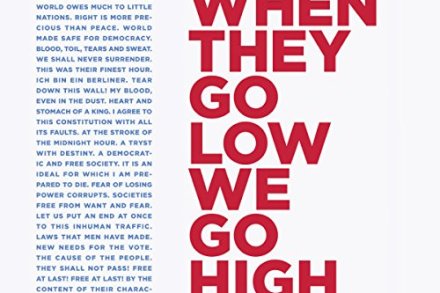
The Book Club is taking a brief Christmas break, so we have gone back through the archives to spotlight some of our favourite episodes. This week we are revisiting Sam's conversation from 2017 with Philip Collins, former speech writer to Tony Blair, about his book When They Go Low, We Go High: Speeches That Shape The World and Why We Need Them. He takes Sam through the history of rhetoric, how Camus is the original centrist Dad, and why David Miliband’s victory speech is perhaps one of the best speeches never delivered.

Would Starmer’s government have any cash to spend?

From our UK edition

16 min listen

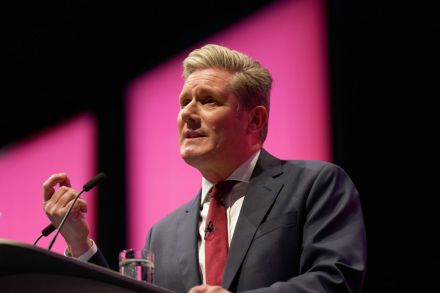
If Labour wins the next election, will Keir Starmer have any money to spend on his programme of government? In a piece for the Times yesterday, journalist Philip Collins says it won't, and he thinks Labour is suffering because of this constraint. How can Labour be intellectually interesting if the government purse strings are so tight? Fraser Nelson disagrees. He says that, thanks to the Tories taking tax levels to record highs, Starmer will have plenty of cash to work with. Kate Andrews speaks to Philip and Fraser. Produced by Natasha Feroze and Max Jeffery.

Theresa May’s speech was a dud because Tories can’t do rhetoric

From our UK edition

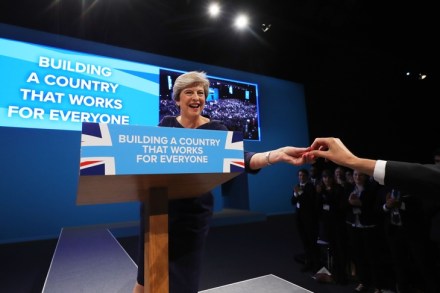
There are many ways to make a conference speech memorable and Theresa May managed most of them. A prankster with a P45, a constant cough and a set that fell to bits as she spoke, the speech was a riot of metaphors in waiting. It may yet be pointed to as a decisive moment in her premiership but it was certainly notable. The only forgettable aspect was the content. When Mrs May tries to inject passion into her voice it is not just the frog that catches in her throat. It is her conservatism. Conservative politician can ascend to the rhetorical heights at time of peril. Winston Churchill, was, as David Cannadine once wrote, both a master and a slave of the English language. In his early years, Churchill had an unenviable reputation for lavish verbosity.

What Jeremy Corbyn can learn from Clement Attlee

From our UK edition

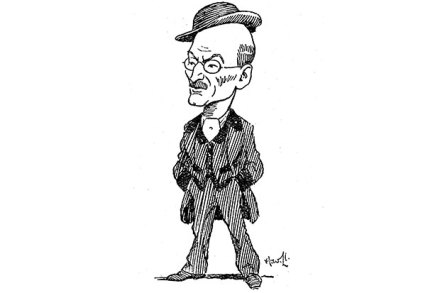
History teaches no lessons but we insist on trying to learn from it. There is no political party more sentimental than the Labour party. The stone monument of Labour history is Clement Attlee’s 1945–51 administration, so any biography of the great man is, inevitably, an intervention into the present state of the party, even if it comes supported with all the best scholarly apparatus. The last major biography of Attlee was Kenneth Harris’s official work, more than 30 years ago, in 1982. There is a neat symmetry to the fact that Harris was writing during the last occasion that the Labour party decided to join hands and walk off a cliff.

The quiet patriot

From our UK edition

History teaches no lessons but we insist on trying to learn from it. There is no political party more sentimental than the Labour party. The stone monument of Labour history is Clement Attlee’s 1945–51 administration, so any biography of the great man is, inevitably, an intervention into the present state of the party, even if it comes supported with all the best scholarly apparatus. The last major biography of Attlee was Kenneth Harris’s official work, more than 30 years ago, in 1982. There is a neat symmetry to the fact that Harris was writing during the last occasion that the Labour party decided to join hands and walk off a cliff.

Even the people who make political adverts aren’t sure they work

From our UK edition

It is a common prejudice about modern politics that it is all focus groups and spin, all public relations and advertising. The rather heartening conclusion from Sam Delaney’s history of advertising in politics is that this is a calumny on the political trade. Delaney has spoken to everyone involved in political advertising since the phenomenon began in earnest with Wilson in 1964 and can hardly find a soul who is certain that advertising does anything more than varnish good ideas. Maurice Saatchi, for example, credited Margaret Thatcher’s proposals, rather than his talent for a pithy slogan, for her electoral victories. Chris Powell, a leading figure in Labour’s Shadow Communications Agency, also doubts whether advertising can really change popular opinion.

Politics: Ed Miliband has given himself a chance to be heard, but he won’t take it

From our UK edition

After the carnival barking of the phone-hacking saga, the long break beckons for Parliament. For the party leaders, though, there will be little rest. Against the advice of their entourages, who after all want a break from their boss, the three leaders will now spend eight weeks worrying about their conference speeches. In my former life in Labour politics, I would come back after the break to find Tony Blair surrounded by paper on which he had scribbled fragments of ideas. Over several weeks we added lines and moved the papers around. It was like the party game in which several people draw a funny animal.

Ed Miliband may win the Labour leadership, but he will never take the country

From our UK edition

Philip Collins reviews the week in politics Other people’s families are always strange. How much stranger when the idea of a political fight within a family is no longer a metaphor. Ed Miliband recently told of his parents’ journey to England and his gratitude for their refuge here. This dramatic and effective story could have been a moment of emotional differentiation if it weren’t for the inconvenient fact that the other serious candidate has the same parents. The battle for the Labour leadership remains a curious contest which has provoked no curiosity. The public was asked this week which of the candidates would make the best prime minister: 64 per cent said either none of the above or that they didn’t know.