More from Books

A friend in need

The title of Jenny Erpenbeck’s Go Went Gone, and the autumnal tone of its beginning — a classics professor retires, leaving him at home raking leaves, mulling over memories of his wife and wondering about the body in a nearby lake — suggests that this will be a book of endings, something akin to Anita Brookner’s stories of self-absorbed people in the twilight of their lives. But Richard, now professor emeritus, proves to be a more unpredictable character. Unlike many of Brookner’s loners, there is the strong force of history in him. A precarious beginning under fascism and war, then a life shaped by the GDR and its abrupt cessation in 1989, has left him and his circle of friends adrift in the new Germany.

The call of the Wren

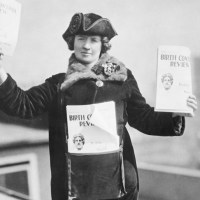
This book is a thoroughly researched account of the parts played by women in the service of the Royal Navy from the Middle Ages to the present. What it lacks in anecdotes and personal accounts it makes up for in its comprehensive documentation of official attitudes and measures. Women have served in — or, more accurately, with — the Royal Navy for longer than we might think. There are medieval references to women accompanying their husbands on voyages, including the Crusades, and to women serving as launderers, cooks, nurses and prostitutes (possibly all four). Ladies of the Cinque Ports — Hastings, Dover, Sandwich, Romney and Hythe — were the most likely to sail. One source claimed that older women ‘washed the clothes and heads [of the sailors]….

Massacre of the innocents

I thought I knew the history of the years 1914 to 1945: the first world war and the terrible casualties in the trenches; the second world war and the German conquest of Europe; day and night bombing; Stalingrad and the Holocaust. But I’m embarrassed to say that I knew nothing about the tragedy in Galicia in Eastern Europe. Unlike the Nazi genocide, much of the killing took place between neighbour and neighbour: Jews, Poles and Ukrainians destroyed each other with increasing ferocity and brutality between 1914 and the 1940s. The beautiful city of Buczacz in Eastern Galicia, with its Roman Catholic, Greek Orthodox and Jewish shrines, ended as a gigantic ruin.

Poison in Paradise

Eton turns out prime ministers of various stripes and patches, but it also forges fine explorers. It seems to prepare its alumni perfectly for flying snakes, scorpions so large you can put leads on them and leeches in waving battalions; titanic drinking and dancing ceremonies (our explorer, Robin Hanbury-Tenison, suffers repeated blistering on the dance floor); the friendship of head-hunters; and for the exacting business of leading world-protecting, people-nurturing expeditions into the planet’s wild and vulnerable regions. In the school’s natural history museum, pupils can now see a parang, presented to Hanbury-Tenison by his tribal friends, its handle shaped like a hornbill, its razor-sharp edge responsible for hacking off more than 100 heads.

The eternal visionary

On 3 September 1968, Allen Ginsberg appeared on William F. Buckley’s Firing Line. Buckley exposed Ginsberg’s politics as fatuous — the blarney, stoned — but Ginsberg stole the aesthetic victory by reading ‘Wales Visitation’, a homage to William Blake. ‘White fog lifting and falling on mountain brow,’ Ginsberg intones, ‘…teeming ferns/ exquisitely swayed/ along a green crag/ glimpsed through mullioned glass in valley rain.’ ‘Nice,’ Buckley nods. He lets Ginsberg read the whole poem.

Reconsider Phlebas

So the Phoenicians never existed. Herodotus, that unreliable old fibber, made it all up in the Histories. Is this really what Josephine Quinn is saying, or is it just a cunning ruse to stir up a fuss and infuriate the dwindling band of Herodoteans out there? Because Quinn, a professor of ancient history at Oxford University, declares that her mission is not so much to rescue the Phoenicians from their ‘undeserved obscurity’ so much as to argue that there were no such people. ‘It is modern nationalism that has created the Phoenicians,’ she writes, citing 19th-century French, English and German historians who spoke of the Phoenician ‘people’ and ‘nation’ in the age of the nation state.

A brutal race

More than 25 years ago, Peter Carey co-wrote one of the most audacious road movies ever made, Wim Wenders’s Until the End of the World, which circles the globe before concluding with a long interlude in the Australian outback. While the film was in the mode of speculative science fiction and Carey’s captivating A Long Way from Home is a fiercely realist story set in the 1950s, this new book nonetheless shares both that earlier work’s fascination with outsiders whose lives spin off in unpredictable directions, and as a profound reverence for Australia’s interior and its people.

Dangerous living

Here come three novels marketed as debuts but written by authors with some sort of previous, be it in short stories, journalism, theatre, television or a combination of the above. The Alarming Palsy of James Orr by Tom Lee (Granta, £12.99) takes a fable and transplants it into real life — in this case bourgeois southern British suburban life — where the neat conclusions we might draw from it if we encountered it in a more distilled form are muffled and made strange. The exemplar of Kafka is obvious (both Metamorphosis and The Trial); but I found myself thinking also of John Cheever, Richard Yates and other American writers who needle away at the pain and self-delusion behind the sleek lives of the executive class.

Father of the nation

Franklin D. Roosevelt isn’t as popular as he once was. When Barack Obama won the 2008 election, he let it be known that he was reading a book about FDR, and tumbleweed blew through the newsrooms. Which is odd because for many decades FDR was every bit the model liberal as Ronald Reagan was the model conservative. Roosevelt was credited with ending the Great Depression, laying the foundations of a welfare state and leading America through the second world war — achievements for which he was rewarded with not one, not two but four election victories. And he did all of this despite being an elitist East Coaster with a wife who was very probably a lesbian.

A girl with green eyes

I loved a man. But our affair was nasty, brutish and short. Copious weeping was my un-tart retort. All that’s left of him is a stained T-shirt. I must rid my mind of him now. That’s long overdue. But how? These three books seem to present three answers. I’ve been wonkily underlining whole paragraphs and brooding over what to do. Nowadays, if you admit to being heartbroken after the fact you’re treated as a malingerer. So I very much appreciated Giulia Sissa’s Jealousy: A Forbidden Passion — a scholarly defence of indulging your violent fury. In the age of Tinder, your next paramour is but a thumb-swipe away, so the attitude is: ‘They don’t love you. Why would you care? It’s all in your head. It’s all in your past.

Sunlit days and starry nights

In 1990, the BBC’s adaptation of David Lodge’s culture-clash novel Nice Work won an award at a glitzy soirée in London. At the same time, his debut stage play The Writing Game opened at the Birmingham Rep. Malcolm Bradbury, his old friend and partner on the twin tracks of literary academia and serio-comic fiction, had come to Birmingham to stay and see the show. After a starry night in the West End, and ‘a brief whirl around the dance floor’, Lodge sped back home. He arrived at 3.30 a.m., but found that his wife Mary ‘had accidentally locked me out, and I had to throw gravel up at our bedroom window from the back garden to wake her without disturbing the Bradburys’.

Cannon law

Many and various are the things one finds in Kentish pubs (I’m told); but few could top the sepoy’s skull discovered at The Lord Clyde, Walmer, complete with brief biography: Skull of havildar ‘Alum Bheg’, 46th Regt. Bengal N. Infantry... blown away from a gun. From this grisly starting point, Kim Wagner, lecturer in British imperial history at Queen Mary University of London, narrates how, in the swelter of mid-1857, following outbreaks throughout British India, native Bengal Army units at Sialkot mutinied, killing officers and civilians and looting the cantonment, and then set out for Delhi to join Bahadur Shah, the briefly-minted ‘Emperor of India’. They didn’t make it.

Short and sharp

Like A Fiery Elephant, my biography of the experimental novelist B.S. Johnson, contains one particularly careless sentence: the one where I described Johnson as ‘Britain’s one-man literary avant-garde of the 1960s’. It was a silly thing to write, partly because it wasn’t true, but also because it was easily the most quotable line in the book and so every journalist and reviewer was bound to pick it up and repeat it. And so it proved. But Johnson was not Britain’s one-man literary avant-garde. The 1960s saw a significant flowering of what we might (for shorthand) call experimental writing in this country.

War of words

At the close of the 1970s, I found a selection of postcards in an antique shop which had been sent from the Western Front in 1917 by a soldier named Private Howe to his young daughter Ena. I was struck by the immediacy of the language, and the careful avoidance of anything hinting at danger, combined with the tastefully chosen French photomontages of flowers and romanticised battlefields. In Words and the First World War, Julian Walker has examined many such postcards, alongside letters sent to and from the Fro nt, private diaries, trench publications such as the Wipers Times, national and regional newspapers and other sources.

Answerable only to God

The late Michael Foot used to say that the first thing he needed to know about a new acquaintance was, on which side he or she would like their forebears to have fought in the English Civil War. He himself, of course, was firmly for Parliament. But having read Leanda de Lisle’s book, it is hard to imagine how anyone could possibly want to have Roundhead ancestors. King Charles I is among the most baffling figures in English history, as the subtitle makes clear. Failing to avoid the the Civil War and letting Lord Strafford, his loyal chief minister, go to the block, are scarcely peccadilloes. ‘The man of blood, with his long, essenced hair’ aroused real hatred among enemies who eventually killed him.

An uphill struggle

‘It’s a grand thing to get leave to live’, perhaps the most famous line Nan Shepherd wrote, is carved in the slate paving of the Writers’ Museum’s Close in Edinburgh. But many who read it, either there or on the new Scottish £5 note, will be surprised to learn that it is not actually taken from The Living Mountain, the work that brought Shepherd posthumous fame beyond her native Scotland. Published in 1977, just four years before its author’s death, this book about the Cairngorms — part spiritual memoir, part nature writing — was written decades earlier, in the 1940s, but failed to find a publisher.

A banquet of delights

While the short story is currently under-going one of its periods of robust, if not rude, health, its two dominant modes — the classical or Chekhovian, and the postmodern or experimental — have become harder to define, with authors happily borrowing tricks from both approaches. None of the collections here can definitively be confined to either camp, and this should be celebrated. William Boyd’s decision in The Dreams of Bethany Mellmoth (Viking, £14.99) to jettison conventional character names is gently experimental, if not always successful. From the start we encounter exotics such as Ludo Abernathy and Arkady Lemko. Later, there’s a Zack, a Moxy and a Sholto. Later still, a Max Bassman, a Jurgen Kiel and (boldly) a Raleigh Maltravers.

Puffing through the Punjab

‘I went to a restaurant the other day called Taste of the Raj. The waiter hit me with a stick and got me to build a complicated railway system.’ The comedian Harry Hill’s gag is an acerbic commentary on the British empire, but there can be no doubt that India’s modern history is intimately intertwined with its railways. They grew into a vast realm of their own within the sub-continent and embodied all the vagaries of imperial rule. Who better to chronicle them than Christian Wolmar? He is a railway obsessive who has now produced his 11th book on rail and its history. This time round he has given himself one of the greatest train sets any boy ever had to play with. The story he tells begins in the mid-19th century with a series of formidable engineering challenges.