More from Books

The luck of the devil

Who says that the ‘great man’ theory of history is dead? Following hard on the heels of Andrew Roberts’s magnificent biography of Churchill comes this equally well-written life of another superman who bestrode his era and all Europe like a colossus. Although Adam Zamoyski is at pains to insist that his subject was an ordinary

A lesson in natural selection

In a living room in Vineland, New Jersey, in the 1870s, a botanist and entomologist named Mary Treat studied the activities of carnivorous plants and reported her findings to her colleague, Charles Darwin (Treat is extensively referenced in Darwin’s Insectivorous Plants). Treat also corresponded with others — Charles Riley, Asa Gray — about these plants,

Getting it in the neck

‘What!’, railed Voltaire in his Dictionnaire Philosophique of 1764. ‘Is it in our 18th century that vampires still exist?’ Hadn’t his Enlightenment rationalism seen off such sub-religious voodoo? Well no, mon frère, it hadn’t. In fact, here we are, a quarter of a millennium on, and those vampires are still with us. Films, rock concerts,

Sleeplesss nights and endless daze

A genre of memoir currently in vogue involves entwining the author’s personal story with the cultural history of a given phenomenon, so that each may illuminate the other. Mellow introspection and anecdotal whimsy are spliced with tidbits of cultural criticism; the prose is meandering and associative rather than linearly expository. This format can feel a

The power of the poppy

America has for years been struggling with a shortage of the drugs it uses to execute people, yet it was only in August, in Nebraska, that the first judicial killing using opioids was performed. Aside from moral questions about the death penalty itself, the resistance for so long to this obvious solution denotes a particularly

A chronicle of modern times

Jonathan Coe writes compelling, humane and funny novels, but you sometimes suspect he wants to write more audacious ones. He has a long-standing interest in formally experimental writers — Flann O’Brien and B. S. Johnson are heroes — but it’s an interest that has never really become full-blown influence. Though The Rotter’s Club (2001) —

Wickedness in wax

The reader of Edward Carey’s Little must have a tender heart and a strong stomach. You will weep, you will applaud, you will wonder if your nerves can take it, but most of all you will shudder. In this gloriously gruesome imagining of the girlhood of Marie Tussaud, mistress of wax, fleas will bite, rats

Rich man, poor man, friar, saint

This passionate series of engagements with the life of St Francis will stay in my mind for a very long time — I hope forever. Ann Wroe describes it as ‘A Life in Songs’, and it does, indeed, rehearse the familiar story of the rich young merchant’s son dispossessing himself, and giving his life to

No shrinking violet

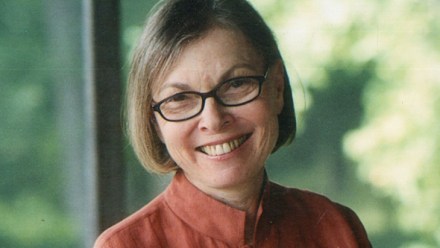
‘I have fallen in love many times in my consulting room,’ writes the psychotherapist Jane Haynes. ‘I do not mean that I want to have an explicit sexual relationship,’ she clarifies. That said, she describes herself as the Desdemona of the consulting room, falling in love as she listens to ‘someone share the pity of

The road not taken | 25 October 2018

In the 1970s, when Mark Kermode first picked up an instrument, the UK record business was a very different place. There were five weekly music papers — NME, Sounds, Melody Maker, Record Mirror and Disc. Around 15 million people tuned into Top of the Pops every Thursday; Radio 1 reached more than 20 million listeners

Highway to hell

A lingeringly strange atmosphere hangs about Benjamin Wood’s third novel, in which the settings and paraphernalia of a new wave of British weird fiction — old children’s TV series, rustic bloodletting, the starkness of the northern landscape — encroach steadily on a retrospective story of childhood murder and deceit. The setting is northern England in

The king of trees

Over the past couple of years, I’ve been planting up much of the pasture on our small Cornish farm with native hardwood trees, mainly oak. I now know I needn’t have bothered. As soon as the grass stops being cut, little oaks spring up of their own accord. This last dry summer in particular has

Family mysteries

Maggie is sitting alone in the park when she’s approached by Harvey, who introduces himself as a recruiter for MI5. This is the starting point of Mick Herron’s This is What Happened (John Murray, £16.99). The company Maggie works for is under investigation as a possible threat to national security. She takes on a task,

Outpourings of the heart

The numbers invite awe: three billion beats in a lifetime; 100,000 miles of vessels. But on the hospital floor, wonder is often in short supply. Doctors forget how intimate their examinations and investigations can be. Stethoscope to chest. Order a blood test. I remember on a morning ward round at medical school, our consultant wanted

Albers the austere

The German-born artist, Josef Albers, was a contrary so-and-so. Late in life, he was asked why — in the early 1960s — he had suddenly increased the size of works in his long-standing abstract series, ‘Homage to the Square’, from 16×16 inches to 48×48. Was it a response to the vastness of his adopted homeland,

In cold blood | 18 October 2018

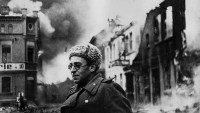
The 50th anniversary of the Vietnam war has produced an outpouring of books, along with Ken Burns and Lynn Novick’s 18-hour television spectacular, which sparked in the United States yet another round of heated debate on the war. The journalist and military historian Max Hastings’s fast-paced and often compelling narrative will surely rank as one

Jay for Japan

Haruki Murakami’s Killing Commendatore was published in Japan in February last year. Early press releases for this English version hailed the book as ‘a tour de force of love and loneliness, war and art — as well as a loving homage to The Great Gatsby’. Anyone familiar with Murakami’s 17 preceding novels can vouch for

Relocate or emigrate

There is a degree of irony in the opening chapter of T.M. Devine’s history, lambasting popular previous depictions of the Clearances and citing ludicrous comparisons to Nazi genocide and the misty-eyed melancholy of John Prebble. Though it does not mention such iconography as Thomas Faed’s painting ‘Last of the Clans’, used for the paperback of