More from Books

The dawn of Romanticism

Several years ago, I was interviewing the garden writer and designer Sarah Raven at her home in Sussex when a tall, tanned figure bounded up from the woods towards us. It was Adam Nicolson, her husband, and he carried an axe over his shoulder. A few months later, an email arrived from Nicolson, inviting me to come with him and a gang of his friends on a ‘moon walk’ in the Quantocks. I couldn’t make it, but realise now that the night walk was part of the research for his extraordinary and engrossing record of the time William and Dorothy Wordsworth spent in Somerset with Samuel Taylor Coleridge. This ‘year of marvels’ (from June 1797 to September 1798) would end with the publication of the first great work of Romanticism, the Lyrical Ballads.
From alpha to omega

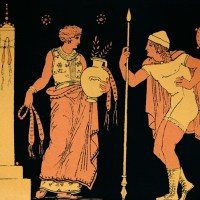
Mary Norris’s book about her love affair with Greece and the Greek language starts with a terrific chapter about alphabets. That may sound like an oxymoron, but I was fascinated to learn why the Y and the Z come at the end of our alphabet. When the Romans were adapting the Greek alphabet, they ditched these letters because they didn’t need them. Later, when they started using Greek words, they wanted them back, so they tacked them on at the end. Equally, it’s nice to know how it comes about that, in England, we pronounce the letter Z as Zed — unlike in America, where Zed’s dead (and they say Zee, baby). It’s a throwback to a time we would have called it Zeta, after the Greek letter. Obvious, once you know.

The tug of the tide

We ought to cherish the haunted landscape of the Thames Estuary while we can. The grey hulks of old power stations, the white domes of oil refineries, the sternly rectilinear factories, all of which once seemed oppressive, are now instead poetic because of their near extinction. Caroline Crampton’s atmospheric and movingly written exploration of the Thames, and that once-industrial estuary, is especially illuminating on the soul of the river; and she investigates satisfyingly what it is in these silent marshes and concrete embanked paths that still generates such an odd sense of unease.

The thoughts of Chairman Gonzalo

Few Peruvians today are interested in ‘the Shining Path years’, which left no traces besides 70,000 mutilated bodies and a wrecked country. Modern Lima, by and large, is a thriving city of five-star restaurants, shopping malls and newish Toyotas. Yet between 1980 and 1992 it was a vile and violent place, under siege from a revolutionary movement that modelled itself on Mao, Pol Pot and Enver Hoxha, and which venerated its leader as these men’s planetary heir. If anything, Sendero Luminoso was a precursor of Isis, with its child-suicide bombs, its rigid code of secrecy and its cultish devotion to a short, bearded, chubby figurehead who believed that ‘violence is a universal law’.

Tell us what we want

We live in a logic-obsessed world, from computer modelling of the economy to businesses run by spreadsheets. But we also know, from decades of behavioural economics and evolutionary psychology research, humans are not robots. The social world is not a machine but a complex system. In Alchemy: The Surprising Power of Ideas that Don’t Make Sense, Rory Sutherland, vice chairman of Ogilvy and columnist for The Spectator, explains how to crack the magic underlying our humanity. Humans evolved to justify their instinctive decisions to others, not to prove what is right and wrong. Those who could defend their actions were more likely to survive. We use reason sparingly, selectively and self-servingly. We search for evidence to support our existing world view.

Ranting and raving

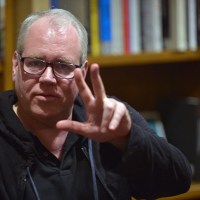
Q: What’s worse than listening to someone ranting hysterically about Donald Trump? A: Listening to Bret Easton Ellis ranting hysterically about people ranting about Trump. I gave him a fair hearing, I really did. Some of what Ellis has to say in White, his first work of non-fiction, is not stupid. It’s true that teeth-gnashing over Trump’s presidency can seem alarmingly out of touch with the realities of modern America. I share his concern that aesthetics are increasingly, regrettably, being sidelined in favour of ideology. His film criticism is unfailingly lucid and intelligent. I wish there had been more of it. Ellis is used to being pilloried for his tweets, podcasts and journalism.

Bach to the rescue

One of the great joys of the 18th-century novella La petite maison is the way Jean-François de Bastide matches the proportions and shape of the book to the architecture of the exquisite country house at the story’s heart. Zuzana Ružicková, the outstanding Czech harpsichordist who died in 2017 while working with Wendy Holden on this touching memoir, analyses Bach, a composer she more or less made her own in the second half of the 20th century,  in very similar terms: I have a tectonic rather than a visual memory, and as the melodies begin to build, in my mind I imagine a building... I instinctively know how it is built.

Brutish Brits

Damian Barr explains the upsetting genesis of his impressive debut novel, You Will Be Safe Here, in his acknowledgements: This story began with a picture of a boy in a newspaper. That boy was Raymond Buys and he’d been killed in a camp not unlike New Dawn. He was just 15. This book is dedicated to him. So the novel opens with a prologue in which a boy, Willem, is left at the New Dawn camp, south of Johannesburg, in 2010. Then Part One takes us back to 1901, to the diary entries of Mrs Sarah van der Watt, about to be taken from her farm — which she watches burn under the British scorched earth policy — to a concentration camp near Bloemfontein.

Life at the Globe | 23 May 2019

IN ASSOCIATION WITH THE PRINCIPAL PARTNERS OF SHAKESPEARE’S GLOBE’S 2019 SUMMER SEASON   ‘Small Latin and less Greek’ was Ben Jonson’s verdict on Shakespeare the linguist. But as Henry V (the latest play in the Globe’s Merian-sponsored summer season) shows, he knew a bit of French, too. As well as all that blood-and-thunder stuff on the battlefield, the play contains — in Act Three, Scene Four — the only scene wholly in French anywhere in the plays; as well as his dirtiest joke. Princess Katharine, offered in marriage to King Harry to appease him after the Dauphin’s consignment of tennis balls failed to amuse, is learning English with her lady’s maid Alice.

Grave meditations

In 2012 OUP published Geoffrey Hill’s Collected Poems; they could have waited, because they’re now going to need another edition. Between 2012 and his death, aged 84, in 2016, Hill wrote another 271 poems, and here they are — although, given his productivity since the mid-1990s, I wouldn’t be surprised if there were plenty more. But the poems in The Book of Baruch by the Gnostic Justin look as though they are part of a deliberate and ordered sequence, all of them using the same form, of irregular lines, occasional internal rhymes and Hill’s characteristic style, hopping over centuries with semi-cryptic allusions, barks of rage and mordant humour. I say ‘semi-cryptic’ because sometimes it is hard to follow his trains of thought.

Time takes its toll

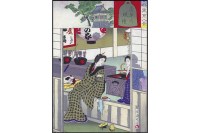
In Edo (now Tokyo), before the Meiji restoration, bells marked the beginning of each hour. The hours were named after the animals of the Chinese zodiac; the cow had its own hour, as did the mouse, the chicken, the horse, etc. In winter, daytime hours were shorter than in summer, and night hours were long. The bells told people when to rise, eat and sleep. In 1872, however, Japan switched to Western time, the use of the bells was forbidden and ‘time was torn away from nature’. Anna Sherman looks for evidence of the time bells of Edo in modern Tokyo. She describes a map that shows the sound-ranges of the bells as circles, ‘like raindrops’, that contain areas of the city and travels around and inside these circles.

Writing that burns the eyes

Of how many magazine articles can you recall where you were and what you felt when you read them? If any occur, there’s a reliable chance John Hersey’s ‘Hiroshima’ will figure among them, and not just because it will have been assigned at an impressionable age in school. For the first time in its history, the New Yorker cleared an entire issue in August 1946 to run the 30,000-word piece in full. In Mr Straight Arrow, his chronicle of Hersey’s career, the former Times Literary Supplement editor Jeremy Treglown relates an account of its reception among the international press corps in Rome — every one rapt, occupying their own cone of ‘silence... even in the bar’.

Mad, bad and dangerous

Mr Todd is a lonely man, out of work, nursing a thousand grudges while he ekes out a living with his grown-up son, Adrian. He believes Adrian is dangerous, a threat to other people. But the real evil might be living inside Mr Todd’s head. This is the squalid battleground set out by Iain Maitland in Mr Todd’s Reckoning (Contraband, £8.99). Skirmishes take place in a rundown bungalow, giving father and son few places to hide. There is no relief from intimate noises and petty arguments. When Adrian brings home a girlfriend and her young child, Mr Todd’s world crumbles at the seams. The consequences are horrible. Maitland conjures madness from the inside, looking out.

The slasher with the knife

A stiff, invigorating breeze of revisionism is blowing through stuffy art history. Is it really true that all the valuable traffic was on a mainline between Paris and New York, with modest sidings in London, Barcelona and Zurich? Was the adventure of modern art an exclusively masculine journey across the North Atlantic? Suddenly, it has been discovered that there were modernists at work in Latin America and Africa too. An exhibition of Carmen Herrera, a Cuban abstractionist, in New York’s Whitney Museum two years ago was a sensation. The more so, of course, because Herrera (now 103) is a woman. The Tate has recently shown that Dorothea Tanning was at least as interesting as her better-known husband, Max Ernst. Hilma af Klimt at the Guggenheim has astonished New York.

Disputes over Putin

These two refreshingly concise books address the same question from different angles: how should we deal with Russia? Mark Galeotti focuses on Vladimir Putin himself, his background, aims, tactics and strategy (if any).  Andrew Monaghan takes a wider approach, analysing Russia’s strengths and weaknesses, its self-image, its perceptions and misperceptions of us, ditto ours of it. Both argue that relations between Russia and the West suffer because we are sometimes prisoners of our own preconceptions. Monaghan describes what he calls the two-part security dilemma, a problem firstly of interpretation and secondly of response.

Seas of ink-and-wash

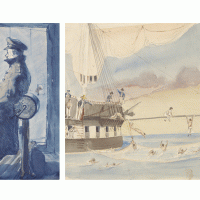
Working in the Public Record Office some years ago, I ordered up the logbook of the badly damaged HMS Scylla on her return to Britain after D-Day. There was something very moving in seeing the bare navigational details noted in my uncle’s familiar hand. But then can anything be so immediate a point of contact with the past as a ship’s log as, watch by watch, the location, the wind and the weather are recorded with relentless discipline? Is there a more eloquent message than the odd water stain during a ‘fresh gale’? And if this is telling, what of the journals and diaries, sketchbooks and maps that give a graphic dimension to the mere facts?

Fire and fury

Everyone behaves badly in The Polyglot Lovers — no saving graces. It’s a complex, shifting structure of sex, self-hatred and misogyny, examining what the author calls ‘the violence in the male gaze’. Its blithe disregard for social norms and finer feelings is exhilarating; it’s pitiless and scathingly funny. The women invariably make wincingly bad decisions. Feminism for the Fleabag generation? Nothing is simple here, in a world as disorientating as a hall of mirrors. The novel has three parts, each with a narrator and the story is told backwards as it teasingly reveals its leading character — not a person, but a manuscript that will change all three narrators’ lives.