More from Books

Should we blame our ancestors for slavery when we’re equally culpable?

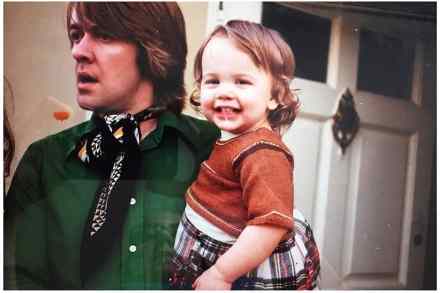
The premise of White Debt is that the author’s ancestors ran a business selling a product grown by slaves. Therefore he wants to investigate Britain’s role in slavery — which is a rather odd framing, since his family’s tobacco firm wasn’t started until decades after slavery in British colonies was abolished. But Thomas Harding apparently only recently learned that slavery happened in the British Empire. He goes as far as to ask: ‘How could I not have known this?’ Well, truly, I don’t know. I don’t recall the time when I wasn’t aware that slavery was the reason that people of African descent live in the Caribbean today. Some of their ancestors were enslaved in territories that belonged to Britain.

The Greeks’ bitter fight for freedom

Last year was the 200th anniversary of the outbreak of the war of Greek independence in March 1821. It has been celebrated by a flood of books and events, a particularly instructive exhibition at the Benaki Museum in Athens and this gruesome page-turner. Mark Mazower, professor of history at Columbia University and the author of many books on modern Greece, stresses the passion for freedom, exceptional stamina and heroism which helped Greeks establish an independent state between 1821 and 1830. Greeks had long felt oppressed as subjects of the Ottoman empire. One of them called it ‘a tyranny so frightful... neither equal nor comparable to any other and so unjust’.

The novels that became instant classics

In the world of books, a modern classic is an altogether more slippery thing than a classic: it must walk a line between freshness and durability; reflect the current age but hope to outlast it. For individual publishers, given many 20th-century writers are still in copyright, a modern classics list will necessarily be partial. However, few such partial lists are as complete as Penguin Modern Classics (PMCs), founded in 1961 four years after Penguin’s general editor A.S.B. Glover said: ‘We don’t want — without outstandingly good reasons — to start any new series such as “Modern Classics”.

Scholars and spectres: The Runes Have Been Cast, by Robert Irwin, reviewed

It could be said that the power of a horror story depends on the possibility, however minute, of it being true. This is partly why so many masters of the genre, from Bram Stoker to Robert Louis Stevenson, have given their narratives the semblance of believability by including epistolary passages, ‘found’ documents and the commentaries of ‘editors’ in their books. In The Runes Have Been Cast, Robert Irwin takes the opposite approach, writing in a prologue: Should any of my readers incline to a serious study of the subject of this book, it is only right to urge them most strongly to refrain from being drawn into the practice of the Secret Art... My own observations have led me to an absolute conviction that to do so would be a complete waste of time.

The march of the larch: the Treeline is now encroaching on the arctic tundra

Covering 20 per cent of the Earth’s surface, the boreal forest is the largest living system, or ‘biome’, on land. It contains one third of all the planet’s trees and encircles much of the northern hemisphere in a halo of green. The northernmost extent of this forest, called the treeline, marks the point beyond which it is too cold for trees to grow. This is perhaps not where you’d expect to find Ben Rawlence, an author and journalist whose previous books have focused on humanitarian crises in Africa. But, as he explains in The Treeline, things are changing alarmingly fast in this biome: ‘The trees are on the move. They shouldn’t be. And this sinister fact has enormous consequences for all life on Earth.

Emperor for three years: the doomed reign of Maximilian I of Mexico

On 8 April 1864 an Austrian archduke with a penchant for daydreaming agreed to be emperor of Mexico. As Edward Shawcross describes in his majestic history The Last Emperor of Mexico, the process to install Maximilian of Habsburg began two and half years earlier. The plan was proposed by a determined clique of Mexican Conservatives and developed by Napoleon III, the scheming emperor of France. The Conservatives, who had just lost a four-year civil war, wanted to repeal the Liberal constitution that confiscated the assets and privileges of the Catholic church. They saw Maximilian as a symbol of the imperial family that had brought the faith to Mexico. Napoleon III, who wanted to expand French influence and trade, saw a potential puppet.

Beautiful enigma: Garbo’s mystery lives on

‘We didn’t need dialogue’, glares Gloria Swanson’s crazed silent picture star midway through Billy Wilder’s Sunset Boulevard. ‘We had faces!’ She had a point. Even those of us who believe the movies weren’t really the movies until they had snappy dialogue (and no dialogue ever snapped the way Wilder’s did) have to concede that Swanson had a face that could stop a train. Still, she was an also-ran compared with Greta Garbo, who had a face that could start a religion. As her first champion, the Swedish filmmaker Mauritz Stiller, once said that Garbo’s mush would ‘make the gods happy’. Her embonpoint was rather less empyreal.

A cursed place: Small Things Like These, by Claire Keegan, reviewed

Claire Keegan’s tiny, cataclysmic novel takes us into the heart of small-town Ireland a few decades ago, creating a world that feels in certain respects dead and buried but whose legacy the country is still processing. This is Ireland before the boom and bust of the Celtic Tiger; before the insidious, everyday power of the Catholic church began to be eroded by the exposure of multiple abuse scandals; before its population voted overwhelmingly in favour of marriage equality and access to abortion. Yet in other respects the life it describes is familiar, and the Wexford town of New Ross, dominated by the River Barrow and governed by the rhythms of work and family, is representative of life as it is still lived outside the country’s major population centres.

What is it like to be worshipped as a god in one’s lifetime?

In January 1780 the news reached London that Captain Cook had been killed and eaten in Hawaii. The story of his death was met with morbid fascination by the general public, inspiring paintings, poems and even a ballet. This ballet was so violent that one of the dancers accidentally stabbed another during the scene of the attack, yet it was also a fantastic success, touring the theatres of Europe and America. Soon aristocratic women were wearing dresses modelled on the natives who killed Cook, and interest in the explorer’s death continued into the 19th century, until one wit noted that every museum in the world contained a copy of the club that killed him. So, who was it that really deified Cook: the Hawaiians who murdered him or the Europeans who made a martyr of his memory?

Birds have helped mankind throughout history — but we have repaid them cruelly

Unusually for a book about nature, the species in question, in this lucid story of the relationship between birds and humans, is ours. Why catch six million ibises, attractive water birds with curved beaks, plunge them into vats of liquid resin, wrap them in bandages and bury them in vast cemeteries in Middle Egypt in 650 BC? When There Were Birds explains that these ibises were offerings to Thoth, god of knowledge and wisdom. Throughout this story, faith, cash and custom drive humans to behave in astonishing ways towards birds. From the early 15th century we were moving canaries to the Swiss Alps and southern Germany, where breeders might raise 50,000 birds a year, which were then transported and sold across the world. In 1871 America alone bought 48,000 as pets.

Will the real Mel Brooks please stand up?

‘I went into show business to make a noise, to pronounce myself,’ Mel Brooks told Kenneth Tynan in 1977, in a New Yorker profile entitled, with appalling relish, ‘Detours and Frolics of a Short Hebrew’. ‘I want to go on making the loudest noise to the most people.’ His memoir All About Me! may be his final act of this pronunciation. He is 95. His real name is Melvin Kaminsky but that wouldn’t fit on a drum — a drum is his natural instrument — and he shortened it to Brooks. He was the youngest of four boys of Max and Kate. His father died when he was two, and Mel created Maxes wherever he could — Max Bialystock in The Producers, a man too vivid to be forgotten; and a son with Anne Bancroft, Max Brooks.

The history of music – at breakneck speed

From Ladybird’s The Story of Music (a dinky 50 pages, generously illustrated) to Richard Taruskin’s five-volume epic The Oxford History of Western Music, the history of classical music has been sliced and stretched in print to fit every possible length, format and agenda. Andrew Gant’s Five Straight Lines joins the cluster of works jostling and elbowing at the midpoint of these extremes. The Oxford-based academic (whose previous books on carols and hymns have introduced us to a genial, approachable narrator, with a welcome glint in his eye), shouts no provocative argument or USP from his cover, makes no novel claims for his survey. This is, quite simply, a narrative of music from the beginning to the now.

Restless visionary: Man Ray was always ahead of his time

In the summer of 1940, after almost 20 years in Paris, Man Ray fled the Nazis for the country of his birth. Disliking New York, where he’d spent his youth, he made for the West Coast. He hoped to get as far as Tahiti or Hawaii. But his trip came to an end when, braced by the space, lifted by the lack of skyscrapers (‘made me feel taller’) and swept off his feet by a dancing girl (the latest in a long line of hoofers for whom he’d have the hots), he settled in Los Angeles. Though he would live there for more than decade, he never really liked the place. Nonetheless, he was far more productive in America than in Europe.

The crime which inspired Crime and Punishment

‘Whether I am a trembling creature or whether I have the right…’ The much quoted words of Rodion Raskolnikov, the protagonist of Crime and Punishment, encapsulate the novel’s main question. Fyodor Dostoevsky first pitched the idea of ‘the psychological account of a crime’ to a publisher in 1865. Three decades earlier, a real-life murderer, Pierre François Lacenaire, waiting for his execution in a French prison, wrote: ‘Only I can decide whether I have done wrong or right to society.’ As Kevin Birmingham shows in his new book, this is but one detail of Lacenaire’s story mirrored in Dostoevsky’s masterpiece; moreover, Dostoevsky’s reflections on the case influenced the way he understood the nature of evil.

A reappraisal of James Courage

James Courage is one of those fine writers who, though he enjoyed considerable success in his lifetime, has now more or less slipped from view. None of the eight novels he published between 1933 and 1961 is in print and most of them are impossible to find secondhand. The same goes for a collection of his short stories published in 1973. He is chiefly remembered for A Way of Love, a bold novel about a homosexual relationship that was published in 1959 and became a minor cause célèbre in New Zealand when it was banned there. Courage was born in New Zealand in 1903, but came to Oxford University in 1922.

Lydia Davis masters the art of translating without a dictionary

‘Read slowly, word by word, if you wish to understand what I am saying.’ Despite appearing in Essays Two, the latest non-fiction collection from Lydia Davis, this exhortation is by the Norwegian author Dag Solstad; yet the approach is apt for Davis’s work. This is not because Davis, a feted translator and writer who won the Man Booker International Prize in 2013, is incomprehensible but because her work is often so short — a couple of lines or a couple of pages. It demands to be savoured slowly.

What the Russians thought of James Bond in the 1960s

Last year I wrote a piece about James Bond for the ‘Freelance’ column of the Times Literary Supplement. All true Bond lovers — of the novels, I mean — know that he lived in a ‘comfortable flat in a plane-tree’d square off the King’s Road’, as Ian Fleming described it in Moonraker. Further internal evidence in Thunderball indubitably established that it was Wellington Square — but there was considerable mystery and doubt about exactly which house contained the Bond apartment. In my article I claimed to have identified it as No. 25, based on a certain amount of sleuthing and, I thought, convincing circumstantial evidence. No.

Were the Sixties really so liberated?

Lolita, the Lady Chatterley trial, the pill, Christine Keeler, ‘(I Can’t Get No) Satisfaction’, love-ins, Oh! Calcutta!, the Oz trial — sex, even more than usual, was on people’s minds in the 1960s, that semi-mythical decade which, to stretch a point, lasted from the late 1950s to the early 1970s. That, anyway, is the plausible contention of Peter Doggett, whose Growing Up is a refreshingly undogmatic, well-researched and highly readable survey of some of the emblematic episodes and controversies surrounding the subject during these years. More detailed sociology would have been helpful — how, if at all, did everyday/everynight sexual practices and attitudes change in Barnsley, in Dunfermline, in Ashby-de-la-Zouch?