Elizabeth Goldring

Thomas More’s courage is an inspiration for all time

From our UK edition

Three years ago, when memories of the final series of HBO’s Game of Thrones were still fresh, Joanne Paul published The House of Dudley, a gripping account of three generations of the Dudley family, whose efforts to seize the crown from the Tudors, as I noted in these pages, made the machinations of the Lannisters and the Starks look tame. Now, hard on the heels of the final instalment of the BBC’s adaptation of Hilary Mantel’s Wolf Hall trilogy – and with a revival of Robert Bolt’s A Man for All Seasons opening in the West End in August – Paul has published another book equally attuned to the zeitgeist.
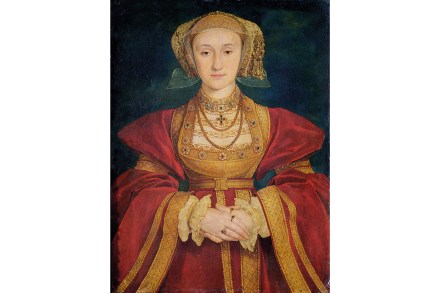
At last we see Henry VIII’s wives as individuals

From our UK edition

Divorced. Beheaded. Died. Divorced. Beheaded. Survived. Nearly 500 years after the death of Henry VIII, can there be anything new to say about his queens: Katherine of Aragon, Anne Boleyn, Jane Seymour, Anne of Cleves, Katherine Howard and Katherine Parr? Does the world need another book about this sextet? The answer to both questions, as this elegantly written and sumptuously illustrated volume makes clear, is a resounding yes. Published to coincide with the National Portrait Gallery’s exhibition of the same name (20 June-8 September), Six Lives is a collection of concise, accessible essays written by experts with specialist knowledge of Tudor painting, music, jewellery, manuscript illumination and book binding, among other topics.

The lion and the unicorn were fighting for the crown

From our UK edition

Elizabeth I died at Richmond Palace on 24 March 1603 at the age of 69 after a reign of 45 years. Her health had been poor from the early 1590s onwards: arthritis, gastric disorders, chronic insomnia and migraines were just some of the ailments which plagued her. Yet, uniquely among English monarchs, she refused to make provision for the succession. James I made great efforts to ensure that his escape from the Gunpowder Plot would not soon be forgotten From Tudor to Stuart is Susan Doran’s enthralling account of the behind-the-scenes manoeuvres of those who had a viable claim to succeed the Virgin Queen.

The woman who put the Spencer family on the map

From our UK edition

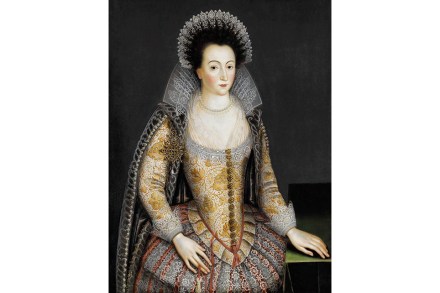
The first woman to put the Spencer family on the map was not Diana, Princess of Wales, the youngest daughter of the 8th Earl Spencer, nor even Georgiana, Duchess of Devonshire, the elder daughter of the 1st. Rather, it was their Tudor forebear Alice, Countess of Derby, the subject of this absorbing biography by Vanessa Wilkie. Born at Althorp – then a modest, two-storey red brick manor house – in May 1559, six months into the reign of Elizabeth I, Alice was the youngest daughter of Sir John Spencer, a prosperous sheep farmer and sometime sheriff of Northamptonshire, and his wife Katherine, née Kytson. At the age of about 20, Alice married Ferdinando Stanley, Lord Strange. It was a brilliant match for her and the Spencers.

A passion for painting at the early Stuart courts

From our UK edition

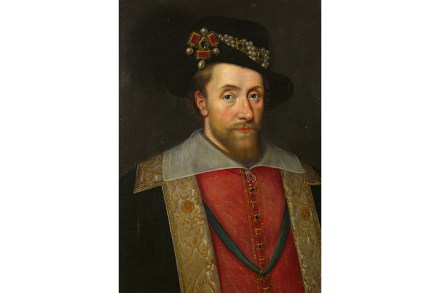
Four years ago Roy Strong – one-time director of both the National Portrait Gallery (1967-73) and the V&A (1973-87) – published The Elizabethan Image: An Introduction to English Portraiture, 1558-1603, in which he returned, after more than a 30-year hiatus, to the subject with which he first made his name: the imagery of Queen Elizabeth I and her court. Now 88, the indefatigable Strong has produced a follow-up volume charting the fate of portraiture (and painting and the visual image more generally) at the courts of Elizabeth’s Stuart successors, James I and Charles I. Charles I would travel by barge to Van Dyck’s studio to pass the time with him and watch him paint The format of – and thinking behind – The Stuart Image is the same as in the previous book.

The machinations of the Dudleys make Game of Thrones look tame

From our UK edition

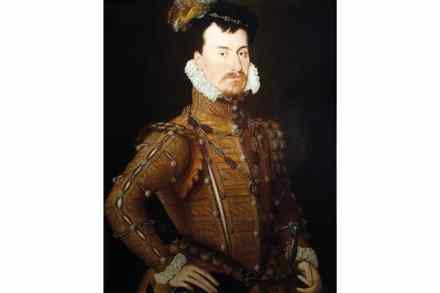
This is the gripping story of the ever-fluctuating fortunes of three generations of the Dudley dynasty, servants to — and at times rivals for — the Crown in the 16th century. As Joanne Paul observes in her engrossing biography of an extraordinary family, ‘had fate, Fortuna, Nemesis or God made only the slightest adjustment to their orchestration of events’, the Dudleys, not the Tudors, might have ruled England for generations. The narrative begins in the 1490s with Edmund Dudley, an Oxford-educated barrister who rose to a position of power, influence and wealth at the early Tudor court, only to be arrested and imprisoned in the Tower within days of Henry VII’s death in 1509.

Sables, ruffs and doublets

From our UK edition

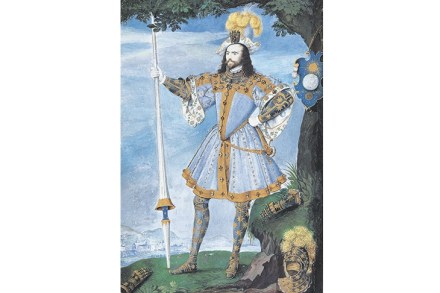
Roy Strong first encountered the portraiture of Elizabeth I and her court while a schoolboy in post-war Edmonton. In the early 1950s, as a second Elizabethan age beckoned, the teenaged Strong unexpectedly found himself face to face with the ‘Ermine’ and ‘Rainbow’ portraits of the Virgin Queen on a day trip to nearby Hatfield House. It was, as he later recalled in his Self-Portrait as a Young Man, ‘the birth of a love affair’. Shortly after, he began compiling a card index of Elizabeth I’s portraits and trying his hand at painting miniatures in the style of Nicholas Hilliard, the most celebrated portraitist of her reign.