More from Arts

Incredible string band

The Ukulele Orchestra of Great Britain are performing at the Albert Hall: playing their tiny instruments in a very big space. There must be 5,000 people here, but the orchestra’s friendly jokes, the modesty of the ukulele sound and the familiarity of the audience make the concert seem intimate. The Ukes have been going for 28 years, and in the past half-decade or so they’ve gone mega. Their formula is a mash-up of the ridiculous and the sublime; the players poke fun at their ‘bonsai guitars’, then pluck from them a wildly diverse range of music with virtuosity and irreverence.

Building on the past

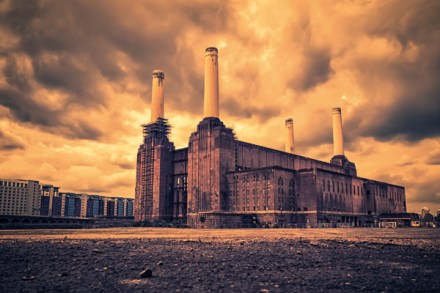
London was an industrial city until remarkably recently. It seems extraordinary now, but Bankside Power Station was built in 1947, by Sir Giles Gilbert Scott, to burn oil right on the banks of the Thames, opposite St Paul’s. What’s more, Gilbert Scott’s other great power station, Battersea, built in 1929, is less than a mile upstream. In the early 1970s, more than 1.1 million people in the capital — almost a third of the workforce — had manufacturing jobs. Now only 117,000 do — one in 40 workers. Still, the old industrial architecture survives in pleasingly generous quantities.

The place to be

A display of drawings by 20th-century sculptors is a welcome event, and the multi-levelled, multi-functional Kings Place provides just the right ambience, the building echoing the concept and providing a satisfying mix of enjoyment, surprise and irritation. To stage Sculptors’ Drawings (until 12 October) has been a long-held ambition of Pangolin’s Rungwe Kingdon and he has assembled over 200 works, including Eduardo Paolozzi’s ‘Collage’ (above), plus a scattering of 3D pieces. It sounds straightforward, but this being the art world, and sculpture a broad kirk, no chance to complicate has been foregone.

American beauty | 19 September 2012

Tragically, the number of ballet directors who can orchestrate good programmes and good openings is dwindling these days. Helgi Tómasson, of San Francisco Ballet, is one of the few who are still in the know, judging by the terrific bang with which his company opened last week in London.  Divertimento No.15 might not be one of George Balanchine’s greatest works, but it remains a delectable compendium of all the distinctive traits dance-goers love in Balanchine’s composition. Craftily entwined with and within Mozart’s music, the 1956 dance is one of the choreographer’s many tributes to the grand old era of the Imperial Russian Ballet — whence he came.

Royal rocks

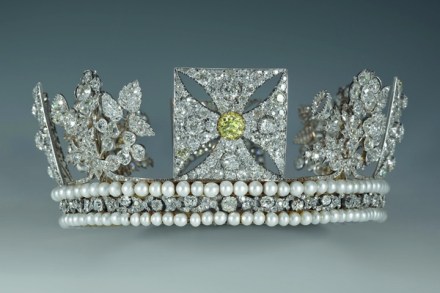
It’s a smallish dark room but, wow, what a lot of sparklers. There are more than 10,000 diamonds set in tiaras, crowns (Diamond Diadem, above), brooches, swords, earrings and necklaces, on display at Buckingham Palace in a special exhibition Diamonds: A Jubilee Celebration (until 7 October). These stunning pieces were acquired by six monarchs over three centuries. Many of the stones have been recut or made into new settings, such as the Fringe Brooch, belonging to Queen Victoria. The larger stones in this brooch are believed to have come from one of the two jewels given to her by the Sultan of Turkey. She wrote in her journal of 8 May 1856 that she decided she could not wear one of the jewels and wished to have it reset.

Science fiction as reality

What’s that in your pocket? Magic or art? The near ubiquitous iPhone may be rammed with very new technology, but it is a witness of very old, even mysterious, values. Few of us understand its inner workings, even as we indulge ourselves daily with its impressive powers to astonish. ‘My life,’ Daniel Harris wrote in Cute, Quaint and Hungry, his witty critique of consumerism, ‘is suspended above an abyss of ignorance. Virtually nothing I own makes sense to me.’ This is a familiar feeling. If we had to start over, few of us would know how to light a fire, still less design and manufacture a beautiful smartphone. If civilisations are remembered by their most significant artefact, the iPhone is our memorial. Arthur C.

Peacocks and passion

Not many peacocks could handle an 8,000-strong festival audience. But such is the gentle atmosphere of the annual End of the Road music festival — set in the historic Larmer Tree Gardens, north Dorset — that the resident peacocks get on just fine with their weekend visitors. Last weekend was the seventh outing of the festival and, true to form, the line-up did not have something for everyone’s musical taste. Listening to unfamiliar music was half the joy of the weekend. Still, the curators have a strong musical bias so it is a good thing I enjoy Americana, modern folk, blues and indie pop; otherwise there were the peacocks for entertainment. Headliners included Grizzly Bear, Beach House and Grandaddy.

What’s it all about? | 6 September 2012

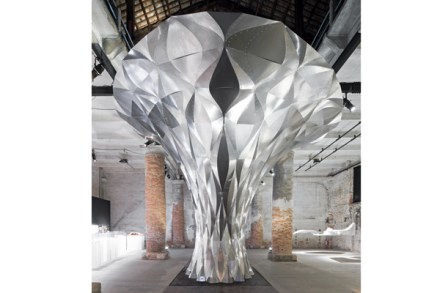
The Venice Architecture Biennale, the world’s biggest and most prestigious architecture exhibition, struggles to know who it’s for — the professional architect or the interested public — and indeed why it exists at all. This is partly Venice’s fault. To spend one’s time looking at architectural models, drawings and, this year, photographs and film when you could be slinging back Bellinis in an 18th-century palazzo seems perverse. Added to which, the Biennale organisers have now decided the vernisagge — the private view — should take place in late August, when Venice is at its hottest and the Corderie, the former rope-making factory of the Arsenale where the main exhibition is held, becomes a vast wooden greenhouse. Yet everyone comes.

Working men’s clubs

Where better to explore the history of the city than at its very heart? Guildhall Art Gallery, nestled between St Paul’s Cathedral and the Bank of England, is currently home (until 23 September) to Butcher, Baker, Candlestick Maker, a collection of artefacts from London’s Livery Companies, or guilds — an historic part of London’s identity. Dating from the Roman period, these 108 companies operated as trade associations, regulating and cultivating their industries. From illuminated medieval manuscripts to ornate tobacco jars and clothing (Master Carpenter’s Crown, 1561, above), visitors are provided with a rare insight into the codes and traditions of the guilds.

The great wall of Peckham

The Peckham Peace Wall began life as a window: a long pane of shop glass in the front of Rye Lane’s newly refurbished branch of Poundland. During the riots last summer, the glass went, along with some of Poundland’s stock. The next morning, after the damage had been boarded up, a local theatre group covered the MDF with multicoloured Post-It notes, asking passers-by to fill them in with messages about why they loved Peckham. They called it, with impeccable logic, ‘The “Why We Love Peckham” Wall’. The notes filled to overflowing with affection and wounded civic pride. And they attracted reporters, who gave the display a more resonant name.

Follow that dream

‘Our fate lies within ourselves. We just have to be brave enough to see it,’ says Princess Merida, the winsome, feisty heroine of Disney-Pixar’s latest animated romp Brave (PG, nationwide). ‘Why shouldn’t we choose our own fate?’ asks another character, chafing at the constraints imposed by family, duty and tradition. Why not, indeed? As Brave is set in Scotland — albeit an imagined Caledonia owing more to Ossian than history — the politics of the movie are inescapable. If you’re burdened with being Scottish, that is. The rest of the world can, and presumably will, enjoy this caper unburdened by such dreary contemplation.

Spirit of the Fringe

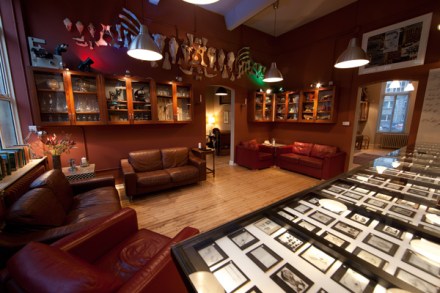
In the beginning was the Edinburgh International Festival, a carefully curated exhibition of high culture. Then came the Fringe, in which every pub and church hall in the city became a venue for everything from student theatre to experimental dance. Now, it is mutating again — and for the better. The real arts story of Edinburgh this year is emerging from what used to be the Royal Veterinary School. It has been renamed Summerhall, transformed inside into a world of fresh wood and glass doors and offered as a strikingly ambitious, multifaceted arts venue. Bankrolled by the financial consultant and sometime Downing Street adviser Robert McDowell, the 2.5-acre site incorporates theatre and exhibition spaces, studios, workshops, libraries and little museums.

Brown study

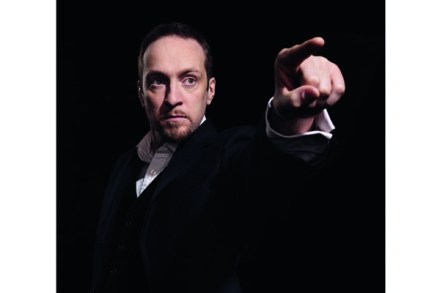
Stage hypnotists need the trust of their audience, but also a whiff of danger. So Derren Brown calls his show Svengali, though he is not really an evil puppetmaster but a gentle, coaxing, mostly ethical puppetmaster. That show, which opened for its first run at the end of 2010, is back for a short time at the Novello theatre (until 11 August). It’s fun watching the audience drift through the doors and wondering who will end up on stage dancing naked or eating raw onions or whatnot. A thousand potential victims. There are quite a lot of children given that Derren can be a bit sweary on stage — but one of his special abilities is to deliver the f-word innocuously. He asks his audiences not to reveal anything, and perhaps he hypnotised us because I’m inclined to obey.

Critical meltdown

If the River of Music put you in the mood for stimulating sounds on the banks of the Thames, next week’s Meltdown at the Southbank Centre, also part of the London 2012 Festival, is well-timed. Meltdown’s later-than-usual slot should earn it a little reflected Olympic glory, though it’s hard to imagine anyone less suggestive of healthful outdoor pursuits than this year’s curator, surname-free singer and visual artist Antony (above), who looks as if he has spent his life shunning daylight in some windowless New York dive.

Culture notes: Chart topper

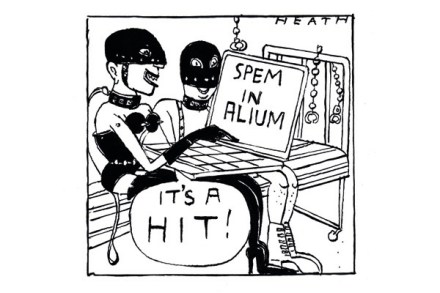
The iTunes classical chart hasn’t been around very long, but for the time it has been available the number one slot has usually featured Pavarotti singing ‘Nessun dorma’. Nothing wrong with that, except that the chart was invented specifically to encourage the current classical music scene and give an impression of who was doing what within it. Now a piece written 450 years ago — Tallis’s ‘Spem in alium’ — has taken over at the top, in a recording by the Tallis Scholars. Manna sure drops from heaven in unpredictable ways. This posting has come as a result of the success of an erotic novel, Fifty Shades of Grey by E L James, where it is suggested that Tallis’s music is the ultimate turn-on.

Culture notes: 00 heaven

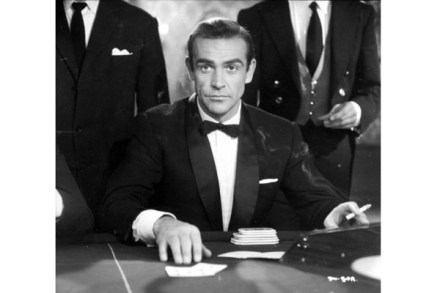
It took Ian Fleming just eight weeks to write his first James Bond novel but the legacy of his eponymous spy has been far less fleeting. Fifty years after 007 first made it on to the big screen in Dr No (see Sean Connery, above) a Barbican exhibition is celebrating with a stunning display of Bond gadgets, clothes and paraphernalia, such as Jaws’ metal teeth (until 5 September). Designing 007: 50 Years of Bond Style has more than 400 such items, playfully arranged in rooms recalling Bond’s own stomping ground: a casino, M’s office, and so on. There is Ursula Andress’s white bikini, Scaramanga’s golden gun, even an Aston Martin DB5, although sadly the Sean Connery leaning nonchalantly against it is a replica.

Grim realities

It was somewhat weird that Pina Bausch’s Palermo Palermo opened on the same night as Spain’s victory over Italy in the Euro 2012 final. After all, the Sicilian capital was long dominated by the Spaniards. Yet in Bausch’s Tanztheater vision of Palermo there are no references to such history, bar a few Spanish-looking steps set to the Spanish-influenced Sicilian music in part one’s frenzied finale. What one gets instead are more or less explicit flashes of the city’s more contemporary and often grim realities: from the mafia ritual of kissing the boss’s hands, to garbage piling up in streets, via evocations of Sicilian mourning, immigration and emigration.

Culture notes: All shipshape

The museum Titanic Belfast (above) opened recently to commemorate the centenary of one of our best-loved disasters. If you think you know everything there is to know on the subject, or more than you really want to, think again. Hull 401, as she was known to Harland and Wolff, may yet prove to be the making of the city that famously said, ‘She was all right when she left here.’ In a building designed to echo the lines and forms of both ship and iceberg, overlooking the very slipways from which she and her sister ship Olympic were launched, the museum sets up a dialogue with the past in a way most large exhibitions find impossible.

New world order

When World Cities 2012 — better known as the current Pina Bausch season — was first presented, questions were raised about the apparently random order of the various pieces. Yet a chronologically structured retrospective would have deprived the event of the theatrically stimulating game of juxtapositions that the reordered version possesses. As with her non city-specific works, Bausch’s city-specific creations can be grouped in two categories: the more and the less danced pieces. The pendulum swung dramatically throughout the four decades in which Bausch worked, though not frequently. So a chronologically structured retrospective would have suffered from clumps of similarly formulated compositions. A vibrant chiaroscuro is key to the success of the current season.

Culture notes: Good as gold

An enthralling exhibition at Goldsmiths’ Hall, Gold: Power and Allure (until 28 July), which charts Britain’s history and celebrates exquisite artistry and craftsmanship, awaits those who venture into the City this summer. The grand opulence of the Hall is a superb setting: the deep plum-red, gilded and mahogany furnishings and the grand marble Staircase Hall enhance the magnificence of the display and serve to remind us that gold was not only worth its weight (unlike paper bank notes), but also played an important psychological role in Britain’s dominance on the world stage. More than 400 gold objects, from 2,500 BC to the present, are on display.