More from Arts

Bourne again | 3 January 2013

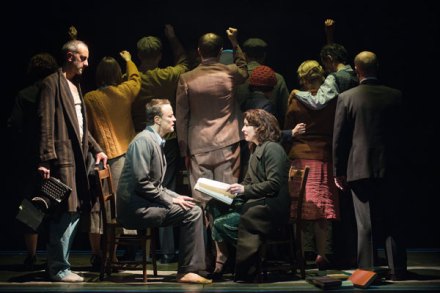
While most theatres brace themselves for the annual invasion of prancing Nutcrackers and flying snowmen, Sadler’s Wells offers something that is mercifully not as sugary. Never-ending love and magic kisses might be at the core of Matthew Bourne’s long-awaited take on Sleeping Beauty — aptly subtitled ‘ A Gothic Romance’ — but there are also bites of the Twilight saga genre, demonic creatures and a fair amount of gender-bending. Odd as it may sound, it all works to absolute perfection, contrary to what some Jurassic highbrows might like to think.

Special K

There’s a K-Pop Academy in London. Students go through a 12-week course and learn not only the finer points of PSY-style hip-hop, but also Korean cuisine, fashion, history and traditional music. Not everyone can attend — as with Hogwarts, one must be chosen. Applicants submit an essay to the Korean Cultural Centre and 30 students are picked each term. Once you have been selected, the course is free. I am invited to the Academy’s ‘graduation’ ceremony, where the students — all teenage girls, from all ethnic groups — express their love for all things K-Poppy. They adore Korean dance, Korean soaps, wearing the hanbok or Korean national dress. ‘I can’t believe this is over,’ I later overhear one girl wail to another in the lavatory.

London’s high life

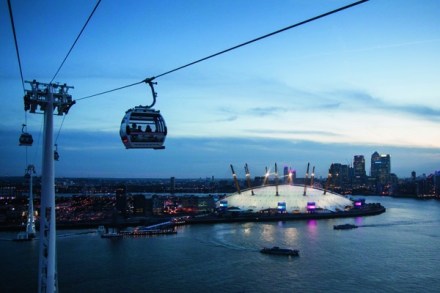
You can take a five-minute flight across the Thames on something called the Emirates Air Line. It’s a cable-car ride between North Greenwich and the Royal Docks that’s sponsored by the Gulf carrier. Much else on the ride simulates a plane trip — the tickets are called boarding passes, and when you ‘take off’ from either side of the river there’s a large digital screen showing cheery people waving you off, as at an airport. As I embark from the southern bank, a bunch of ‘Butchers from South London’ bid me goodbye. The cable cars, however, are called gondolas rather than, say, ‘cockpits’ or ‘cabins’ — and once up in the air the whole of London unfolds.

In the worst possible taste

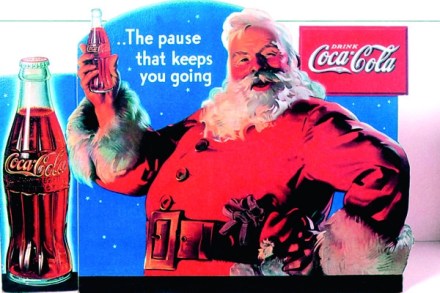
What are the rules of taste at Christmas? How might the fastidious chart a neat path through this garish and cluttered carnival of unreflective consumption? How might dignity be maintained in this tinselled and glitter-balled waste of space? Actually, how might we design it better? Nicky Haslam once and quite correctly, without a flicker of irony, advised me that ‘coloured lights are common’. There is value in such advice and we will return to this refreshing idea a little further down the page. Germans and Americans have a peculiar historic hold over our imaginations at this time of year. It was Victoria’s earnest German Prince, Albert of Saxe-Coburg and Gotha, who first imported the hitherto pagan Christmas tree.

Selling secrecy

In the ‘psychotherapy ward’ of a secret venue somewhere in east London, watercolour portraits of troubled male faces line the wall. Nearby in the ‘court-room’ a sound installation broadcasts an ominous tick-tock into the airy acoustics of a large hall, while the ‘Warden’s Office’ below is furnished by quilts handmade by inmates. This is Secret Gallery, the latest venture from the company behind Secret Cinema, which stages immersive screenings of celluloid classics (kept secret until the screening itself) that have so far included Blade Runner, The Red Shoes and now The Shawshank Redemption, Frank Darabont’s cult tale of prison injustice.

Review: The Rolling Stones at the O2 Arena

‘How’re you doing in the cheap seats? They’re not that cheap, though, that’s the problem,’ said Mick Jagger as he launched into the first of the Rolling Stones’ 50th anniversary concerts. Still, the electrifying combination of swagger, swing and blues transformed the O2 Arena into a raucous celebration of the self-proclaimed ‘greatest rock-and-roll band in the world’. The Stones were last on stage in 2007, and the intervening years have done little to diminish the band’s sprightliness. Jagger remained the archetypal front man, while 71-year-old drummer Charlie Watts kept up the momentum. The gnarly fingers of guitarist Keith Richards did, however, sometimes fail to find the notes, his languid playing style exaggerated by age.

A world apart | 22 November 2012

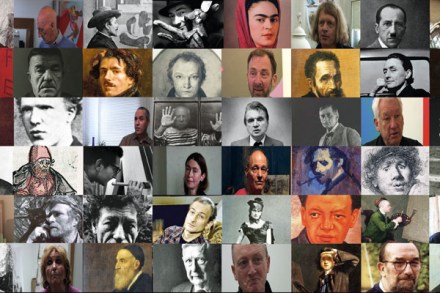
Although the starving artist in the garret is no longer the favourite public stereotype, painters and sculptors remain something of a mystery even to those who spend time looking at their work. So a film that helps to explain their assorted motivations can only be a good thing, and one as lucid and entertaining as Jake Auerbach’s latest offering, The Last Art Film (available on DVD at £16.99), should be welcomed with open hearts and minds. Jake Auerbach is a distinguished film-maker with a string of successful artist documentaries behind him (his subjects have included Sickert, Freud, his father Frank and Allen Jones), and he has distilled all his experience of the strange ways of artists into this 94-minute film.

The Dagenham Dustbin

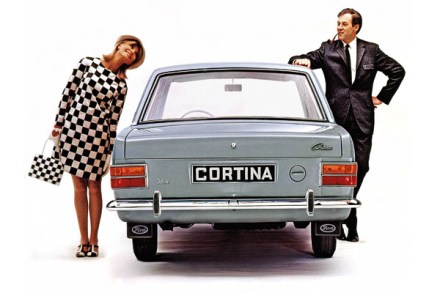
For those of us who find passion in national iconography, this is a melancholy historical moment. It’s a very bad time for British manufacturing and an even worse one for British symbols. The Chinese-owned maker of the London taxi (which Charles Eames described as one of the greatest designs of all time) is going bust. Soon, all London cabs will be efficient but characterless Mercedes-Benzes, Peugeots or Nissans. Penguin Books, the most influential and well-meaning Modernist experiment of them all, more useful than its contemporary, the BBC, more international than London Transport, has been acquired by a grim German multinational. And Britain, spiritual home of the commercial jet, long ago lost the ability to manufacture an entire aircraft.

Weaving magic

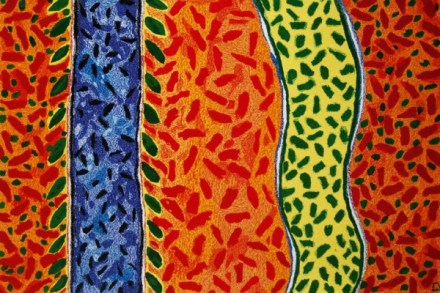
Tapestry, papal and princely, never quite went away. Today it satisfies a need for conspicuous displays of skill of the kind celebrated in the V&A’s recent show Power of Making. The surprise hit of last year’s Venice Biennale was Penelope’s Labour: Weaving Words and Images, an exhibition of weavings and tapestries old and new, while the reception of Grayson Perry’s six narrative hangings, ‘The Vanity of Small Differences’, confirms our current fascination with crafted art.

London pride

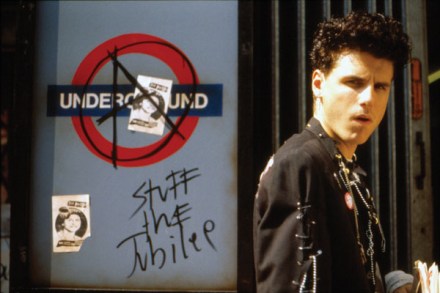
The trend for documentary portraits of individual cities assembled from archive footage continues with Julien Temple’s London: The Modern Babylon, out now on Bfi DVD. Temple was the obvious choice of director, as a native of the city and creator of London films Absolute Beginners and Oil City Confidential, not to mention 2010’s superb Requiem for Detroit? for the BBC. The film has been compared to Guy Maddin’s My Winnipeg and Terence Davies’s Of Time and the City (about Liverpool), though London lacks those works’ deeply personal perspective and strict avoidance of cliché: this is a film that opens to the sound of  ‘London Calling’ and closes with ‘Waterloo Sunset’.

Captivating kaleidoscope

When Philippe Decouflé first introduced the idea of sheer fun into the deadly serious business of postmodern dance-making, sceptics predicted that his comic strip and animated movie-like ideas would soon start to wear off. Almost 30 years later, his stuff is still as provocatively entertaining, and his work holds a special place in the history of choreography. Panorama is a cleverly woven look at some of his past and much-acclaimed creations. Yet the performance has very little in common with trendy, pompously celebratory and unbearably lifeless choreographic retrospectives. Structured as a sort of music-hall review and compèred like one by the most unlikely of MCs, Panoroma is a kaleidoscope of choreographic and theatrical ideas that amuse, intrigue and captivate.

All that jazz | 1 November 2012

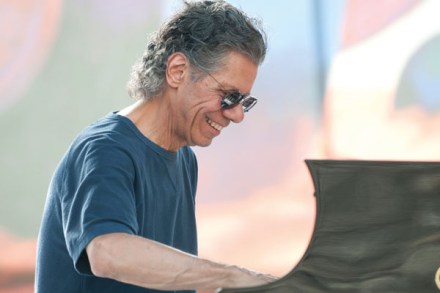
What London can give jazz music — beyond an audience in its concert halls — is a setting to match the music’s diversity. The city offers access, culturally, to what is European, American, African and more. And so it is with the London Jazz Festival (9–18 November), whose extensive programme is significant both for its cultural mix and for its line-up of jazz’s greatest living musicians. 2012 marks the festival’s 17th outing, with over 250 concerts, 40 hours of which are to be broadcast on BBC Radio 3. Performers will include the legendary saxophonist Sonny Rollins (16 November, Barbican), who recorded with Miles Davis before he was 20. Now aged 82, Rollins is passing through London on a seven-date European tour.

Mixed bag | 1 November 2012

Last year I raved about Birmingham Royal Ballet, their artistic drive, their freshness, their impeccable artistic eclecticism and, not least, their superb dancing. It was with such memories that I went to Sadler’s Wells last week, only to leave both programmes with reservations and mixed feelings. Neither programme stood out for being particularly well constructed; one, titled Opposites Attract, lacked contrast and shadings, while the other suffered from excessive stylistic idiosyncrasy. David Bintley’s Take Five, to Dave Brubeck’s luscious jazz, strived to add sparkle, but did not succeed — surprisingly, one might add, given that it has all the right ingredients to be a success.

21st-century Disney

When, in 1940, Walt Disney released Fantasia, his radical arrangement of animations set to classical music, he fancied that he might add new segments to it every few years so that it could grow with its audience. Alas, it was not to be. The cost of installing the new ‘Fantasound’ technology in cinemas, plus a public mood made inhospitable by war, meant that his fantasy was soon a box-office flop. So he would, no doubt, have been delighted to see Fantasia, accompanied by the London Philharmonic Orchestra, moving with the times 72 years later, as part of the Royal Albert Hall’s Live in Concert series.

Blurring boundaries

Each of the Buddhist monks’ faces tells a variation on the same story. One simmers with fury, another sags with despair, a third is locked in a stoical gaze. The sign they are holding is written in Mandarin — its message the latest piece of sadistic invention by the Red Guards promoting Mao’s Cultural Revolution. ‘To hell with the Buddhist scriptures, they are full of dog farts.’ This is just one tiny photograph in the Barbican exhibition Everything Was Moving (until 13 January 2013). The project takes a gargantuan bite into world affairs in the Sixties and Seventies, so that through the eyes of 12 photographers we revisit such provocative topics as apartheid, Ukraine under Soviet rule, the American civil rights movement, and Mao’s China.

Twin peaks

According to an old ballet commonplace, no one can beat the Russians when it comes to Swan Lake. Biased and historically inaccurate as this may be, the generalisation has a grain of truth. Russian ballerinas have always looked at ease with the popular classic. It matters little that it was created for an Italian star and partly choreographed by a French ballet master; Swan Lake is as Russian as vodka and comes magically to life when left in the hands — and legs — of Russian interpreters. Which is what happened last week with the international superstar Natalia Osipova’s debut with the Royal Ballet. Osipova’s rise to fame started only recently, and many in this country still remember her dazzling rendition of Don Quixote.

A step away from buying toothpaste

Fifty years ago it was not possible to bid at auction via the telephone — that first historic telephone bid was made for a Monet at Christie’s in 1967. Now the auction house’s Great Rooms, and indeed every other international saleroom, is lined by banks of telephones and digital screens, and absentee clients may also bid from anywhere in the world online, live through an interactive bidding portal or via iPhone and iPad apps. It seems that one moment advances in technology allowed Elizabeth Taylor to sit by her pool in Bel Air in her swimsuit and bid on the telephone for Duchess of Windsor diamonds in Geneva, the next, that part of her estate could be dispersed around the globe courtesy of Christie’s inaugural online-only auction.

Fact and fantasy

Britain’s country houses were constantly in the news a generation ago. In 1974 The Destruction of the Country House, an exhibition at the Victoria and Albert Museum curated by Roy Strong, Marcus Binney and John Harris, offered a dismal chronicle of the houses that had disappeared in the past century. It proclaimed their importance to the national heritage, boldly urging that country house owners ‘deserve consideration and justice as much as any other group within our society as they struggle to preserve and share with us the creative richness of our heritage’. This invocation bore fruit in the mid-1980s when Kedleston Hall, Calke Abbey and Weston Park, all threatened with dispersal, were preserved by the National Heritage Memorial Fund.

Wheels of change

Bicycles can be powerful images in cinema. Like the 1948 masterpiece Ladri di Biciclette, Wadjda, the first film ever to be filmed in Saudi Arabia, is about a child and a bike. But whereas two wheels in Vittorio De Sica’s brutally neorealist film represented the shackles of poverty, here they embody freedom. Or at least the whisper of it. Wadjda, which will be screened at the London Film Festival on 11 and 14 October, has at its helm Saudi Arabia’s first female director, Haifaa Al-Mansour. This is a feat not just because this is a country where women are not allowed to drive (Al-Mansour often had to hide in a van while filming in Riyadh), but also because cinemas themselves have been largely banned in the gulf kingdom for 30 years.

Sex and the city

We don’t do burlesque here. We do bawdy, Benny Hill, end-of-pier prurience instead. Montmartre may have the Moulin Rouge, but the closest we get to saucy is John Major not ‘on’ Edwina Currie — titter — but on our tradition of music hall. As a nation we can-cannot do the can-can. So I found it intriguing that impresario Harvey Goldsmith has imported one of Paris’ most distinguished and long-running titty shows, Crazy Horse, to London’s Southbank. I went, to sit in a hot tent in the dark with a lot of mouth breathers, to watch young women without any clothes on, apart from strange pants consisting of large Band-Aids that barely covered the Hitler-moustaches painted vertically on the pubis. If that floats your boat, I suggest you go.