Amander Baillieu

What’s it all about? | 6 September 2012

From our UK edition

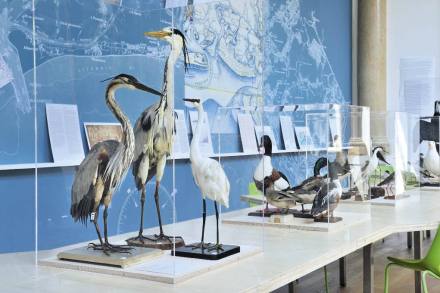
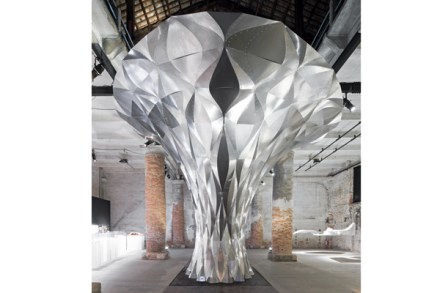
The Venice Architecture Biennale, the world’s biggest and most prestigious architecture exhibition, struggles to know who it’s for — the professional architect or the interested public — and indeed why it exists at all. This is partly Venice’s fault. To spend one’s time looking at architectural models, drawings and, this year, photographs and film when you could be slinging back Bellinis in an 18th-century palazzo seems perverse. Added to which, the Biennale organisers have now decided the vernisagge — the private view — should take place in late August, when Venice is at its hottest and the Corderie, the former rope-making factory of the Arsenale where the main exhibition is held, becomes a vast wooden greenhouse. Yet everyone comes.
New build

From our UK edition

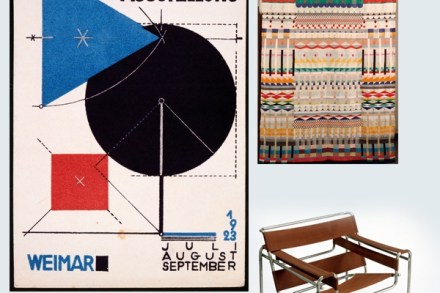
The Bauhaus was a sort of university of design, whose progressive ideas eventually fell foul of the Nazis. But as the exhibition Bauhaus: Art as Life is keen to impress, it was also a lifestyle, a modernist utopia, where staff and students were encouraged to mix freely, which they did with gusto. This, just as much as its reputation as a nerve centre for a new aesthetic, made it a magnet for the central European avant-garde. Among its teachers were some of the greatest artists and designers of the 20th century: Wassily Kandinsky and Paul Klee taught art; Marcel Breuer was responsible for furniture; Laszlo Moholy-Nagy for product design; Oskar Schlemmer for performance; and Walter Gropius, the school’s founder, lectured on architecture.

Building block

From our UK edition

Britain’s architects can produce the best designs in the world, says Amanda Baillieu. So why aren’t any on display at the Venice Architecture Biennale? Something has gone very wrong for the British at the Venice Architecture Biennale. This three-month event may play second fiddle to the older and larger Art Biennale, but for architects it is meant to be the only festival where they can let rip, free from the restraints of budgets, planning and bureaucracy. They come to gossip, to see what their rivals are up to and schmooze clients. Even Norman Foster has dropped by to talk up his firm’s plan for Hong Kong’s new £1.8 billion arts district. Some 30 countries show their wares in national pavilions, slugging it out for punters and prizes.

My week as a climate change denier

From our UK edition

The Spectator’s Global Warming special is only in the shops for a couple more days.  If you’ve missed it – or if you still need convincing to buy it – here’s an extended version of the article by Amanda Baillieu from within its pages: When a work colleague sent a tweet to his 2000 followers comparing me to Nick Griffin I realised I was heading for my Jan Moir moment. A few days before, I had written an opinion piece with the rather attention seeking headline Is global warming hot air?  I’d wanted to see if my readers, who are mainly architects, agreed with the line now adopted by the Royal Institute of British Architects (RIBA) that ‘man made’ climate change is the greatest challenge facing the profession.

The thin green line: cross it at your peril

From our UK edition

It was when I saw an internet tweet comparing me to Nick Griffin — with 2,000 people signed up to it — that I realised just how much trouble I was in. It was when I saw an internet tweet comparing me to Nick Griffin — with 2,000 people signed up to it — that I realised just how much trouble I was in. My sin: I had written an opinion piece entitled ‘Is global warming hot air?’ I’d wanted to see if my 18,000 architect readers agreed with the line now adopted by the Royal Institute of British Architects (Riba) that ‘man-made’ climate change is the greatest challenge facing the profession.