Angela Summerfield

Artistic response

From our UK edition

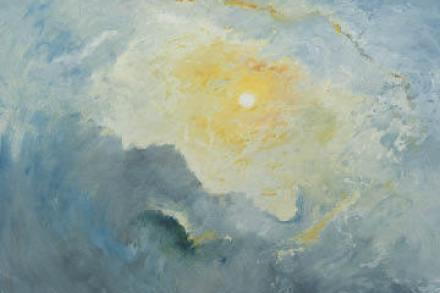
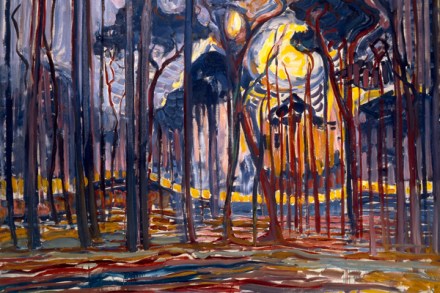
Van Gogh to Kandinsky presents a rare and exciting opportunity to see some 60 paintings as examples of landscape symbolism from major international institutions and private collections. The exhibition extends beyond the usual north European definitions of this subject, with the coupling of the emotionally charged graphic-colourist van Gogh with the increasingly reductive and programmatic application of colour-to-form associated with late Kandinsky. It challenges, therefore, conventional categorisations of modern European art. Who would think, moreover, that Lord Leighton, Hammershøi, Monet and Mondrian could share a common thesis, let alone inhabit the same gallery rooms? In lesser hands, such an ambitious project could have descended into chaos and visual incoherence.
Culture notes: Good as gold

From our UK edition

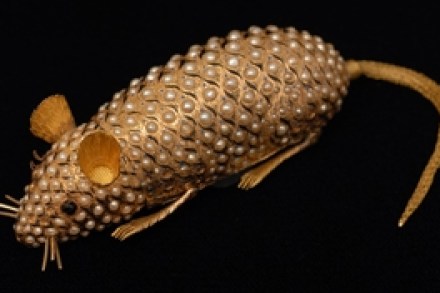
An enthralling exhibition at Goldsmiths’ Hall, Gold: Power and Allure (until 28 July), which charts Britain’s history and celebrates exquisite artistry and craftsmanship, awaits those who venture into the City this summer. The grand opulence of the Hall is a superb setting: the deep plum-red, gilded and mahogany furnishings and the grand marble Staircase Hall enhance the magnificence of the display and serve to remind us that gold was not only worth its weight (unlike paper bank notes), but also played an important psychological role in Britain’s dominance on the world stage. More than 400 gold objects, from 2,500 BC to the present, are on display.

Mountain people

From our UK edition

John Ruskin (1819–1900) was Britain’s leading authority on art in the 19th century, and his voluminous writings had a profound influence on both artists and public appreciation. The process of art, according to Ruskin, was one that should be founded upon the truthful perception of nature, and landscape art and its practitioners, notably Turner, were the focus of his prescriptive ideas. A work of art was not about replication or, at the other extreme, artistic expression, but an artist’s ability to respond to and capture the form, colours (hue) and tones of Nature, as perceived at certain times of day, or under key atmospheric conditions. As art was a celebration of God-given beauty, the more sublime and awe-inspiring the landscape depicted, the better.

Visual dialogue

From our UK edition

An encounter with the paintings by the established Berlin-based Swede Peter Frie comes as a breath of fresh and insightful air to the British contemporary art scene. The dozen or so works (large-scale oil landscapes and a few still-lives) are displayed in stunning contemporary settings: a glass gallery and an adjacent artists’ house at Roche Court (a period house with grounds, better known for its sculpture programme). Landscape painting has not fared well within the dictates of modernist and post-modernist art definitions. It is as if an urban-centric, text-driven and often anti-aesthetic dogma has stifled both alternative discourse and individual human expression.

Luminous landscapes

From our UK edition

Oleg Vassiliev: Recent Works Faggionato Fine Arts, 49 Albemarle Street, London W1, until 23 January 2009 The septuagenarian Russian artist Oleg Vassiliev is exhibiting for the first time in London. Vassiliev was born in Moscow, in 1931, and studied graphic art at the Surikov Art Institute (Moscow State Art Institute), a training which provided him with both an extraordinary technical understanding of the use of pencil, and the means of a livelihood as a book illustrator in Soviet Russia. In the spring and autumn months Vassiliev was able to explore the landscape immediate to Moscow with fellow artists, as well as ideas as to what constituted art.

A very British medium

From our UK edition

Watercolour, that quintessentially British medium and form of expression, is currently enjoying a revival of interest among contemporary artists and academics alike. Following on from Tate Britain’s riveting Thomas Girtin exhibition and Hockney’s forays into the Nordic and Yorkshire landscapes come two exciting and enchanting shows, a short bus journey between the two. Both offer a rare opportunity to see in London otherwise inaccessible works. At Messum’s, the show of north Yorkshire artists includes small-scale atmospheric watercolours and mixed-media works, of the dales, by Peter Hicks.

Elemental forces

From our UK edition

Len Tabner Messum’s, 8 Cork Street, London W1, until 1 December For those of us who live in the British Isles there are two unassailable facts. We are island dwellers who live surrounded by turbulent seas. Our emotional lives, in other words how we experience our existence and express ourselves, often have recourse to rich literary and visual traditions centred on two subjects: the land and the sea. The progenitors of a visual sensibility were Constable and Turner. Both artists pushed the boundaries in terms of how art materials could be handled, and how subject matter, such as farmland, mountains, beaches and the sea, and the intrinsic four elements (air, light, water and earth), could be interpreted as an expression of sentiment and awe.

Shifting impressions

From our UK edition

Abstract art in Britain, in its widest sense, is currently enjoying a revival of interest among collectors, art dealers and curators; a time span which runs from the 1960s to the latest recipient of the Turner Prize, Tomma Abts. Callum Innes, still only in his mid-forties, is Scotland’s premier abstract painter. He is represented in leading public collections and by commercial galleries in London, New York and Dublin; he was awarded the Jerwood Painting Prize 2002 and showed at Tate, St Ives in 2005. The current show, organised by the dynamic Fruitmarket Gallery, Edinburgh, features a selection of small and large-scale paintings created over the past 15 years.

Essential truths

From our UK edition

This is a brave and thoughtful exhibition, for it addresses the needs both of a multifaith city, Liverpool, and an exhibition programme reliant on the collection resources of Tate Britain and Tate Modern. Representatives of several religions were given open access to the Tates’ collections. Part of the selection process acknowledged the dominant Christian– Judaic nature of these collections, both in content and in the biography of artists. An interesting departure point for those involved, therefore, became the examination of and lively discussion about the merits of 20th- and 21st-century abstract and non-representational art. The inclusion of this genre was crucial in presenting the Islamic faith and acknowledging its prohibition on images.